
Quick answers
Can I keep tablets in a weekly organiser?
An organiser can help some people manage prescriptions, but keep the original labelled packaging available for identification and expiry checking. Ask a pharmacist for product-specific storage advice.
Are vitamins and supplements safe within a child’s reach?
No. Store them with the same care as other medicines.
What information should I give a poison-information service or clinician?
The person’s age and condition, product name, strength if shown, approximate time and possible amount, plus any other substance involved.
Keep the original container and readable label
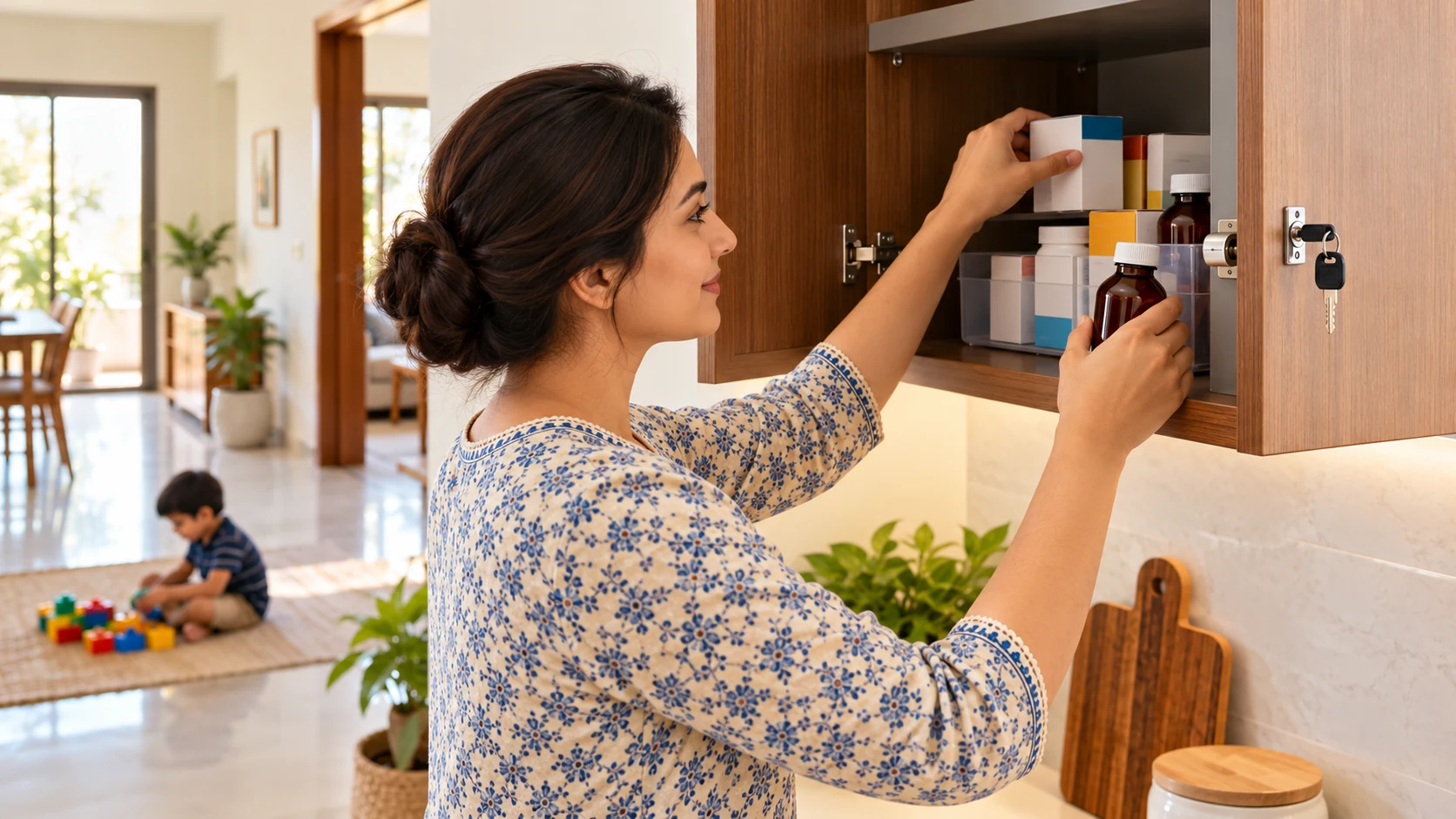
Keep each medicine in its original container or pharmacy-labelled pack. The name, strength, directions and expiry date help a pharmacist, poison-information service or clinician identify it. Do not transfer tablets or liquids into food jars, drink bottles or unlabelled containers.
Make access harder
Store medicines, vitamins, nicotine products, cleaning chemicals, pesticides and alcohol-containing products where young children cannot reach or open them. A locked or child-resistant storage place is safer than relying on a warning alone. Put products away after use; do not leave them on bedside tables, handbags, low drawers or dining tables.
Separate, review and dispose safely
Keep medicines separate from food and household chemicals. Review the home storage area periodically for expiry dates, damaged packaging, leaks, changed appearance and unclear labels. Ask a pharmacist or local health authority about an appropriate disposal route. Do not flush or pour medicines and chemicals into drains, toilets, rivers or onto the ground unless an authoritative local instruction specifically permits it.
If a possible ingestion happens
Stay calm, remove the item from reach without creating another risk and keep the package or label for identification. Do not make the person vomit, give a home antidote or wait for symptoms unless a qualified poison-information or clinical professional specifically instructs you.
AIIMS National Poisons Information Centre advises not to wait for symptoms or treat the person yourself after a suspected poisoning or wrong-medicine ingestion. Call its 24-hour poison-information line, 1800 116 117, and take the person to a nearby healthcare facility. For unconsciousness, breathing difficulty, seizures, burns, severe symptoms or another immediate emergency, call 112 and seek urgent medical help.
What needs attention
- Labels and original packaging help identify what may have been taken.
- Secure storage reduces easy access by children and visitors.
- Vitamins, supplements and nicotine products can be unsafe in the wrong person or amount.
- Early poison-information or clinical advice is safer than a home remedy.
Controls that reduce risk
- Use a secure, dry storage place and put products away after use.
- Keep original packs and labels available.
- Review expiry dates and damaged or unclear products.
- Ask a pharmacist or local authority about appropriate disposal.
- For a possible ingestion, keep the label and call AIIMS NPIC early; call 112 for immediate danger.
Common unsafe practices
- Moving medicines into food jars, drink bottles or unlabelled containers.
- Leaving medicines, vitamins or nicotine products within a child’s reach.
- Storing medicine beside food or household chemicals.
- Waiting for symptoms after a possible ingestion.
- Making a person vomit or giving a home antidote without professional instruction.
Leave a comment