

Quick answers
What does a face shield protect against?
Splashes, sprays and flying particles, when it is worn over safety glasses or goggles. It does not give enough impact protection on its own, it does not filter smoke and it does not make it safe to work close to flames.
Do I need safety glasses under a face shield?
Yes. Impact-rated glasses or goggles are your main eye protection. The shield covers the rest of the face.
Should a face shield work with my other PPE?
Yes. It must sit properly with your helmet, respirator and ear protection. If one item pushes another out of place, your overall protection drops.
How do I keep a face shield clear?
Clean and inspect it after every job as the maker advises, because smoke, chemicals and dirt cut visibility. Anti-fog visors help where fogging is a problem. Replace a scratched or cracked visor.
Why does the fit of a face shield matter?
A shield that is uncomfortable or slips gets pushed up and forgotten. Adjustable headgear and a padded frame keep it in place during hard physical work.

If you grind metal, handle acids, clean up after a road accident or work near hot liquids, a face shield is one of the simplest pieces of kit you will use. It is also one of the most misunderstood. People expect it to do jobs it was never made for.
Here is what a face shield does, what it does not do, and how to choose and look after one.
What a face shield protects you from
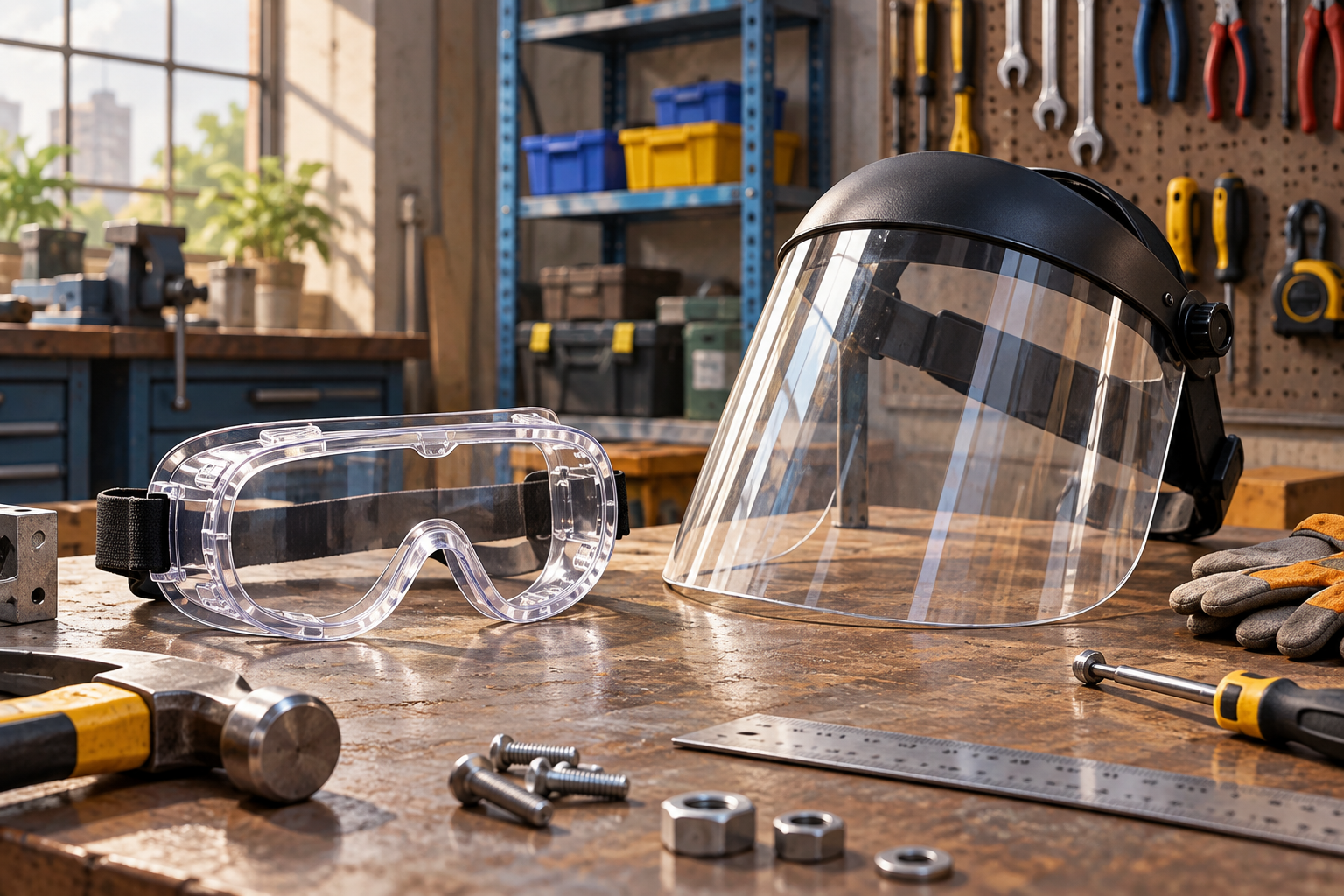
A face shield is a clear visor that covers the face from the forehead down. Worn over safety glasses or goggles, it keeps splashes, sprays and flying particles off your face. That is its job.
It does not filter smoke. It does not protect your breathing. And on its own, it does not give your eyes enough protection against impact.
Always wear glasses or goggles underneath
Impact-rated safety glasses or goggles are your main eye protection. The shield goes on top and covers the rest of the face. If a chip from a grinding wheel flies up under the visor, only the glasses stand between it and your eye.
A face shield is not flame protection
A face shield does not make it safe to work close to flames. In structural firefighting, the face is protected by the sealed facepiece of positive-pressure self-contained breathing apparatus (SCBA), worn with the helmet, hood and full protective kit. A visor or shield on the helmet is an add-on against splashes and flying bits, nothing more.
Types of face shield
You will see full-face shields, flip-up visors fixed to a helmet, and shields made for one particular task, such as chemical handling. Pick the one that matches the hazard in front of you, whether that is grinding, a chemical splash, radiant heat or body fluids at a rescue.
Chemicals and breathing protection
For chemical spills, use a shield with a chemical-resistant coating or a sealed design, and check that it works with your respirator.
Some full-face units come with built-in breathing protection, such as a powered air-purifying respirator (PAPR) or a gas mask. These filter some contaminants, but they do not supply oxygen. Never use them in fire smoke or in any unknown or oxygen-poor space. There, only positive-pressure SCBA will do.
Clear vision, fit and comfort
You cannot work safely if you cannot see. Smoke, steam and your own breath can fog a visor, so anti-fog coatings or vented frames help on long jobs.
Fit matters just as much. A shield that pinches or slips gets pushed up on the forehead and forgotten. Adjustable headgear and a padded frame keep it in place while you bend, climb or carry.
Check that it sits properly with your helmet, respirator and ear defenders. If one piece pushes another out of place, you have lost protection, not added it.
Cleaning and checking
Smoke, chemicals and dirt leave a film that cuts your vision. Clean the shield after every job, using only what the maker allows, because some solvents cloud or weaken the visor. Replace a visor that is scratched, cracked or permanently fogged.
Training
Everyone who uses a face shield should be shown how to put it on and take it off along with the rest of their PPE, and told plainly what it cannot do. Newer designs are tougher and clearer than older ones, but no material changes the basic rule. A shield is the last layer of protection, not the first.
Before your next shift
Hold your shield up to good light and look for scratches and cracks. Check that the headgear grips firmly. Make sure your glasses or goggles are kept with it.
If a chemical splashes someone’s face, rinse with clean running water straight away and keep rinsing, then get the eyes checked by a doctor. For a poisoning query, the AIIMS poison centre number is 1800 116 117. In an emergency, call 108 or 112.
What needs attention
- A face shield guards the face against splashes, sprays and flying particles, not against flames
- It does not filter smoke or protect breathing
- On its own a shield does not give enough impact protection; impact-rated safety glasses or goggles go underneath
- In structural firefighting the face is protected by the sealed facepiece of positive-pressure SCBA
- Air-purifying respirators and gas masks do not supply oxygen and must not be used in fire smoke
Controls that reduce risk
- Match the shield to the hazard: grinding, chemical splash, heat or biological fluids
- Always wear impact-rated glasses or goggles under it
- Check that it fits with your helmet, respirator and ear protection
- Keep anti-fog visors clean and replace scratched or cracked ones
- Clean and inspect after every job, as the maker says
- Train on putting on and taking off the full set of PPE
Common unsafe practices
- Wearing a face shield without safety glasses or goggles underneath
- Thinking a shield makes it safe to work close to flames
- Using a PAPR or gas mask in smoke or an unknown atmosphere
- Using a scratched, fogged or cracked visor
- Choosing a shield that does not fit with the helmet or respirator
- Cleaning visors with solvents the maker does not allow

Leave a comment