
Case Study
What happened here
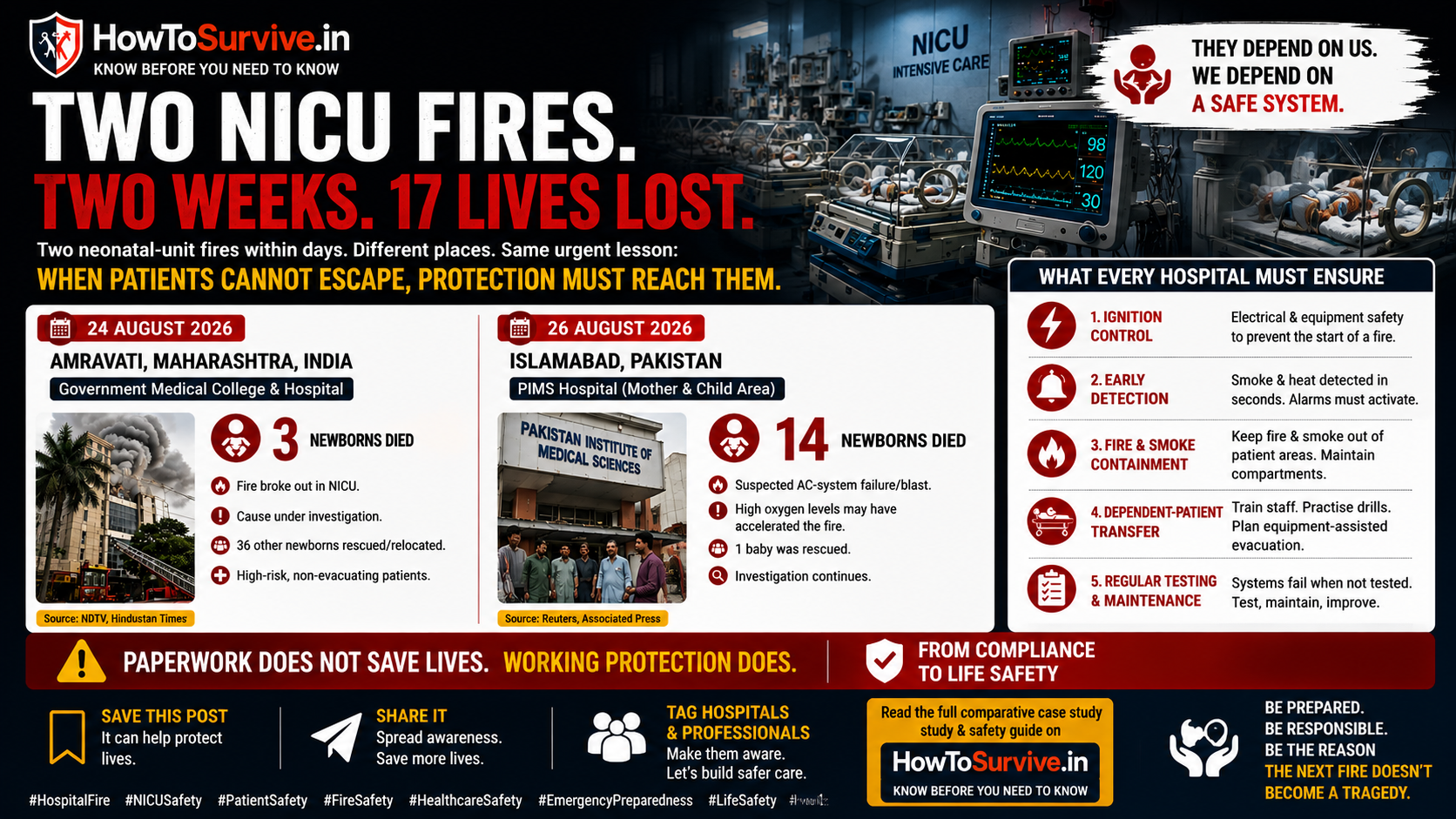
 1 / 2
1 / 2 Combined number claimed by original post17
Independent verificationRequired before publication
Patient groupNon-ambulatory newborns
Critical systemsDetection, compartmentation, medical-gas isolation and assisted evacuation
Publication statusEditorial hold until source reconciliation
What we can say safely
A comparative hospital-fire record examining reported neonatal deaths. Because the original post combines two incidents and casualty claims, each number must remain separated and source-dated.
- Conditions exceed normal control
- Occupants or witnesses identify danger
- People move or require assisted evacuation
- Public services control the incident
- Authorities examine cause, compliance and corrective action
Why consequences escalated
- Occupancy must match the approved use
- Detection and two usable escape routes are essential
- High-risk fuel, smoke, water or blast exposure requires separation
- Vulnerable occupants need planned assistance
- Reported cause and liability must follow evidence
Failures and risk multipliers
- Using unapproved or incompatible space
- Allowing one route to become a single point of failure
- Delaying alarm or evacuation
- Ignoring prior complaints or inspection findings
- Publishing unverified casualty or cause claims
People closest to the evidence
“Safety principle”
A building or industrial system must remain survivable after one foreseeable failure.
Actions that reduce risk
- Verify lawful occupancy
- Check detection and two exits
- Control fuel, water and structural hazards
- Plan assistance and accountability
- Practise evacuation
- Call the appropriate emergency service