
What happened here
 1 / 4
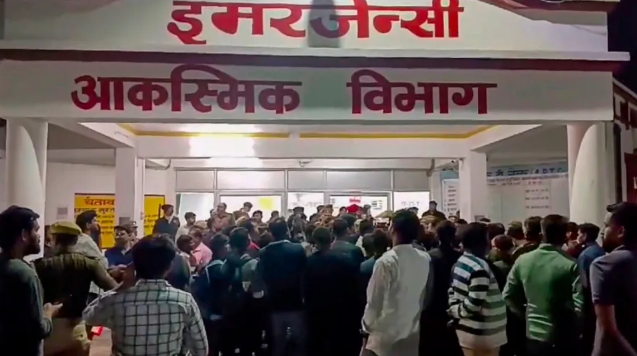
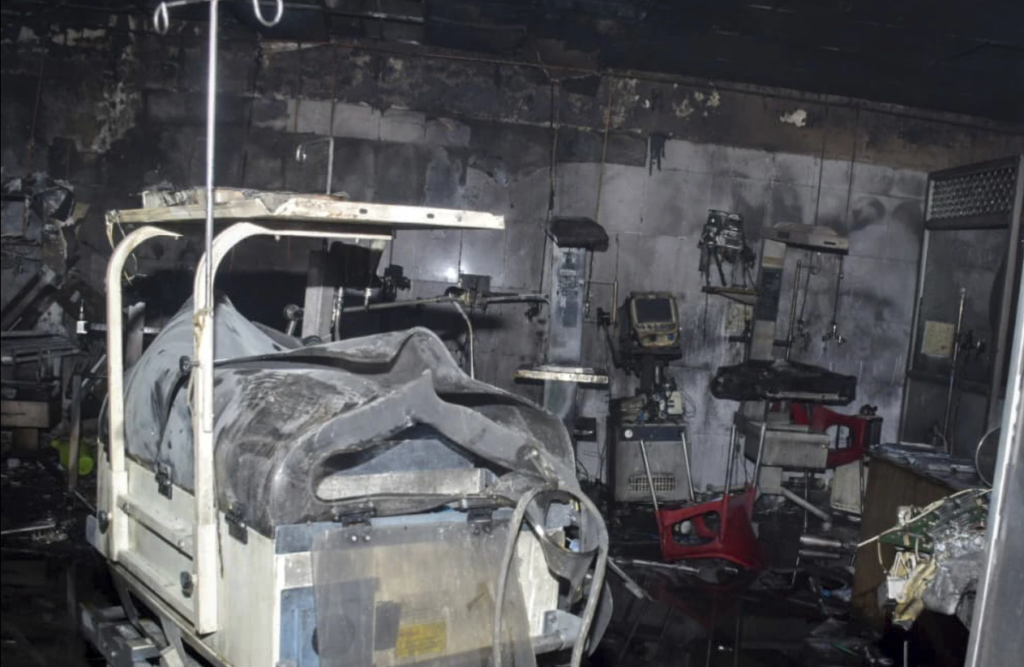
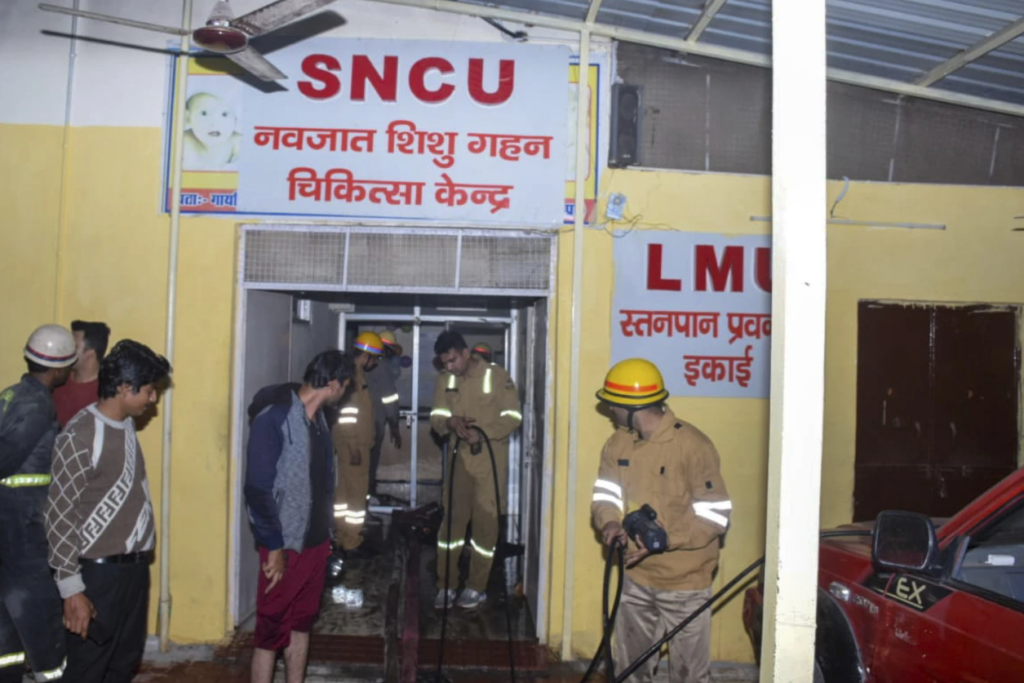
A late-night fire in the neonatal intensive care unit killed ten newborns immediately, injured 16 and led to the rescue of 37–45 babies in early official reporting. Rescued infants kept dying in the following days. PTI reported 18 deaths by 25 November 2024: ten on the night of the fire and eight later, which officials attributed to the babies' illnesses. A state committee's report led to the principal's removal and three suspensions.
Quick answers
What happened in the Jhansi Medical College NICU fire?
Around 22:45 on 15 November 2024, a fire broke out in the neonatal intensive care unit at Maharani Laxmibai Medical College, Jhansi. Newborns were killed and injured, and staff and relatives rescued many babies. Early and later death counts differ between reports.
What caused the fire in the Jhansi hospital NICU?
Initial findings pointed to a short circuit in a switchboard or the electrical system, and plastic coverings and an oxygen-enriched clinical setting were reported to have aided spread. Magisterial and departmental probes were ordered.
Why can fire spread fast in a hospital NICU?
Plastic equipment covers and oxygen leakage can accelerate fire spread, and a NICU carries heavy continuous electrical load for life-support equipment. That load must be engineered with redundancy and checked regularly.
What should hospitals check to prevent NICU fires?
NICU electrical demand should be engineered for continuous life-support loads, and automatic detection must alert a continuously staffed point. Extinguisher condition should be verified against maintenance records, and infant identification and evacuation carriers kept ready.
A neonatal intensive care unit runs life-support machines round the clock, in a room rich in oxygen, for patients who cannot move at all. At Jhansi on a Friday night in November 2024, that combination turned a small electrical fault into a fire that killed ten babies.
What happened
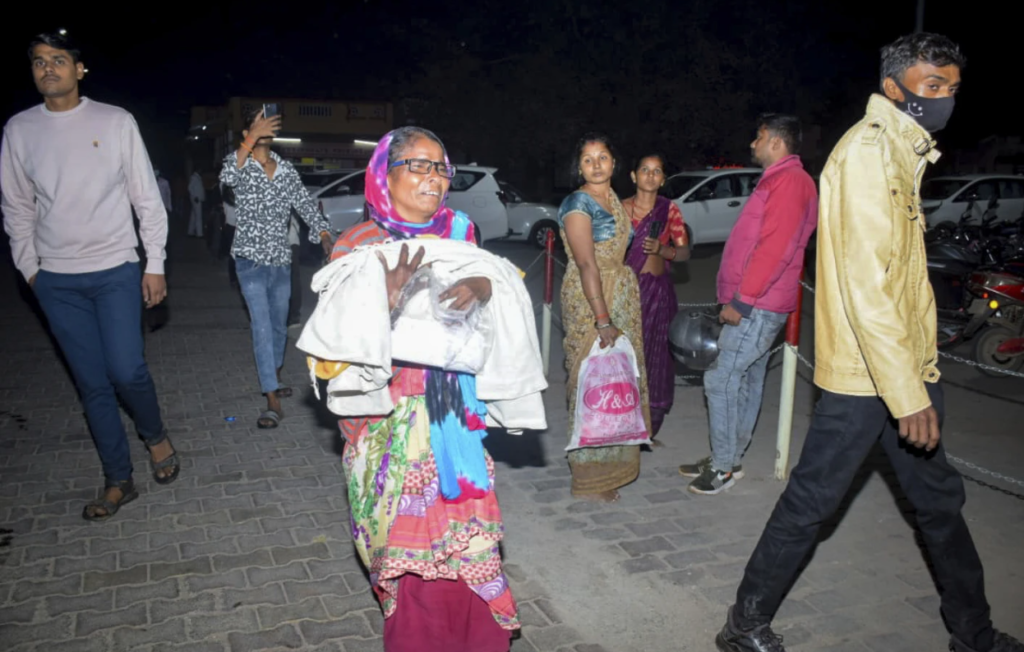
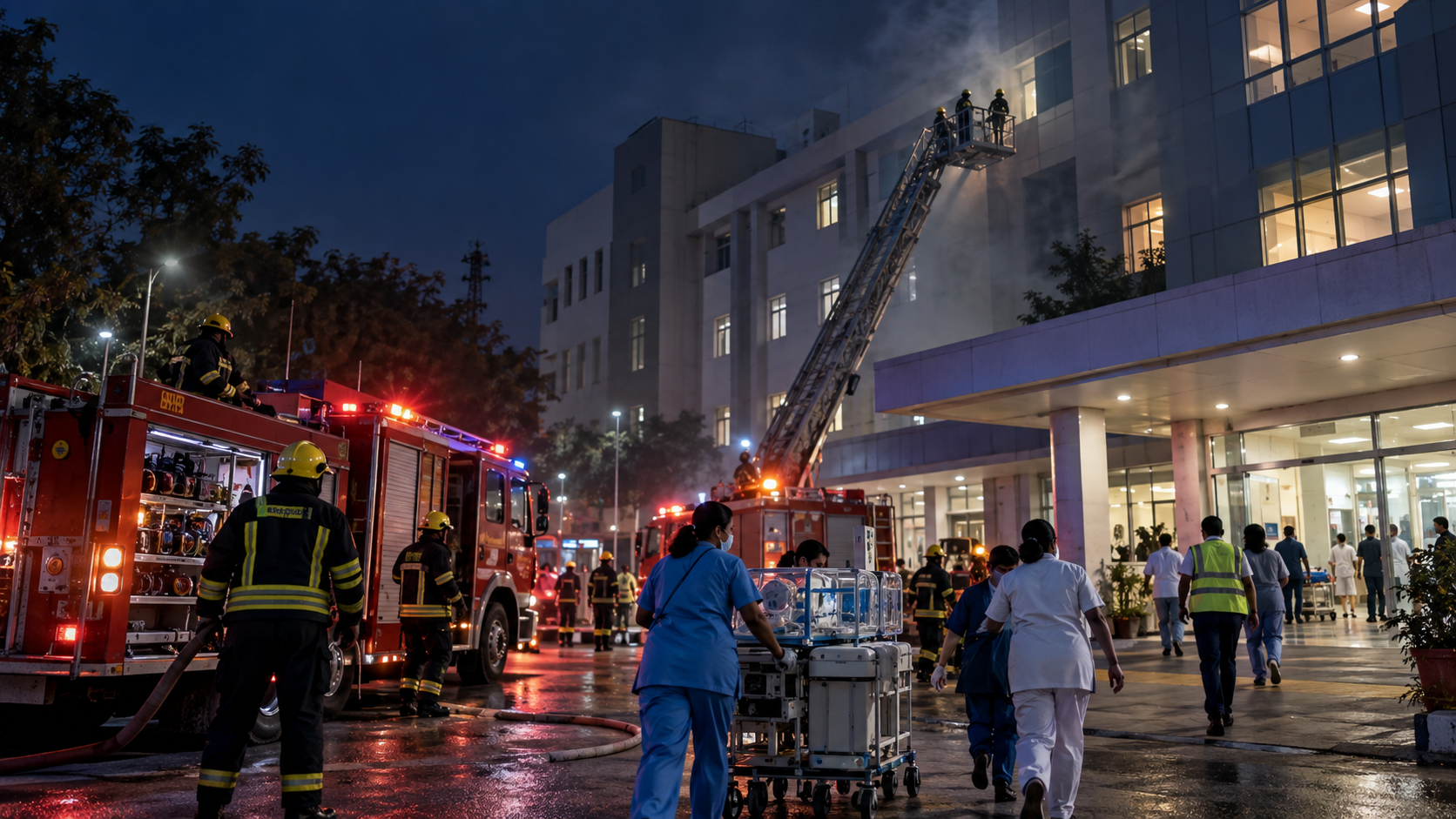
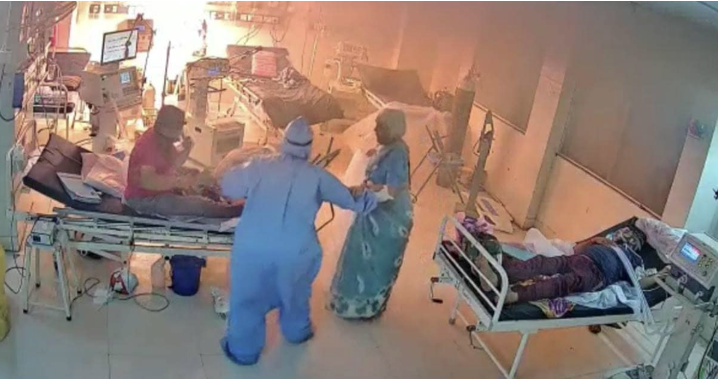
At about 10.45 pm on 15 November 2024, a fire broke out in the neonatal intensive care unit (NICU) of Maharani Laxmibai Medical College in Jhansi, Uttar Pradesh. Smoke and flames spread among the equipment. Staff and relatives began carrying babies out, and windows and other openings were used to reach the infants inside.
Ten newborns died that night. The National Human Rights Commission (NHRC) recorded at least ten deaths, 16 babies injured and 37 rescued; other early official reports put the number rescued at 39 to 45.
Rescued babies kept dying in the days that followed. On 17 November an eleventh baby died; the district magistrate said that death was from illness, not burns. By 25 November PTI reported the toll at 18: ten on the night of the fire and eight rescued infants who died later, deaths that officials attributed to the babies’ illnesses.
Response
According to a preliminary report described by India Today, a nurse on duty tried to put out the fire and suffered burns to her legs. As the flames moved towards the oxygen concentrators, staff raised the alarm, and paramedical staff used fire extinguishers, but by then the fire had grown. Firefighters arrived within eight minutes of the alert.
On 16 November NHRC issued notices to the Uttar Pradesh Chief Secretary and Director General of Police, seeking a report within a week on the FIR, action against officials, treatment of the injured and compensation. The state ordered magisterial and departmental probes.
On 27 November, on the report of a four-member committee, the state removed the college principal and suspended the junior engineer (electrical), the NICU sister-in-charge and the chief superintendent.
What is known about the cause
A two-member preliminary committee found no foul play and said a short circuit in a switchboard started the fire, which spread quickly through the plastic coverings on medical equipment. On 19 November a special team led by the Director General of Medical Education, Kinjal Singh, reported that an electrical overload caused a short circuit: an extension cord caught fire first, and the fire spread to a ventilator. Continuous running of life-support devices on the unit’s electrical supply was reported as a factor.
Doctors also told the inquiry that water sprinklers are not installed in NICUs because of the newborns, according to the same India Today report.
What remains unknown
- A final consolidated government death toll. Early and later counts differ, and we keep them separate.
- The published final inquiry report. We could not find one.
- The condition of the alarms and extinguishers on the night, beyond early reports.
Lessons
A NICU’s wiring, alarms and evacuation plan have to be built for its real load before the first baby is admitted. At Jhansi, an overloaded circuit and an extension cord were enough.
- Engineer NICU wiring for round-the-clock life-support loads, with spare capacity and backup.
- Ban extension cords and multi-plugs for critical equipment.
- Check for oxygen leaks, and keep plastic covers away from heat sources.
- Fit automatic detection that sounds at a point where someone is always on duty.
- Check extinguishers against maintenance records, not just by looking at them.
- Keep infant ID bands and evacuation carriers ready for every cot.
If there is a fire in a newborn unit: raise the alarm the moment you see smoke or smell burning. Carry babies out of the room away from the fire and close the door behind you. Stay low under smoke. Trained staff should cut power and oxygen to the fire area only if it is safe. At the safe point, check every baby’s ID band, tell firefighters which cots were not reached, and do not go back in. Call 112, or 108 for an ambulance.
If your baby is in a NICU, note the nearest exit today and ask how babies would be moved out. If you see an extension cord, a hot plug or smell burning, tell the staff at once. Hospital managers: list every NICU device running on an extension cord and remove it this week.
More on Jhansi: see our fire and emergency safety guide for emergency numbers, the fire stations and the local risks to know. Jhansi is one of six major hospital fires we look at in Deadliest Hospital Fires in India.
Reporting limits
The immediate figures (at least ten dead, 16 injured, 37 rescued) are from NHRC; other early official reports gave 39 to 45 rescued. The toll of 18 (PTI, 25 November 2024) counts ten deaths on the night and eight later deaths that officials attributed to illness. No final consolidated toll or published final inquiry report was found. The preliminary committee details are from news reports of the committee’s findings. Commercial news photographs and video stills are linked, not copied.
- Fire develops in NICU/SNCU
- Smoke and flame spread among equipment; staff and relatives begin removing babies
- Windows/access points are used to reach infants
- Ten immediate deaths and multiple injuries are confirmed
- NHRC issues notices; state orders magisterial and departmental probes
- Preliminary committees examine electrical load, alarm/extinguisher claims and equipment
- An 11th rescued baby dies; the DM says the death was from illness, not burns
- Special team led by DGME Kinjal Singh reports an overload short circuit as the prime cause
- PTI reports the toll at 18: ten on the night of the fire, eight later
- On a four-member committee's report, the principal is removed and three staff are suspended
Why consequences escalated
- NICU electrical demand must be engineered for continuous life-support loads and redundancy
- Plastic equipment covers and oxygen leakage can accelerate fire spread
- Automatic detection must produce a local and continuously staffed alarm
- Extinguisher condition claims must be verified against maintenance records
- Infant identification and evacuation carriers are core emergency equipment
- Early and later death counts must not be merged without dates
Failures and risk multipliers
- Overloading the NICU's electrical supply with continuous life-support equipment; the special team cited an overload short circuit
- Running equipment through an extension cord, which caught fire first, as reported
- Plastic equipment covers and an oxygen-rich room that helped the fire spread
- Lapses that led to the principal's removal and suspension of the electrical JE, NICU sister-in-charge and chief superintendent
Actions that reduce risk
- Engineer NICU wiring for round-the-clock life-support loads, with spare capacity and backup
- Ban extension cords and multi-plugs for critical equipment
- Check for oxygen leaks and keep plastic covers away from heat sources
- Fit automatic detection that sounds at a continuously staffed point
- Check extinguishers against maintenance records, not just by looking at them
- Keep infant ID bands and evacuation carriers ready for every cot

Leave a comment