How To SurviveLife-Safety Intelligence for IndiaEmergency Guide
Home / Case Study / Arki Fire: 10 Lives Lost, Zero Preparedness – A Wake-Up Call for Every Town
Case Study · Ready For Review

Arki Fire: 10 Lives Lost, Zero Preparedness – A Wake-Up Call for Every Town

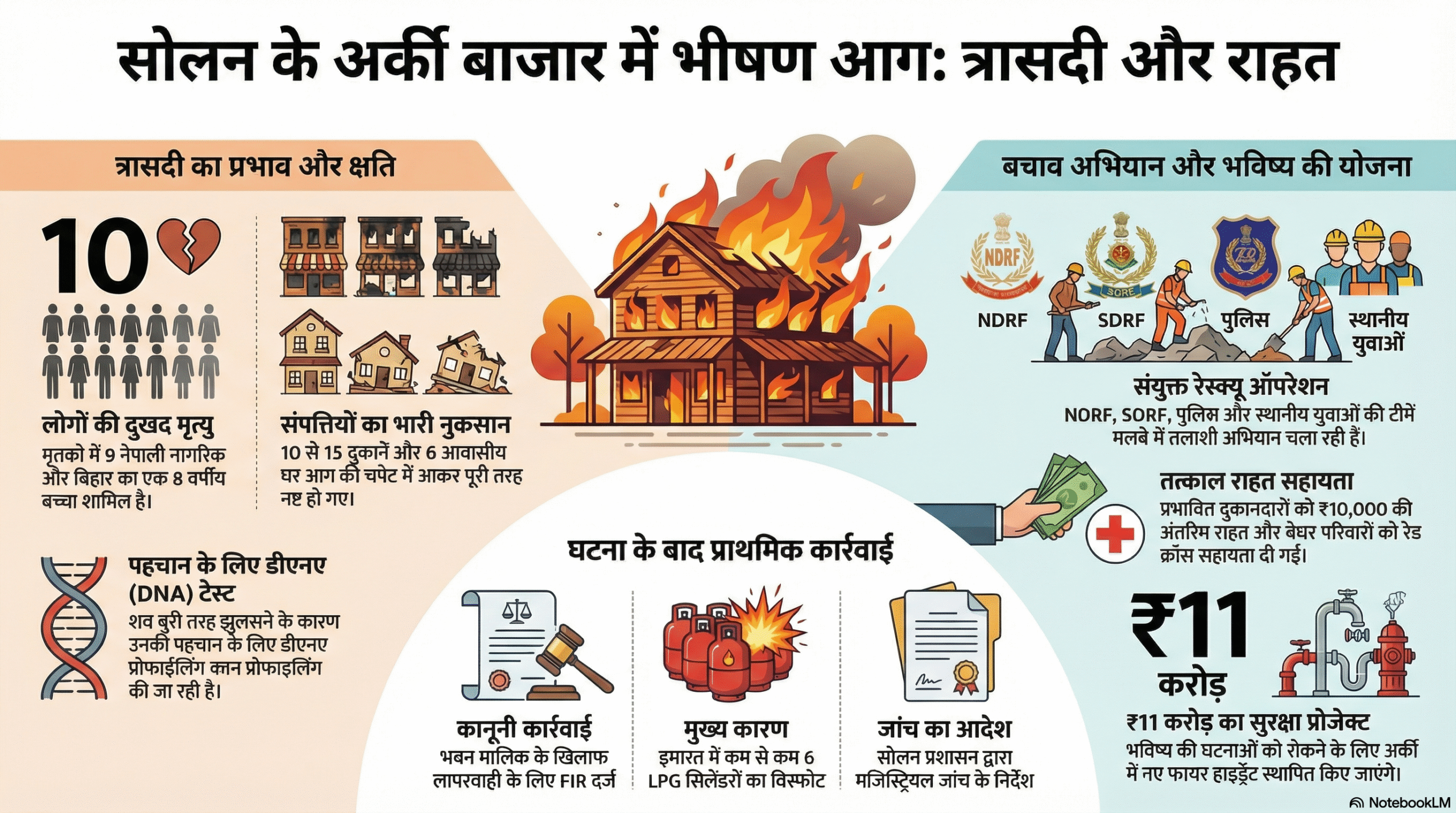
A late-night fire in an old wooden mixed-use building spread through shops and homes and involved multiple LPG cylinders; the final reported toll reached 10.

Date12 January 2026LocationOld Bus Stand market, Arki, Solan district, Himachal Pradesh, India
01
Case Study

What happened here
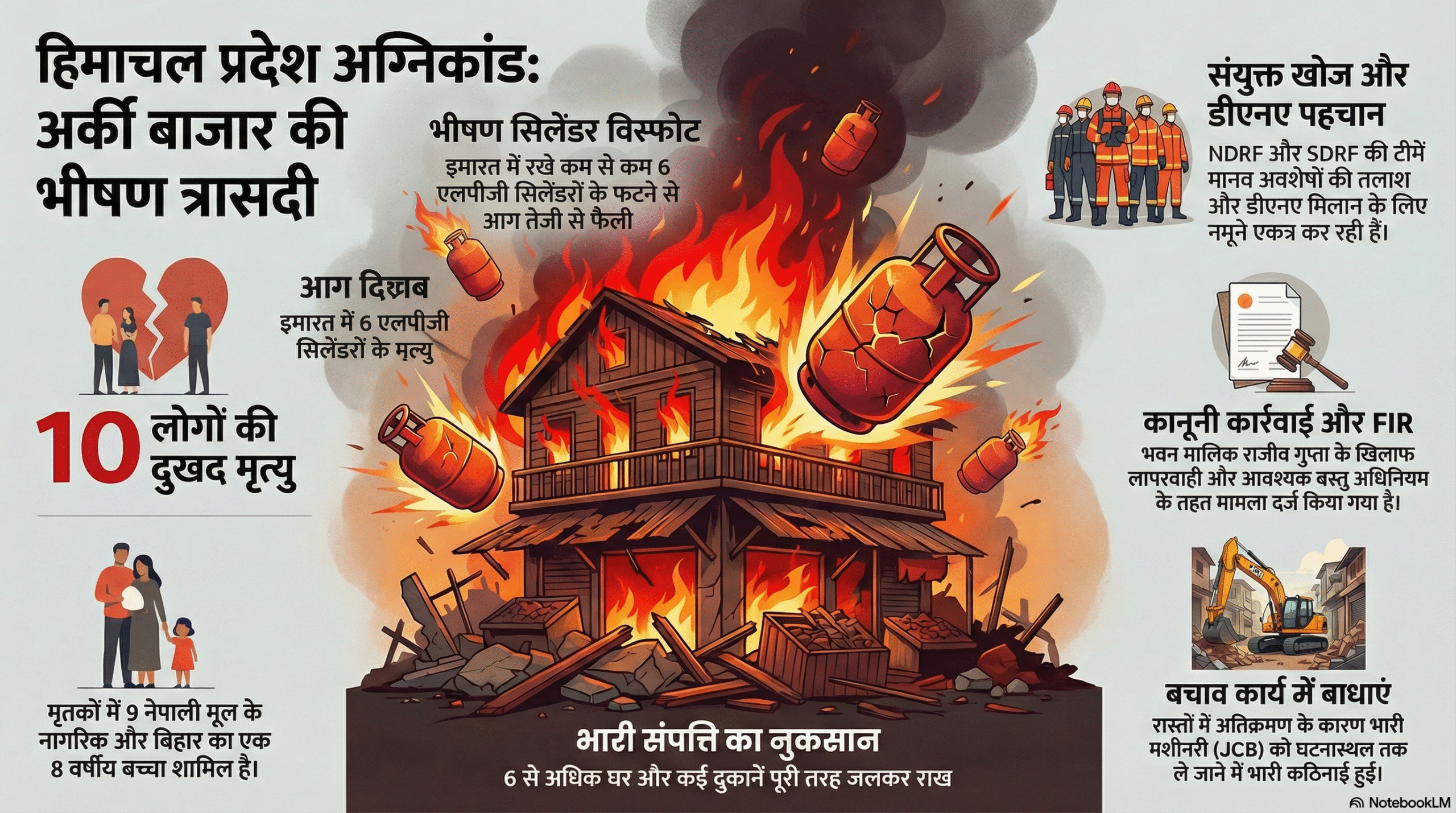
Deaths10
Nepalese nationals among deaths9
Child among deaths1 aged 8
Building typeOld wooden residential-commercial structure
EscalationMultiple LPG cylinder explosions

What we can say safely

A late-night fire in an old wooden mixed-use building spread through shops and homes and involved multiple LPG cylinders; the final reported toll reached 10.

  1. Families occupy rooms above/near shops
  2. Late-night fire develops in old market structure
  3. LPG involvement accelerates spread
  4. Fire crosses connected combustible construction
  5. Teams and dogs recover remains for DNA identification

Why consequences escalated

  • Wooden connected buildings enable rapid concealed spread
  • LPG stock beneath sleeping accommodation is a severe mixed-use hazard
  • Early warning is essential during sleeping hours
  • Bathrooms do not protect against heat and smoke
  • Market fire plans need hydrants, access and exposure protection

Failures and risk multipliers

  • Relying on one escape route
  • Failing to detect smoke before occupants are trapped
  • Allowing electrical, fuel or LPG hazards to go unchecked
  • Failing to maintain emergency equipment and accessible exits
  • Delaying accurate emergency information

People closest to the evidence

“Safety lesson”

Redundant escape, early warning and controlled fuel load decide survival before responders arrive.

Actions that reduce risk

  1. Test alarms and emergency lighting
  2. Locate and practise every emergency exit
  3. Keep hammers and exits accessible in buses
  4. Inspect electrical, fuel and LPG systems
  5. Display 112 and exact location
  6. Record and close safety defects
02
Watch & learn

Playable video library

Captions
Official guidance

Fire Safety

Bureau of Indian Standards · Hindi/English

Fire-safety overview

03
Incident data

The broader evidence

Survival sequence

  1. Raise the alarm and call 112
  2. Leave immediately through the nearest safe exit
  3. Break a marked bus emergency window when doors are blocked
  4. Stay low beneath smoke
  5. Move upwind from vehicle or LPG fire
  6. Never return
10DeathsFinal district reporting
9Nepalese nationalsLater identification reporting
1Eight-year-old childReported victim
2Existing incident imagesAttached Media Library items
10DeathsFinal district reporting
9Nepalese nationalsLater identification reporting
1Eight-year-old childReported victim
2Existing incident imagesAttached Media Library items

Limitations

  • Early casualty counts may differ from later verified totals. Copyrighted news photos are not copied without permission; official and existing licensed site media are preferred.

Immediate actions

  • Test the alarm
  • Find two ways out
  • Remove obstructions
  • Check LPG and electrical equipment
  • Save 112 and the full address
  • Practise evacuation
Sources and further readingAkashvani initial official response ↗Himachal Pradesh Fire Services ↗Times of India citing Solan Additional Deputy Commissioner ↗Last reviewed 2026-09-01