
What happened here
 1 / 2
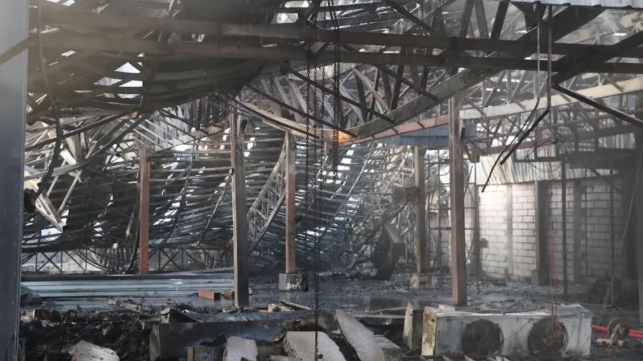
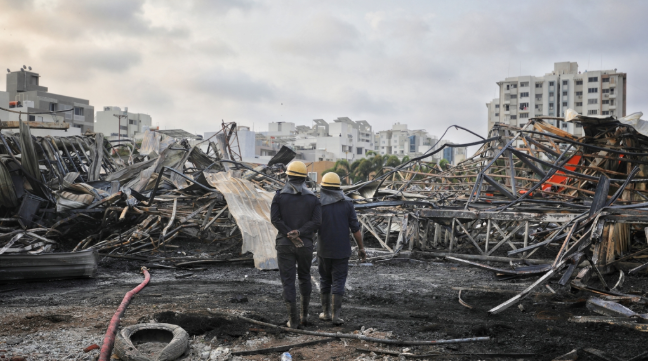
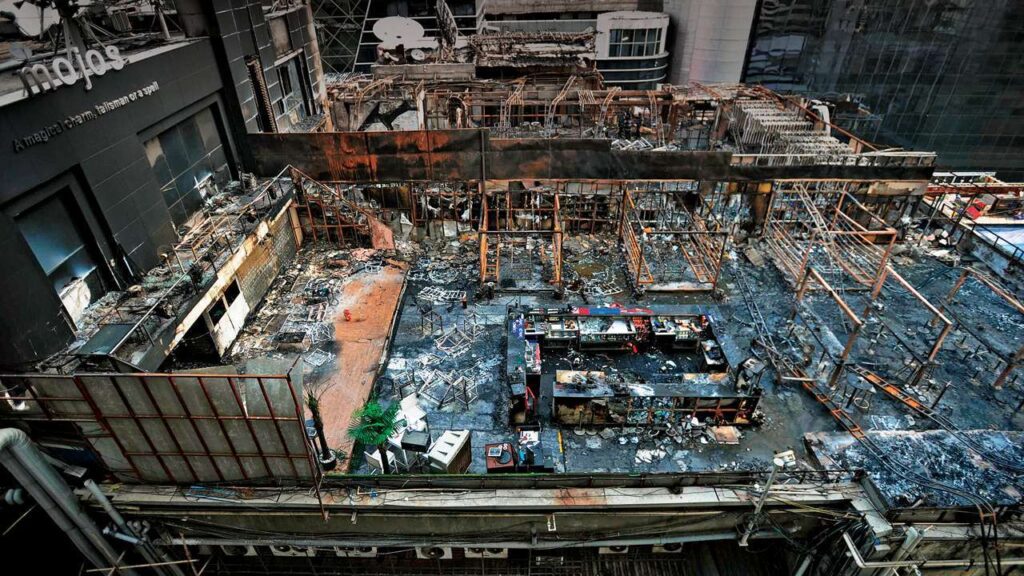
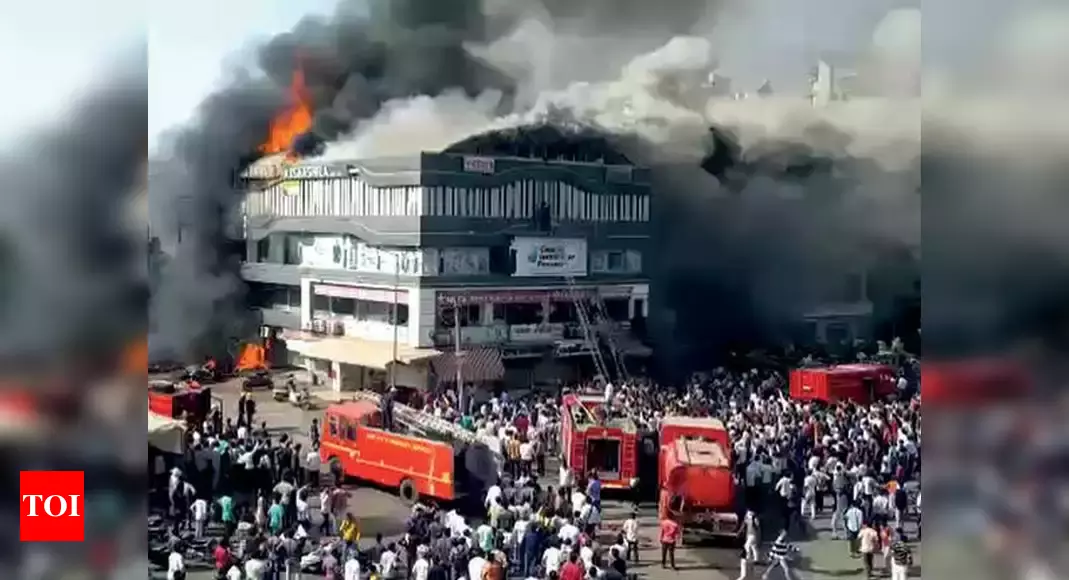
1 / 2 A late-afternoon fire swept through a crowded two-level gaming venue and killed 27 people. Court and police records documented missing fire authorisation and approval failures; CCTV-based reporting showed welding near combustible material before rapid fire spread.
What happened
On the evening of 25 May 2024, fire spread through the TRP Game Zone on Nana-Mava Road in Rajkot during a busy summer-vacation weekend. Police and later court records use a confirmed toll of 27 deaths. Early media counts varied while remains were being identified; this article therefore uses the later court-supported figure rather than combining incompatible early reports.
The developing fire
CCTV-based reporting showed welding work close to combustible material before flames spread rapidly. Reporting also documented fuel associated with go-karts and generators at the premises. The precise allocation of criminal responsibility belongs to the court process, but the physical risk pattern is clear: hot work, combustible storage, a lightweight enclosure and inadequate control measures were allowed to coincide in a crowded public venue.
Approvals and enforcement
The Gujarat High Court and criminal proceedings recorded that the venue operated without the required fire authorisation. The land permission cited in later court records was for residential use, while the game-zone activity continued. Investigators examined owners, managers and public officials; by 31 May 2024, contemporary reporting said nine people had been arrested.
Why escape became difficult
A public entertainment venue must be designed around the number and movement of visitors, including children and families unfamiliar with the layout. Combustible linings and stored fuel can produce rapid heat, smoke and structural failure. Fire extinguishers cannot compensate for missing prevention, compartmentation, protected exits, alarm, evacuation management and emergency access.
What visitors should do
Before entering a crowded indoor attraction, identify at least two independent exits and avoid venues where the only route is narrow, obstructed or difficult to recognize. At the first sign of smoke or fire, leave immediately, alert others without delaying your own escape, stay low beneath smoke and never return for belongings. Call 112 or the local fire service once you are outside and give the exact location, access route and information about anyone believed trapped.
What operators must change
Hot work requires a written permit, removal or shielding of combustibles, trained fire watch and post-work monitoring. Fuel must be minimized, segregated and stored under applicable rules. Occupancy, exits, emergency lighting, detection, suppression, staff drills and fire-service access must be verified before admitting the public. Temporary construction must never mean temporary safety.
Record status
The criminal and accountability record continued after the incident. In November 2025, the Supreme Court declined to interfere with a Gujarat High Court decision concerning discharge petitions. This article separates established incident facts from allegations and leaves findings of individual guilt to the courts.
- Fire spread through the TRP Game Zone during a busy weekend
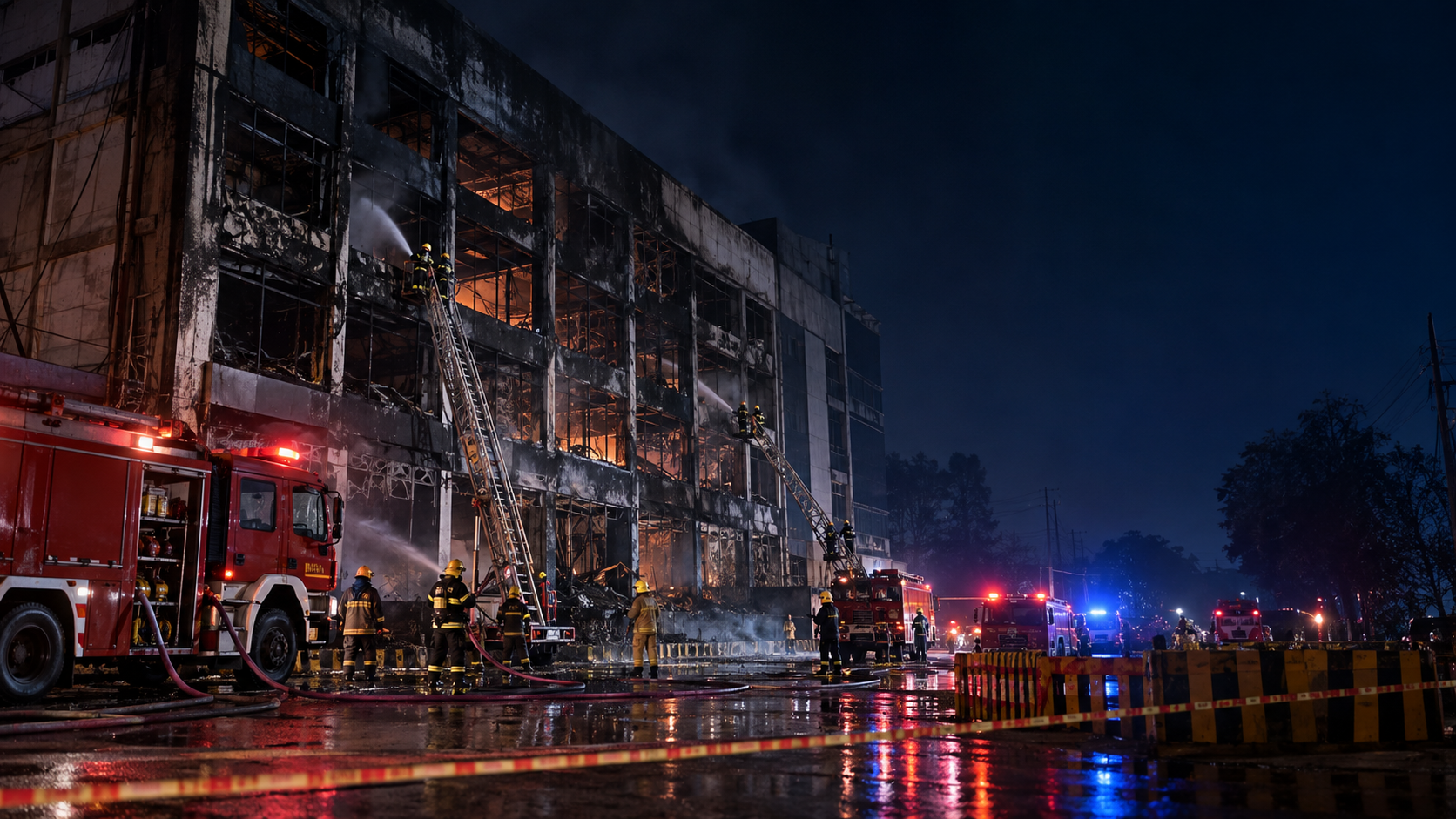
- Emergency response, fire control and recovery operations began
- Gujarat formed an SIT and the Gujarat High Court took suo motu cognisance
- CCTV-based reports described welding sparks and rapid fire spread
- Contemporary reporting said nine arrests had been made, including public officials
- Gujarat High Court ordered an exhaustive fact-finding inquiry into municipal responsibility
- Gujarat High Court bail proceedings recorded the 27-death case and missing fire NOC condition
- Supreme Court declined to interfere in a discharge-related challenge reported in the continuing prosecution
Why consequences escalated
- A crowded entertainment venue operated without the required fire authorisation.
- Hot work was reportedly conducted close to combustible material without effective isolation and fire watch.
- Fuel and other combustible loads increased the consequences of ignition.
- Temporary or lightweight construction did not reduce the need for protected escape, alarm, suppression and occupancy control.
- Approval and enforcement failures extended beyond the immediate actions of staff at the venue.
- Early casualty figures varied; later police and court records support a confirmed toll of 27.
Failures and risk multipliers
- Allowing public operation before fire approval and safe-use verification.
- Performing welding without removing or shielding combustibles and maintaining a trained fire watch.
- Keeping fuel and high fire loads within or near a crowded attraction.
- Treating portable extinguishers as a substitute for prevention, alarm, exits and suppression.
- Failing to stop unsafe operation through inspection and enforcement.
- Repeating preliminary casualty numbers after later official records became available.
People closest to the evidence
“The Gujarat High Court described the event as a man-made disaster”
Gujarat High Court · Suo motu public-safety proceedings · Source ↗
“I have not seen a blaze like this in 26 years of service”
Fire official interviewed by ANI · Immediate response context; early casualty count in the video was preliminary · Source ↗
Actions that reduce risk
- Require a written hot-work permit, combustible clearance, fire watch and post-work monitoring.
- Verify lawful use, occupancy and fire approval before opening any public attraction.
- Provide at least two clearly marked, unobstructed and independent escape routes appropriate to occupancy.
- Segregate and minimize petrol, diesel, LPG and other hazardous storage.
- Install and maintain detection, alarm, emergency lighting and suitable suppression.
- Train staff to stop activities, raise the alarm, direct evacuation and meet responders.
- Conduct independent inspections and close venues when life-safety conditions are not met.

Leave a comment