How To SurviveLife-Safety Intelligence for IndiaEmergency Guide
Home / Case Study / Coimbatore LPG Shelter Fire: At Least 12 Cylinders Exploded — Why Temporary Housing Needs Permanent Fire Safety
Case Study · Ready For Review

Coimbatore LPG Shelter Fire: At Least 12 Cylinders Exploded — Why Temporary Housing Needs Permanent Fire Safety

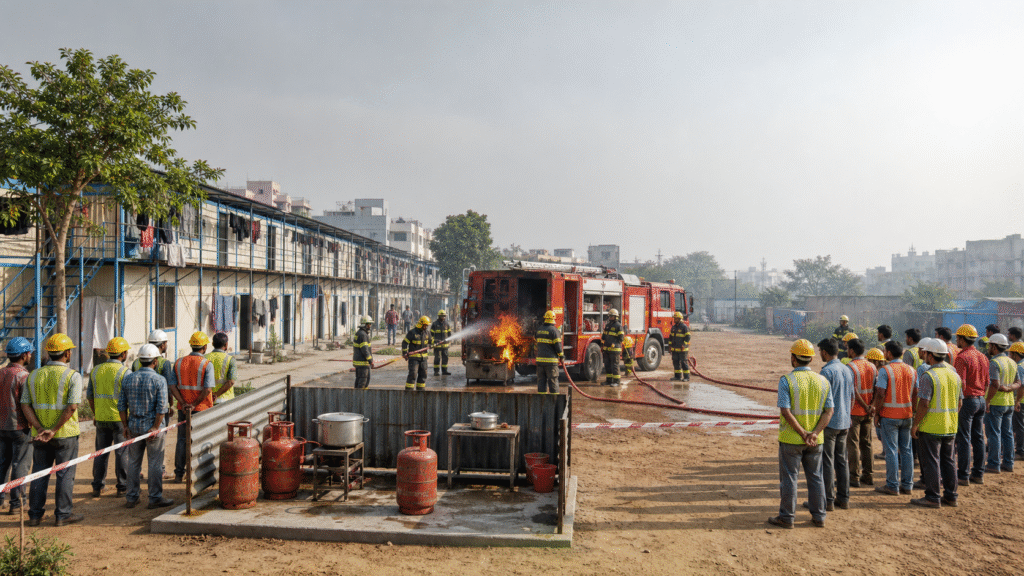
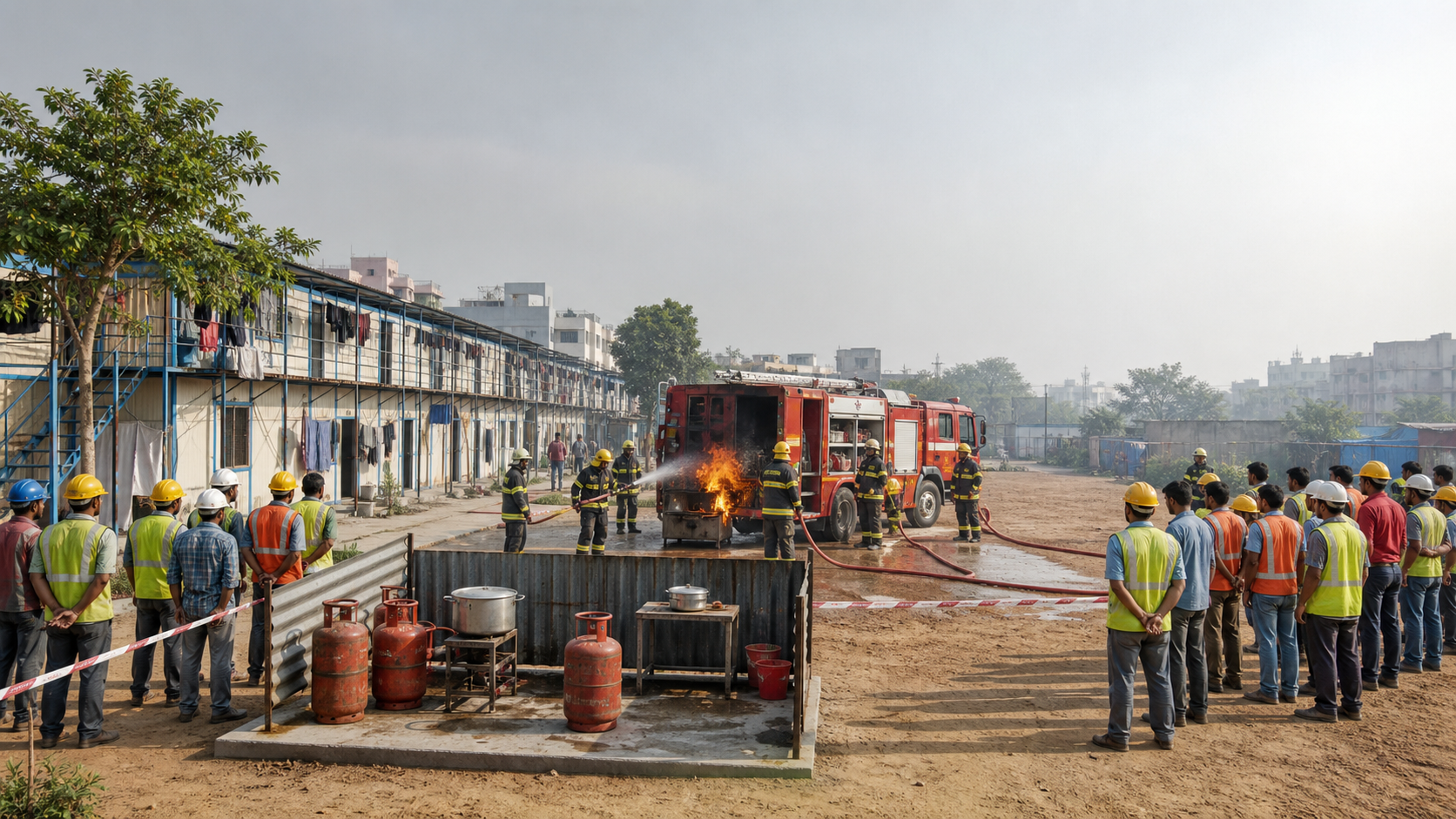
A canteen-area fire spread through temporary worker shelters and reportedly involved at least 12 LPG cylinders; workers evacuated and no casualties were reported.

Date29 August 2026LocationNava India, Avinashi Road, Coimbatore, Tamil Nadu, India
01
Case Study

What happened here
Reported cylinder explosionsAt least 12
Temporary sheds damaged67 of 127
Fire tenders5
Reported control timeAbout 2.5 hours
Deaths or injuriesNone reported

What we can say safely

A canteen-area fire spread through temporary worker shelters and reportedly involved at least 12 LPG cylinders; workers evacuated and no casualties were reported.

  1. Fire reportedly begins near a canteen shelter
  2. Adjacent temporary accommodation becomes involved
  3. At least 12 LPG cylinders reportedly explode
  4. Occupants reach safety without reported casualties
  5. Five tenders control the incident in about 2.5 hours

Why consequences escalated

  • Temporary accommodation needs permanent-grade separation, detection and escape
  • Bulk LPG cylinders must not be dispersed through combustible sleeping shelters
  • Canteens should be separated from sleeping accommodation
  • Cylinder inventories and shut-off access aid responders
  • Evacuation prevented a mass-casualty outcome

Failures and risk multipliers

  • Allowing sleeping or crowd occupancy without a risk-specific plan
  • Depending on one escape path
  • Treating an unverified cause claim as a final investigation finding
  • Failing to control fuel, combustible stock or structural loads
  • Leaving inspection defects unresolved

People closest to the evidence

“Safety principle”

Detection, separation, stable construction and redundant escape must be established before people enter the hazard area.

Actions that reduce risk

  1. Verify alarms and two escape routes
  2. Keep exits and emergency access clear
  3. Separate sleeping areas from fuel, cooking and storage
  4. Control crowds outside structural fall zones
  5. Record inspections and close every defect
  6. Call 112 with the exact location
02
Watch & learn

Playable video library

Captions
Official guidance

Fire Safety

Bureau of Indian Standards · Hindi/English

General fire-safety context

03
Incident data

The broader evidence

Survival sequence

  1. Raise the alarm and call 112
  2. Leave immediately by the nearest safe exit
  3. Stay low beneath smoke
  4. Move upwind from LPG, battery or warehouse fire
  5. Stay outside the fall zone of damaged structures
  6. Never return for belongings
12+LPG cylinders reported explodedIncident reports
67Sheds damagedReported site assessment
127Total temporary shedsReported site assessment
5Fire tendersIncident report
0Reported casualtiesFire-service account cited by press
12+LPG cylinders reported explodedIncident reports
67Sheds damagedReported site assessment
127Total temporary shedsReported site assessment
5Fire tendersIncident report
0Reported casualtiesFire-service account cited by press

Limitations

  • Early and later reports may differ. Cause claims remain provisional until an official investigation confirms them. News photographs are not copied without permission; the gallery uses existing site-owned media.

Immediate actions

  • Test the alarm
  • Find two ways out
  • Remove exit obstructions
  • Check LPG, electrical and structural hazards
  • Save 112 and the exact address
  • Practise evacuation
Sources and further readingNew Indian Express incident report ↗PIB: LPG accident and fatality data ↗PESO annual reports ↗Last reviewed 2026-09-01