
What happened here

 1 / 4
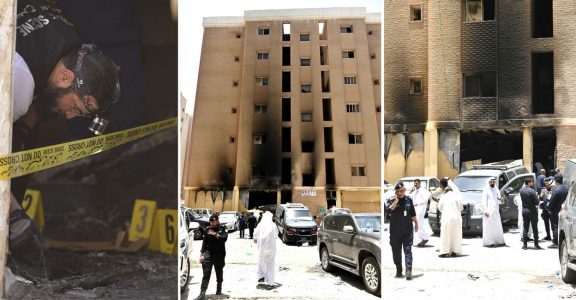
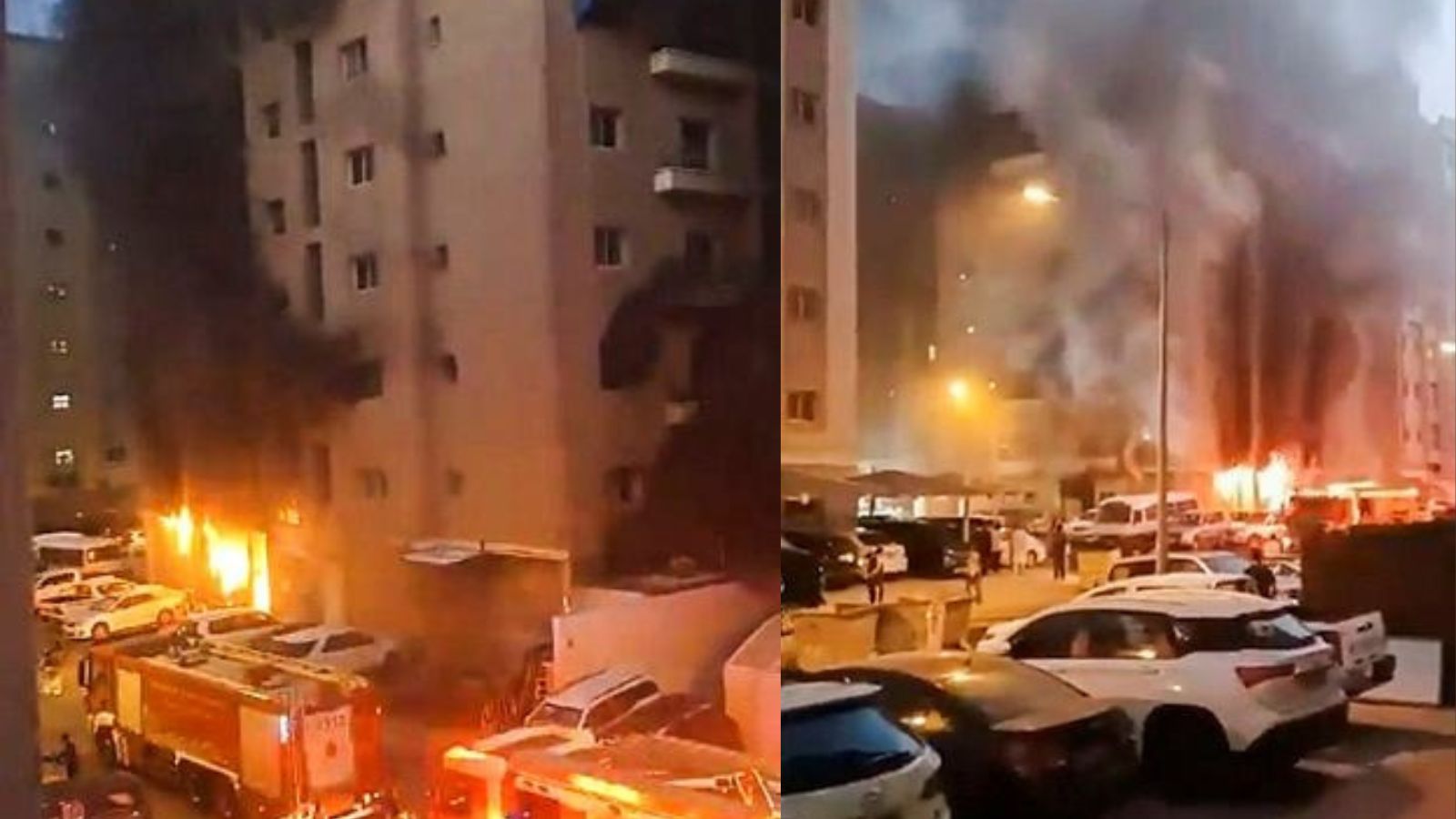
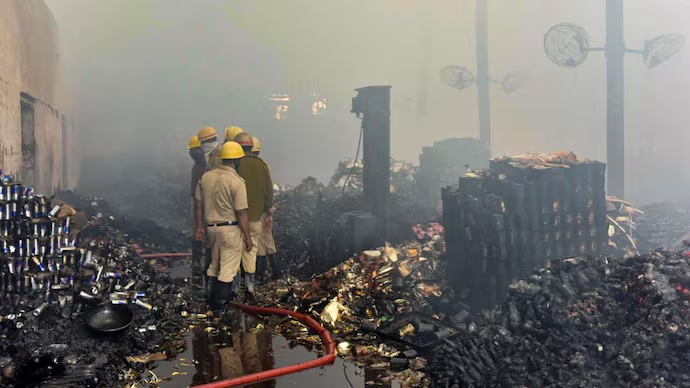
1 / 4 Early on 12 June 2024, fire broke out in a six-storey labour-housing building in Mangaf, Kuwait, where nearly 195 workers of one company lived. Of the 49 to 50 people killed, 45 were Indian, most of them overcome by smoke while asleep. An Indian Air Force C-130 brought their mortal remains home.
Quick answers
What happened in the Mangaf, Kuwait fire of June 2024?
Early on 12 June 2024, fire broke out in a six-storey building in Mangaf, Kuwait, where workers of one company lived. 45 Indians were among the 49 to 50 people killed, most of them overcome by smoke while asleep.
Where did the Mangaf building fire start?
Early reports said a kitchen, but Kuwait Fire Force investigators later blamed an electrical short circuit in the building guard's room.
What happened in the Mangaf fire court case?
In May 2025 a Kuwaiti court convicted nine people, three of them for involuntary manslaughter. Some sentences were cut on appeal in 2025, and in January 2026 the Court of Cassation suspended some prison terms pending appeal. We found no final ruling by 16 October 2026.
How did India respond to the Kuwait fire?
The Prime Minister held a high-level meeting and announced compensation, a Minister of State went to Kuwait, helplines were set up for families, and an Indian Air Force C-130 brought the mortal remains home.
How can workers stay safe in crowded labour housing?
Look for two ways out before you sleep, ask for a smoke alarm if there is none, keep the stairs clear, avoid overloaded extension boards, and never go back into a burning building.
Most of them were asleep. In the early hours of 12 June 2024, fire broke out in a six-storey building in Mangaf, Kuwait, where nearly 195 workers of one company lived. By the time the smoke reached their rooms, many had no chance to get out. Of the 49 to 50 people killed, 45 were Indian nationals, and more than 50 Indians were injured. Early reports had put the Indian toll at 40.
What happened
Authorities were alerted at about 4:30 am Kuwait time (7 am IST). Early reports said the fire began in a kitchen. Kuwait Fire Force investigators later traced it to an electrical short circuit in the building guard’s room. Most of the deaths were caused by smoke, not by flames, while people slept.

How Kuwait and India responded
- Fire and rescue. Kuwaiti firefighters put out the blaze and brought out trapped residents.
- Hospitals. The injured were taken to five government hospitals in Kuwait. Most of them were reported to be stable.
- Government of India. Prime Minister Narendra Modi held a high-level meeting, announced compensation for the families of those who died, and sent Minister of State Kirti Vardhan Singh to Kuwait to help with the injured and with bringing the bodies home.
- Diplomacy. External Affairs Minister S. Jaishankar spoke to Kuwaiti authorities, pressing for a full investigation and quick repatriation of the remains.
- Helplines. The Indian Embassy in Kuwait and the Ministry of External Affairs set up helplines for families.
- Bringing them home. An Indian Air Force C-130 flew back the mortal remains of the 45 Indians, 31 of them to Kochi.

The court case
The Emir of Kuwait ordered an investigation. On the orders of the Emir and the First Deputy Prime Minister, Kuwaiti authorities arrested the building owner, the janitor and people from the company that employed the workers, pending a criminal examination of the site.
In August 2024 prosecutors said they found no evidence of criminal intent and treated the case as a misdemeanour. Eight people were charged with manslaughter, wrongful injury, perjury and negligence, and released on bail. In May 2025 a Kuwaiti misdemeanours court sentenced three people to three years with hard labour for involuntary manslaughter, and six others to one year for perjury or for sheltering a wanted person, according to Gulf News citing Al Rai.
Arab Times reported in November 2025 that Kuwait’s Misdemeanour Appeals Court had revised those sentences. Some three-year terms were cut to one year, while three defendants kept three years with labour for manslaughter. The Court of Cassation also suspended the one-year sentences of a Kuwaiti and two expatriates. In January 2026, Arab Times reported that the Court of Cassation had suspended the prison terms of a Kuwaiti citizen and several expatriates while it examines their appeals, replacing them with a fine of KD 5,000. The reports do not give exact ruling dates, and we found no final ruling by 16 October 2026.
Kuwaiti newspapers put the number of Indians killed at 46. This page uses 45, the figure given by India’s Ministry of External Affairs.
The dead also included workers from other countries. Fires like this one hit migrant communities hardest, wherever they work.
What should change
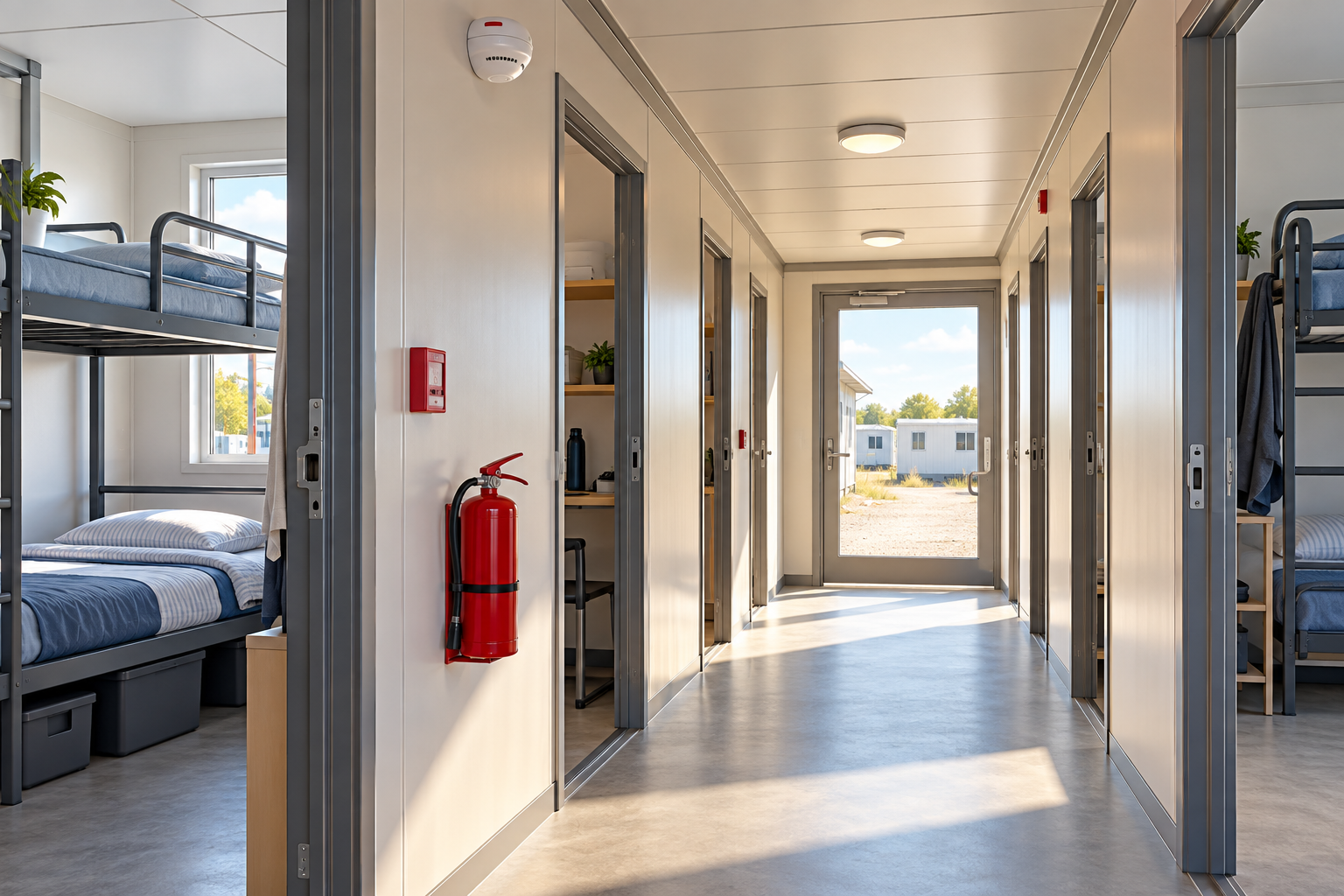
- Alarms that wake people. Every sleeping room and corridor in worker housing needs a smoke detector, tested every month. Most of the people who died here never got a warning.
- Stairs that stay clear of smoke. Self-closing doors on the stairs and nothing stored there give people a way down.
- Safe wiring and fair occupancy. Get the wiring checked by a licensed electrician, especially near guard rooms, kitchens and the ground floor, and do not house more workers than the building is approved for.
- Drills and a register. Show every new worker the two ways out, run a night-time drill, and keep a register of names, rooms and family contacts.
- Accountability across borders. India and the countries that employ Indian workers need to keep working together on migrant workers’ housing and safety. Workers should know their rights before they go abroad.
If you or someone in your family works abroad
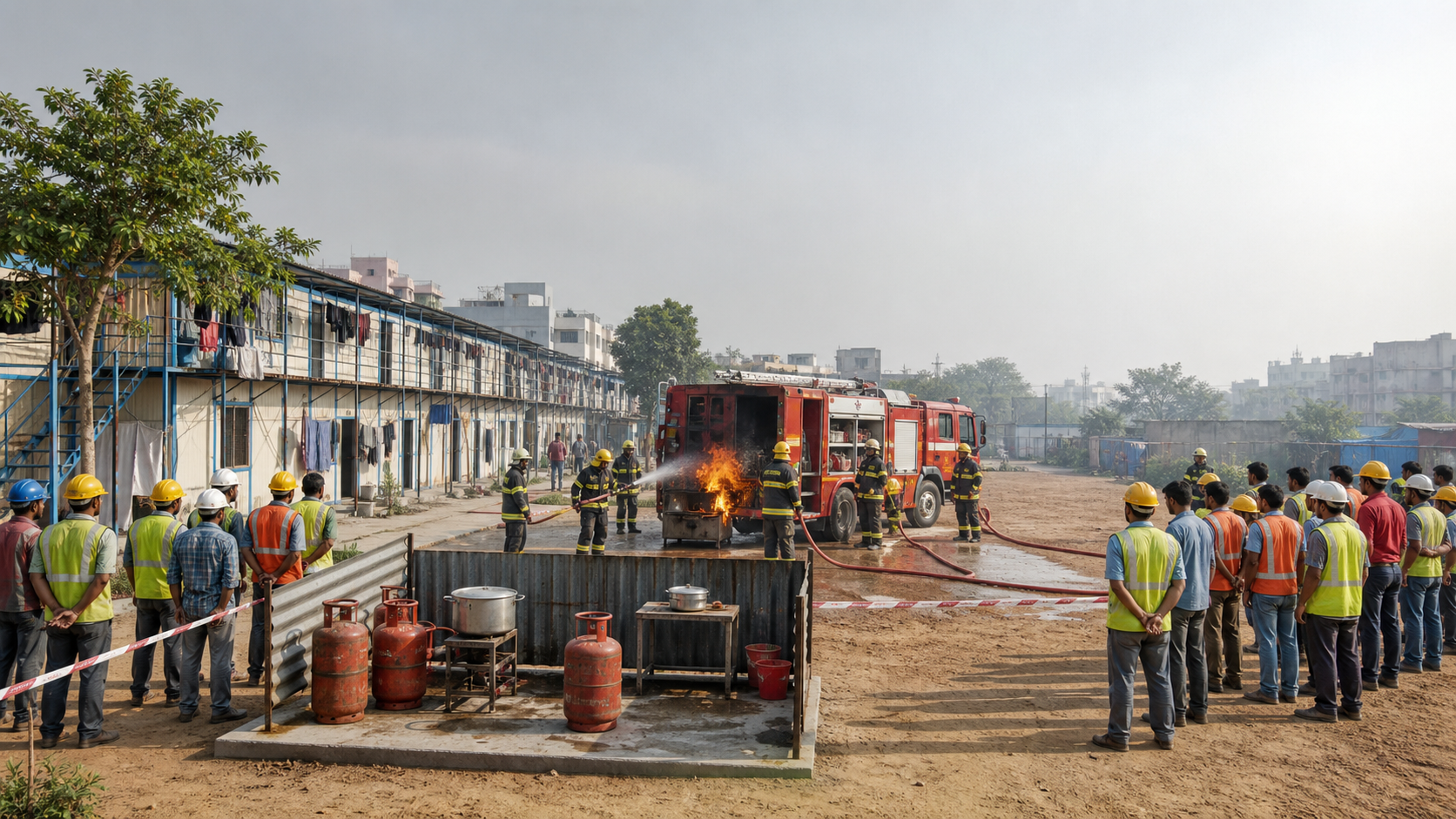
If you live in shared worker housing, find two ways out of your floor before you sleep tonight. Check for a smoke alarm in your room or corridor, and ask your supervisor if there is none. Do not charge phones or run heaters on overloaded extension boards near your bed. Save the local emergency number and your embassy helpline in your phone. Families back home should keep a copy of their relative’s passport, the employer’s name and the address abroad.
- Authorities are alerted to a fire in a six-storey labour-housing building in Mangaf while residents sleep
- Indian Embassy sets up a helpline; the Prime Minister holds a review meeting and announces compensation
- Indian Air Force C-130 brings back the mortal remains of 45 Indians, 31 of them to Kochi
- Kuwaiti prosecutors treat the case as a misdemeanour; eight people charged and released on bail
- Kuwaiti court sentences three people to three years for involuntary manslaughter, per Gulf News citing Al Rai
- Kuwait's Misdemeanour Appeals Court revises the sentences; some three-year terms cut to one year, others kept at three years for manslaughter (Arab Times, 16 November 2025)
- Court of Cassation suspends prison terms of a Kuwaiti and several expatriates pending their appeals and replaces them with a KD 5,000 fine (Arab Times, 11 January 2026)
- No final Court of Cassation ruling found
Why consequences escalated
- Most of the people who died were asleep and were killed by smoke, not flames
- An electrical fault in the guard's room near the entrance grew into a building-wide fire
- Without an alarm, sleeping residents had no warning until the smoke reached them
- A staircase open to smoke cut off the way down
- Crowded rooms full of bedding, bags and partitions gave the fire and smoke plenty to feed on
- An up-to-date resident register makes it far quicker to tell families who is missing
Failures and risk multipliers
- Housing nearly 195 workers in one building without a warning that would wake them at night
- Letting an electrical fault in the guard's room near the entrance grow into a building-wide fire
- Leaving the staircase open to smoke, so it filled before sleeping residents could use it
- Packing rooms with bedding, bags and partitions that burn and smoke heavily
- Giving workers no fire drill or briefing on the way out
Actions that reduce risk
- Employers: put smoke detectors in every sleeping room and corridor of worker housing, and test them monthly
- Get the wiring checked by a licensed electrician, especially near guard rooms, kitchens and the ground floor
- Keep stairs free of stored goods and fit self-closing doors to stop smoke climbing
- Do not allow more workers per room or floor than the building is approved for
- Keep a resident register with names, room numbers and family contacts, updated every month
- Run a night-time evacuation drill and show every new worker the two ways out
Leave a comment