Home / Case Study / Kamala Mills Compound Fire (2017): A Case Study in Fire Safety and Urban Planning
Case Study · Ready For Review
Kamala Mills Compound Fire (2017): A Case Study in Fire Safety and Urban Planning
The Kamala Mills fire killed 14 people in a rooftop restaurant and exposed unauthorised alterations, combustible décor, obstructed escape and fragmented enforcement in a dense entertainment district.
Date29 December 2017LocationKamala Mills Compound, Lower Parel, Mumbai, Maharashtra, India
01
Case Study
What happened here
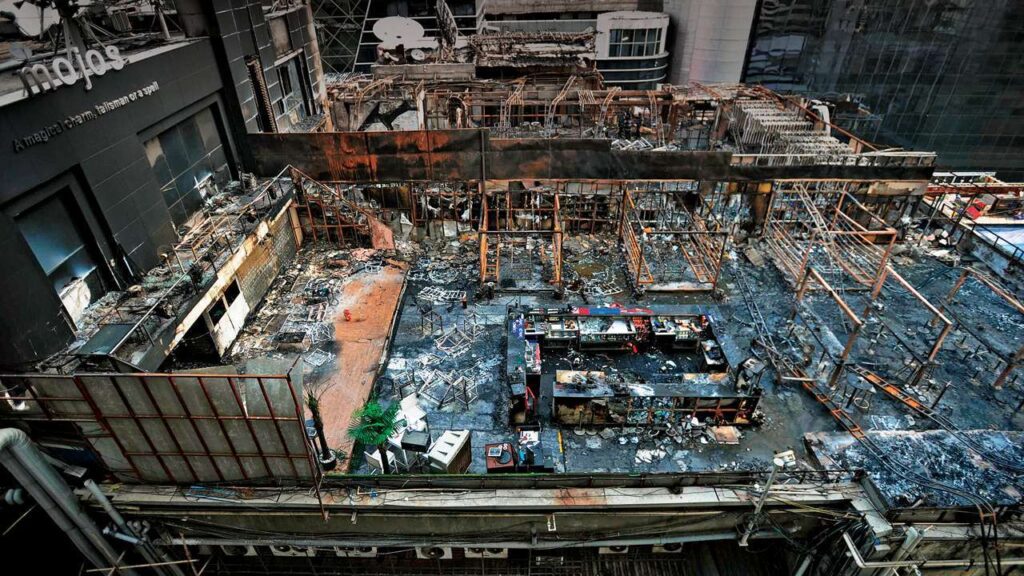
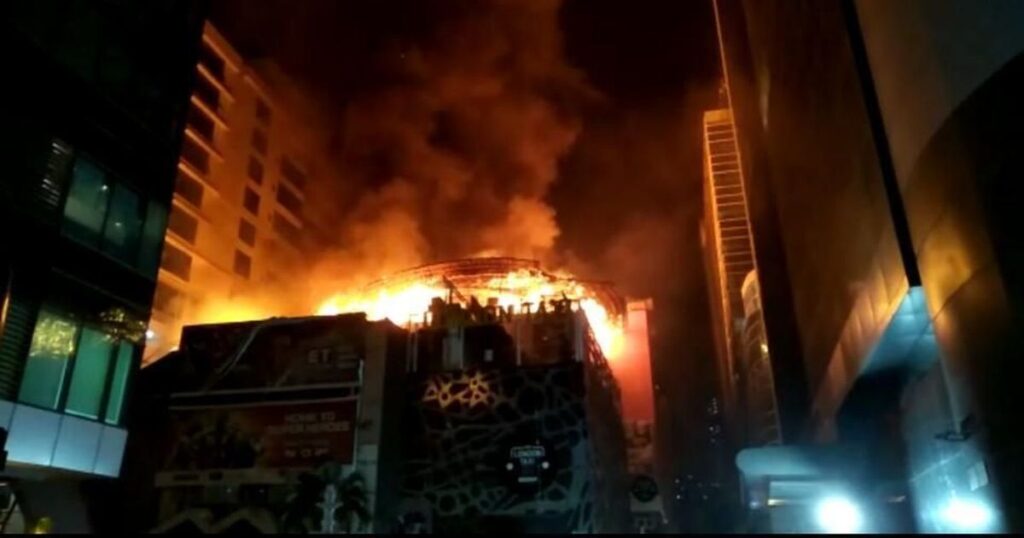
1 / 3Existing HowToSurvive.in incident image
Deaths14
Injured16
OccupancyRooftop restaurants in a dense commercial compound
Major hazardCombustible construction and décor
Official reviewMCGM Enquiry Committee report
Verified overview
What we can say safely
The Kamala Mills fire killed 14 people in a rooftop restaurant and exposed unauthorised alterations, combustible décor, obstructed escape and fragmented enforcement in a dense entertainment district.
Incident timeline
Fire develops at a rooftop restaurant during late-night operation
Combustible material and temporary enclosures allow fast growth
Patrons move through congested, smoke-affected routes; some shelter in a washroom
Mumbai Fire Brigade controls the blaze and recovers casualties
MCGM examines permissions, alterations, inspection and enforcement failures
Key findings
Why consequences escalated
Unauthorised construction and combustible rooftop materials increased fire growth
The two adjoining establishments created interacting hazards and confusing escape conditions
Obstructions, enclosure and route geometry impaired evacuation
Licensing departments held fragmented information and did not reliably detect changed conditions
Routine enforcement must compare the occupied premises with approved plans
Core mistakes / what went wrong?
Failures and risk multipliers
Using combustible temporary structures and décor in a crowded rooftop venue
Changing or enclosing spaces without valid approval and fire-safety reassessment
Allowing escape paths to be narrow, shared, confusing or obstructed
Failing to train staff to direct patrons immediately to safe exits
Weak coordination among licensing, building, health and fire authorities
Voices that matter
People closest to the evidence
“Safety lesson”
Protected escape, early warning and enforceable occupancy controls must work before an emergency; response cannot compensate for every built-in failure.
Practical prevention
Actions that reduce risk
Verify current fire and occupancy approvals against the actual premises
Keep every exit, stair, gangway and fire-service access route unobstructed
Test alarms, emergency lighting, extinguishers and suppression systems on schedule
Remove unauthorised combustible construction and hazardous storage
Train every shift and conduct realistic evacuation drills
Record defects, assign an owner and close them by a fixed date
02
Watch & learn
Playable video library
Captions
Official safety guidance
Fire Safety
Bureau of Indian Standards · Hindi/English
BIS overview of building fire-safety systems
03
Incident data
The broader evidence
How to survive this situation
Survival sequence
Raise the alarm and leave immediately by the nearest safe exit
Do not use lifts during a fire unless specifically designed and directed for evacuation
Stay low beneath smoke and close doors behind you where possible
Do not hide in toilets or enclosed rooms unless no escape remains; if trapped, call 112 and signal your location
Move to the assembly point and report missing people
Never re-enter for belongings
14DeathsMCGM enquiry record
16InjuredMCGM enquiry record
29 December 2017Incident dateLate-night restaurant occupancy
2 adjoining venuesInteracting premisesShared rooftop risk and escape environment
Evidence chart
14DeathsMCGM enquiry record
16InjuredMCGM enquiry record
29 December 2017Incident dateLate-night restaurant occupancy
2 adjoining venuesInteracting premisesShared rooftop risk and escape environment
What the data does not show
Limitations
Historical records may use different casualty definitions and were produced for legal, administrative or memorial purposes. Video material is supplementary and is not a substitute for the primary sources.
What you can do today
Immediate actions
Walk every exit route from the occupied area to open air
Check that exit doors open without keys or special knowledge
Confirm alarms are audible and visible where required
Remove stored or decorative combustibles from escape paths


 1 / 3
1 / 3