Home / Case Study / Learnings from AMRI Hospital Fire, Kolkata
Case Study · Ready For Review
Learnings from AMRI Hospital Fire, Kolkata
The 2011 AMRI Hospital fire showed why smoke control, removal of basement combustibles and assisted evacuation are indispensable where patients cannot escape independently.
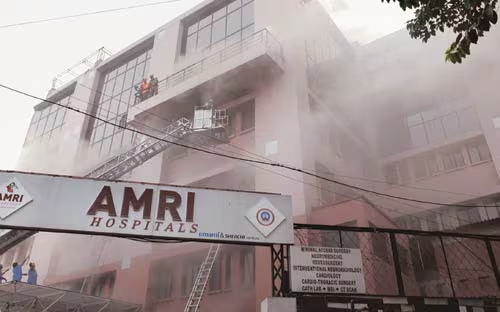
Date9 December 2011LocationAMRI Hospital, Dhakuria, Kolkata, West Bengal, India
01
Case Study
What happened here
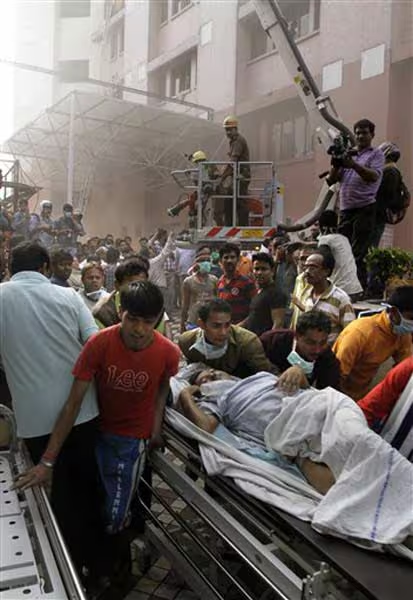
1 / 8Existing HowToSurvive.in incident image
Incident timeEarly morning
Reported deaths93
Primary victim groupHospital patients
Fire origin areaBasement
Primary lethal mechanismSmoke inhalation and suffocation
Verified overview
What we can say safely
The 2011 AMRI Hospital fire showed why smoke control, removal of basement combustibles and assisted evacuation are indispensable where patients cannot escape independently.
Incident timeline
Combustible stored material burns in the lower level
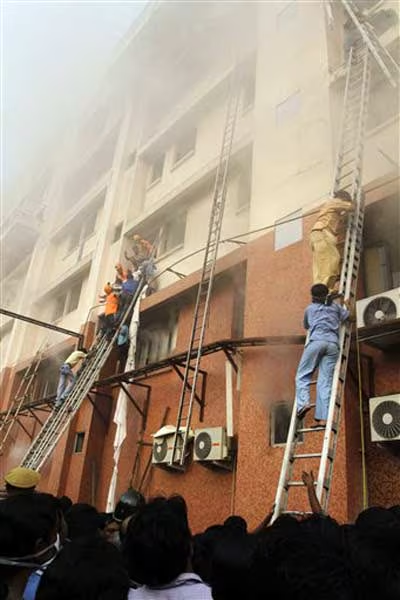
Smoke migrates into patient floors through the building
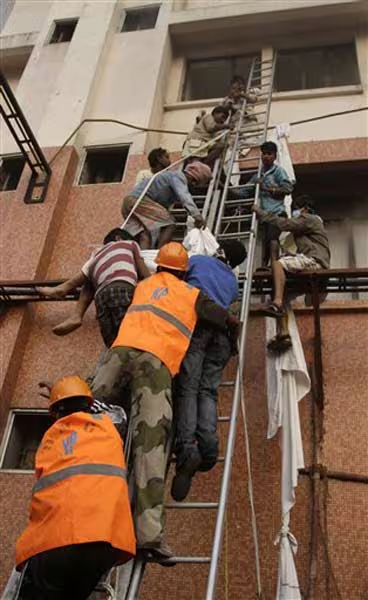
Staff, residents and emergency services attempt evacuation and rescue
Bed-bound and critical patients cannot self-evacuate
State authorities appoint a commission and review fire-safety failures
Key findings
Why consequences escalated
Combustible basement storage created a major smoke source below vulnerable patients
Smoke compartmentation and removal did not protect upper floors
Hospitals require enough trained staff for progressive horizontal evacuation at all hours
Patients connected to medical equipment need pre-planned assisted movement
Detection, alarm, smoke control, fire doors and command must operate as one system
Core mistakes / what went wrong?
Failures and risk multipliers
Using a hospital basement for combustible storage
Allowing smoke to spread vertically into sleeping and critical-care areas
Inadequate night staffing or role clarity for assisted evacuation
Failing to maintain effective compartmentation and smoke barriers
Depending on external rescue for patients who require immediate internal movement
Voices that matter
People closest to the evidence
“Safety lesson”
Protected escape, early warning and enforceable occupancy controls must work before an emergency; response cannot compensate for every built-in failure.
Practical prevention
Actions that reduce risk
Verify current fire and occupancy approvals against the actual premises
Keep every exit, stair, gangway and fire-service access route unobstructed
Test alarms, emergency lighting, extinguishers and suppression systems on schedule
Remove unauthorised combustible construction and hazardous storage
Train every shift and conduct realistic evacuation drills
Record defects, assign an owner and close them by a fixed date
02
Watch & learn
Playable video library
Captions
Official safety guidance
Fire Safety
Bureau of Indian Standards · Hindi/English
BIS overview of building fire-safety systems
03
Incident data
The broader evidence
How to survive this situation
Survival sequence
Raise the alarm and leave immediately by the nearest safe exit
Do not use lifts during a fire unless specifically designed and directed for evacuation
Stay low beneath smoke and close doors behind you where possible
Do not hide in toilets or enclosed rooms unless no escape remains; if trapped, call 112 and signal your location
Move to the assembly point and report missing people
Never re-enter for belongings
93Reported deathsPredominantly patients
9 December 2011Incident dateEarly morning
1 high-dependency occupancyHospitalMany occupants could not self-rescue
Basement to upper floorsSmoke pathVertical spread drove casualties
Evidence chart
93Reported deathsPredominantly patients
9 December 2011Incident dateEarly morning
1 high-dependency occupancyHospitalMany occupants could not self-rescue
Basement to upper floorsSmoke pathVertical spread drove casualties
What the data does not show
Limitations
Historical records may use different casualty definitions and were produced for legal, administrative or memorial purposes. Video material is supplementary and is not a substitute for the primary sources.
What you can do today
Immediate actions
Walk every exit route from the occupied area to open air
Check that exit doors open without keys or special knowledge
Confirm alarms are audible and visible where required
Remove stored or decorative combustibles from escape paths





 1 / 8
1 / 8