
THE IMPORTANCE OF FIRE SAFETY
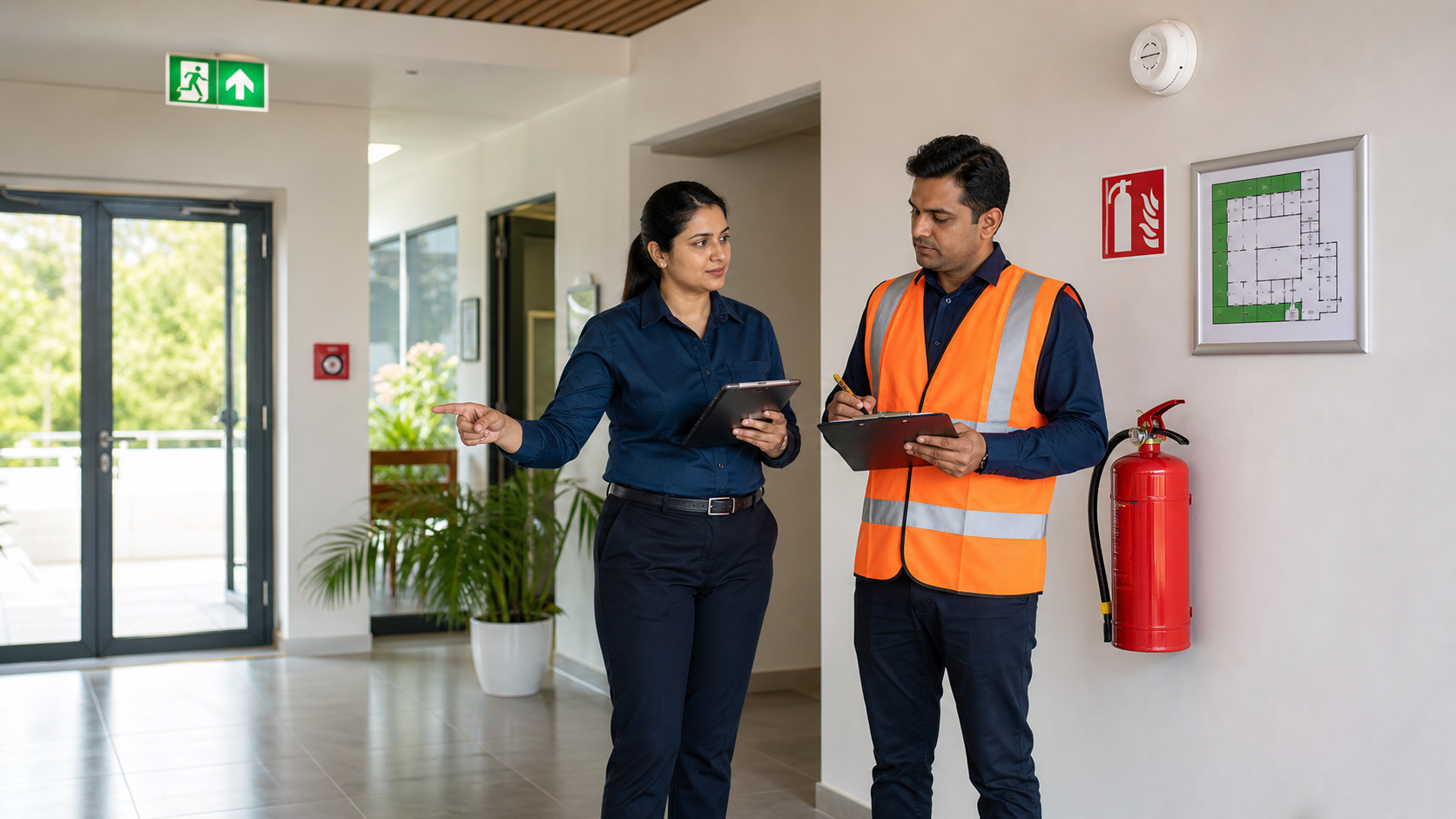
What needs attention
- A fire certificate or installed system does not replace daily management and maintenance
- People need early warning and a protected route to safety before smoke or panic removes their options
- Active protection such as detection and suppression must be supported by passive protection such as compartmentation and fire doors
- Building use, occupant load and hazards determine the required safeguards; one checklist cannot fit every occupancy
- Drills must include visitors, contractors, night shifts and people who may need assistance
- Fire-service access, water supplies and reliable building information affect emergency response
Controls that reduce risk
- Obtain an occupancy-specific fire-risk assessment from a competent professional
- Compare the building's use and current layout with approved fire and life-safety plans
- Test alarms and confirm every occupied area can hear or perceive the warning
- Inspect exits, stairways, fire doors, emergency lighting and assembly-point arrangements
- Maintain detection, suppression, pumps, water supplies and portable extinguishers to applicable standards
- Assign wardens for every shift and plan assisted evacuation for people who may need help
- Invite the local fire service to review access, hazards and pre-incident information where practicable
- Record faults, isolation periods, corrective work and the person responsible
Understand and apply the guidance
With the increased construction of high-rise buildings, new smart cities planned, and the establishment of new industrial zones, fire safety remains a worry due to an increase in the incidence of fire accidents these days. Fire safety is becoming increasingly critical, necessitating proper steps to prevent the probability of fire accidents and damage. Inadequate building and commercial area planning, a lack of an evacuation plan, and insufficient monitoring of fire protection systems all contribute to major fire accidents that could have been avoided by simply adhering to the already-in-place rules and regulations and auditing such systems on a regular basis.
Catastrophic fire incidents can be avoided if the national building code is followed and safety precautions are taken.
In actuality, absolute fire safety is not possible, but most fires are preventable. Preventing a fire is the safest approach to dealing with it.
A fire safety audit in a building is an efficient approach to determine whether or not fire safety systems are in place and in accordance with the National Building Code of India, which emphasizes fire prevention, fire protection, and life safety measures.
Section 4 of India’s National Building Code addresses the requirements for fire prevention, life safety in the event of a fire, and building fire protection. The code specifies occupancy classes and fire prevention features that are required to reduce the danger of fire to life and property.
Fire in a building / workplace / commercial complex, loss of precious lives and damage to property & materials can be avoided by,
- Creating fire-resistant structures in accordance with necessary safety requirements and appropriate standards.
- Following fire safety procedures on a regular basis. Conduct and maintain a fire risk assessment. Based on the assessment’s conclusions, employers must ensure that adequate and appropriate fire safety measures are in place to reduce the risk of harm or death in the case of a fire.
- Regular firefighting and evacuation training for the occupants.
- Keep ignition sources and flammable substances at a safe distance and in specified areas.
- Prevent inadvertent fires by, for example, ensuring that heaters cannot be pushed over.
- Maintain good housekeeping at all times, such as avoiding the accumulation of trash that could catch fire.
- Determine ways to detect fires and rapidly notify people in the event of a fire, such as adding smoke alarms, fire alarms, or warning bells.
- Install adequate fire-fighting equipment to quickly extinguish fires.
- Always keep fire exits and escape routes clearly marked and unencumbered.
- Ensure that your employees receive adequate training on the protocols they must follow, including fire drills.
- Regularly review and update your risk assessment.
Now let’s see what the National Building Code of India, Chapter 4 says about fire safety. It majorly talks about the following 3 most important aspects of fire safety.
LIFE SAFETY
Every structure shall be built, constructed, equipped, maintained, and managed in such a way that adequate means of egress are provided to avoid undue danger to the life and safety of the people during the escape period from fire, smoke, fumes, or panic. For high occupancy spaces, annunciation, announcements, and a voice-guided/aided system may be required to lead inhabitants to safe egress routes, places of comparative safety, or exits and to avoid panic situations during distress.
Life Safety majorly covers details about
- General Exit requirements
- Arrangement of Exits
- Number of Exits
- Number of Exits
- Doorways
- Corridors/Passage ways
- Horizontal Exits
- Internal Staircases
- External Staircases
- Pressurization of escape routes
- Ramps
- Refuge Area
- Fire Lifts/Fire Tower
- Emergency escape lighting/ Illumination
- Fire detection and Warning
FIRE PREVENTION
In accordance with the provisions of various clauses of the National Building Code of India, all buildings shall be protected by fire extinguishers, hose reels, wet riser, down-comer, yard hydrants, automatic sprinkler systems, deluge system, high/medium velocity water spray, foam, water mist systems, gaseous or dry powder system, manual/automatic fire alarm system, and so on.
Fire Prevention covers the following points
- Classification of Buildings
- Fire Zones
- Types of Construction
- Requirements common to all Occupancies
- Heating/Smoke venting
- Surface and Interior Finish
- Glazing/Casement/Skylights/Louvers
- Passive systems
- Requirements specific to individual Occupancies
Fire Protection mainly covers below points
- Extinguishers
- Small Bore Hose Reels
- Dry Riser
- Wet Riser
- Down comer
- Yard Hydrant system
- Automatic Sprinkler Installation
- Manual Fire Alarm System
- Automatic Fire Alarm System
- Underground Storage Tank
- Terrace Tank
- Ground level Pumps
- Terrace-level Pumps
Fire protection in car parking facilities, malls and multiplexes, hospitals and hotels, commercial cookery protection, super high-rise structures over 100M intended for various occupancies, and Metro train safety are additional elements in the latest NBC 2016.
It is possible to reduce fire accidents by conducting frequent fire safety audits and risk assessments. A fire safety audit not only helps us uncover anomalies or deficiencies in the existing system, but also provides us time to make the necessary modifications and avert a disastrous fire by adopting the recommendations of the fire safety audit.
Common unsafe practices
- Treating fire safety as a one-time approval instead of a managed building system
- Locking, narrowing or storing material in exit routes and stairways
- Wedging fire doors open or penetrating fire-rated barriers without approved fire stopping
- Disabling alarms or isolating pumps and sprinklers without compensating controls and urgent repair
- Increasing electrical load, storage height or occupancy without reviewing the fire strategy
- Training only security staff while ordinary occupants do not recognise alarms or assembly procedures
- Attempting to fight a growing fire instead of evacuating and calling emergency services