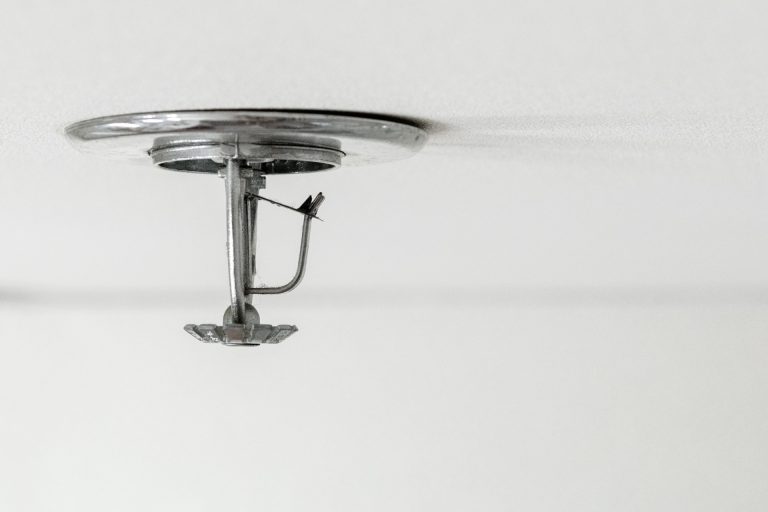
An automatic fire sprinkler is a heat-operated discharge device connected to a designed water-supply network. In most conventional systems each closed sprinkler operates independently when its thermal element reaches its rated condition; smoke or a manual alarm does not make every head discharge. Early water can cool burning fuel, wet nearby material, reduce fire growth and improve conditions for evacuation and firefighting. That benefit is not automatic: the system must suit the hazard, deliver the calculated flow and pressure, avoid obstructions, remain in service and be inspected, tested and maintained. Sprinklers complement—not replace—alarms, compartmentation, smoke control, exits and the fire service.
TopicFire Safety · Home SafetyUpdated2026-08-31
01
The guide
The Importance of Fire Sprinklers
Key risks
What needs attention
The legacy post's statement that sprinklers cut death and property loss by one-half to two-thirds mixed different datasets and is replaced with the exact population, period and measure
NFPA's current public report covers fires reported to United States municipal fire departments during 2017–2021; it is useful performance evidence but not an Indian outcome survey
In that dataset, sprinklers operated in 92 percent of fires judged large enough to activate and controlled fire in 97 percent of the incidents where they operated
The leading reported reason for non-operation was a system shut off before the fire, showing why valve and impairment control matter
One sprinkler operated in 77 percent of reported structure fires where sprinklers operated; five or fewer operated in 96 percent
Sprinklers are not all interchangeable: standard spray, residential, quick-response, ESFR and special sprinklers have different listings and design uses
Deluge systems are an exception to the common independent-head explanation because open nozzles or sprinklers discharge when the releasing system opens the valve
Water damage is a real planning issue, but removing or disabling the sprinkler can allow a much larger fire and firefighting water demand
Prevention checklist
Controls that reduce risk
Find the main sprinkler control valve and confirm it is open, locked or supervised as designed
Check the fire pump and automatic controls show normal status
Review the latest main-drain, alarm, pump, flow and water-supply test records
Look for painted, corroded, leaking, loaded, damaged or missing sprinklers
Remove storage and decorations that violate required clearance or obstruct discharge
Compare the current occupancy and stored products with the approved hydraulic design basis
Require a permit, temporary precautions, notification and restoration test for every impairment
Keep spare sprinklers and the correct wrench where the adopted standard requires them
Train security and maintenance staff never to close a valve merely to silence an alarm
Escalate every change in ceiling, rack, partition, machinery, process or water supply to the competent designer
Practical guide
Understand and apply the guidance
Most people agree that fire sprinkler systems are one of the best ways to put out fires when they are small. It is very important to protect your business, property, or home from fires by putting in fire sprinkler systems.
What is the purpose of fire sprinkler systems?
Sprinkler systems in homes and businesses are very important. Sprinklers are mostly used for two things:
Keeping people safe
Keeping property safe
The NFPA says, “When sprinklers are present, the chances of dying in a fire and the average property loss per fire are both cut by half to two-thirds compared to fires where sprinklers are not present.”
Protecting Lives:- Without a doubt, fire sprinklers’ most important job is to protect the lives of the people who live in the building. “The civilian death rate was 81% lower in homes with fire sprinklers than in homes without them,” says a report from the NFPA. Sprinkler systems are turned on early in a fire to help fight it and make it more likely that people will survive. Fire sprinklers slow the spread of a fire and make it easier for people to get out of a building safely. They also reduce the number of toxic fumes that a fire puts out.
Protecting Property:- Fire sprinkler systems can cut down on the damage a fire does to the property by a lot. Sprinklers stop a fire when it is still small, so it does less damage to property. “When fire sprinklers were present, fires were kept in the room where they started 97% of the time,” says the NFPA. Some people may think otherwise, but fire sprinklers are set off by heat or flames, not by smoke. During a fire, the sprinkler head closest to the fire is the only one that works.
Mistakes to avoid
Common unsafe practices
Believing smoke, a pull station or one operating head automatically opens every sprinkler
Closing a control valve to stop leaks or renovation dust without formal impairment management
Painting heads, hanging objects from pipes or placing cabinets and signage in the discharge pattern
Changing cartons to exposed plastics, aerosols, lithium-ion batteries or higher storage without review
Assuming visible water in a tank proves adequate flow and pressure at the remote design area
Installing decorative ceilings, ducts, lights or partitions beneath sprinklers without coordination
Using domestic plumbing components or unlisted heads as substitutes
Failing to heat or protect wet-pipe systems where freezing is credible
Treating an annual pump start as proof of the complete system
Expecting sprinklers to compensate for locked exits, open fire doors or missing alarms
02
Watch & learn
Related Videos
Captions
Practical system training
Fire Sprinkler System Practical
Safety Management Study · Hindi · Verified
Hindi-first walk-through of system components and arrangements
03
Facts & action
Evidence, Cases & Next Steps
92%Sprinklers operatedU.S. 2017–2021 fires where systems were present and fire was large enough to activate
97%Effective when operatedU.S. reported incidents in the same NFPA dataset
89%Operated and effective overallU.S. activation-eligible fires in the same dataset
Evidence chart
U.S. 2017–2021 reported firesOperated when activation was expected
U.S. 2017–2021 reported firesEffective after operating
U.S. 2017–2021 reported firesOperated and effective overall
U.S. reported structure firesConfined to object or room with sprinklers
U.S. comparison groupConfined to object or room without AES
U.S. reported structure firesOne head operated when sprinklers operated
Operating trigger | Heat at the individual sprinkler, not smoke alone
Normal closed-head response | Only sprinklers heated sufficiently operate
Primary objective | Control or suppress the design fire early
Design inputs | Occupancy, commodity, storage, ceiling, obstruction, sprinkler listing and water supply
Indian reference | IS 15105:2021
System partners | Alarm, fire pump or supply, valves, monitoring, drainage and firefighter connection
Life safety | Sprinklers support evacuation but do not replace protected exits
Do This Today
Immediate prevention actions
Photograph the control-valve position and normal-status indication
Check the pump is in automatic mode and no alarm or supervisory condition is ignored
Look upward for paint, corrosion, leakage, missing escutcheons and blocked spray patterns
Measure the most challenging storage height and clearance below sprinklers
Review whether new products, batteries, foam plastics or aerosols entered the protected area
Confirm recent renovation drawings include sprinkler relocation and hydraulic review
Ask who can authorise an impairment and who confirms restoration
Ensure emergency responders receive the alarm even when the building is unoccupied
If Fire Starts
Emergency survival steps
Treat sprinkler flow or a waterflow alarm as a real fire condition and begin the approved evacuation
Activate the alarm if it has not sounded and call 112 from a safe place
Use the nearest safe exit and do not delay to investigate the operating head
Do not close the sprinkler valve or stop the fire pump to reduce water damage
Keep away from smoke, electrical hazards, falling ceiling material and unstable storage
Tell responders the exact area, known fuel, hazardous materials and any missing people
Meet at the assembly point and remain available for accountability
Facility staff should give firefighters valve, pump, water-supply and hazard information
Only the fire service or authorised incident controller may approve re-entry
Restore and test the impaired system promptly after the incident under competent supervision
What the data does not show
Limitations
No comparable public Indian national dataset was identified for sprinkler presence, operation, effectiveness, deaths and property loss
NFPA estimates exclude fires reported only to U.S. federal or state agencies or industrial brigades
Association between sprinkler presence and lower loss does not prove every difference was caused by sprinklers alone
The 90 percent death-rate reduction is an all-structure U.S. estimate and should not be applied to one Indian building
The 55 percent lower average property loss in NFPA's report applies specifically to reported U.S. home fires, so it is not presented as a universal property-saving percentage
Small fires that never challenged the system are excluded from operation-effectiveness calculations
Videos explain principles but do not provide project-specific design or acceptance evidence