
What happened here
 1 / 8
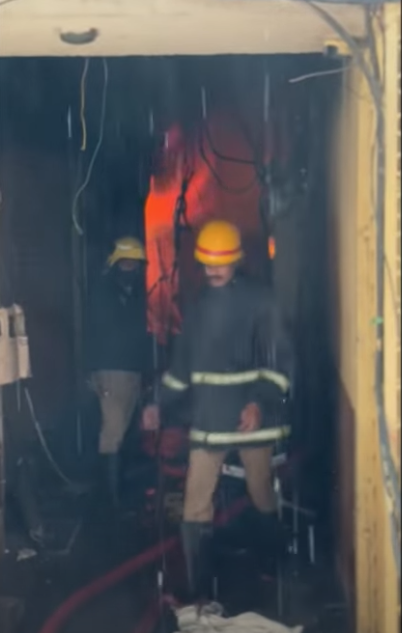
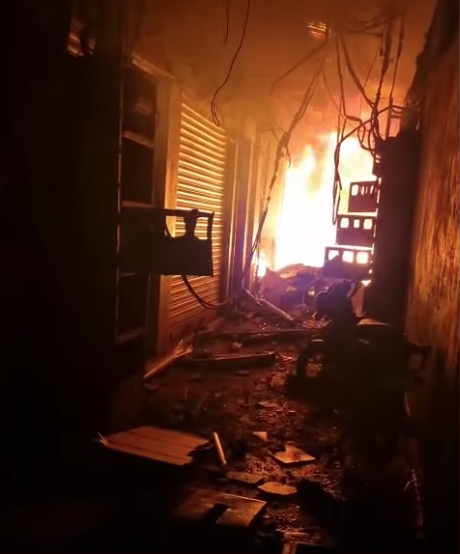
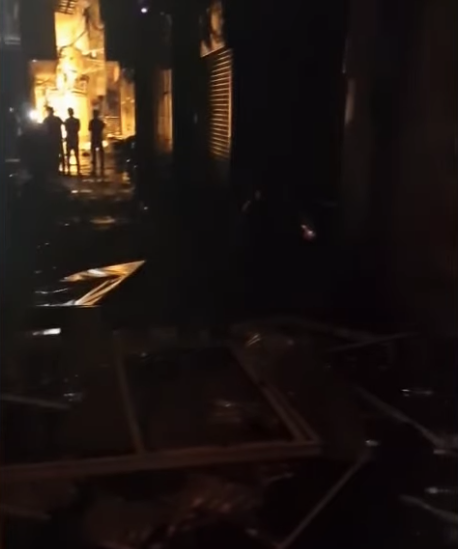
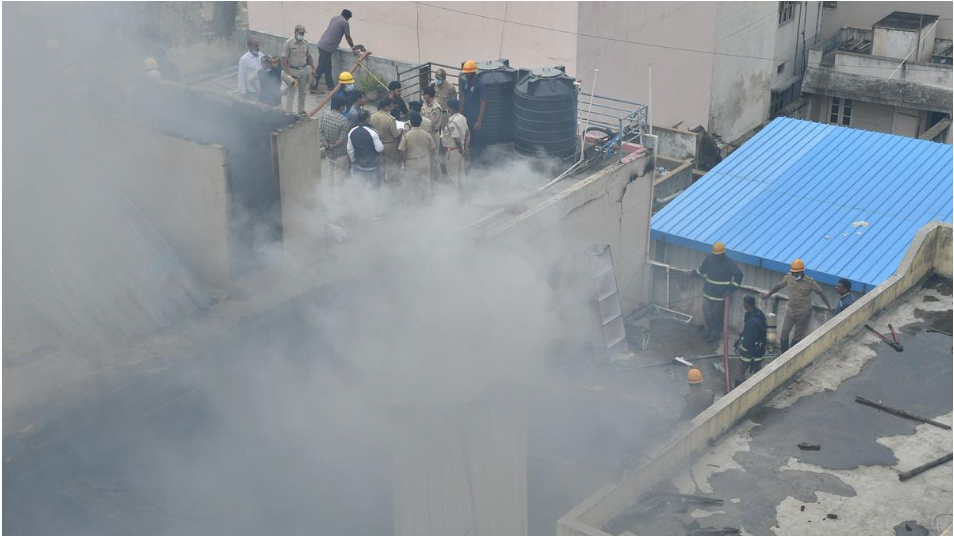
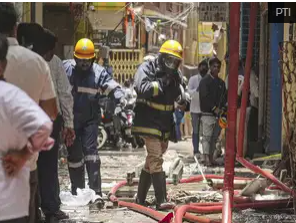
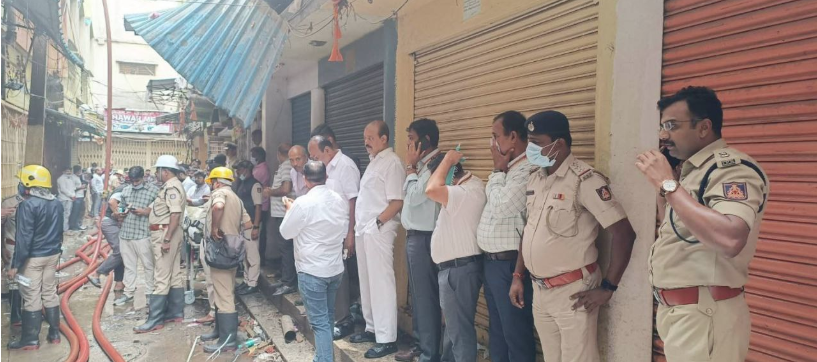
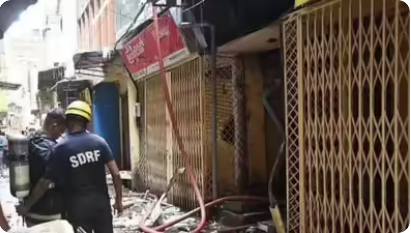
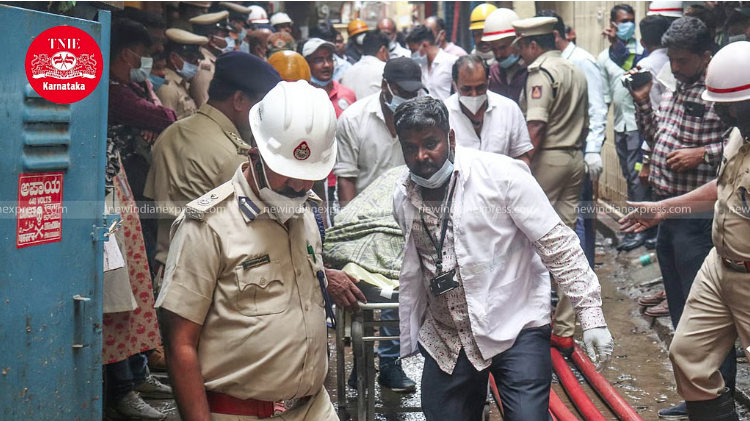
1 / 8 A fire in a plastic-products unit inside a dense multi-storey building killed five people, including two children, and tested high-rise access, water delivery and evacuation through narrow Bengaluru lanes.
Quick answers
What happened in the Nagarathpete building fire in Bengaluru?
Around 3:30 am on 16 August 2025, a fire broke out in a plastic mat manufacturing unit on the ground floor of a residential building in Nagarathpete, Bengaluru. Residents upstairs were trapped by thick smoke, and five people died, including two children.
What is suspected to have caused the Nagarathpete fire?
A short circuit in the factory area is suspected. Stored plastic then produced high heat and dense toxic smoke that spread through the building.
Why is a factory inside a residential building dangerous?
Combustible manufacturing in dense mixed-use areas needs strict separation. Residents above had no secondary escape route, and narrow lanes prevent reliance on external ladders and rescue.
What should you do if you smell smoke at night at home?
Crawl low and cover your nose with a damp cloth, do not open hot doors, and never run upright through dense smoke. Move to a balcony or window and signal for rescue, and make sure every family member knows the escape routes.
📅 Date & Location
- Date: 16 August 2025 (early morning; the fire call came in at about 3:14 AM)
- Location: Plastic mat manufacturing unit-cum-residential building, Nagarathpete, Central Bengaluru, Karnataka
🕯 What Happened?
- A major fire broke out in a plastic mat manufacturing unit operating from the ground floor of a residential building.
- Cause is suspected to be a short circuit in the factory area.
- The blaze quickly engulfed the building, trapping residents upstairs.
- Five people died, including two children from a family of four from Rajasthan. Another neighbour was also killed.
- The victims were asleep and were unable to escape due to thick smoke and blocked escape routes.
- Fire tenders rushed to the site, but by the time flames were doused, the residents had already succumbed to smoke inhalation and burns.
- Police later arrested the building owners for safety violations and for illegally running a factory in a residential building.
🔍 Mistakes / What Went Wrong
- Illegal usage of building – commercial plastic factory inside a residential zone.
- Combustible materials (plastic mats) accelerated the fire.
- Electrical short circuit risk – inadequate wiring for industrial use.
- Blocked exits – no secondary escape route for residents trapped above.
- No fire detection or suppression systems – alarms, sprinklers absent.
- Late awareness – residents were asleep; smoke spread silently.
⚖ Hidden / Less-Mentioned Truths
- Victims didn’t die immediately of burns – smoke inhalation during sleep was the primary killer.
- Zoning violations: running plastic unit in dense, residential Nagarathpete is a systemic governance lapse.
- Arrest of owners shows negligence, but many such illegal mixed-use buildings exist across Bengaluru.
- This wasn’t just an “accident” – it was a preventable systemic failure.
🧯 How Could It Have Been Prevented?
- Strict zoning enforcement – no factories in residential spaces.
- Compulsory fire NOC for any mixed-use building.
- Installation of smoke alarms in every floor.
- Automatic fire suppression systems (sprinklers, extinguishers).
- Multiple exits / fire escape staircase mandatory in multi-storey buildings.
- Awareness of smoke survival techniques among residents.
- Regular safety audits by civic and fire authorities.
🛡 Survival Guide (If You’re in Such a Situation)
- If you smell smoke at night – crawl low, cover nose with damp cloth.
- Do not open hot doors – may lead to flash fire.
- Move to balcony/window and signal for rescue.
- Never try to run through dense smoke upright.
- Keep fire escape routes clear and known to all family members.
- Always keep a fire blanket (such as our own Life Safety Blanket), a fire extinguisher and a torch at home.
- Teach children how to react calmly in case of fire.
📊 Data / Stats Box
- Deaths: 5 (including 2 children)
- Cause: Suspected electrical short circuit in plastic unit
- Building type: Plastic mat factory (ground floor) + residential (above)
- Fire fighting response: Eight fire vehicles, 55 firefighters and 21 officers; the rescue operation lasted about 12 hours
- Legal action: Building owners arrested for violations
📽 Visuals (Collected / Suggested)








🙏 Voices / Human Angle
- A neighbour recalled: “We heard screams, but by the time we reached, the smoke was unbearable.”
- The Rajasthan family had moved to Bengaluru for livelihood – their lives ended due to negligence not their own.
- Survivors in the area expressed fear, demanding inspections of other similar buildings.
📢 Systemic Lessons
- Bengaluru has thousands of illegal mixed-use buildings; each is a potential death trap.
- Fire services must regularly inspect high-risk zones like Nagarathpete.
- Urban governance must strictly enforce zoning and fire compliance.
- Public awareness campaigns about smoke survival and exits are critical.
- Authorities must integrate community volunteer fire response in congested localities.
💡 What You Can Do Today
✅ Check if your building has valid fire NOC.
✅ Ensure there is at least one alternate escape route.
✅ Install basic smoke detectors in home.
✅ Educate your family about smoke survival.
✅ Report illegal factories in residential spaces.
✅ Share this case study to spread awareness.
📌 Tags
#BengaluruFire #NagarathpeteTragedy #HowToSurvive #IndiaFireCrisis #NeverForget
🔚 Closing Line
“One family’s livelihood turned into their death trap — a short circuit lit by negligence. Survival depends not on chance, but on preparedness and accountability.”
Latest update (16 October 2026)
PTI reported that the complaint was filed at Halasuru Gate police station by Gopal Singh, the elder brother of victim Madan Singh, alleging that the owners had built without safety clearances, proper ventilation or emergency exits. PTI also reported that the third-floor room where a woman and two children were found had been locked from outside.
Police Commissioner Seemant Kumar Singh said the owners of two buildings were arrested and that extra floors had been built without permission. Deputy Chief Minister D K Shivakumar announced Rs 5 lakh for each victim’s family, and FSL officers collected samples. We found no chargesheet or FSL report by 16 October 2026.
More on Bengaluru: see our Bengaluru fire and emergency safety guide for fire brigade numbers, every fire station and the local risks to know.
- Fire call received for a plastic mat unit on the ground floor of a residential building in Nagarathpete
- Fire and thick smoke trap sleeping residents upstairs; five people die, including two children
- Eight fire vehicles, 55 firefighters and 21 officers work through narrow lanes; the rescue lasts about 12 hours
- Complaint filed at Halasuru Gate police station by the brother of victim Madan Singh; PTI reports the third-floor room where a woman and two children were found was locked from outside
- Police Commissioner says owners of two buildings arrested and extra floors built without permission; Rs 5 lakh compensation per family announced; FSL samples collected
- No chargesheet, bail outcome or FSL report found
Why consequences escalated
- Combustible manufacturing in dense mixed-use areas needs strict separation
- A G+4 building can trigger high-rise access and system requirements
- Narrow lanes prevent reliance on external ladders and rescue
- Two protected routes and internal systems are vital
- Stored plastic produces high heat and dense toxic smoke
Failures and risk multipliers
- Running a plastic factory on the ground floor of a residential building
- Storing large amounts of plastic mats, which burn hot and give off thick toxic smoke
- Wiring meant for homes carrying an industrial load
- Only one way out for families sleeping upstairs
- No smoke alarms to wake people before the stairs filled with smoke
Actions that reduce risk
- Report any factory or godown running inside a residential building to the civic body and fire service
- Fit a smoke alarm on every floor, outside where people sleep
- Keep a second way out from upper floors, and never lock or block it
- Get wiring checked by a licensed electrician when the load changes
- Press for regular fire inspections of mixed-use buildings in congested areas
Leave a comment