
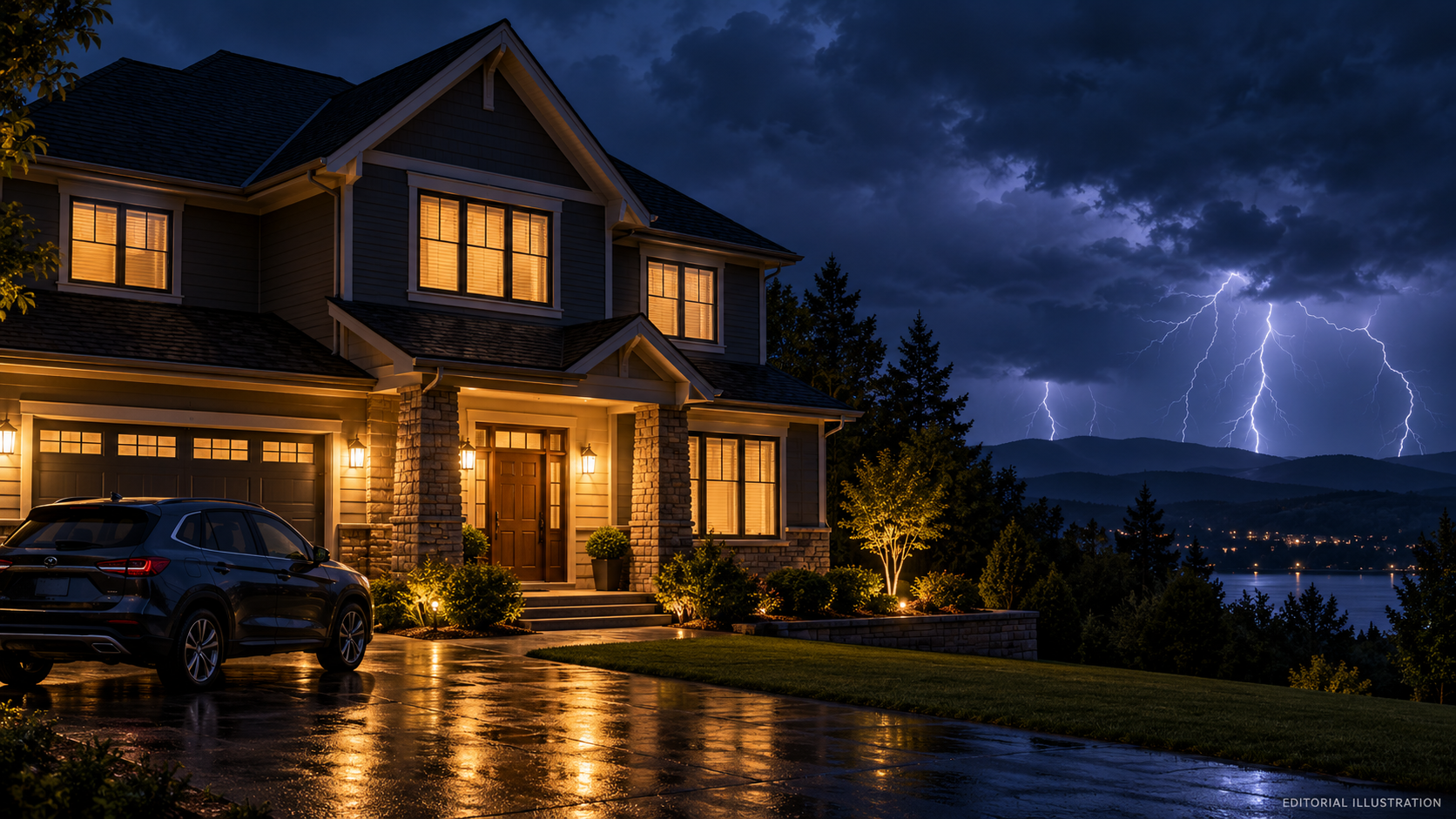
Make a shelter plan before you go out
For an outdoor trip, check the India Meteorological Department forecast and relevant local alerts, including the NDMA SACHET service. Identify a substantial building or a fully enclosed hard-top vehicle that you can reach quickly. A field, beach, lake, rooftop, tent or roadside open shed does not become safe because rain has not yet arrived. Weather can change before a group has time to get back.
At the first thunder, go inside
The CDC and US National Weather Service advise moving to a substantial enclosed building or a closed hard-top vehicle with the windows up when thunder is heard or lightning is seen. The metal body helps protect vehicle occupants; a motorcycle, open rickshaw, convertible, tractor or vehicle without a substantial roof is not equivalent shelter. Do not stand beneath an isolated tree or under a small open structure. Move away from water, hilltops, open fields and conductive fences or wires while heading for genuine shelter. There is no reliably safe position outdoors during a thunderstorm; do not treat crouching in the open as a substitute for going inside.
Reduce avoidable risks indoors
Being inside a sound building is much safer, but lightning can travel through plumbing and wired systems. Until the storm passes, avoid bathing, washing dishes, handling plugged-in equipment, corded phones, windows, exterior doors and porches. A mobile phone that is not plugged into a charger is generally suitable for an emergency call. Keep children and pets inside too.
Wait before returning outside
Continue to shelter for at least 30 minutes after the last thunder. Do not use a brief lull or blue patch of sky as proof that danger has ended. If new thunder is heard, restart the wait. Organisers of sports, outdoor work and school activities should designate who watches alerts, who stops the activity and where everyone will shelter rather than making the decision person by person.
If someone is struck
Check that rescuers are not exposed to ongoing lightning. Call India’s emergency number 112 and give the exact location and the number of people affected. A lightning-struck person does not hold an electrical charge and can be touched, but the surrounding storm remains dangerous. Follow dispatcher instructions; if the person is unresponsive and not breathing normally, begin CPR and use an AED if available and you are trained or guided to do so. Avoid moving a person with suspected traumatic injury unless immediate danger requires it. Urgent medical assessment is needed even when someone initially seems to recover.
What this guide does not claim
This is general India-focused prevention and response guidance, not a report of one incident. It does not predict a strike at a particular address, replace real-time local warnings or quantify individual risk. The panel chart is an editorial decision sequence, not measured lightning data. The videos are official educational material hosted by NDMA; their muted autoplay embeds were verified in a local same-template test, while the live WordPress preview still needs checking after import.
What needs attention
- No outdoor location can be called safe during an active thunderstorm.
- A hard-top enclosed vehicle differs from a motorcycle or open vehicle.
- Lightning can travel into buildings via plumbing and wiring.
- A struck person can be touched safely, but rescuers must consider continuing storm danger.
- The 30-minute rule is safety guidance, not a measured prediction for a particular storm.
Controls that reduce risk
- Identify a substantial building or enclosed hard-top vehicle for each outdoor venue.
- Assign a person to check local alerts and stop activities at the first thunder.
- Plan transport for children, outdoor workers and anyone needing assistance to reach shelter.
- Teach the 30-minute wait after the last thunder.
- Keep emergency-location details and 112 accessible.
Common unsafe practices
- Waiting for rain to start before seeking shelter.
- Standing under a tree or small open shed.
- Treating a motorcycle or open vehicle as a lightning-safe car.
- Bathing or handling plugged-in equipment during a storm.
- Going back outside at the first clear sky rather than waiting after the last thunder.
- Assuming a struck person is electrically charged and withholding help.
Leave a comment