
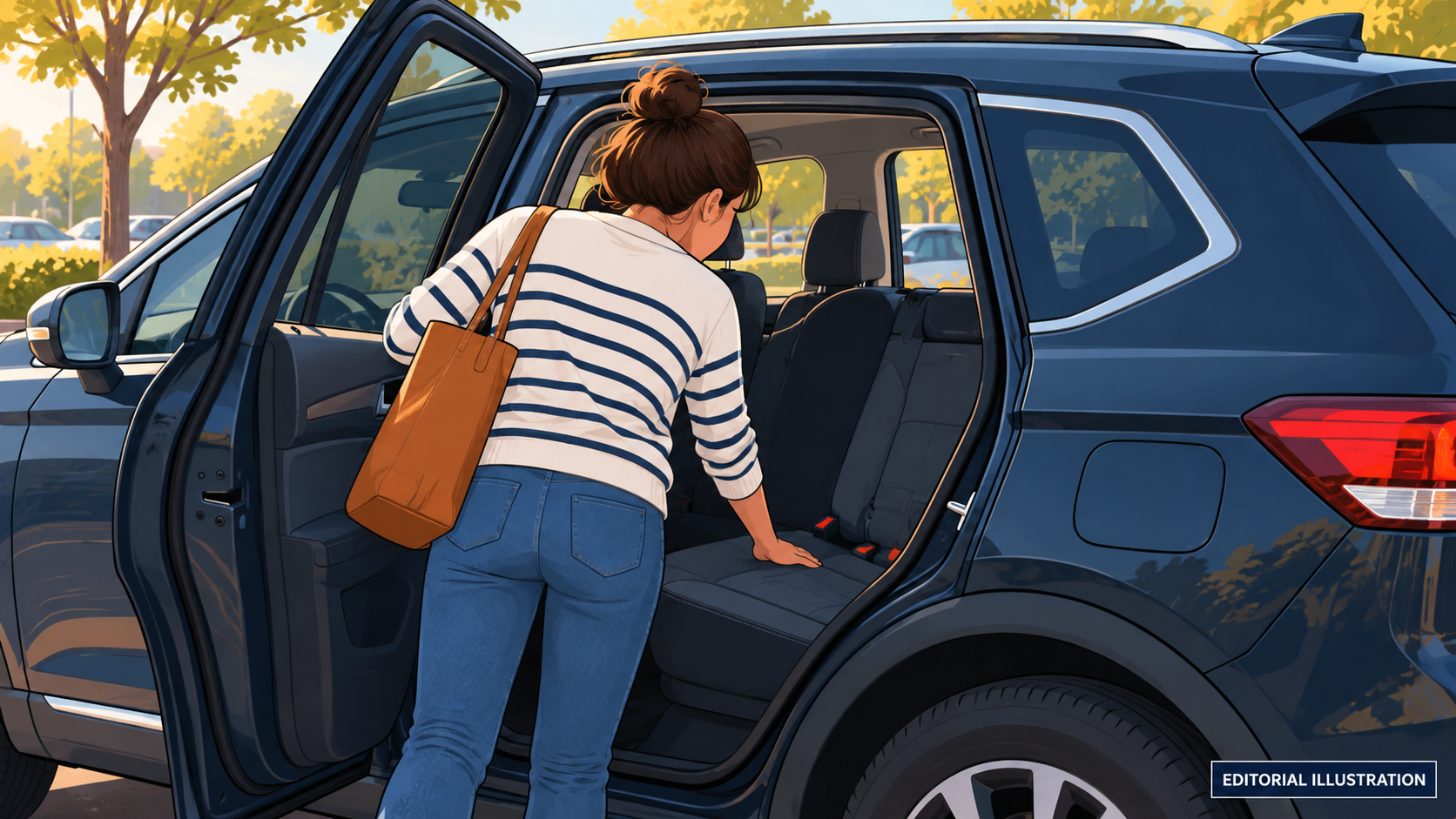
Quick answers
Is it safe to leave a child in a parked car for a few minutes with the window down?
No. A child should never be left alone in a parked car, even for a brief errand. Rolling a window down or parking in shade does little to stop the interior heating, and children can heat up faster than adults.
How to make sure a child is never forgotten in the car?
Check the whole car, especially the rear seat, every time before locking. Confirm every handover to the next caregiver and ask the school or caregiver to call if the child does not arrive, especially when routines change.
What to do if you see a child alone in a locked car?
Call 112 immediately with the exact location or vehicle description and whether the child is awake or unwell, and alert nearby staff without losing sight of the child. Follow the dispatcher's instructions on safe access and cooling.
How to stop children from getting trapped inside an unattended car?
Lock parked vehicles even when no child is travelling and keep keys or fobs out of a child's reach. Teach children that a car is not a play area, and if a child is missing, check nearby vehicles while seeking help.
A parked car is never a waiting room for a child
India’s National Centre for Disease Control advises never leaving a child alone in a parked closed vehicle. Even a brief errand can become dangerous. NHTSA explains that rolling a window down or parking in shade does little to prevent the interior from heating, and that children can heat up faster than adults. This guide is general prevention advice for India, not a report about one incident. US vehicle-death figures should not be applied to India.
Make the last step of every trip the same
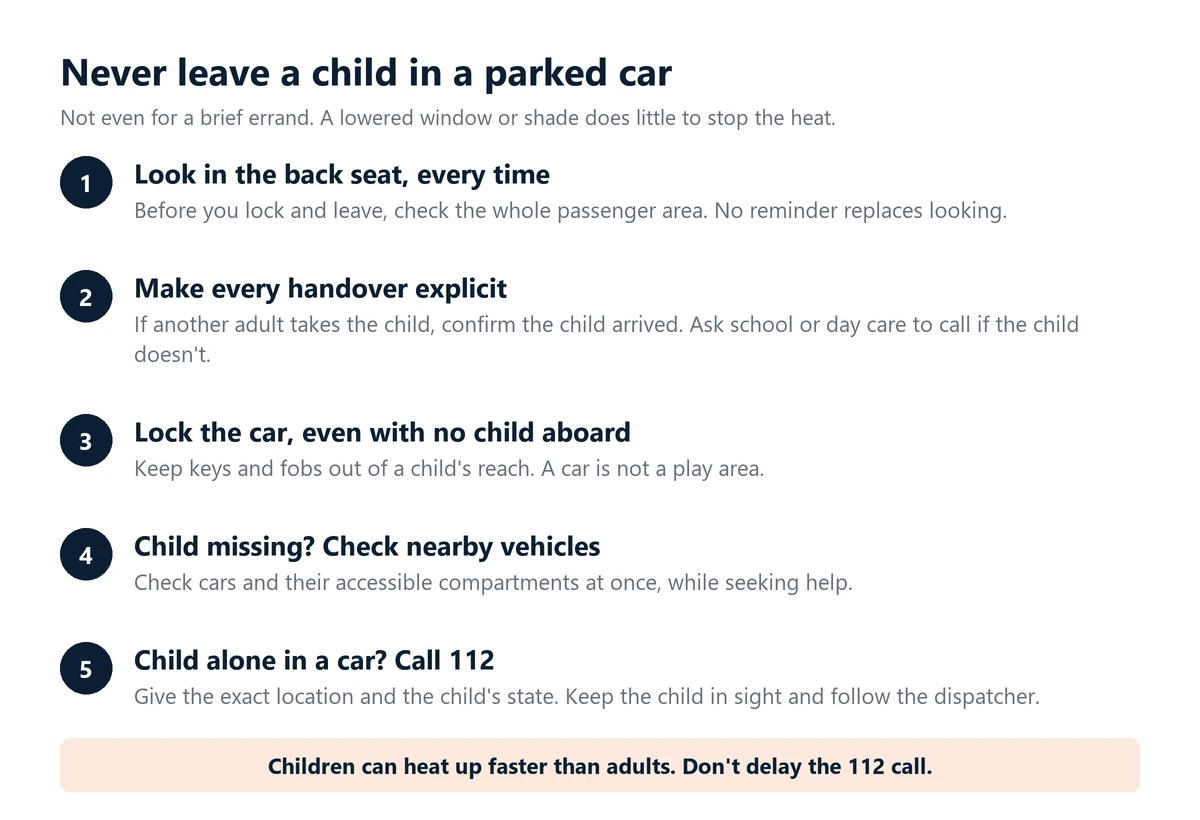
Before locking and leaving, check the whole passenger compartment, especially the rear seat, every time. This habit matters even when the usual route or caregiver changes. A safely placed bag or other reminder can prompt a rear-seat check, but no reminder replaces looking. If another adult takes a child to school or day care, confirm that the child was handed over. Ask the school or caregiver to call promptly if the child does not arrive when expected. Make the handover explicit rather than assuming the other person completed it.
Prevent a child from entering an unattended vehicle
Lock parked vehicles, including when no child is travelling, and keep keys or fobs out of a child’s reach. Teach children that a car is not a play area. If a child is missing, immediately check nearby vehicles and their accessible compartments while seeking help. These steps address a different pathway from a forgotten passenger: a child can enter an unlocked vehicle and be unable to get out.
If you see a child alone in a vehicle
Act immediately. Call India’s emergency number 112, give the exact parking location or vehicle description, and describe whether the child is awake, responsive or visibly unwell. Alert nearby staff or the driver without losing sight of the child. If the child is unresponsive or in distress, tell the dispatcher immediately and follow instructions to gain safe access and start cooling. Do not delay the emergency call while searching for a caregiver. Once the child is out, move them to a cooler place and follow dispatcher or clinician advice on cooling and urgent medical care. The NCDC’s child heat guidance advises water and airflow while help is sought; do not give an unconscious child anything to drink. This article does not give blanket legal advice about forcing entry into a vehicle: emergency responders should guide that decision.
Make the system work for more than one adult
Agree on who drives, who checks the back seat and who confirms arrival. If a trip is handed to a relative, neighbour, driver or school worker, communicate the change directly. A phone reminder or car alert can be useful as a backup, but it is not proof that the child has been safely handed over. Review the routine during holidays, unusual commutes and other schedule changes.
Limits of this guide and its video
No quantitative chart applies to this prevention guide; the steps in Panels 1 and 3 are an ordered checklist. No map applies to a nationwide prevention guide. The cover is AI-generated editorial art. The NHTSA educational video is US-produced but teaches the general look-before-locking habit; its title, publisher, thumbnail and muted inline playback were checked locally on 3 October.
What needs attention
- A cracked window or shade does not make leaving a child in a car safe.
- A repeated check-and-handover routine reduces reliance on memory alone.
- Children can also enter an unlocked vehicle and become trapped.
- A child found alone in a vehicle warrants immediate action and emergency contact.
- No India-specific parked-car death count is asserted.
Controls that reduce risk
- Make checking the rear seat the final step at every stop.
- Agree on explicit school and caregiver arrival confirmation.
- Lock unattended cars and keep keys out of children's reach.
- Teach children not to play in or around parked vehicles.
- If a child is found alone, call 112, describe their condition and follow dispatcher guidance.
Common unsafe practices
- Leaving a child for a short errand while the car is parked.
- Assuming shade, a cracked window or an alert device is sufficient.
- Skipping a rear-seat check because the trip is routine.
- Assuming a school or relative received a child without confirmation.
- Leaving unused cars unlocked or keys within a child's reach.
- Delaying 112 to find a parent when a child may be in distress.


Leave a comment