
Quick answers
What to do if I notice a safety defect on my child's school bus?
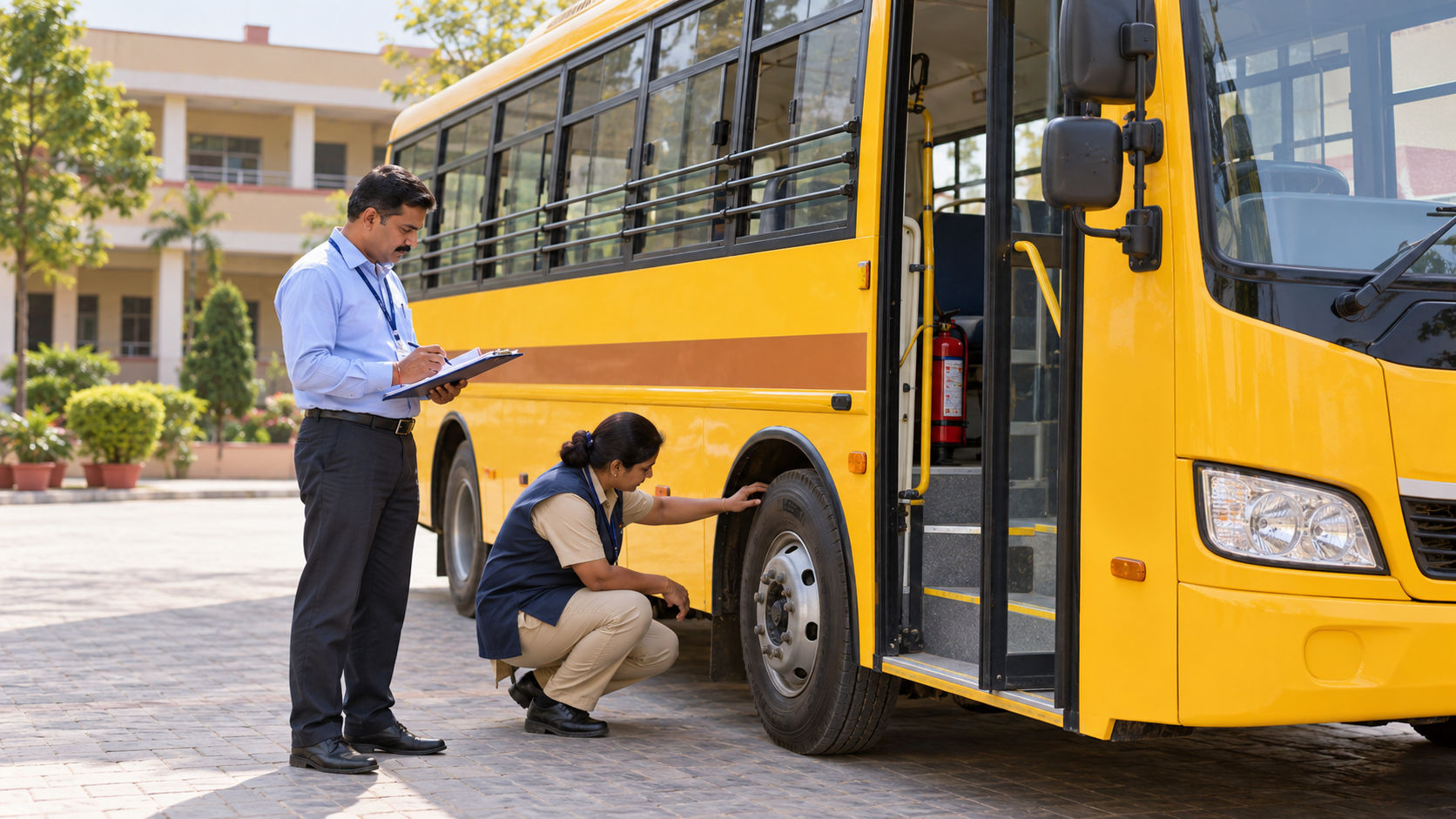
Keep the child away from any immediate hazard, then record the bus number or registration, route, date, time and the observable problem. Send a written report to the school's published transport manager or principal contact and keep a copy.
What if the school bus looks unsafe to board?
Alert the responsible school or transport staff promptly and arrange a safe alternative journey. If the bus is moving, do not ask a child to jump out or force a stop in traffic; call 112 only for a real emergency such as a collision, fire or injury.
What follow-up should parents ask from the school after reporting a bus problem?
Ask what was checked, who checked it, what was repaired or changed, whether the bus is cleared for service and how parents will be informed. A generic promise to look into it is not evidence that the defect was fixed.
Where to escalate if the school does not fix a bus safety issue?
Raise it with school management and the relevant local transport authority using the applicable local process. Rules and contacts differ by state, operator and school affiliation.
A concern needs a clear handover
A damaged tyre, broken door latch, missing attendant, overcrowding or dangerous driving should not disappear into a casual chat. The first goal is to keep children away from an immediate hazard; the second is to ensure the school checks and closes the concern rather than merely acknowledging it.
Record what you actually saw
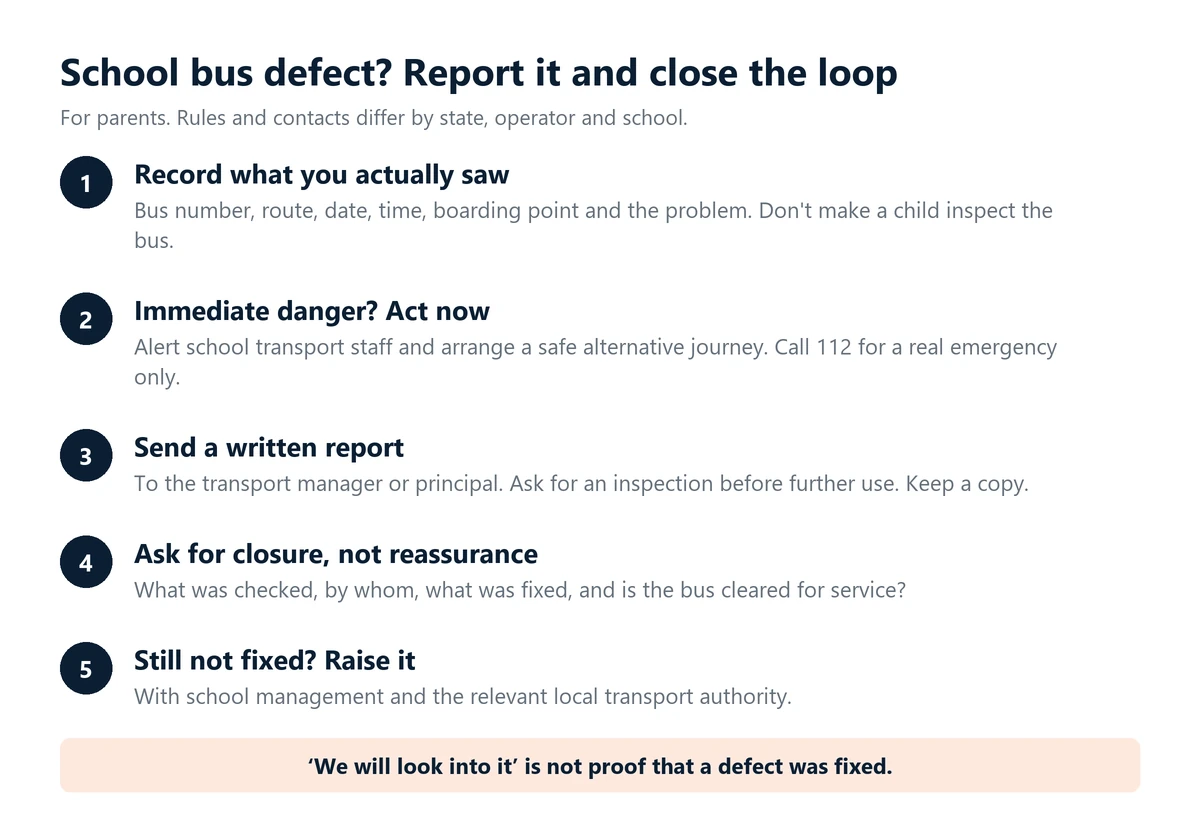
Note the bus number or registration, route, date and time, boarding point, the observable problem and whether a child is presently at risk. A clear photograph can help if taken safely and without exposing children’s identities. Distinguish a firsthand observation from something a child or another parent reported. Do not make a child inspect a vehicle, approach moving traffic or share personal details publicly to prove a concern.
Act differently for immediate danger
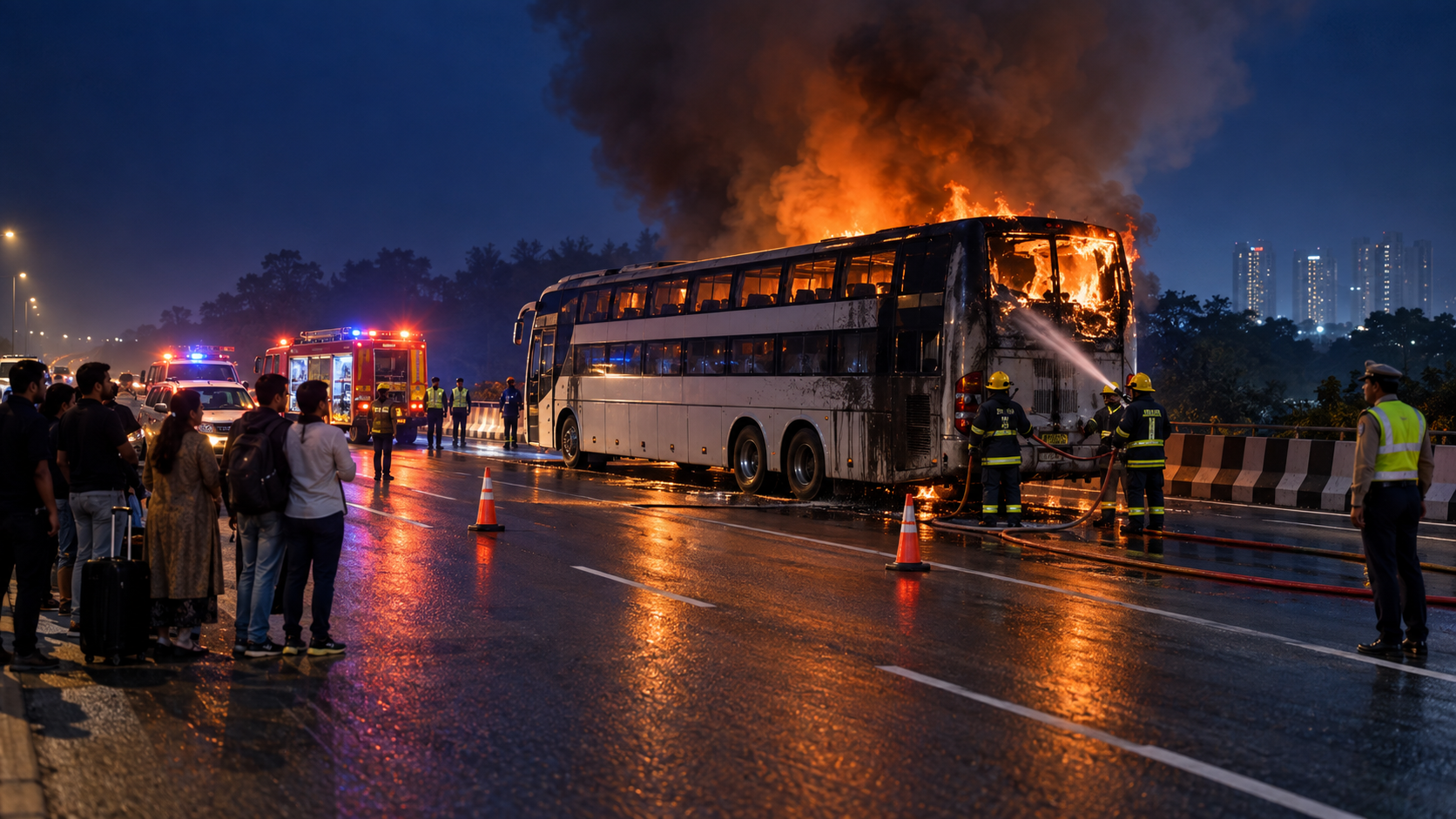
If a bus appears unsafe to board or continue in—for example a door will not secure, a tyre is visibly failing or the driver appears unable to operate safely—alert the responsible school/transport staff promptly and arrange a safe alternative journey. If the bus is moving, do not ask a child to jump out or force a stop in traffic; contact the attendant, school or emergency services as the situation requires. Call 112 in India for an actual emergency such as a collision, fire, injury or immediate threat, not a routine maintenance complaint. Parents should not attempt roadside repairs or confront a driver in a way that distracts from driving.
Send a written report to the right person
Use the school’s published transport manager or principal contact. Give the vehicle and route details, the specific concern, when it occurred and a request that the vehicle be inspected before further use if the issue could affect safety. Ask who is responsible for deciding whether that bus remains in service and how children will travel in the meantime. Keep a copy of the message and acknowledgement.
Ask for closure, not just reassurance
Request a clear response: what was checked, who checked it, what was repaired or changed, whether the bus is cleared for service, and how parents will be informed. A generic ‘we will look into it’ is not evidence that a defect was fixed. If the issue persists, raise it with school management and the relevant local transport authority, using the applicable local process. Rules and contacts differ by state, operator and school affiliation; this guide does not invent a universal deadline or legal procedure.
What the national guidance says—and does not say
CBSE’s 2017 circular for affiliated schools describes school-bus safety roles and measures, including transport-management responsibility; its 2022 reminder again tells affiliated schools to ensure safety in school buses and other transport and review safety requirements. These documents support school accountability, but they are not a substitute for current state transport rules or a vehicle-specific inspection. A parent can use them to frame questions while the school and transport authorities apply the actual local requirements.
Make reporting usable for everyone
Schools should make transport contacts easy to find, give staff a way to take a bus out of service when needed, provide alternate safe transport, document inspection and repair, and tell families when the matter is closed. Drivers and attendants need a no-blame route for reporting defects before departure. A child should know which trusted adult to tell without being made responsible for diagnosing a mechanical problem.
What needs attention
- A written, specific report is easier to investigate than an unrecorded verbal complaint.
- Immediate child safety comes before administrative closure.
- Acknowledgement alone does not prove an inspection or repair happened.
- CBSE guidance applies to CBSE-affiliated schools; state and local rules may differ.
- No single national complaint deadline or universal escalation contact is asserted here.
Controls that reduce risk
- Publish a clear transport-manager contact for families and staff.
- Record each bus concern with route, vehicle and date.
- Take an immediately unsafe vehicle out of service and arrange alternate transport.
- Document inspection and any repair or operational change.
- Tell the reporting parent or staff member how the issue was resolved.
- Apply the current local transport requirements and school policy.
Common unsafe practices
- Putting children at risk to collect proof.
- Posting children's identity or route details publicly.
- Treating a reply of 'we will check' as confirmed repair.
- Asking a child to diagnose a mechanical fault.
- Calling 112 for an ordinary maintenance request instead of an emergency.
- Assuming one school's process applies everywhere.


Leave a comment