Why make a platform plan?
A station feels familiar, but a wrong-platform rush, a dropped phone or a moving train can invite a dangerous shortcut. This is a general passenger guide, not a report about any one crash. Indian Railways has repeatedly advised passengers to use foot overbridges, avoid crossing tracks and not board or alight from moving trains. The goal is to make those choices before pressure or haste takes over.
Before you reach the train
Allow extra time for platform changes. Check the platform number using station displays or staff instructions, then use the designated foot overbridge, subway, lift or escalator that is open for passengers. Never step down onto tracks to save a walk, even if no train is visible. Trains can approach quickly and from an unexpected direction. If you have a child, keep them close; if you need mobility assistance or cannot find an accessible route, ask station staff rather than attempting a track crossing.
While waiting on the platform
Stand well back from the edge and behind a marked safety line where one is provided. Keep luggage, straps and children clear of the edge and leave room for arriving and departing passengers. Do not lean out for a photo or reach toward a passing train. Listen for announcements, especially if a platform assignment changes. In a crowded station, avoid pushing toward a doorway; follow staff instructions and wait for a safer boarding opportunity.
Board and alight only after a full stop
Do not run beside a train, grab a handle on a moving coach or jump off before it stops. South East Central Railway’s safety message directly warns against boarding or alighting from a moving train. Even a slow-moving coach creates a gap and an unstable step. If you miss the train, let it go and ask staff about the next service. Do not try to retrieve time by taking a high-risk step.
If something falls or someone is in danger
If a phone, bag or other object falls onto the tracks, do not climb down after it. Tell station staff and give the platform and approximate location so trained railway personnel can decide how to recover it safely. If a person falls or there is an immediate threat, shout for staff and call for emergency help; do not create a second casualty by entering the track area. RailMadad lists 139 for railway security or medical assistance. For an immediate serious emergency in India, 112 is the national emergency response number. Give the station name, platform, train direction if known, and the person’s condition; then follow staff and dispatcher instructions.
Five-step travel routine
- Confirm the platform before moving.
- Use a designated bridge or subway, never the tracks.
- Wait well back from the edge.
- Board or alight only when the train has stopped.
- Report hazards or dropped property to staff; use 139 or 112 when urgent help is needed.
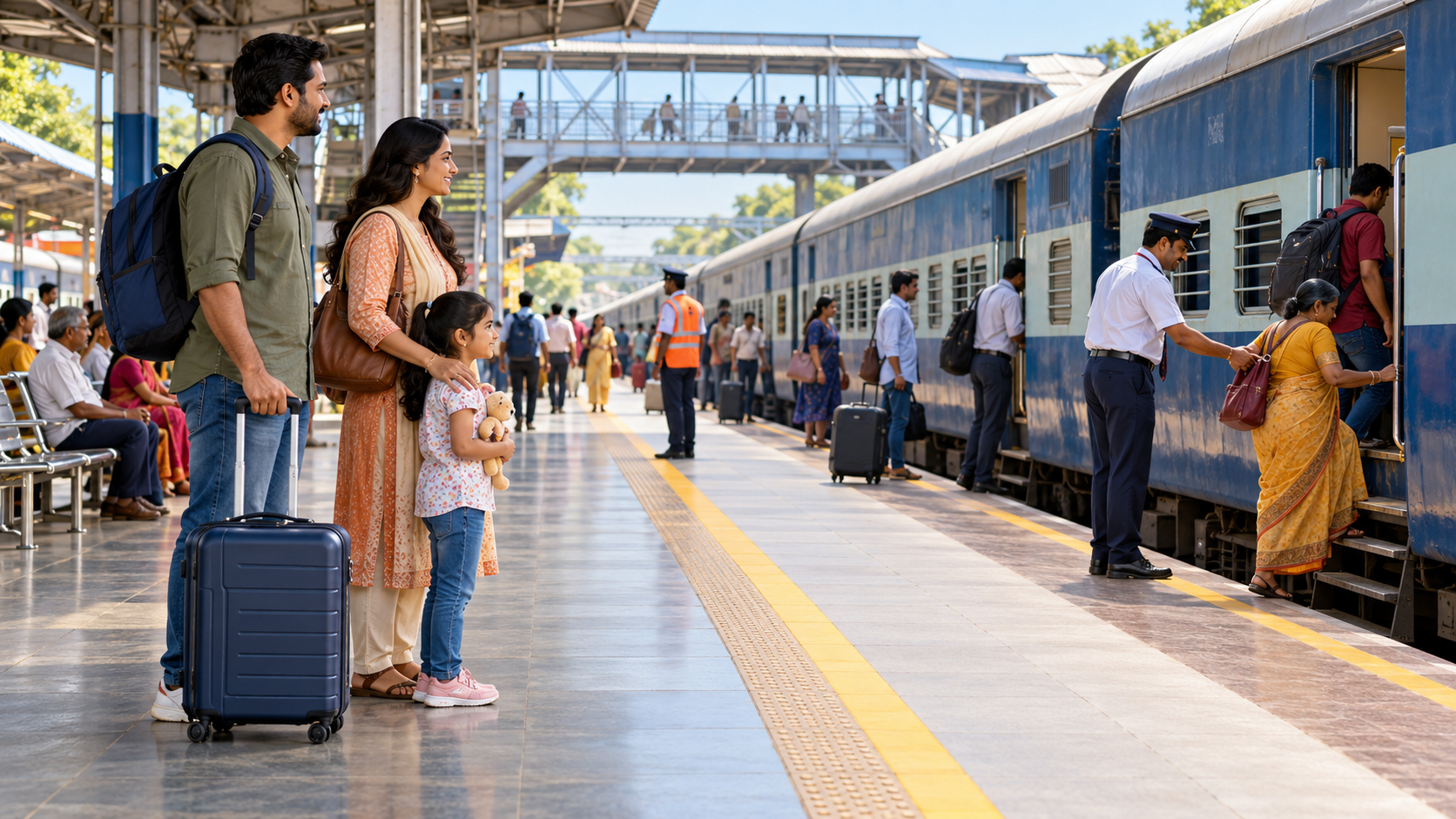
The sequence is an editorial checklist, not a measurement of incident risk. Station layouts vary; obey local signs and staff. The cover is an AI-generated editorial illustration, not a photograph of a named railway station.
What needs attention
- Indian Railways and PIB guidance discourages track crossing and promotes foot overbridges.
- Official railway safety messaging warns against boarding or alighting from a moving train.
- RailMadad currently advertises 139 for railway assistance, including security and medical needs.
- This guide does not claim a measured rate of platform injuries or a universal platform layout.
Controls that reduce risk
- Before the next station visit, identify a designated cross-platform route and allow time to use it.
- Teach children to stop well back from the platform edge and ask staff for help.
- Do not attempt to board or leave a moving train, even if it appears slow.
- If an object falls to the tracks, notify railway staff rather than entering the track area.
- For urgent assistance, give staff or 139/112 the station and platform details.
Common unsafe practices
- Crossing tracks because the next platform looks close.
- Standing on or over the edge line with bags or children.
- Running beside a moving train to catch a coach or jumping off before a full stop.
- Going onto tracks for a dropped object.
- Treating a public safety video as footage of a specific incident.
Leave a comment