Home / Case Study / Caralton Tower Office Building Fire Tragedy
Case Study · Ready For Review
Caralton Tower Office Building Fire Tragedy
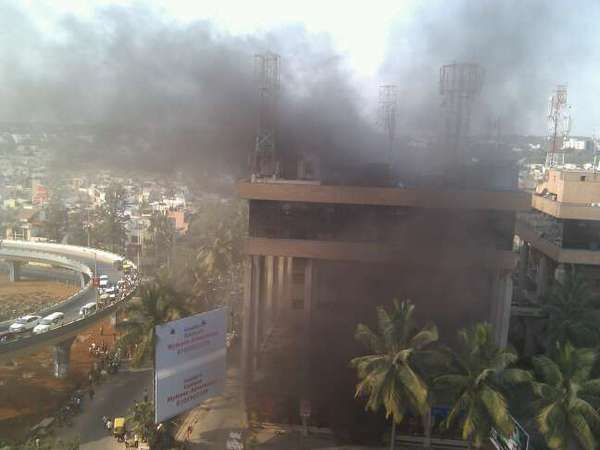
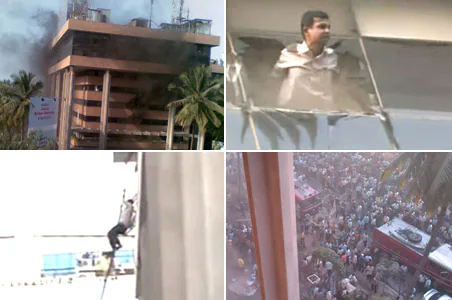
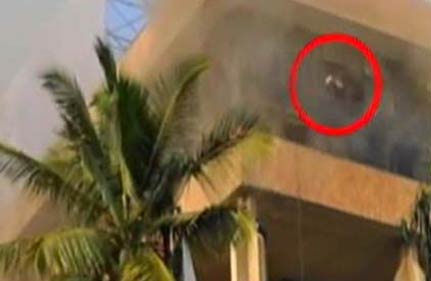
The Carlton Towers high-rise fire killed 9 people and injured 57; the official CAG audit documented delayed notification and an inadequately prepared high-rise response.
Date23 February 2010LocationCarlton Towers, Bengaluru, Karnataka, India
01
Case Study
What happened here
1 / 5Existing HowToSurvive.in image
Deaths9
Injured57
Reported fire timeAbout 15:00
Control-room call receivedAbout 16:30
Special high-rise vehicle summonedAbout 16:45
Verified overview
What we can say safely
The Carlton Towers high-rise fire killed 9 people and injured 57; the official CAG audit documented delayed notification and an inadequately prepared high-rise response.
Incident timeline
Fire develops around 15:00
Control room receives the fire call around 16:30
Fire vehicles are sent after the call
High-rise rescue vehicle is summoned around 16:45
The special vehicle does not reach the incident site, according to the CAG audit
Key findings
Why consequences escalated
A 90-minute delay between reported fire start and control-room call consumed rescue time
Special high-rise capability was not mobilised with the initial response
Traffic and vehicle readiness affected rescue access
Smoke-safe stairs and defend-in-place decisions require reliable building information
Fire reports must be analysed systematically to improve preparedness
Core mistakes / what went wrong?
Failures and risk multipliers
Operating without verifying occupancy, fire and building approvals
Allowing combustible material or stock to compromise escape routes
Locking, obstructing or reducing exits
Failing to test alarms, emergency lighting and firefighting equipment
Failing to train staff for immediate evacuation and emergency calls
Voices that matter
People closest to the evidence
“Safety lesson”
Capacity, combustibility, warning, escape and emergency access must be verified together before occupancy.
Practical prevention
Actions that reduce risk
Compare actual occupancy and layout with approved plans
Open and walk every exit to a safe assembly point
Remove combustibles and storage from stairs and exit access
Test alarms, emergency lighting and firefighting systems
Train every shift and run a realistic evacuation drill
Keep fire-service access clear and display the complete site address
02
Watch & learn
Playable video library
Captions
Official guidance
Fire Safety
Bureau of Indian Standards · Hindi/English
BIS overview of building fire-safety systems
03
Incident data
The broader evidence
How to survive this situation
Survival sequence
Raise the alarm, call 112 and evacuate immediately
Use the nearest safe stair; do not use ordinary lifts
Some older incidents have inconsistent totals across early and later records. Where no final technical investigation was located, the post is marked ready for editorial review and does not assert disputed causation as settled fact.
What you can do today
Immediate actions
Check every exit door opens without a key
Confirm the alarm can be heard throughout occupied areas
Remove stock, décor and waste from escape paths
Write emergency number 112 and the full address at the control point


 1 / 5
1 / 5