
Quick answers
What are the warning signs before a landslide?
Watch for sudden cracks in walls or floors, tilting trees or poles on slopes, rumbling or cracking sounds, muddy water seeping from hill faces, jammed doors or windows, and streams turning muddy after rain.
What should I do if I notice landslide warning signs?
Evacuate immediately and alert neighbours and local authorities. Follow official weather and disaster alerts and move before you are forced to.
Is it safe to travel on hill roads during heavy rain?
It is better to avoid travelling on hill roads during continuous heavy rain. Do not stand on bridge edges or riverbanks during rain, and avoid building or parking under steep slopes.
What should I carry while travelling in landslide-prone hill areas?
Carry a battery torch, a whistle and a first-aid kit, and keep emergency contacts saved, including 108 for an ambulance and 112 for emergencies.
Landslides are not rare accidents in far-off hills any more. They now hit highways, pilgrim routes, hydropower sites, tourist towns and crowded hillside colonies. The ground usually gives warning signs before it moves. Knowing them can save your family.
What the official mapping shows
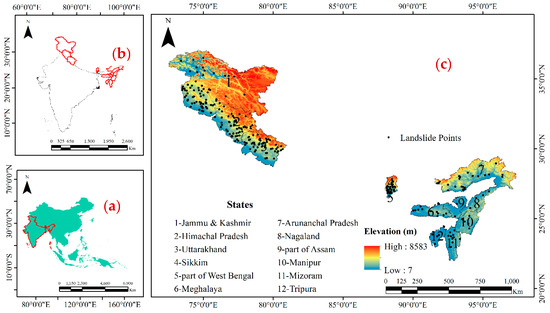
ISRO’s National Remote Sensing Centre (NRSC) published the Landslide Atlas of India in 2023. It holds a database of about 80,000 landslides mapped between 1998 and 2022 in the landslide-prone parts of 17 states and two union territories, in the Himalayas and the Western Ghats. NRSC used this data to rank 147 districts by how exposed their people and property are to landslides.
Reports on the Atlas say Rudraprayag and Tehri Garhwal in Uttarakhand came out on top, and that the states with the most mapped landslide sites were:
| State or UT | Landslide sites mapped, 2000 to 2022 |
|---|---|
| Mizoram | 12,385 |
| Uttarakhand | 11,219 |
| Jammu and Kashmir | 7,280 |
| Kerala | 6,039 |
| Himachal Pradesh | 1,561 |
Source: ISRO/NRSC Landslide Atlas of India (2023), state counts as summarised by GKToday, 8 March 2023. These are mapped landslide sites, not deaths, and the count depends on how much each area was surveyed.
Why this matters
A landslide does not only bring down soil. It cuts off roads, buries homes, breaks power and water lines, and can trap whole villages. On 30 July 2024, landslides at Mundakkai and Chooralmala in Wayanad, Kerala, killed more than 200 people in a single night after very heavy rain. Reports of the final toll differ. Kerala is not usually thought of as a landslide state, which is exactly the point: the Western Ghats are at risk too.
Earlier versions of this page gave national totals for landslides, deaths and displaced families for 2019 to 2025, a ranking of states by “percentage of districts at risk”, trigger percentages and a yearly loss figure. We could not trace any of these to an official source, so we have removed them.
Where the risk is highest
- Himalayan states: Uttarakhand, Himachal Pradesh, Jammu and Kashmir, Sikkim, the Darjeeling hills and Arunachal Pradesh. Steep young mountains, heavy monsoon rain, earthquakes and road-cutting all add to the risk.
- North-east: Mizoram, Nagaland, Manipur and Meghalaya, where hill cutting for roads and towns is common.
- Western Ghats: Kerala (Idukki, Wayanad), the Nilgiris in Tamil Nadu, and the ghat sections of Maharashtra and Karnataka.
Most landslides in India are set off by heavy or prolonged rain and cloudbursts. Unplanned road-cutting, construction on steep slopes, quarrying and loss of forest cover make slopes weaker.
Warning signs before a landslide
- New cracks in walls, floors or the ground.
- Trees, poles or fences on a slope starting to tilt.
- Rumbling sounds, or stones cracking and falling.
- Muddy water coming out of a hillside, or springs appearing where there were none.
- Doors and windows suddenly jamming as the house shifts.
- A stream suddenly turning muddy, or its flow dropping, during heavy rain.
- Water seeping through retaining walls or tunnel linings.
If you notice any of these during heavy rain, leave at once, warn your neighbours and tell the local authorities. Do not wait to see if it gets worse.
What you can do
- Do not build, rent or park right below a steep slope or a cut hillside.
- Avoid travelling on hill roads during continuous heavy rain, and check whether roads are open before you set out.
- In the hills, carry a torch, a whistle, a first-aid kit and some water and food in the vehicle.
- Save 112 (all emergencies) and 108 (ambulance).
- Do not stand on bridges, riverbanks or under hillsides to watch the rain or a flooded river.
- Follow IMD rain warnings and your district administration’s alerts. Move when you are told to, before you are forced to.
What needs to change
- District-level landslide hazard maps used in every building and road decision.
- No-construction zones on the steepest and most unstable slopes.
- Slope protection that works with nature: proper drainage, grass and bamboo, retaining walls designed by engineers.
- Early warning based on rainfall limits and ground sensors, sent to people’s phones.
- Training for local communities, drivers and tour operators, through NDMA and volunteer groups like VFF India.
References
- ISRO / National Remote Sensing Centre: Landslide Atlas of India (2023)
- Geological Survey of India: landslide inventory and hazard zonation
- National Disaster Management Authority: landslide guidelines
- India Meteorological Department: rainfall warnings
The ground often warns before it moves. If you live in or travel to the hills or the Ghats, share these warning signs with your family before this monsoon.
What needs attention
- ISRO has mapped about 80,000 landslides in India between 1998 and 2022
- The risk spans both the Himalayas and the Western Ghats
- Uttarakhand districts rank highest for exposure to landslides
- Heavy and prolonged rain is the main trigger; road-cutting and building on slopes weaken hillsides
- Wayanad 2024 showed how one night of rain can kill hundreds
- No verified national total of landslide deaths for 2019 to 2025 is published
Controls that reduce risk
- Check whether your home or hotel sits below an unstable slope
- Learn the warning signs and teach them to your family
- Keep a torch, whistle, first-aid kit, water and food in the vehicle in the hills
- Agree an evacuation route and meeting point with neighbours
- Report new cracks or seepage to the local authorities
Common unsafe practices
- Building or renting right below a steep or freshly cut slope
- Driving on hill roads during continuous heavy rain
- Ignoring new cracks, tilting trees or muddy springs
- Waiting to see if things get worse before leaving
- Standing on bridges or riverbanks to watch the rain
- Ignoring IMD and district alerts

Leave a comment