
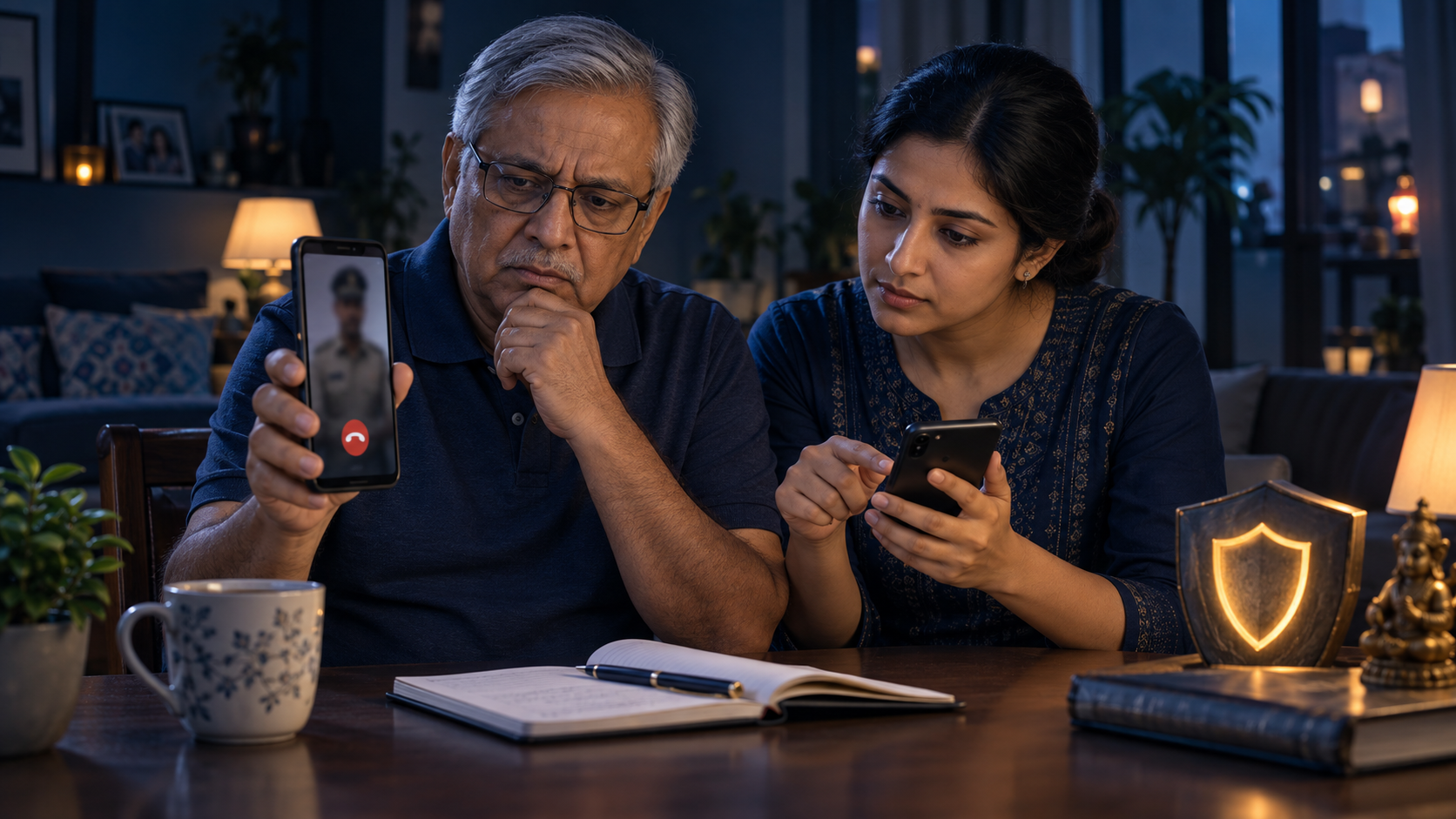
There is no lawful “digital arrest”
A police officer, court, regulator or investigating agency does not arrest you through WhatsApp, Skype or another video call. A genuine authority does not order you to move money to a “safe account”, keep a secret from your family, remain visible on camera for hours, or share an OTP to prove innocence. These demands are designed to create fear before you can verify them.
Break the pressure loop
End the call. You do not need the caller’s permission. Do not use a number, link or officer identity supplied in the call as your only verification. Contact the named institution through its independently located official website or local office and tell a trusted person what happened.
If no money has moved
Block the caller after preserving the number and messages. Check whether you installed a screen-sharing or remote-access app, shared identity documents, revealed banking information or allowed camera and microphone access. From a clean device, change exposed passwords and review bank beneficiaries, transaction limits, email recovery settings and SIM security.
If money has moved
Speed matters. Call your bank through its official channel and ask it to mark the transfer as fraud and contact the beneficiary bank. Call 1930 immediately, then complete the complaint at cybercrime.gov.in. Keep the acknowledgement number. A rapid complaint may help authorities attempt a hold, but no process guarantees recovery.
Preserve evidence without staying exposed
Save phone numbers, profile names, call times, chat exports, screenshots, transaction IDs, account numbers, URLs, app names and any files sent by the caller. Do not delete the chat or reset the device before taking advice if the device may contain evidence. Do not forward intimate or manipulated images beyond the reporting process.
Protect the person, not just the account
Victims may feel shame, panic or fear of arrest. Respond without blame. Sit with the person, help make the bank and 1930 calls, and document each action. If threats involve self-harm, violence or immediate physical danger, call 112 and stay with the person.
What families and banks can prepare today
Agree on a family verification phrase, keep official bank numbers saved, reduce unnecessary transfer limits and decide who can be called during a suspicious demand. Banks should allow staff to pause unusual transfers, speak to the customer away from the caller and escalate suspected coercion quickly.
What needs attention
- Fear and continuous contact reduce a target’s chance to seek independent advice.
- Caller ID, uniforms, documents and video faces can all be forged or manipulated.
- A request for secrecy or transfer to a safe account is a decisive warning sign.
- Rapid contact with the bank and 1930 gives the best available chance of disrupting fund movement.
- Evidence should be preserved, but evidence collection must not delay the first fraud report.
- Supportive family response reduces isolation and helps the victim complete recovery steps.
Controls that reduce risk
- Save 1930 and official bank fraud numbers in family phones.
- Create a family rule: no urgent transfer is made during a threatening call.
- Use lower daily transfer limits unless higher limits are temporarily required.
- Enable transaction alerts on more than one trusted channel where available.
- Review remote-access apps and device permissions with older family members.
- Banks should train frontline staff to identify customers being watched or coached by a caller.
- Schools, employers and community groups should teach verification without shaming victims.
Common unsafe practices
- Arguing with the caller while remaining on video.
- Calling back only on a number supplied by the caller.
- Sharing OTP, PIN, password, card details, screen view or remote access.
- Moving money to a safe, verification, RBI, court or police account.
- Deleting chats or resetting the device before preserving evidence.
- Paying an unofficial recovery agent after the first fraud.



Leave a comment