
Quick answers
How to plan a safe idol immersion outing for a family or group?
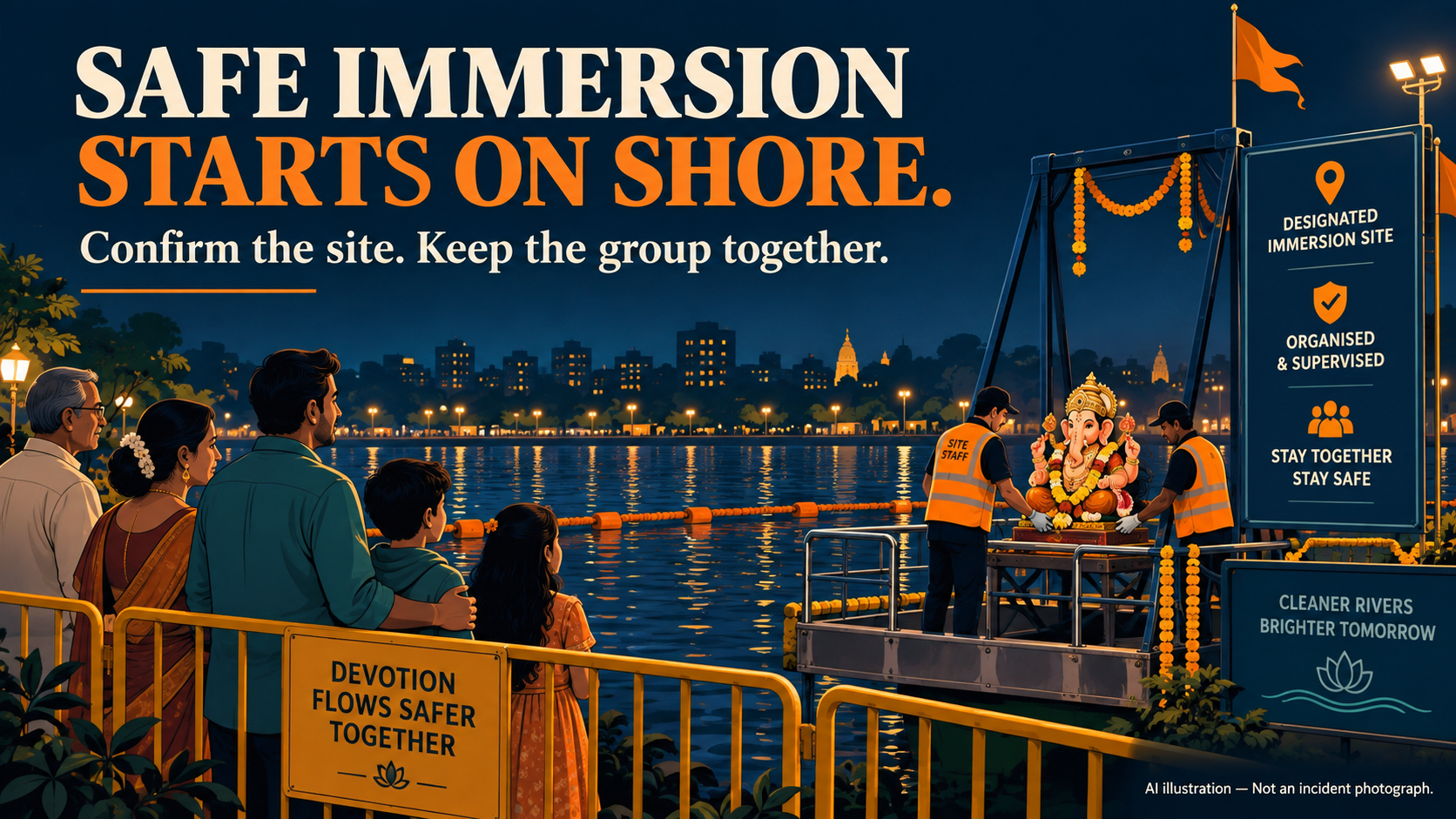
Confirm the current designated site, its operating time and a responsible contact before leaving. Name a group leader and second contact, use a participant list, and agree that everyone stays in the waiting area and does not follow the idol into the water.
Why is a headcount not enough when supervising children at an immersion site?
A headcount alone cannot show whether a particular child is missing. Use a participant list and reconcile names at departure, arrival, before leaving the site and after return, with one adult focused only on supervising children.
What to do if the immersion site has no staff or barriers on arrival?
Hold the group in a safe place away from the water and contact the organiser. Missing staff, unsafe crowding or an unprotected approach means pause; leaving or rescheduling is acceptable, and do not test depth by walking in.
What to do if someone is in difficulty in the water during immersion?
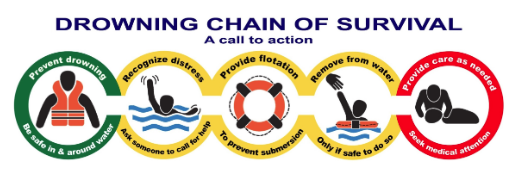
Alert trained site rescuers immediately and call 112, giving the waterbody name, accessible entrance and where the person was last seen. Do not jump in or form a human chain; reach or throw assistance from a safe position only as trained guidance allows.
Who should stay back from the water at an immersion?
Young children, older relatives and anyone who has had alcohol, is on drowsy medicine, or is tired or unwell should watch from behind the barrier. Only the small assigned group should go near the water, and non-swimmers should never enter moving or unfamiliar water.
What first aid is needed after a person is pulled out of the water?
Check breathing. If they are not breathing normally, start CPR and follow the 112 or 108 call-taker: push hard and fast in the centre of the chest, 100 to 120 a minute. Trained rescuers should give rescue breaths too. Keep a breathing person warm and take them to hospital even if they seem fine.
What should organisers arrange at an immersion site?
Use the notified site or an artificial pond, keep separate entry and exit routes, keep spectators back, place life rings, ropes and poles within reach, brief volunteers, keep lighting and an ambulance lane, and stop if conditions go beyond the plan.
What happened at idol immersions on 20 October 2026?
Reports from Kota, Gonda, Fatehpur and Prayagraj describe drownings at immersion spots, and a boat capsize in a canal at Kota. By our count at least eight people died and at least four were missing on the morning of 21 October. Officials said several of the spots were not designated or were prohibited. Counts differ between outlets and are still moving.
Make the decision before reaching the water
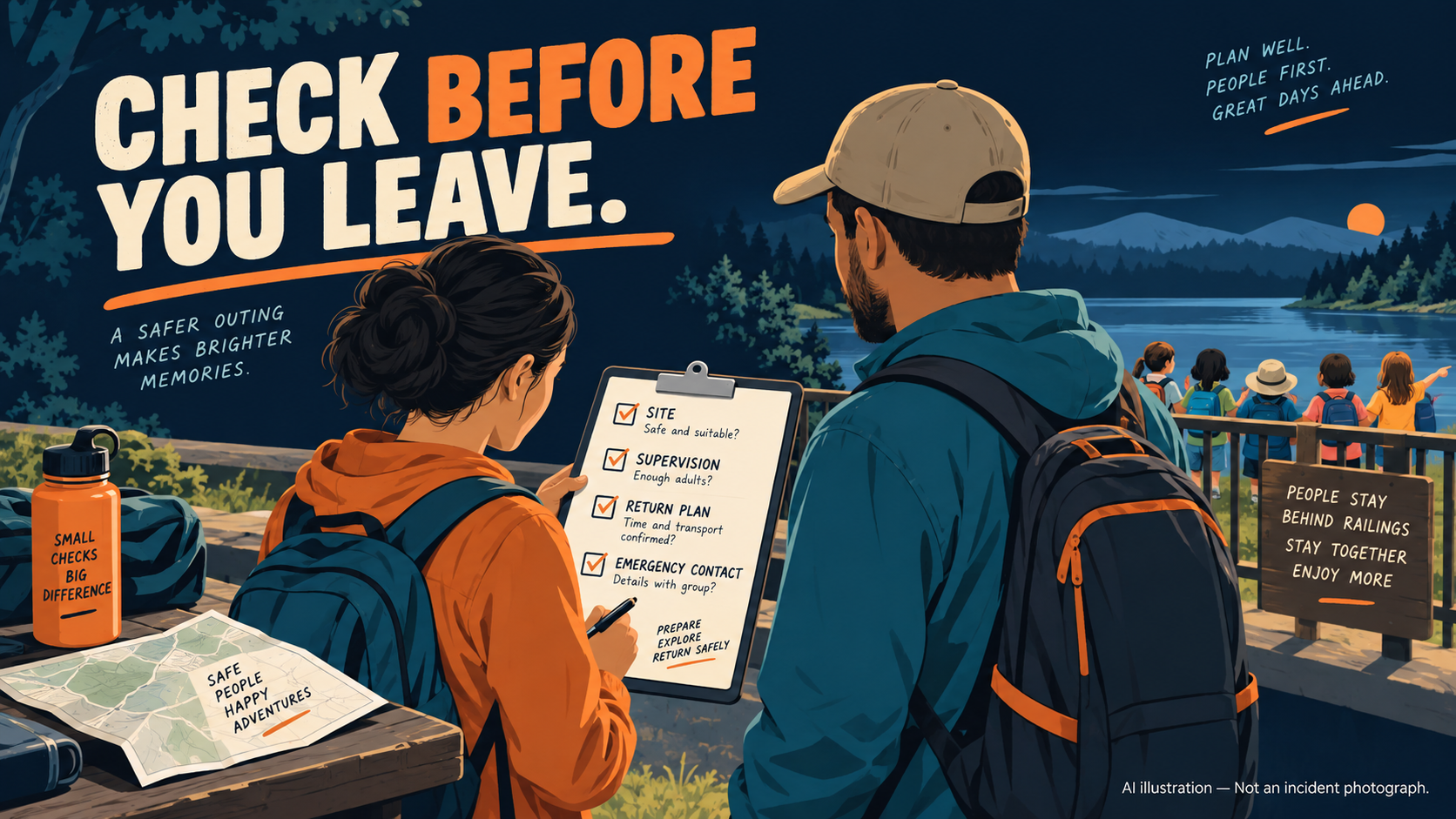
A group outing should not depend on improvising at the edge of a lake. Decide where the group is going, who supervises it and how site staff will receive it. This guide combines official water-safety principles with an editorial planning checklist. It is not a certification that a particular site is safe. Updated 21 October 2026: the next section looks at the immersion accidents reported on 20 October.
This week: immersion accidents, 19 to 21 October 2026
Several people died or went missing at idol immersions on Tuesday 20 October 2026, Vijayadashami. The reports are early, the numbers differ between outlets, and we have left out names and ages. By our count from these reports, at least eight people died and at least four were still missing on the morning of 21 October.
- Kota, Rajasthan. A small wooden fishing boat carrying seven people and an idol capsized in the Chambal right main canal. Three swam out. On Wednesday morning Amar Ujala reported two bodies recovered and two men still missing. Minister Madan Dilawar said the spot was prohibited for immersion, and the SP said designated sites have boats and divers but such cover cannot be set up along the whole canal (The News Mill, with ANI inputs). About 2,000 cusecs were flowing after water was released two days earlier (ETV Bharat).
- Gonda, Uttar Pradesh. At Laxmanpur ghat on the Tedhi river, PTI reported that the SDM said the spot was not a designated ghat and the organisers had neither taken permission nor told the administration. One young man died and two were missing; Dainik Bhaskar reported on 21 October that one body had been recovered and two others were still being searched for. At Bhainsahwa ghat on the Kuano river a man who went in to save four others was lost; PTI called him missing and Bhaskar reported his death confirmed.
- Fatehpur, Uttar Pradesh. Three teenagers drowned in a village pond they entered to bathe after an idol was immersed. The SP said a designated ghat was available but some devotees took one idol to the pond (PTI).
- Prayagraj, Uttar Pradesh. An uncle and nephew drowned in the Tons river at a spot where the police said immersion was prohibited. The families said there were no police or barricades there (Amar Ujala).
Each of these lines up with a step in this guide. Use only the notified ghat or an artificial tank: officials called the spots at Gonda, Prayagraj and Kota undesignated or prohibited. Do not bathe in the water afterwards: that is what happened at Fatehpur. Do not put an idol on a small boat: the Kota boat was a fishing boat with the idol in the middle. Reach or throw, do not go in: the man at Bhainsahwa went into the Kuano to save four others and was lost. And find out whether water has been released into a canal before anyone goes near it. If someone is in trouble, call 112.
Last checked: 21 October 2026, about 11 a.m. IST, using reports published up to about 10.30 a.m. We will update this section if the counts change.
Confirm the site and its operating arrangements
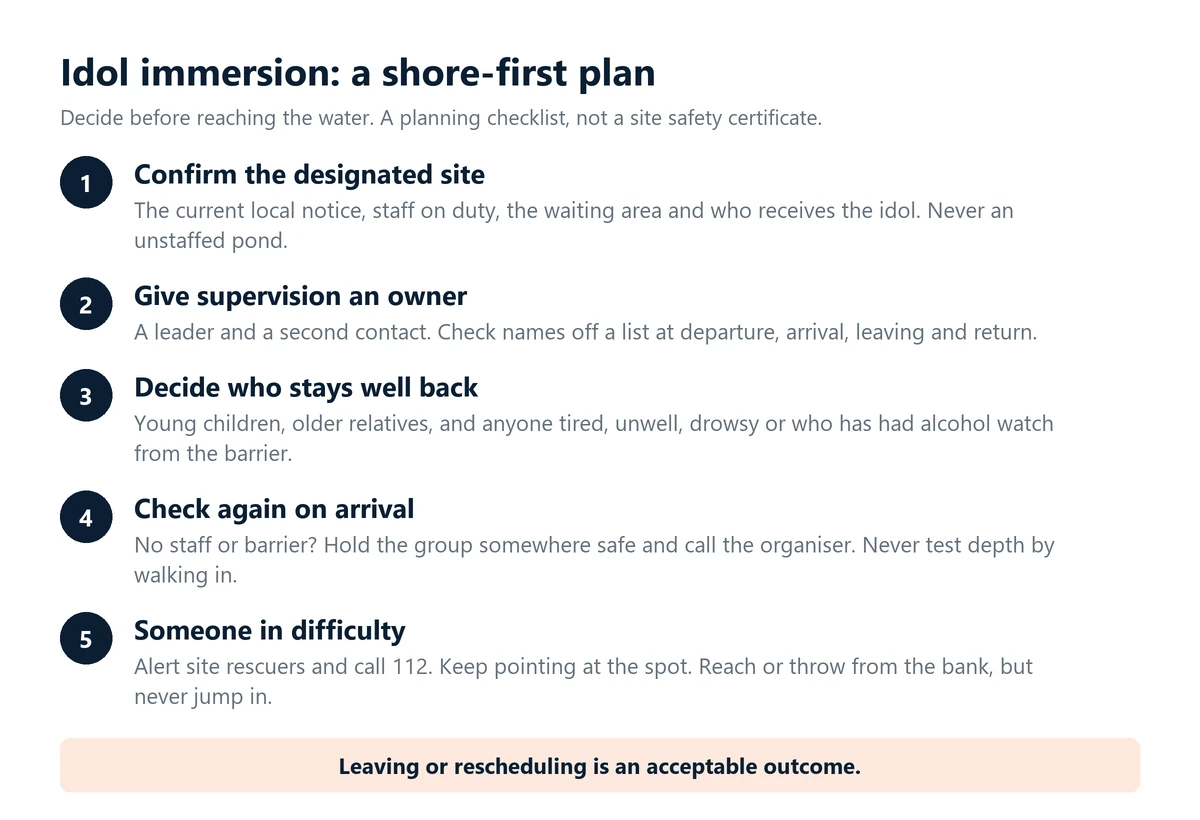
Ask the local authority or event organiser for the current designated location, opening period and contact. The CPCB revised idol-immersion guidance hosted by the Maharashtra Pollution Control Board addresses designated arrangements, crowd management, barriers, staffing and public information. Use the current local notice to turn those general arrangements into a specific destination. An old map pin is not confirmation that staff are operating today.
Ask where the group waits, who receives the idol and whether spectators must remain behind barriers. Confirm access for people who need assistance. If the organiser cannot explain the handover or emergency access, obtain clarification before departure. Do not substitute an unstaffed nearby pond because a queue is long.
Give supervision an owner
Name a group leader and a second contact. Divide supervision clearly so everyone knows whom to stay with. A headcount alone cannot show whether a particular child is missing: use a participant list and reconcile names at departure, arrival, before leaving the site and after return. This is an editorial organisational recommendation, not a universal legal staffing ratio.
Explain the simple boundary beforehand: participants stay in the waiting area and do not follow an idol or another person into the water. Agree on a visible meeting point away from the edge. Keep the person supervising children focused on them while someone else handles transport, ceremony arrangements or photography.
Decide before you leave who stays well back. Young children, older relatives and anyone who has had alcohol, is on medicine that makes them drowsy, or is tired or unwell should watch from behind the barrier. Only the small group the organiser has assigned should go near the water. Someone who cannot swim should never step into moving or unfamiliar water, not even to knee depth.
Check again on arrival
Plans need a visible reality check. Locate the staff member, protected waiting area and exit. Look for crowd pressure, an obstructed route or a missing barrier. Do not test depth by walking in. If the planned protection is absent, hold the group in a safe place and contact the organiser. Leaving or rescheduling is an acceptable outcome.
If someone is in difficulty
Immediately alert trained site rescuers and call 112 in India. Say what happened, the named waterbody, the accessible entrance and where the person was last seen. If several people are missing, distinguish confirmed names from an uncertain estimate. Send someone to guide responders only when the remaining group still has supervision.
One person should keep pointing at the spot where the person was last seen and not look away until rescuers take over. If you can help from the bank, stay low on firm ground so you cannot be pulled in, and reach with a pole or throw a life ring, a rope or anything that floats, such as an empty plastic can.
The American Red Cross reaching-and-throwing lesson demonstrates assistance that avoids entering the water. Do not jump in or improvise a human chain. Follow the dispatcher and trained rescuers. Once someone is recovered, follow emergency instructions; provide first aid within your training and do not delay calling for professional help.
After someone is pulled out
Check whether they are breathing normally. If they are not, start CPR straight away and follow the 112 or 108 call-taker. Push hard and fast in the centre of the chest, 100 to 120 times a minute, about 5 to 6 cm deep. Drowning is a breathing emergency, so if you have been trained in rescue breaths, give five breaths first and then continue with 30 compressions to 2 breaths. If you have not been trained, keep doing chest compressions without stopping. Use an AED if one is brought.
If they are breathing, take off wet clothes if you can, cover them with something warm and keep watching their breathing. Take them to hospital even if they seem fine. Water in the lungs can cause problems later, so medical advice is needed even when the person looks well.
If you are organising for a mandal or society
Use the site the local authority has notified, or an artificial pond. The CPCB idol-immersion guidelines ask that river immersion points be cordoned off and barricaded to avoid any loss of life, and that motor boats with personnel and safety equipment supervise sea immersions. On your side, keep separate routes in and out, let only a small assigned team go near the water, and keep life rings, ropes and reaching poles where volunteers can grab them. Brief volunteers on who calls 112, keep lighting with a backup after dark and keep an ambulance lane clear. If the crowd, the light, the weather or the water goes beyond what you planned for, stop the immersion.
Close the outing properly
Before departure, reconcile the participant list and hand children back to the responsible adult through the agreed arrangement. Record any missing barrier, unsafe instruction or access problem and report it to the organiser. A near miss is useful only if it changes the next visit’s plan.
What this guide does and does not measure
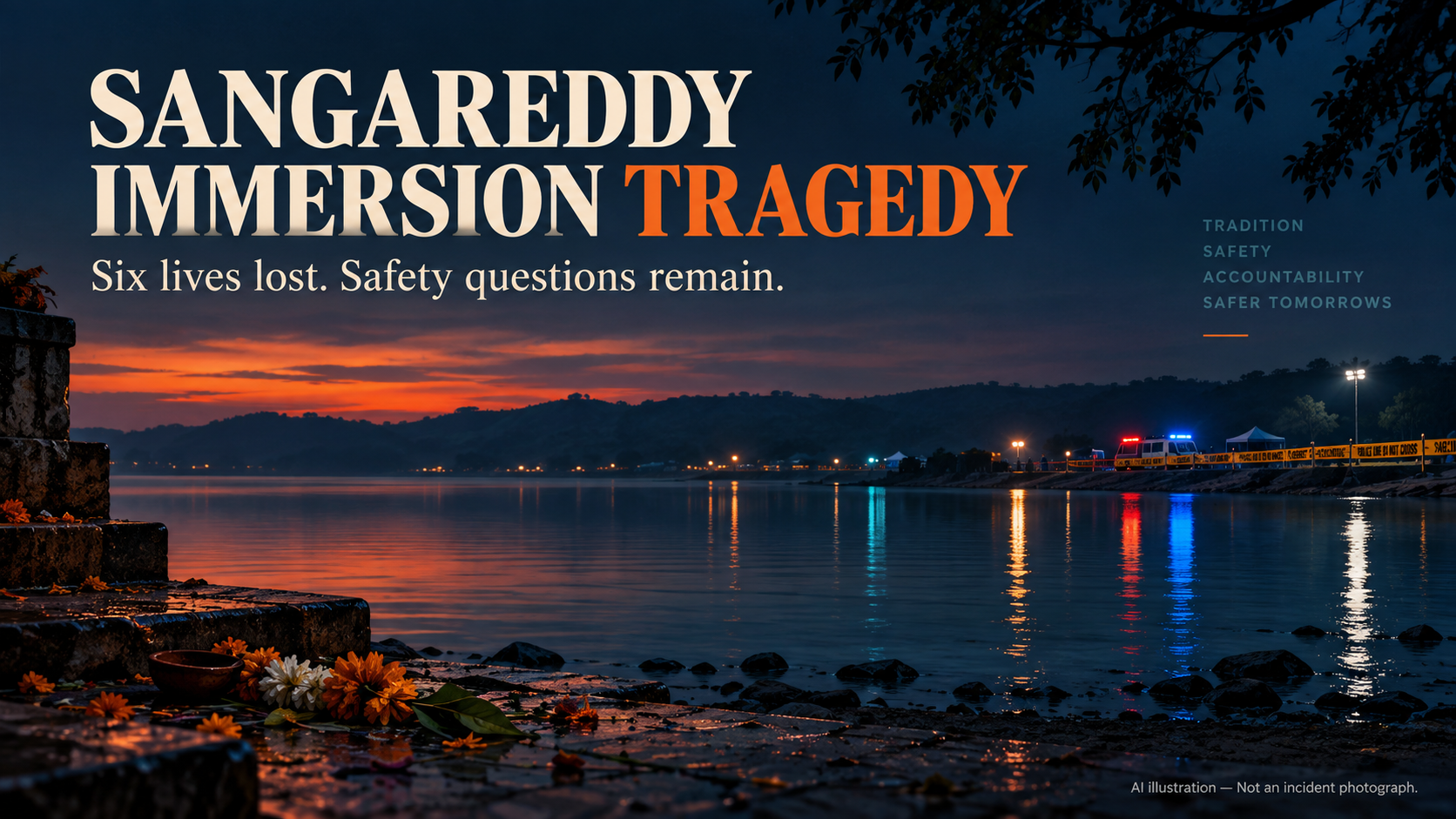
There is no tested claim here that a checklist reduces risk by a particular percentage. WHO drowning-prevention guidance provides general context for supervision, barriers and rescue capability. The linked Sangareddy case explains why details matter, but one incident cannot establish the frequency of immersion emergencies across India.
What needs attention
- Site designation is the start of the check, not its end. Families still need to know whether the site is operating at the intended time and where staff expect them to wait. General guidance cannot validate a particular lake on a particular evening.
- Supervision fails easily when responsibility is assumed rather than assigned. The organiser should make it explicit who watches participants while other adults handle the idol, transport or photographs. A named handover prevents the assumption that someone else is counting.
- A practical stop rule removes pressure to continue simply because the group has travelled. If the protected route or staff are absent, pause away from the water. Do not replace the agreed plan with a shortcut that no responsible organiser has assessed.
- Emergency preparation should simplify communication. Keep the waterbody name and access point available, distinguish last-seen information from assumptions and let trained rescuers direct the response.
- The accidents of 20 October 2026 happened at undesignated or prohibited spots (Gonda, Prayagraj, Kota), in a village pond used for bathing after the immersion (Fatehpur), and on a small boat in a canal (Kota). Counts were still moving on 21 October and differ between outlets.
Controls that reduce risk
- Group leader: confirm the current site and save the local organiser’s contact before departure. Tell participants that a changed site requires a fresh check.
- Supervising adult: keep a name list, make the waiting boundary clear and account for participants at every transition. Arrange a specific handover if you need to leave your role.
- Family member: explain that watching from shore is participation. Do not allow a child to follow someone into water or cross a barrier for a photograph.
- Site arrival contact: identify the staff member and emergency route. Keep the group away from vehicle movements and the water edge while checking arrangements.
- Emergency caller: call 112, describe the water emergency and exact access point, and follow instructions. Avoid guesses about the number missing; update the operator as names are checked.
- After the visit: confirm return and document hazards. Share the concern with the responsible organiser so the next group does not inherit the same uncertainty.
- Organiser: use the notified site or an artificial pond, keep separate routes in and out, place life rings, ropes and poles where volunteers can reach them, keep lighting with backup and an ambulance lane clear, and stop if conditions go beyond the plan.
Common unsafe practices
- A familiar waterbody is not evidence that today’s immersion route is supervised.
- A crowded location is not proof that the entry point is suitable.
- Swimming confidence is not a substitute for trained rescue arrangements.
- A group photograph cannot replace a named headcount and handover.
- A life-saving attempt should not begin with untrained entry or an improvised chain of people.
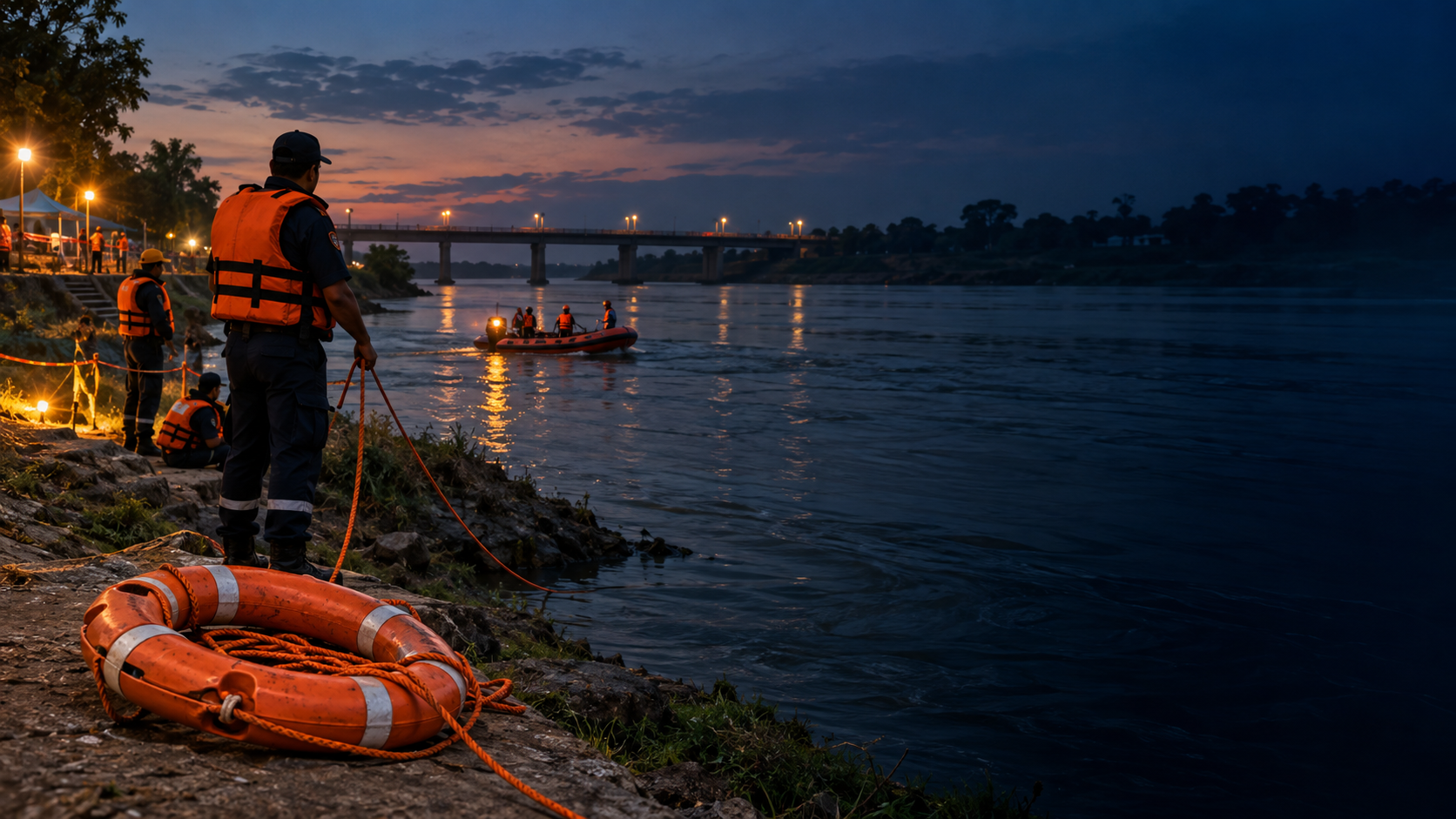
- A generated illustration must not be presented as an actual site photograph or technical design.
- Losing sight of the person in the water while everyone searches at random.
- Assuming a person who is coughing and talking after rescue does not need a hospital check.
- Immersing an idol at a river, pond or canal spot that is not notified, bathing in the water afterwards, or putting the idol on a small boat.
Leave a comment