
Make the decision before the car moves
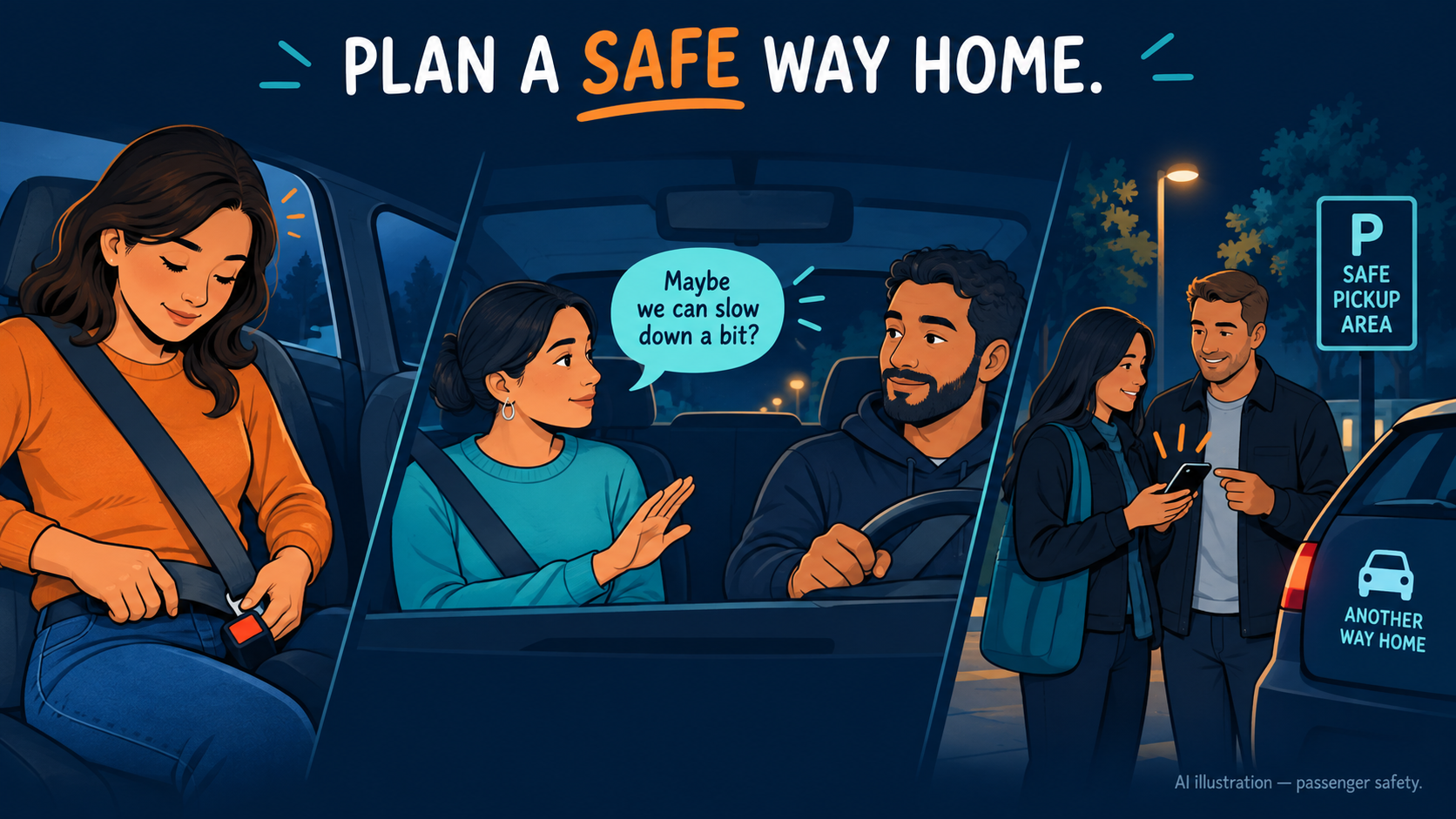
The easiest time to refuse an unsafe journey is before departure. Check that you have a usable seat and restraint, and that you are comfortable with the driver’s condition and behaviour. A social invitation does not oblige you to accept the ride. AAA’s passenger guidance recommends speaking up about unsafe driving and not riding with an impaired or reckless driver. For Indian readers, the practical preparation is a reachable contact and a realistic alternative journey, rather than relying on a promise that someone will slow down later.
Use a short, specific request
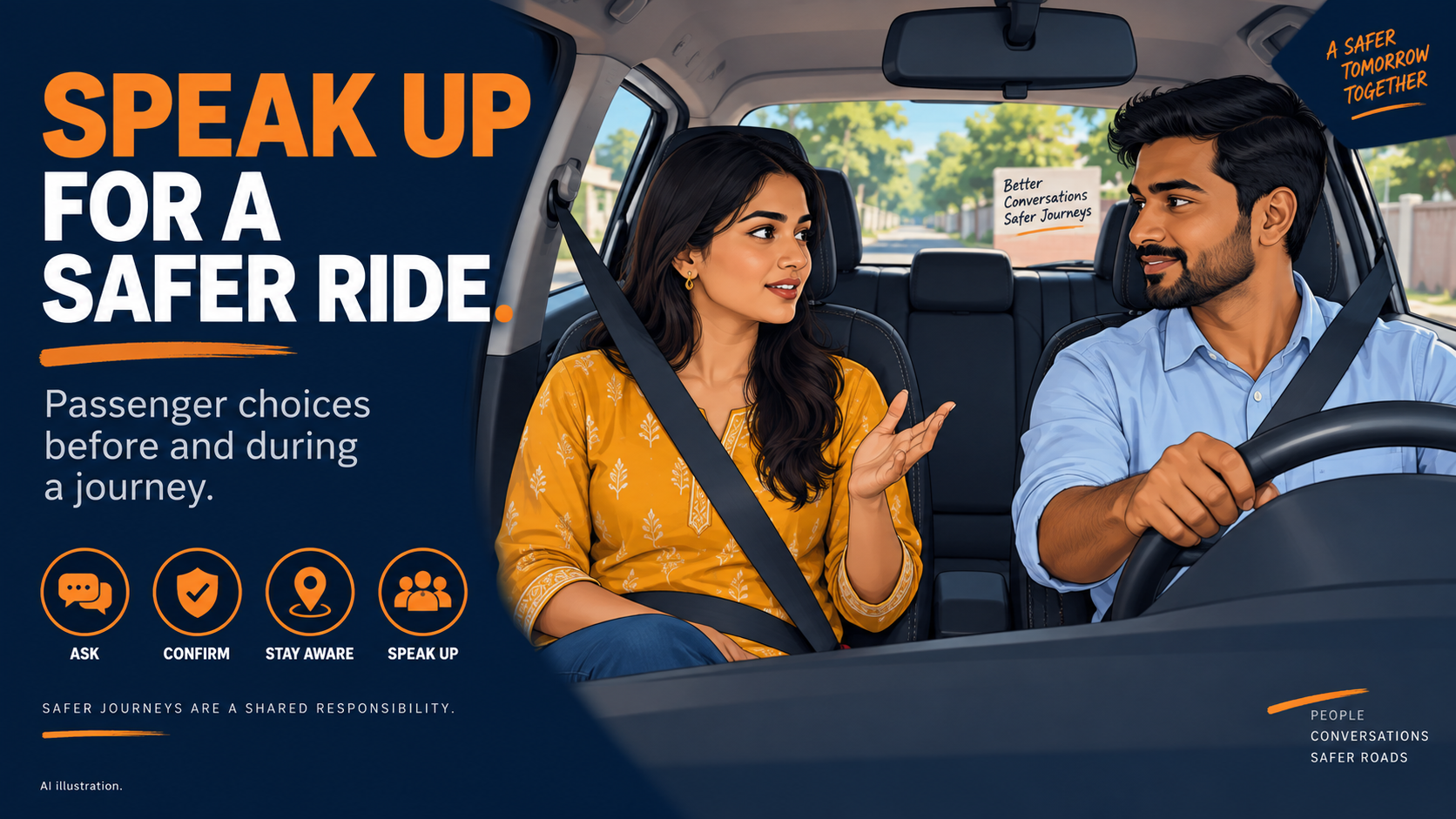
When a concern arises, name the action you want: “Please slow down; I am uncomfortable,” or “Please stop somewhere safe so I can arrange another ride.” These are suggested phrases, not guaranteed de-escalation techniques. Keep your tone calm and avoid an argument about the driver’s skill. A long debate can add distraction. If another passenger is present, ask them to support the request without everyone speaking at once.
Do not create a second hazard
Keep your belt fastened while the vehicle is moving. Do not grab the steering wheel, reach across the driver or try to force an abrupt stop. Do not open a door or attempt to get out before the vehicle has stopped safely. A bridge edge, tunnel lane, blind bend or live traffic lane is not an appropriate planned drop-off. The aim is to reach a safe stopping place, not to win an argument at the instant you feel frightened.
Take distractions away from the driver
NHTSA’s distracted-driving campaign suggests that a passenger can handle messages and advises speaking up about distracted driving. Offer to manage navigation or a necessary call while the driver concentrates. Give directions early and accept a missed turn; it can be corrected later. Keep conversation and music at a level that does not demand the driver’s attention. Do not film a risky manoeuvre for entertainment or encourage a driver to demonstrate acceleration.
Distinguish a speed limit from a safe pace
NHTSA explains that visibility, weather and road conditions can make a speed unsafe even below the posted limit. An empty stretch does not remove curves, restricted sightlines or unexpected hazards. Maharashtra Highway Traffic Police advises respecting signs, speed limits and restraints. As a passenger you do not need to calculate stopping distance to voice a concern. Describe the observable behaviour, such as rapid lane changes or an approach to a curve that feels too fast, without claiming a speed you cannot verify.
Arrange the change of plan
Once stopped in a safe place, decide how to continue: a trusted pickup, a suitable public-transport option or another responsible driver. Share your location with the person helping you, and wait away from moving traffic. For families, a pre-agreed pickup promise can make it easier for a young person to call without fearing an argument at that moment. Discuss the circumstances after everyone is safely home. This is a practical planning suggestion rather than a claim about what any crash victim should have done.
When there is immediate danger
If the situation involves an immediate threat, contact local emergency services when you can do so safely and give the vehicle location, direction and identifying details. If a crash occurs, prioritise avoiding further traffic exposure and follow dispatcher instructions. This guide is about passenger decisions; it does not teach extrication or replace emergency advice. Do not enter a dangerous roadway to collect possessions or footage.
A useful conversation after the journey
Discuss the particular behaviour and the safer alternative, rather than labelling a person a bad driver. For repeated unsafe conduct, change future travel arrangements. A passenger’s choices cannot guarantee survival or compensate for another person’s behaviour. Responsibility for controlling a vehicle remains with the driver; this guide does not blame passengers for a collision. Reviewed 29 September 2026. The learning video concerns speed risk and is clearly separate from incident evidence.
What needs attention
- A clear request: Ask for a slower pace or a safe stop before the situation escalates.
- A separate role: Help with directions or messages without taking over the controls.
- A realistic alternative: Identify a trusted contact and a safe place to wait before travel.
Controls that reduce risk
- Before departure: Check seat and restraint, driver fitness and an alternative way home.
- During travel: Stay buckled, reduce distractions and make one clear request.
- After a safe stop: Arrange onward travel and wait clear of moving vehicles.
- After arrival: Review what happened and change future arrangements if unsafe conduct repeats.
Common unsafe practices
- Do not touch controls: Grabbing the wheel can create another emergency.
- Do not demand an unsafe drop-off: A live lane or bridge edge is not a planned stopping place.
- Do not turn the concern into entertainment: Avoid filming or encouraging dangerous manoeuvres.
- Do not blame victims: Passenger advice cannot establish responsibility for a real crash.
Leave a comment