
How To SurviveLife-Safety Intelligence for India
Language
Automatic translation
Home / Safety Blogs / Safe immersion starts on shore: prevent drowning and stop an unplanned rescue
Safety Blog · Approved

Safe immersion starts on shore: prevent drowning and stop an unplanned rescue

Use a notified supervised site, keep spectators behind barriers, prepare flotation and trained rescue, and use reach-or-throw methods instead of an unplanned entry into the water.

TopicDisaster Preparedness · First AidUpdated2026-09-26
01
The guide
Safe immersion starts on shore: prevent drowning and stop an unplanned rescue

The safest rescue begins before anyone enters the water

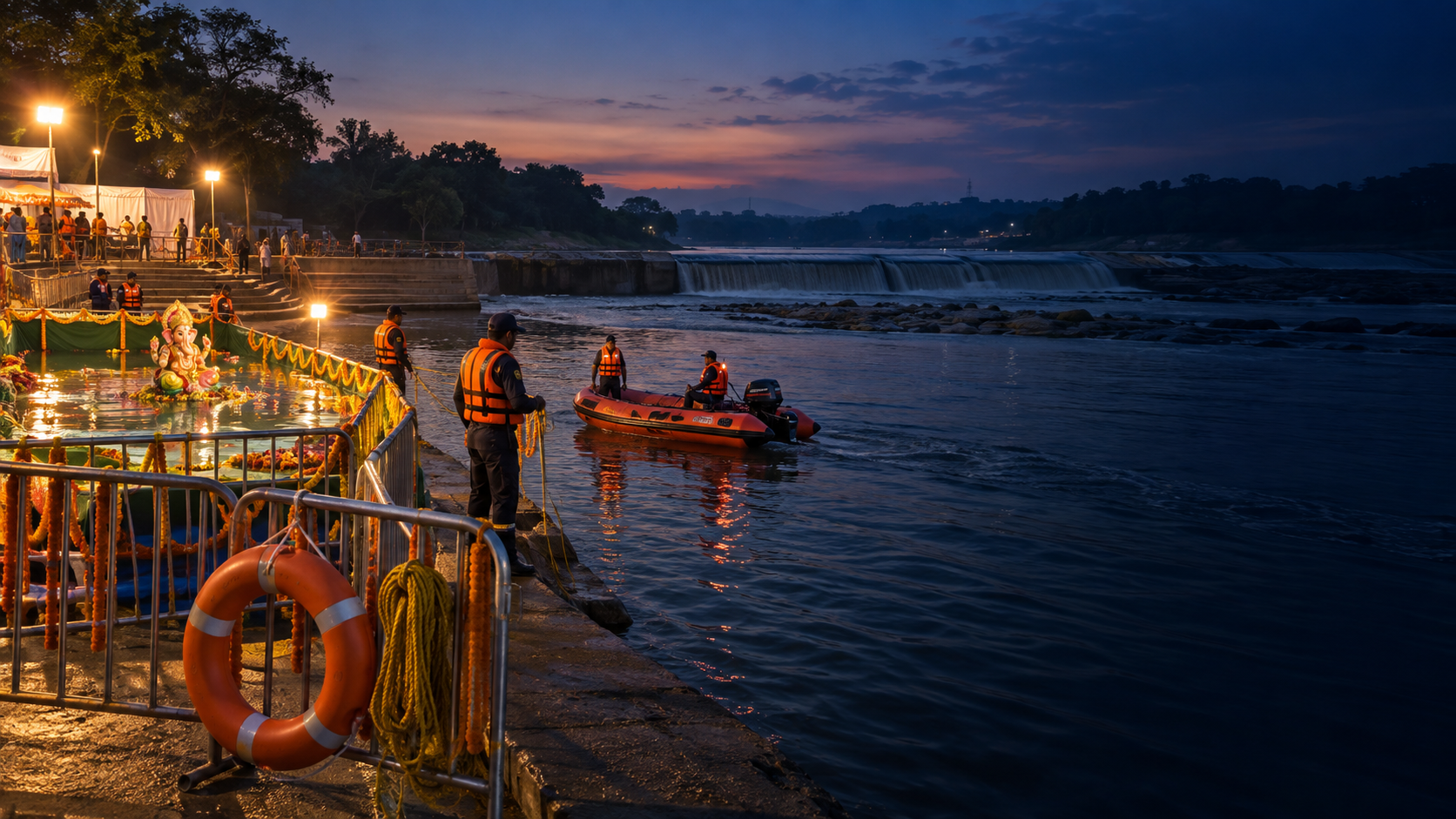
Immersion events combine crowds, uneven banks, changing depth, poor visibility and people focused on a ceremony rather than the water. Prevention starts by using only a notified site with barriers, lighting, supervised entry and a trained rescue team.

Keep families on shore

Only the minimum trained group should approach the immersion point. Children, older adults and anyone affected by alcohol, medication, fatigue or illness should remain behind the marked line. A person who cannot swim should never enter moving or unfamiliar water.

If someone falls in

Raise the alarm, call 112 and point continuously at the person. Reach with a pole or throw a life ring, rope or floating object from a stable position. Do not jump in unless you are a trained, equipped rescuer: panic and current can turn one casualty into several.

After removal from water

Check responsiveness and breathing. Begin CPR if the person is not breathing normally and follow the emergency dispatcher’s instructions. Use an AED if available. Keep a breathing person warm, monitor continuously and arrange medical assessment; apparent recovery does not rule out complications.

What organisers must prepare

Separate entry and exit routes, restrict the water edge, count participants, brief volunteers, provide correctly sized flotation, station trained rescuers with a suitable craft and keep an ambulance access lane clear. Stop the activity when lighting, crowd control, weather or water conditions become unsafe.

What needs attention

  • Crowd pressure and unclear boundaries move unprepared people towards the water edge.
  • Unknown depth, current, mud and submerged objects make familiar-looking water dangerous.
  • An untrained person entering after a casualty can become a second victim.
  • Visible flotation and a rehearsed rescue team shorten response time.
  • Lighting, separate routes and an emergency lane are operational controls, not decoration.
  • Every rescued person needs continued observation and appropriate medical assessment.

Controls that reduce risk

  1. Publish the approved immersion sites and hours before the event.
  2. Install continuous barriers with one controlled approach to the water.
  3. Place life rings, throw bags and reaching poles where volunteers can use them.
  4. Deploy trained rescuers and a craft appropriate to the water body.
  5. Keep lighting and backup power available after dark.
  6. Create a separate ambulance route and identifiable command point.
  7. Stop immersion when crowd density or water conditions exceed the plan.

Common unsafe practices

  • Using an unofficial or unsupervised bank.
  • Allowing children or spectators inside the water-edge zone.
  • Entering the water without training, flotation or a secured line.
  • Forming a human chain in moving or deep water.
  • Losing sight of the casualty while everyone searches randomly.
  • Assuming a coughing, conscious person needs no further assessment.

02
Watch & learn

Related Videos

Captions
Professional rescue learning

Water rescue training

NDRF Vadodara · Language as published

Training context; not footage of a specific immersion incident

03
Facts & action

Evidence, Cases & Next Steps

112Emergency numberCall immediately for a person missing or in distress in water
1Continuous spotterKeep pointing at the casualty until rescuers take over
0Unplanned rescuersBystanders should not enter hazardous water
2Safer shore optionsReach or throw
1Controlled water-edge zoneAccess only for the minimum authorised group
PreventionChoose notified siteConfirm supervision, lighting and emergency access
PreventionControl the edgeBarriers and a minimum authorised group
ReadinessPrepare flotationLife rings, throw bags and reaching poles
ResponseRaise the alarmCall 112 and maintain visual contact
RescueReach or throwAssist from a stable shore position
RecoveryProfessional handoverCPR/AED support and medical assessment

What the evidence supports

  • First choice | Use only a notified, supervised immersion site
  • Emergency number | 112
  • Shore rescue | Reach or throw from a stable position
  • Water entry | Trained and equipped rescuers only
  • After rescue | Check breathing, start CPR when required and obtain medical assessment
  • Organiser duty | Barriers, lighting, flotation, rescue craft and clear ambulance access

Immediate prevention actions

  1. Find the official notified site before leaving home.
  2. Save 112 and share the meeting point with the group.
  3. Keep children within arm’s reach near any water.
  4. Identify life rings, rescuers and the ambulance route on arrival.
  5. Agree that nobody enters after a casualty unless trained and equipped.
  6. Stop and leave if barriers, lighting or supervision are absent.

Emergency survival steps

  1. Shout for help and call 112.
  2. Point continuously at the casualty.
  3. Reach with a pole or throw a life ring, rope or floating object.
  4. Stay low and stable so the casualty cannot pull you in.
  5. Do not swim out unless trained, equipped and assigned to rescue.
  6. After removal, check breathing and start CPR when required.
  7. Use an AED if available and follow dispatcher instructions.
  8. Keep the person warm and obtain medical assessment.

Limitations

  • Water conditions and local rules vary.
  • Only trained responders should conduct in-water rescue.
  • This guide does not replace local authority instructions or certified rescue training.
  • Video availability and embedding can change.
  • The cover is an editorial reconstruction.
Community discussion

Questions, experience and constructive safety discussion

Comments publish immediately unless security controls identify spam. Please do not post private information, unsupported allegations or unsafe instructions.

Leave a comment

* Name and email are required. Your email address will not be published.


The reCAPTCHA verification period has expired. Please reload the page.