
What happened here
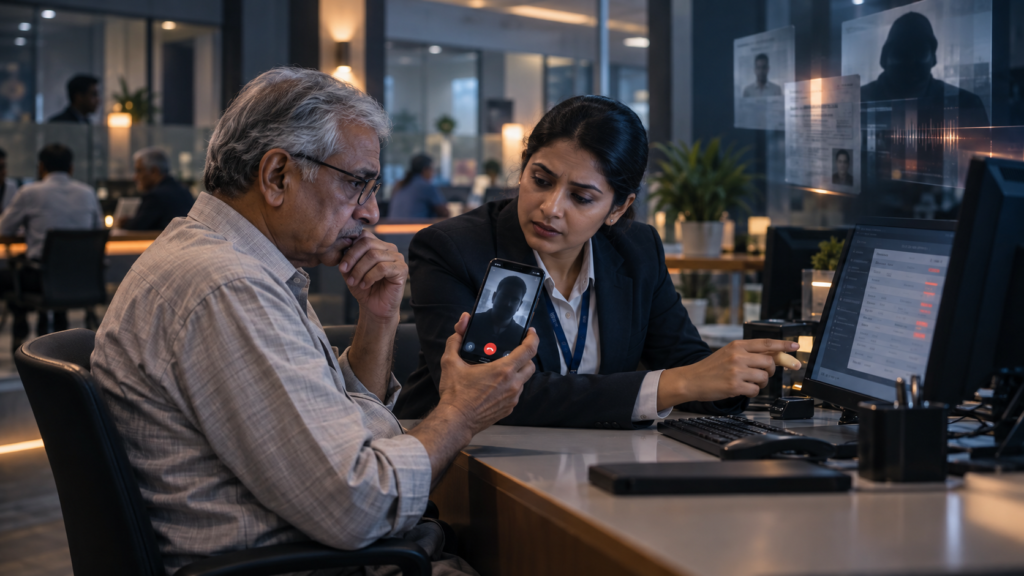
A retired official was allegedly coerced through impersonation, forged material and AI-manipulated images into transferring about ₹2.36 crore. Alert bank staff interrupted further transfers and contacted cybercrime police.
Quick answers
What happened in the Sonbhadra digital arrest fraud case?
A retired official in Robertsganj, Sonbhadra, was allegedly coerced by callers posing as senior authorities into transferring about ₹2.36 crore. Police reported three arrests, and these remain allegations, not findings of guilt.
How did the bank stop the Sonbhadra digital arrest scam?
On 22 September, staff at SBI's Robertsganj main branch reportedly noticed repeated high-value transfers and signs that the customer was under pressure, and alerted the Cyber Crime Police. Reports said ₹75 lakh was frozen or held, not confirmed returned.
Is digital arrest real or a scam?
The expression digital arrest has no legal status; it describes a fraud where criminals keep a target on a call, threaten arrest and demand money. Genuine agencies do not arrest through a video call or require a private transfer to prove innocence.
What to do if someone says I am under digital arrest?
End the call, tell a trusted person and contact your bank on its official number. If money has moved, call 1930 immediately, file at cybercrime.gov.in and preserve call logs, chats and transaction references.
A crime built around fear and isolation
Police and news reports published on 25-26 September 2026 describe a retired public-sector official in Robertsganj, Sonbhadra, being held under psychological pressure by callers who allegedly posed as senior judicial or government authorities. The expression “digital arrest” has no legal status; it describes a fraud in which criminals keep a target on a phone or video call, threaten arrest or reputational harm, and demand money.
How the alleged fraud progressed
Reporting says the callers used forged documents and manipulated images, including material described by police as AI-generated or deepfake, to make their story appear credible. The target allegedly transferred money into three accounts while demands continued. The exact sequence, identities and technical methods remain matters for the police investigation.
The intervention at the bank
On 22 September, staff at the State Bank of India’s Robertsganj main branch reportedly noticed repeated high-value transfers and signs that the customer was acting under pressure. They alerted the Cyber Crime Police. That intervention is important: a customer under coercion may not describe the situation as fraud, so unusual behaviour, secrecy and urgent transfers can be as significant as a suspicious transaction pattern.
Police action and the financial record
Police reported three arrests, including an alleged organiser and two women. Reports said ₹75 lakh was frozen or held, while a vehicle, cash, phones and a false advocate identity card were seized. These are police allegations at an early stage, not findings of guilt. A frozen amount is not the same as money already returned to the victim.
What this case teaches
The strongest control was not a technical filter. It was a person who noticed pressure and stopped the transfer chain long enough to verify the story. Banks, families and potential targets should treat demands for secrecy, continuous video surveillance, a transfer to a “safe account”, or payment to clear an investigation as fraud indicators. Genuine agencies do not conduct a legal arrest through a video call or require a private transfer to prove innocence.
If this is happening now
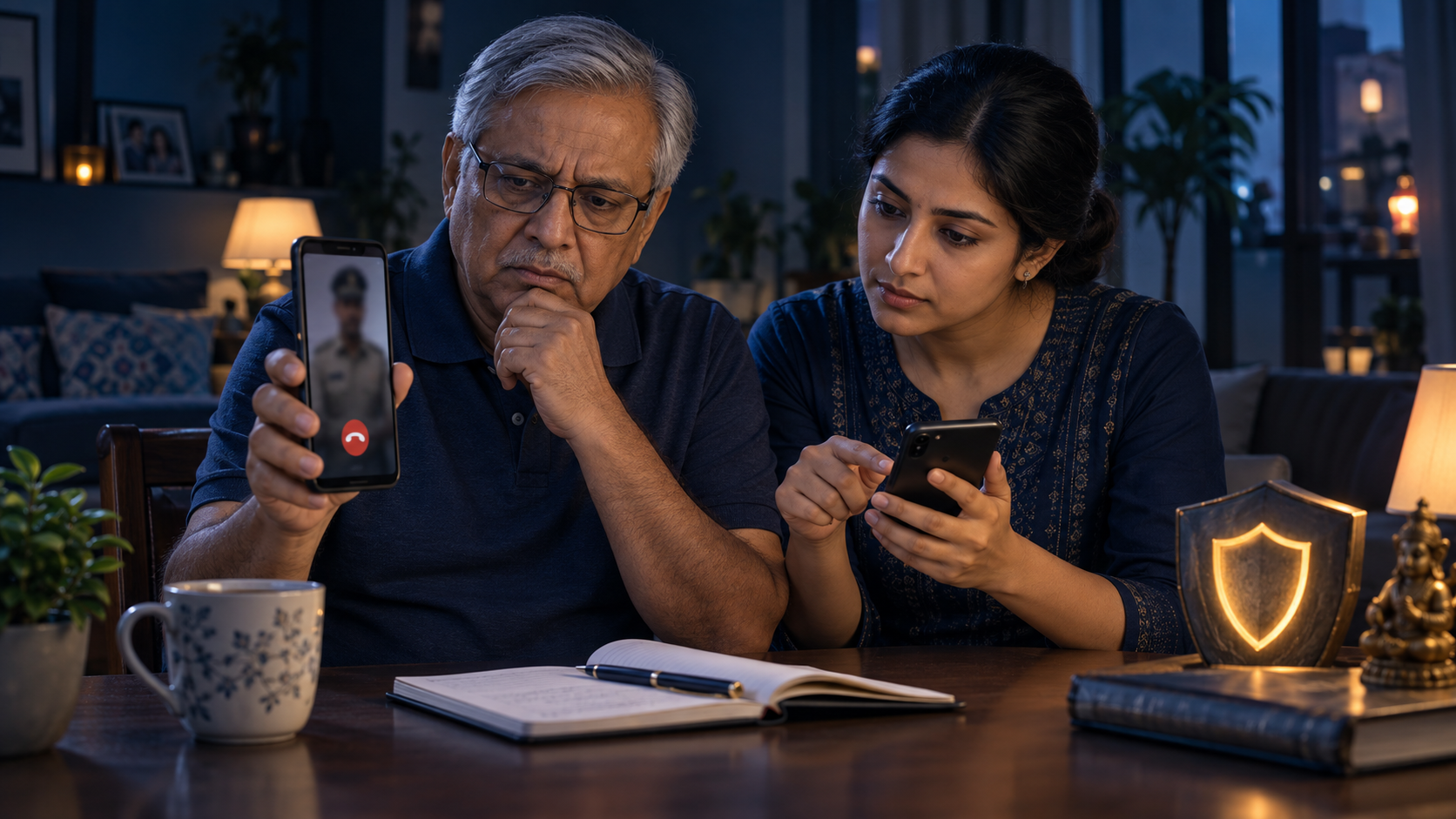
End the call, contact the bank through its official number, and call India’s cybercrime helpline 1930 immediately. File the complaint at cybercrime.gov.in, keep transaction references and preserve messages, numbers, recordings and screenshots. Do not negotiate with the caller or pay a second person who promises recovery.
- Callers allegedly impersonated senior authorities, presented forged or manipulated material and kept the target under pressure
- The target reportedly transferred money into three accounts while demands continued
- Bank staff noticed repeated high-value transfers and signs of coercion, then alerted Cyber Crime Police
- Police announced three arrests and reported seizures and a ₹75 lakh freeze
- Additional reporting described alleged deepfake-backed intimidation and the continuing investigation
Why consequences escalated
- The fraud relied on authority, fear, secrecy and isolation rather than a single technical exploit.
- Manipulated images and forged documents reportedly reinforced the impersonation.
- Repeated transfers created a detectable pattern, but the customer’s pressured behaviour was also important.
- The bank’s intervention provided a break in the coercive loop and enabled a police response.
- Fast reporting can help banks and police attempt to hold funds, but recovery is never guaranteed.
- No legitimate agency requires a transfer to a private or so-called safe account to avoid arrest.
Failures and risk multipliers
- Remaining on a threatening video call instead of independently verifying the claim.
- Accepting caller-supplied numbers, documents or video identities as proof.
- Keeping the demand secret from family, bank staff or police.
- Transferring money to prove innocence, protect an account or assist an investigation.
- Allowing remote access, screen sharing or disclosure of OTP, PIN or passwords.
- Delaying the bank and 1930 report after a transfer.
People closest to the evidence
“Bank staff reportedly observed repeated transfers and that the customer appeared to be acting under pressure”
Times of India · Description of the intervention, not a direct quotation · Source ↗
Actions that reduce risk
- Train bank staff to recognise coercion indicators as well as transaction anomalies.
- Use a discreet escalation process that separates the customer from the live caller.
- Apply enhanced confirmation for unusual high-value transfers, especially to newly added beneficiaries.
- Give older and vulnerable customers a trusted-contact option where lawful and consented.
- Promote 1930 and cybercrime.gov.in at branches and in transaction alerts.
- Preserve CCTV, transaction logs, device details and beneficiary-account information for investigators.
- Never describe a freeze as a completed refund until funds are actually restored.
Leave a comment