Quick answers
What is the difference between a boil-water, do-not-drink and do-not-use notice during floods?
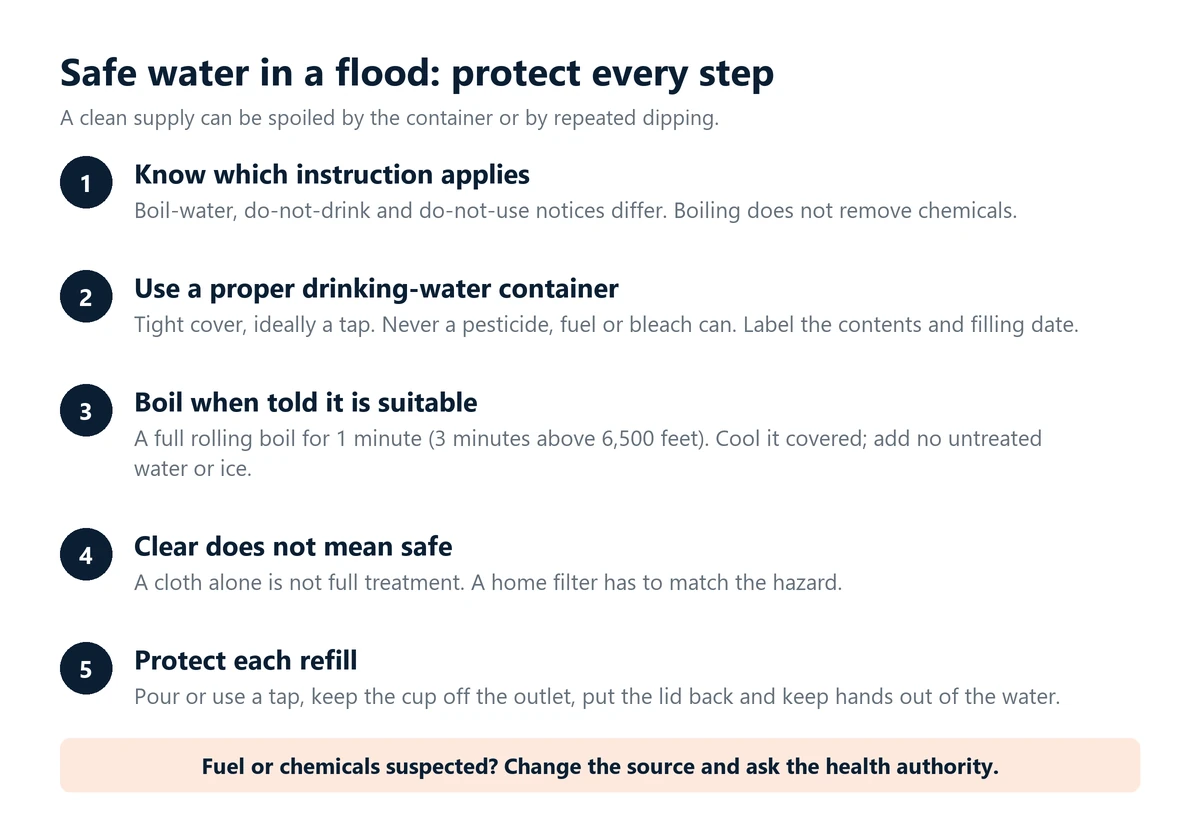
They mean different things. Boiling addresses germs but not chemical contamination, and under a do-not-use notice the supply should be avoided for every purpose that notice covers. Follow the instruction issued for your own address, not one forwarded from another town.
Does boiling make flood-affected water safe to drink?
Boiling can address germs when authorities recommend it, but it does not remove fuel or toxic chemicals. If fuel or chemicals may be present, change to an approved alternative source and ask the health authority instead of boiling more.
How to store drinking water safely during a flood?
Use a clean drinking-water container with a tight cover, ideally one that pours or has a tap. Never reuse pesticide, fuel or bleach containers, avoid putting hands or cups inside, label the contents and filling date, and keep it away from chemicals and direct sun.
When should someone with diarrhoea during a flood get urgent medical help?
Seek urgent help if a person cannot take enough fluids because of vomiting, has severe diarrhoea, becomes confused or drowsy, or is extremely weak. A sick child, older adult or person with other health needs should be assessed promptly.
Safe water begins before the cup
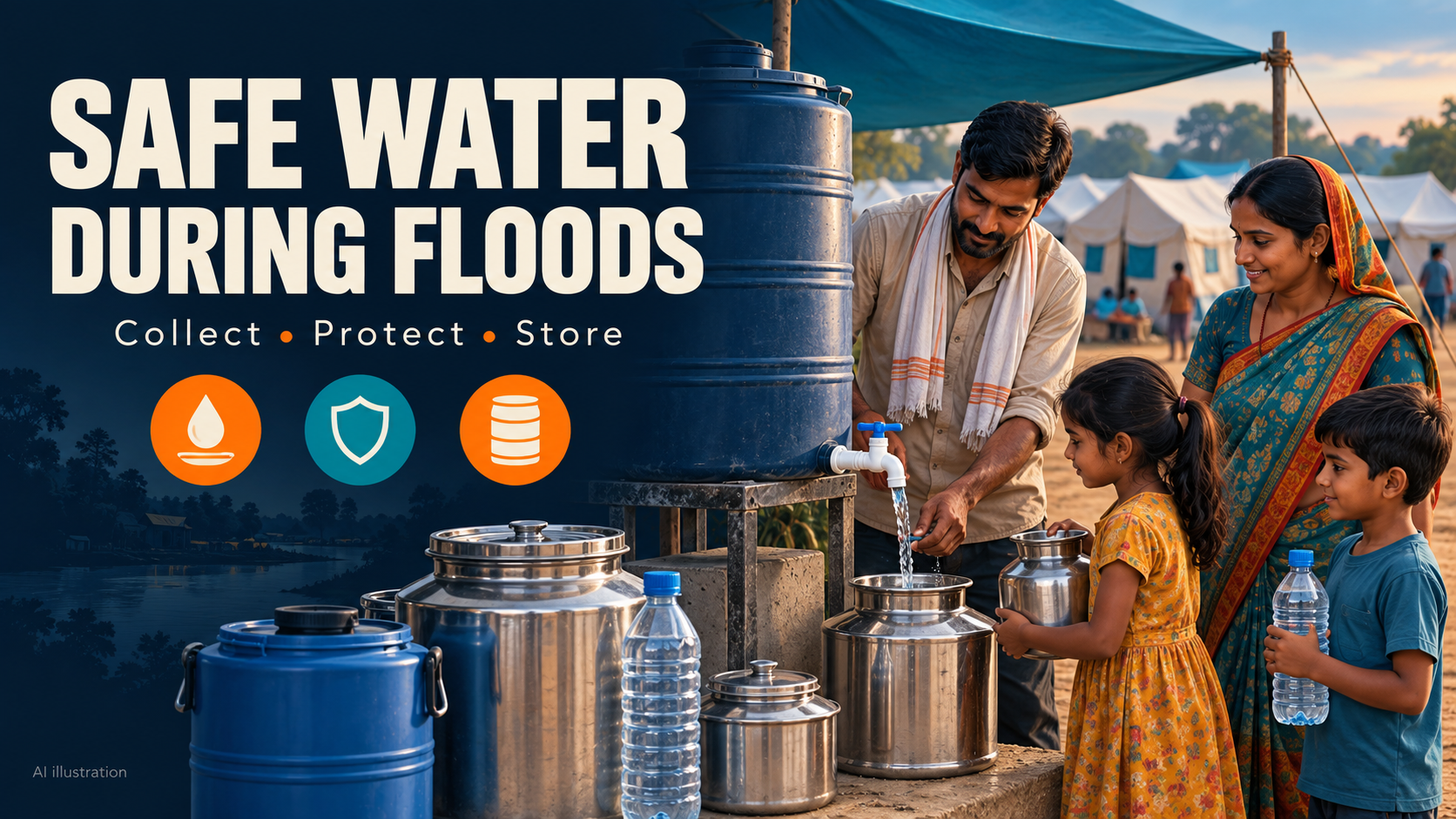
During a flood disruption, a household may collect water from a tanker, relief centre or temporary tap and carry it home. The transfer matters as much as the source: a clean supply can be contaminated by the receiving container or by repeated dipping. WHO’s emergency guidance treats household treatment and storage as part of protecting health at home and in shelters. This guide covers that everyday chain; it is not a declaration that any particular local supply is unsafe. Source and guidance.
First identify the instruction
Ask the water supplier or local health team which source is approved and what uses are allowed. A boil-water instruction, a do-not-drink instruction and a do-not-use instruction mean different things. Boiling addresses germs; it does not solve chemical contamination. During a do-not-use notice, avoid the supply for every purpose covered by that notice. Do not treat a message forwarded from another town as the instruction for your address. Keep the authority, issue time and next update together. Source and guidance.
Make collection practical
Before leaving, identify the collection point, its hours, the safe route and the amount you can carry securely. Arrange help for someone who cannot queue or lift a filled vessel. At a relief centre, ask staff where drinking-water containers should be filled and where washing takes place. These are suggested coordination steps, not a national registration requirement. A short written handover can prevent two family members making the same journey while another household member is left without help.
Prepare the receiving container
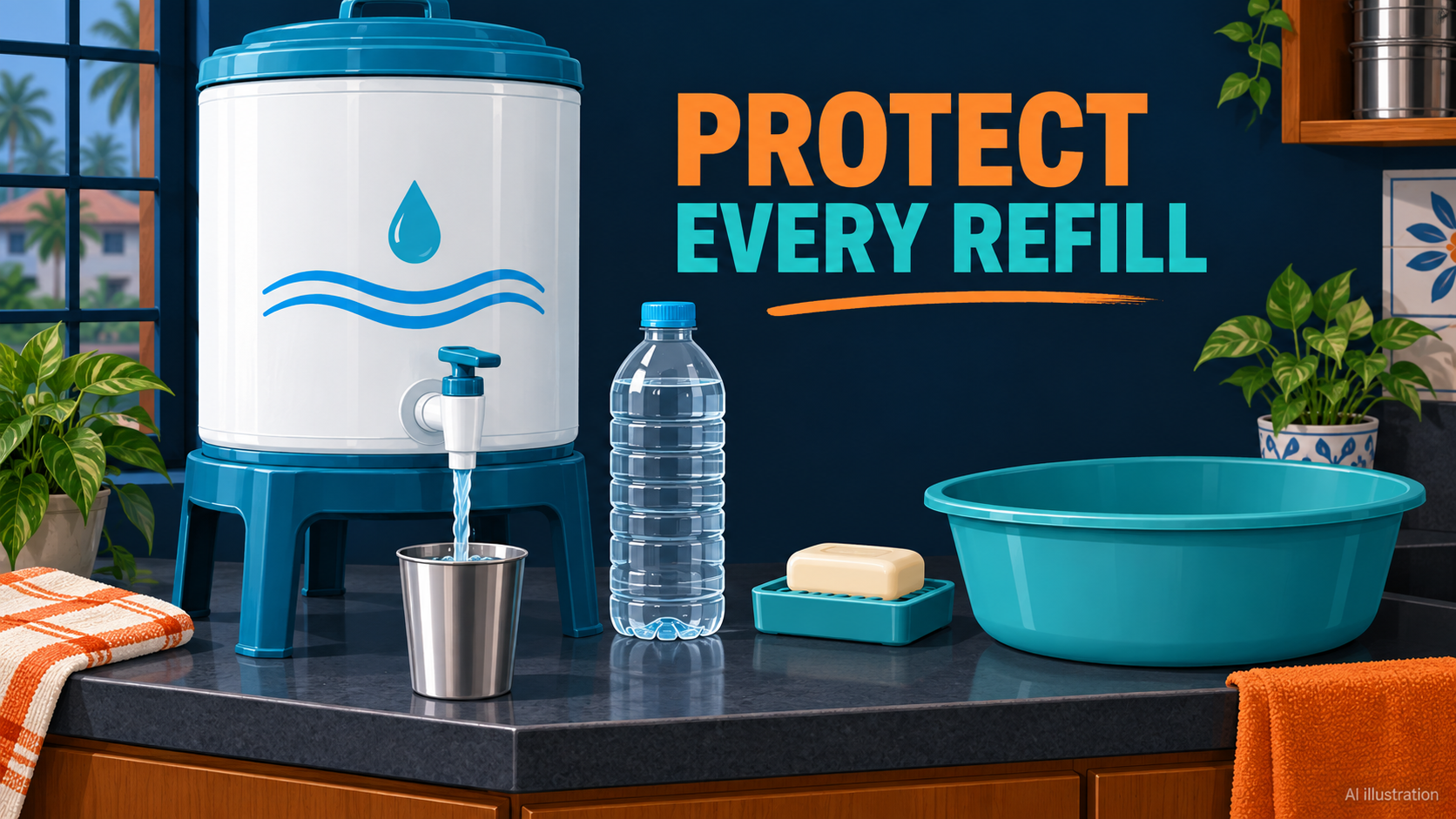
Use a container intended for drinking water with a tight cover, preferably an opening that allows pouring or a tap. Never repurpose a pesticide, fuel or bleach container. Clean and sanitise the vessel using the health authority’s instructions for the product available, then protect its opening. Do not put fingers inside it or dip hands into stored water. Label the contents and filling date; keep the container away from chemicals and direct sun. The aim is to preserve a safe supply after collection, not simply make the vessel look clean. Source and guidance.
When boiling is appropriate
For water that is suitable for household treatment against germs, NCDC’s flood advisory specifies a full rolling boil for one minute, or three minutes above 6,500 feet. Let it cool naturally and keep it protected; adding untreated water or ice can undo the treatment. If fuel or toxic chemicals may be present, change the source and ask the health authority. Do not try to repair that problem by extra boiling. Treatment products supplied during relief should be used according to their own instructions, not an improvised dose copied from a different concentration. Source and guidance.
Do not confuse clarity with safety
Clear water is not evidence that germs or chemicals are absent. If cloudy water is being treated against germs under official instructions, CDC describes settling or preliminary filtration before boiling; a cloth alone is not the full treatment. A domestic filter also needs to match the hazard. If officials require boiling, do not assume that passing water through a familiar household filter cancels that requirement. Use a safe alternative if the treatment needed cannot be completed. Source and guidance.
Protect each refill
Organise a clean receiving area and a separate place for dirty utensils. Pour or use a tap without letting the cup touch the outlet. Replace the lid after filling. If the household cannot tell when or where a batch was collected, ask before mixing it with a fresh batch. Suggested handover fields are: source, collection time, treatment instruction, treatment completed, container cleaned, person responsible and next refill plan. They are a household record, not a laboratory certificate.
Account for uses beyond drinking
The advisory may also affect brushing teeth, food preparation, ice and infant feeding. Check those uses explicitly rather than reserving safe water only for glasses of drinking water. Families using formula should ask the health team about safe preparation and available ready-to-use options; do not dilute feeds to stretch supplies. Whether tap water may be used for handwashing depends on the notice and contamination involved. Follow the local instructions instead of applying one rule to every emergency. Source and guidance.
Keep the plan realistic
Choose containers people can safely manage and a refill arrangement that survives a missed delivery. At the start of each day, compare the supply on hand with the household’s actual needs and the next confirmed collection opportunity. Account for visitors, caregivers and people who need assistance. If a shortage develops, tell the relief coordinator early and explain the number of people and immediate needs. This planning checklist deliberately avoids presenting a single universal quantity as suitable for every climate, medical condition and household.
When illness needs help
Severe diarrhoea can rapidly cause dangerous fluid loss. WHO advises urgent help when a person cannot take enough fluids because of vomiting, has severe diarrhoea, becomes confused or drowsy, or is extremely weak. Use properly prepared oral rehydration solution with safe water when appropriate while arranging medical care; follow the packet and health worker’s instructions. This does not diagnose cholera or claim an outbreak in Bihar. A sick child, older adult or person with other health needs should be assessed promptly. Source and guidance.
When the normal supply returns
A running tap is not the same as an official clearance. Check whether restrictions have been lifted and whether the supplier requires flushing or equipment cleaning. If floodwater entered a well, tank or building water system, ask the responsible water or health professional what inspection, disinfection and testing are needed. Do not enter a tank or attempt a large-system chemical treatment using a household recipe. Keep the temporary safe-water arrangement until the relevant checks are complete. Source and guidance.
A five-minute household review
Confirm the approved source, check lids and labels, read the current notice, arrange the next collection and make sure everyone knows where safe water is kept. If a step fails, record the problem and assign a follow-up rather than ticking it off anyway. The supporting videos are related public water-provider guidance; they are not news footage or proof that a local supply has passed testing. Reviewed 15 September 2026; update this guide if the cited instructions change.
What needs attention
- Use only the source and permitted uses identified in the current local notice.
- Protect water during collection, transport, storage and serving; a clean supply can be re-contaminated at any step.
- Boiling can address germs when authorities recommend it, but it does not remove fuel or toxic chemicals.
- Keep drinking water covered, labelled and separate from washing water and contaminated containers.
Controls that reduce risk
- Confirm the approved source and whether the notice says boil, do not drink or do not use.
- Prepare a clean covered container; avoid hand contact and repeated dipping.
- Label each batch and plan the next refill before the current supply runs out.
- Keep the temporary arrangement until the responsible authority gives the all-clear.
 ↗
↗

Leave a comment