Start with the road around you
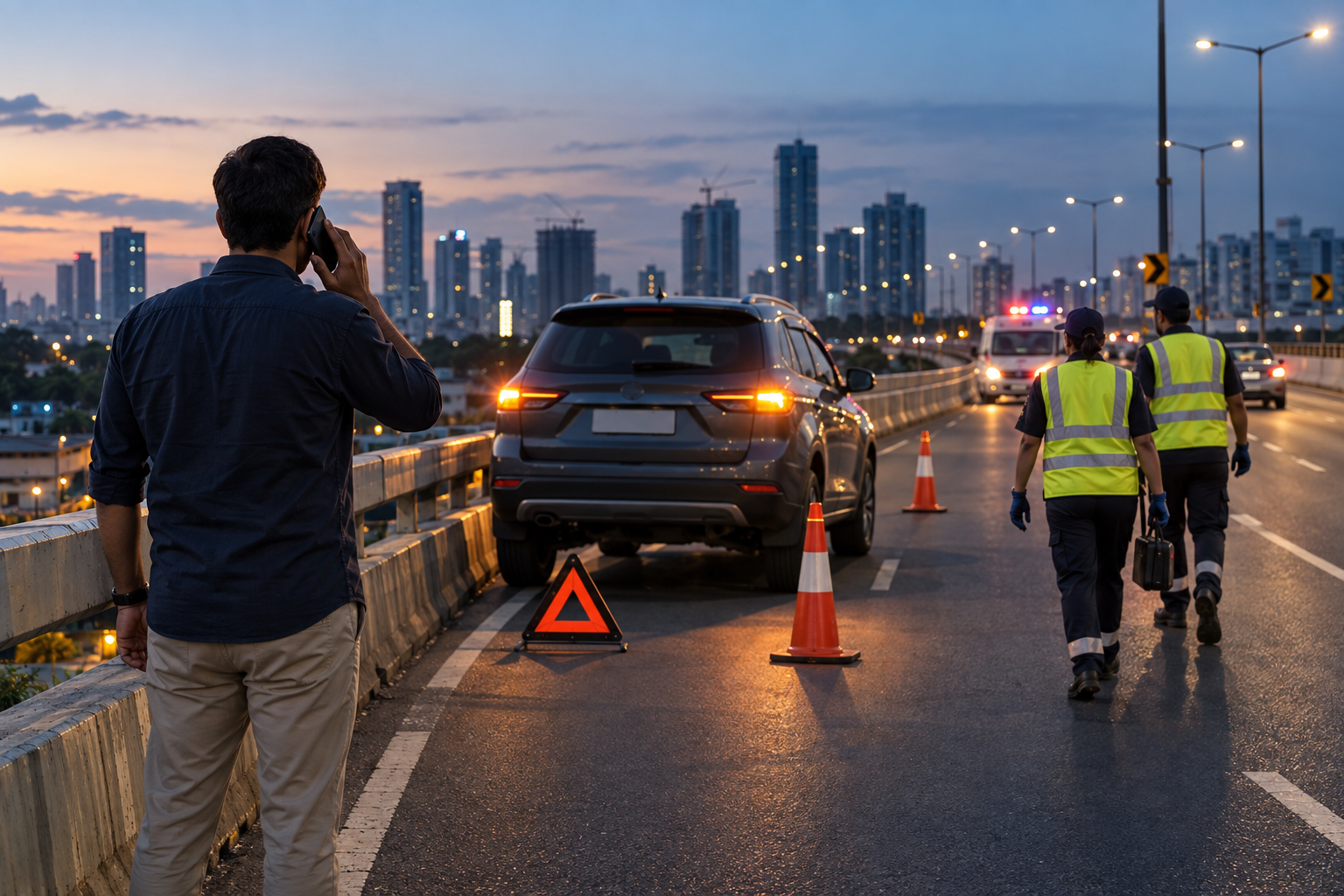
After a collision, traffic may still be moving at speed. Park only where safe, avoid the path of approaching vehicles and move yourself behind a barrier if one is available. A well-intentioned helper who becomes another casualty cannot help the injured.
Make the call
Dial 112 for police and ambulance assistance. Give the road, travel direction, nearest exit or landmark, number of vehicles, visible hazards and whether anybody appears trapped or unresponsive. Stay on the line if the dispatcher asks you to.
Help without making things worse
Do not stand between vehicles, enter a lane to record video, smoke near fuel or move debris that may be unstable. Follow the dispatcher’s first-aid directions. Keep a possibly seriously injured person still unless a continuing hazard makes remaining in place more dangerous. A trained person may provide bleeding control or CPR according to current guidance and the situation.
Protect the handover
Tell responders what you saw, not what social-media posts claim happened. Keep a clear lane for ambulances and avoid sharing images of victims. Note a vehicle registration or witness detail only when safe and useful to investigators.
Before you travel again
Keep a charged phone, share your route, use seat belts and know that the nationwide emergency number is 112. If you regularly travel on high-speed roads, consider recognised first-aid training and learn how to describe your location accurately to an emergency dispatcher.
What needs attention
- A protected scene reduces the chance of a second collision.
- A precise location helps responders find the crash.
- Traffic management and access are part of medical response.
- Untrained movement of an injured person can increase harm.
- Early casualty and cause reports may change.
Controls that reduce risk
- Practise giving a location using road name, direction and landmark.
- Keep emergency numbers and vehicle details accessible.
- Train frequent drivers in recognised first aid.
- Provide high-visibility warning equipment where appropriate and safe to deploy.
- Protect ambulance access during incidents.
Common unsafe practices
- Entering live traffic to film or take photographs.
- Crowding around casualties and blocking medical access.
- Moving an injured person without checking for immediate danger.
- Treating a suspected vehicle defect as proven before inspection.
- Sharing identities or distressing images of victims.
Leave a comment