
Quick answers
What should I do first if I see a road accident on a highway in India?
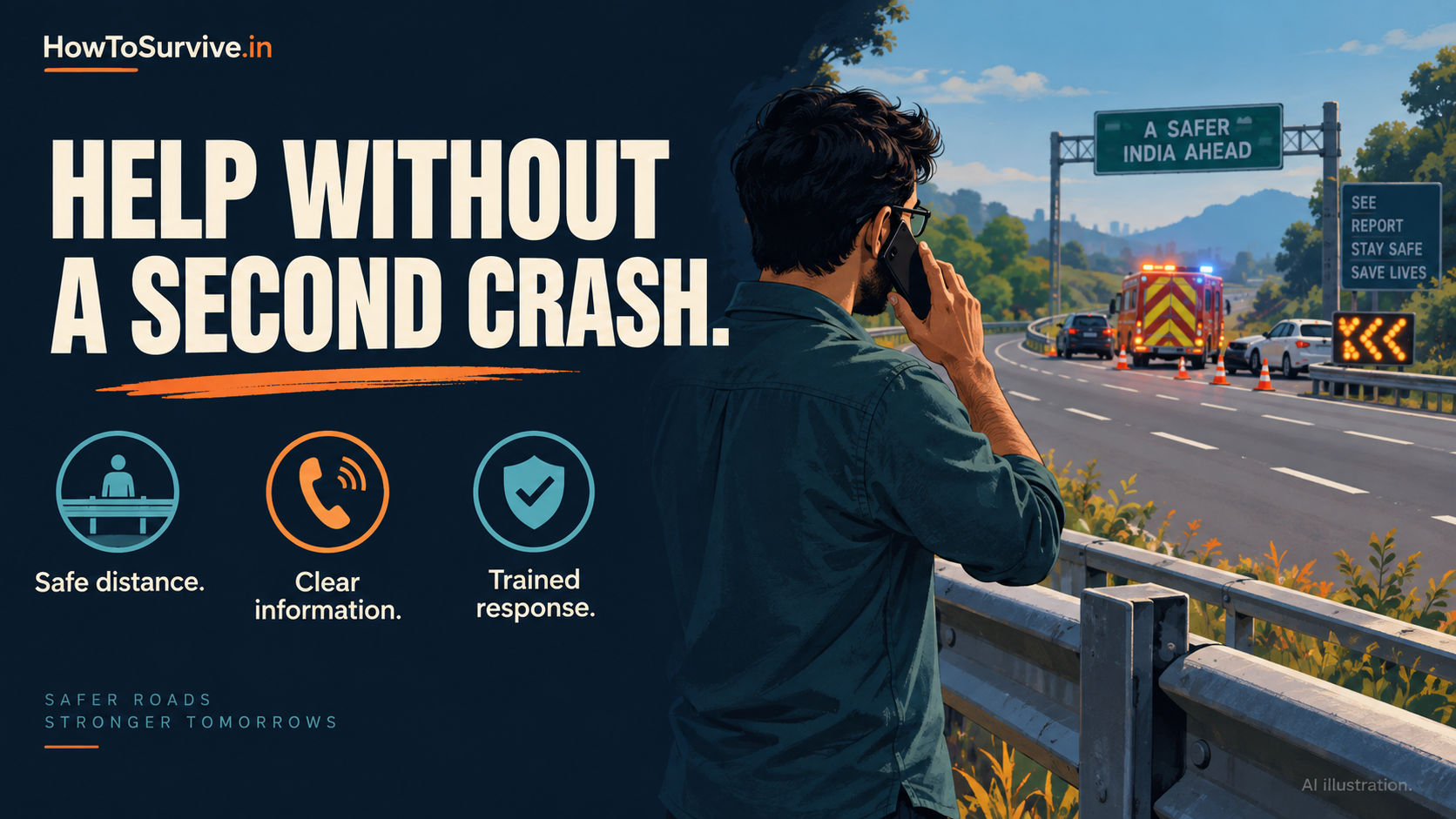
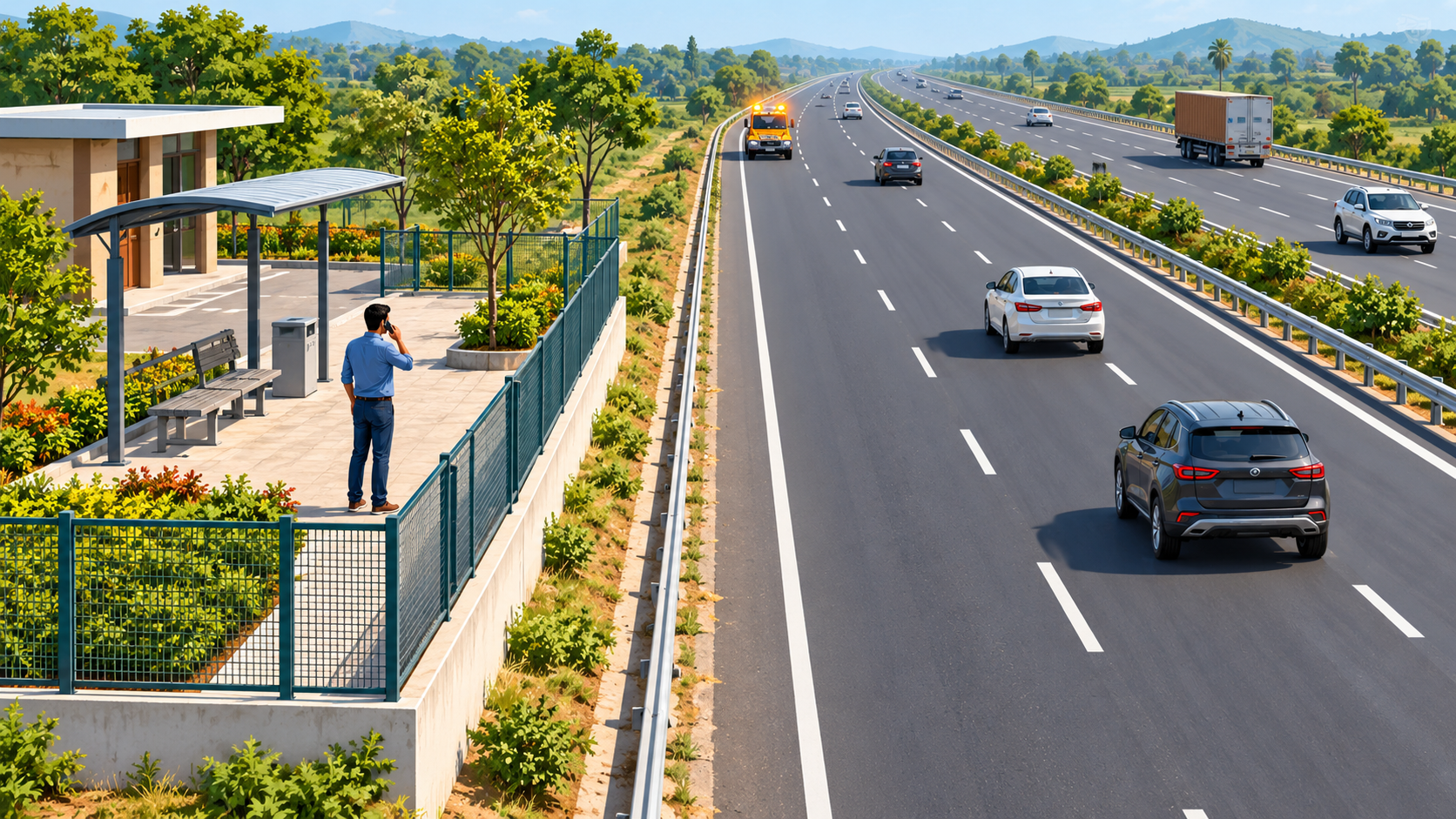
Avoid becoming another casualty: stop only where it is safe, stay clear of moving traffic and call for help from safety. Do not brake abruptly, reverse or turn across traffic to return to the scene.
Which number to call after a highway crash in India?
112 is India's unified emergency number, and on National Highways the NHAI helpline is also promoted. Tell the operator if another service has already been contacted, and do not delay an available call to install an app.
How to describe the accident location to the emergency operator?
Give the road name, direction of travel and the nearest readable landmark or kilometre marker, read from a safe position. Ask the operator to confirm the location they have understood, and do not invent coordinates.
Do Good Samaritans who help road crash victims have to give their details?
MoRTH guidance explains that people helping crash victims in good faith need not volunteer personal details or become witnesses, and hospitals should not demand emergency-treatment payment from them. Becoming a witness is a separate voluntary choice.
Should an injured person be moved after a road accident?
Usually not. Keep a possibly seriously injured person still unless there is further danger, such as fire or oncoming traffic, that makes staying put worse. Follow the operator's first-aid directions and do not remove a helmet unless you have to.
Is it okay to share photos or videos of road accident victims?
No. An injured person's face, documents and distress do not need to be posted online. Give what you saw directly to responders, keep the ambulance lane clear, and never step into traffic to film.
Your first useful action may be a safe call
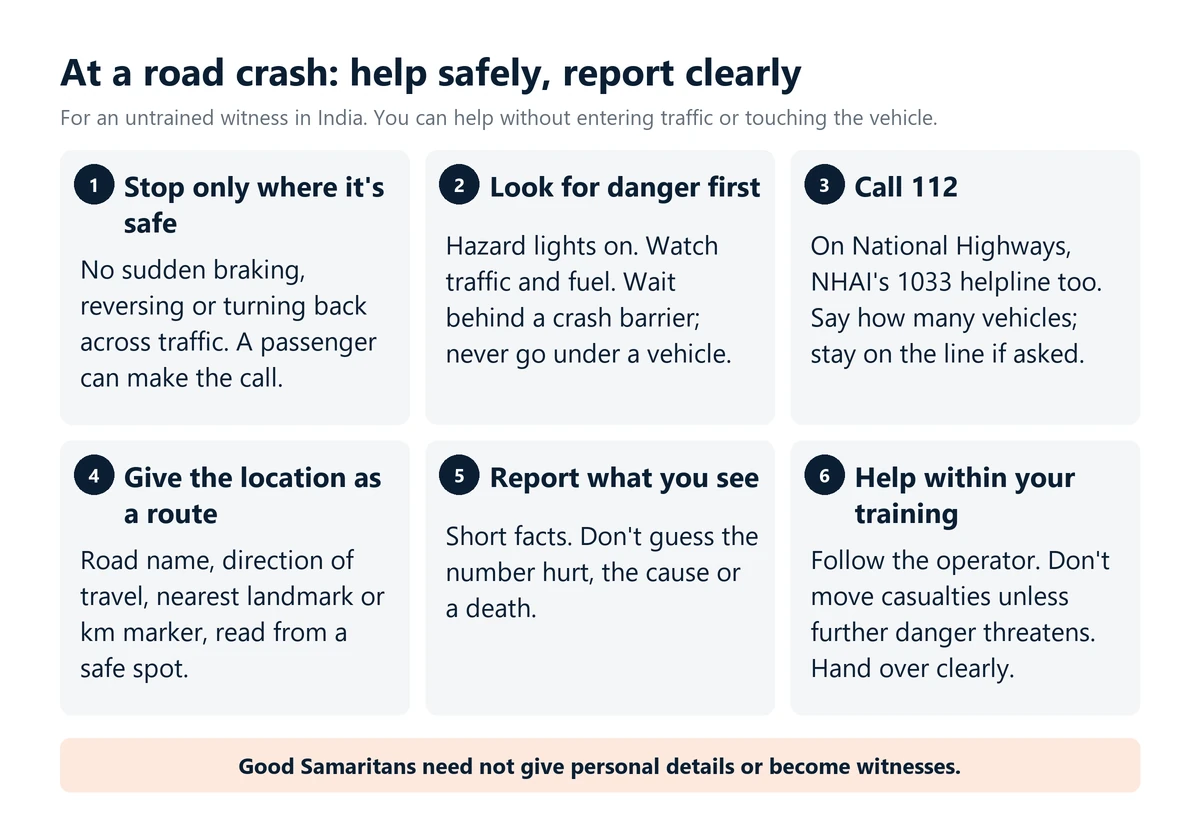
After a highway crash, the urge to rush towards a damaged vehicle is understandable. The immediate task is to avoid adding another injured person while getting the right help to the right place. This guide is for an untrained witness in India, not a vehicle-extrication manual. You can provide useful information without entering traffic or touching the vehicle. If you cannot reach a safe stopping place, do not brake abruptly, reverse or turn across traffic to return. Let a passenger report what is visible, or call after you have stopped safely.
Look for danger before approaching
St John Ambulance advises checking scene safety, parking well away, using hazard lights and being alert to moving traffic, fuel and other hazards. Its guidance says people trapped in or under a vehicle may need the fire service. Treat any approach as conditional on safety; a crowd around a car is not proof that the area is safe. Do not crawl under a vehicle or try to stabilise it using improvised equipment. Do not stand between two vehicles, step into a lane to film, smoke anywhere near spilt fuel or pull at loose debris. If there is a crash barrier, wait behind it. Report hazards you can see and let trained responders assess the scene.
Choose the appropriate contact without delaying help
India’s Ministry of Home Affairs identifies 112 as the unified emergency number. On National Highways, NHAI also promotes the 1033 helpline. Tell the operator if another service has already been contacted so calls can be understood in context. Do not spend the first minutes installing an application, searching for reward rules or assuming a bystander must already have called. An application is an optional access route, not a reason to postpone an available phone call. Neither number is a promise of a fixed arrival time. Tell the operator how many vehicles are involved and stay on the line if they ask you to.
Describe location as a route, not just a town
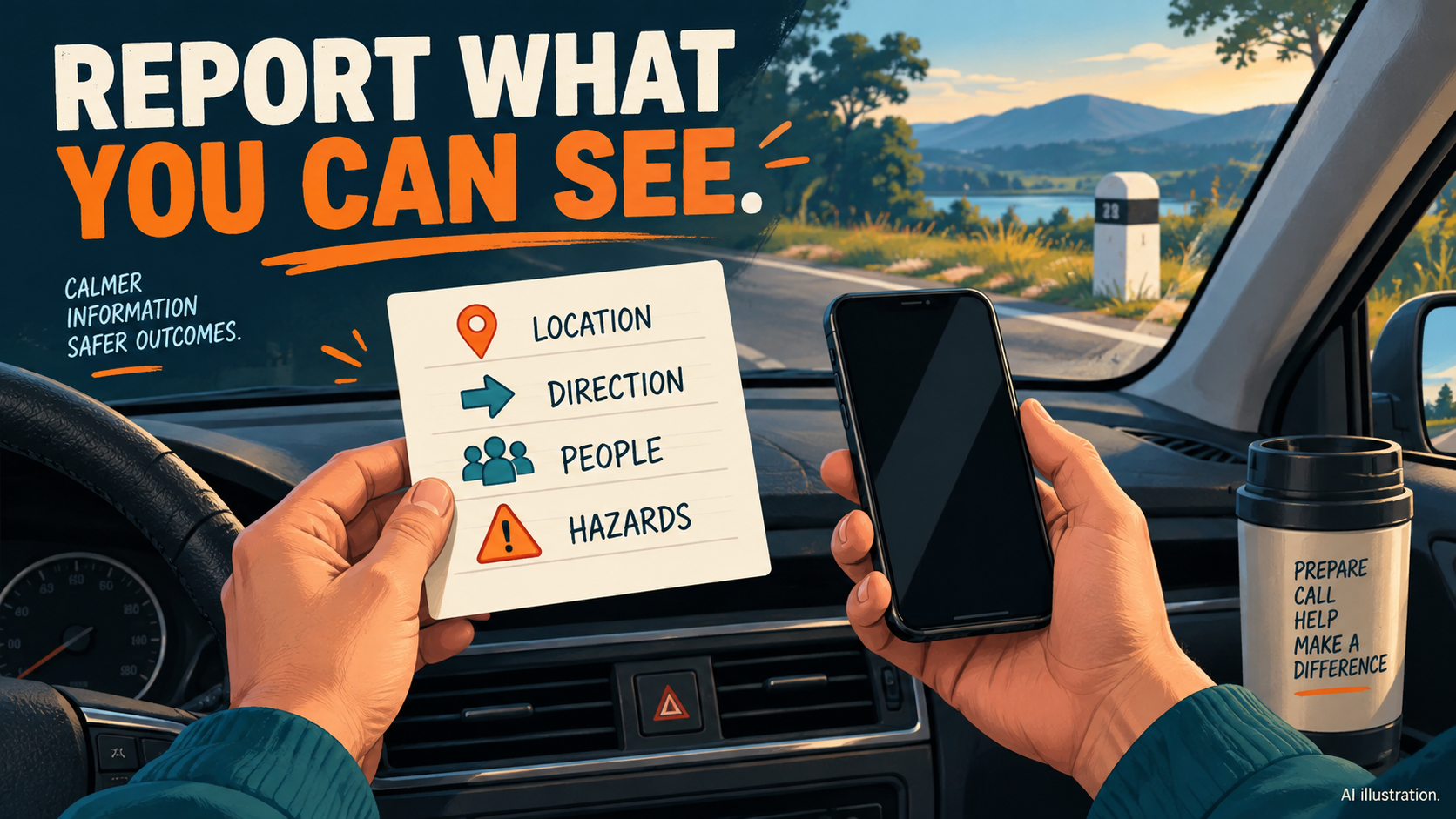
A useful report distinguishes the road name, direction of travel and the nearest readable landmark or kilometre marker. “Near Shahapur” may cover a large area; “Mumbai-bound near the Atgaon sign” is more informative when that is what you actually observed. Read a sign only from a safe position. A phone’s location can help, but do not invent coordinates, walk into danger for a clearer signal or assume the opposite carriageway has the same access. Ask the operator to confirm the location they have understood.
Separate observation from explanation
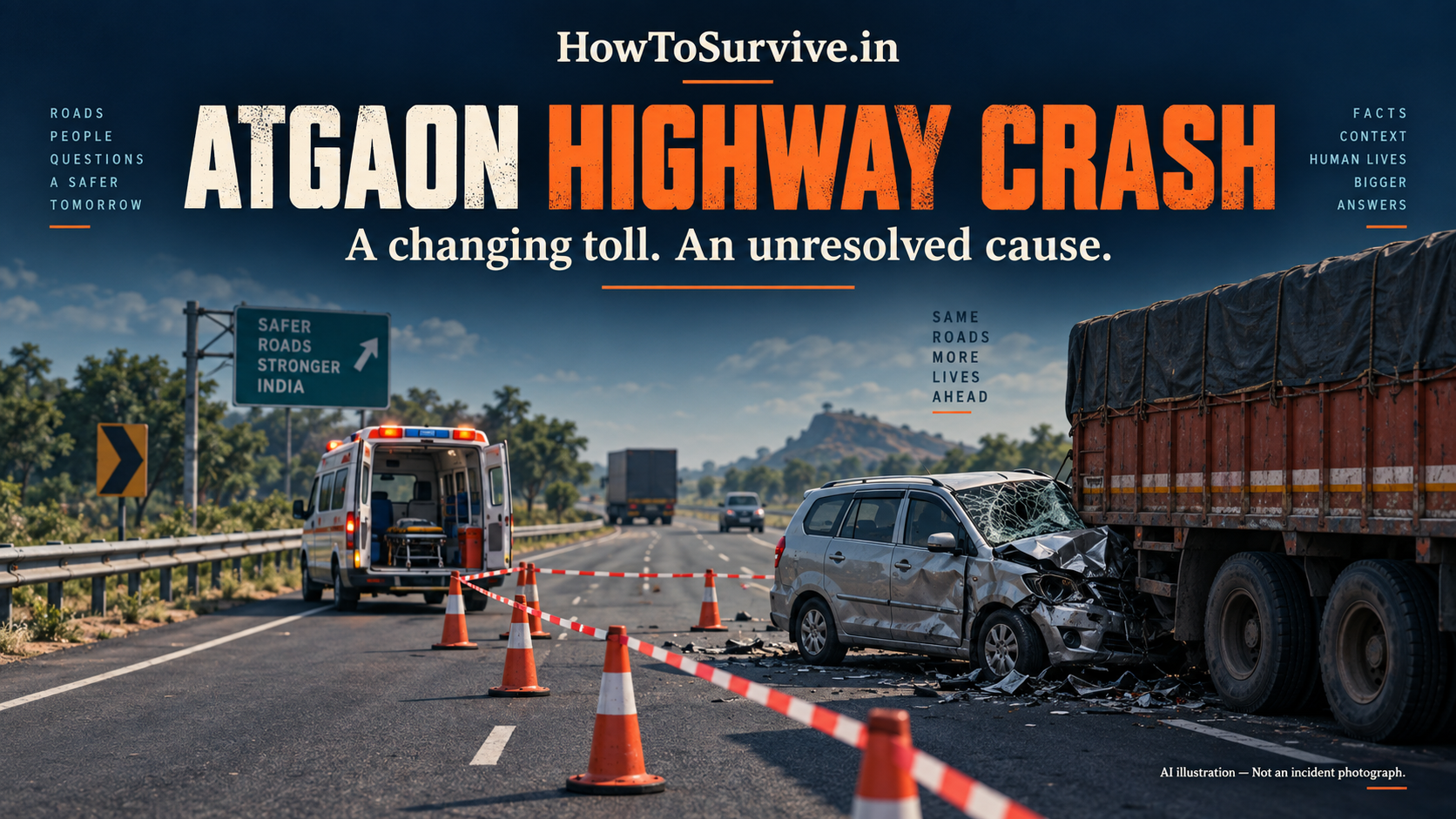
Use short factual descriptions: a car beside a stationary truck; two people visibly needing help; someone appears trapped; smoke is visible. Do not report an exact total if you cannot see everyone. Do not diagnose brake failure, alcohol use or death from the appearance of the scene. Tell the operator which details are yours and which came from another person. The Atgaon news cycle shows why this matters: early casualty headlines changed, and an alleged mechanical problem remained subject to investigation.
Agree a few safe roles
If several witnesses are already present in a safe place, one person can speak to the emergency operator while another notes the landmark or relays a change in conditions. Avoid everyone shouting different instructions at injured people. Keep space for ambulance and rescue access; do not organise an unofficial roadblock or direct high-speed traffic yourself. This is a practical communication arrangement, not a substitute for police scene management. When responders arrive, let their instructions replace any informal arrangement immediately.
Help within your training and the operator’s directions
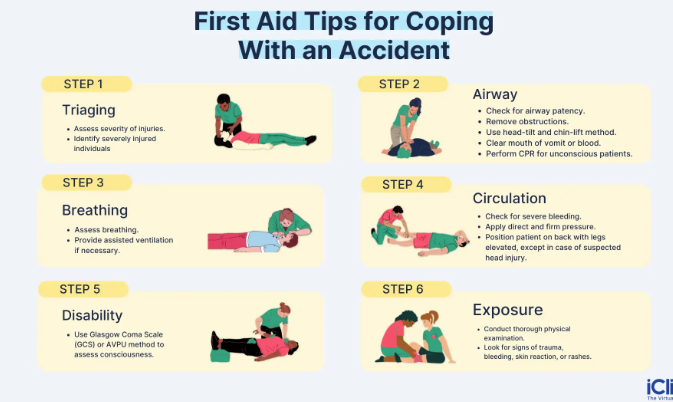
The UK Highway Code warns against moving casualties from vehicles unless further danger threatens, removing helmets unnecessarily or giving food and drink. Its advice is temporary support until emergency services arrive, not a replacement for training. In India, follow the emergency operator’s directions. If someone is unresponsive, not breathing normally or bleeding severely, report that immediately and follow instructions for lifesaving assistance. This guide deliberately does not teach vehicle extraction, spinal assessment or a complete first-aid technique through text alone.
Give a clean handover
When a responder can receive information, explain what you saw, roughly when you arrived and what assistance has already been given. Say which times are estimates. If you did not witness the impact, make that clear. Mention a person who may be outside the immediate cluster without searching an unsafe carriageway yourself. If you have relevant original dashcam footage, retain the original and offer it to the investigating authority. Do not edit a dramatic clip first and let that become the only surviving version.
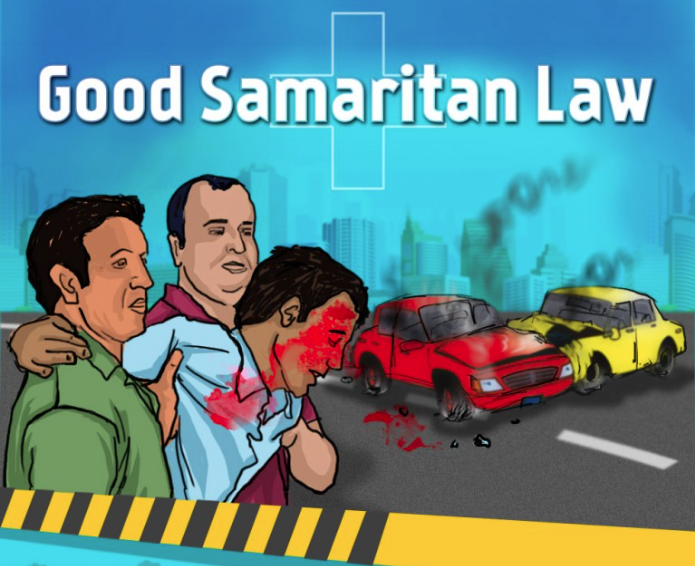
Know the purpose of Good Samaritan protection
MoRTH’s January 2026 public guidance explains protections for people who help crash victims in good faith. It says helpers need not volunteer personal details or become witnesses, and hospitals should not demand emergency-treatment payment from them. Becoming a witness is a separate voluntary choice. These protections support assistance; they do not make a hazardous physical rescue safe. Consult the linked official guidance for the rules, and obtain qualified advice if a particular legal dispute arises. Do not delay an emergency call while trying to resolve paperwork questions.
Keep dignity and useful evidence together
An injured person’s face, documents and distress do not need to be posted online to prove that you helped. Give responders relevant information directly. Tell family members only what you can verify, and avoid announcing a death or hospital destination from hearsay. If a family contact is needed, ask responders how you can assist. This editorial privacy recommendation is especially important when children are involved and when names or medical outcomes in early reports are incomplete.
Report a remaining roadside hazard through the proper channel
An abandoned vehicle or damaged barrier may need attention even after rescue vehicles leave. NHAI describes reporting unsafe roadside conditions through its highway-reporting ecosystem. Give a location and a factual description from safety; retain any reference number supplied. Reporting is a request for assessment, not evidence that the object caused a particular collision or that removal is already scheduled. Do not attempt to tow a wreck or mark a live carriageway yourself. Immediate danger still warrants an emergency report.
Prepare before the next journey
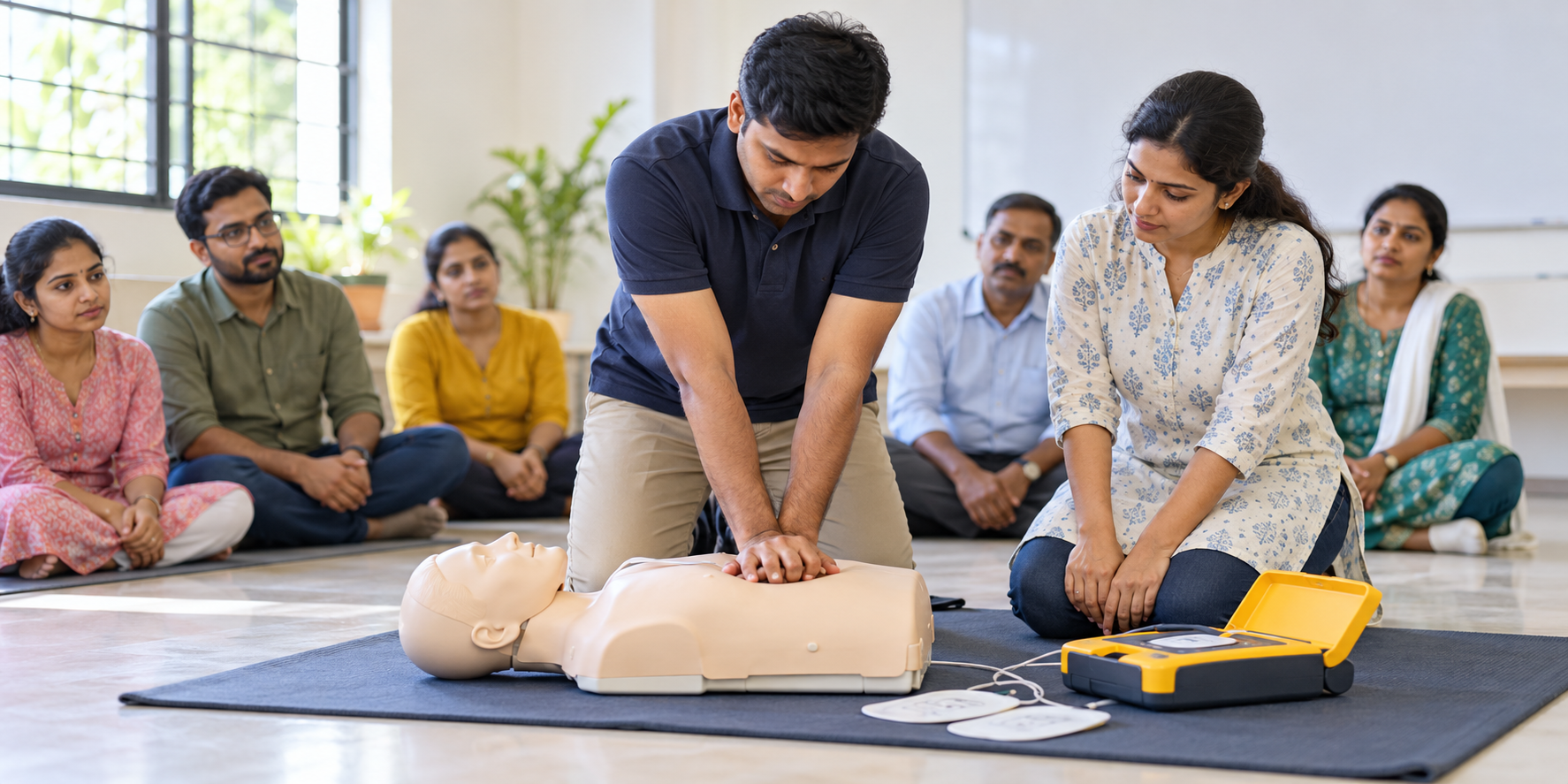
Store the emergency contacts, learn how to identify your direction of travel and consider recognised first-aid training. On long drives keep your phone charged, tell someone your route, and make sure everyone in the vehicle wears a seat belt, front and back. Check that everyone travelling with you knows how to ask for help if the driver is unable to do so. A practical rehearsal can use a harmless example location and a pretend report, but never call the real emergency service for practice. The aim is clear information and safe assistance, not confidence to perform tasks beyond your training. After a difficult incident, allow yourself time to recover and seek support if distress persists.
Sources: MHA, NHAI/MoRTH, Good Samaritan guidance, St John Ambulance, UK Highway Code. Reviewed 29 September 2026.
What needs attention
- Your first useful action may be a safe call: After a highway crash, the urge to rush towards a damaged vehicle is understandable. The immediate task is to avoid adding another injured person while getting the right help to the right place. This guide is for an untrained witness in India, not a vehicle-extrication manual. You can provide useful information without entering traffic or touching the vehicle. If you cannot reach a safe stopping place, do not brake abruptly, reverse or turn across traffic to return. Let a passenger report what is visible, or call after you have stopped safely.
- Look for danger before approaching: St John Ambulance advises checking scene safety, parking well away, using hazard lights and being alert to moving traffic, fuel and other hazards. Its guidance says people trapped in or under a vehicle may need the fire service. Treat any approach as conditional on safety; a crowd around a car is not proof that the area is safe. Do not crawl under a vehicle or try to stabilise it using improvised equipment. Report hazards you can see and let trained responders assess the scene.
- Choose the appropriate contact without delaying help: India’s Ministry of Home Affairs identifies 112 as the unified emergency number. On National Highways, NHAI also promotes the 1033 helpline. Tell the operator if another service has already been contacted so calls can be understood in context. Do not spend the first minutes installing an application, searching for reward rules or assuming a bystander must already have called. An application is an optional access route, not a reason to postpone an available phone call. Neither number is a promise of a fixed arrival time.
- Describe location as a route, not just a town: A useful report distinguishes the road name, direction of travel and the nearest readable landmark or kilometre marker. “Near Shahapur” may cover a large area; “Mumbai-bound near the Atgaon sign” is more informative when that is what you actually observed. Read a sign only from a safe position. A phone’s location can help, but do not invent coordinates, walk into danger for a clearer signal or assume the opposite carriageway has the same access. Ask the operator to confirm the location they have understood.
Controls that reduce risk
- Separate observation from explanation: Use short factual descriptions: a car beside a stationary truck; two people visibly needing help; someone appears trapped; smoke is visible. Do not report an exact total if you cannot see everyone. Do not diagnose brake failure, alcohol use or death from the appearance of the scene. Tell the operator which details are yours and which came from another person. The Atgaon news cycle shows why this matters: early casualty headlines changed, and an alleged mechanical problem remained subject to investigation.
- Agree a few safe roles: If several witnesses are already present in a safe place, one person can speak to the emergency operator while another notes the landmark or relays a change in conditions. Avoid everyone shouting different instructions at injured people. Keep space for ambulance and rescue access; do not organise an unofficial roadblock or direct high-speed traffic yourself. This is a practical communication arrangement, not a substitute for police scene management. When responders arrive, let their instructions replace any informal arrangement immediately.
- Help within your training and the operator’s directions: The UK Highway Code warns against moving casualties from vehicles unless further danger threatens, removing helmets unnecessarily or giving food and drink. Its advice is temporary support until emergency services arrive, not a replacement for training. In India, follow the emergency operator’s directions. If someone is unresponsive, not breathing normally or bleeding severely, report that immediately and follow instructions for lifesaving assistance. This guide deliberately does not teach vehicle extraction, spinal assessment or a complete first-aid technique through text alone.
- Give a clean handover: When a responder can receive information, explain what you saw, roughly when you arrived and what assistance has already been given. Say which times are estimates. If you did not witness the impact, make that clear. Mention a person who may be outside the immediate cluster without searching an unsafe carriageway yourself. If you have relevant original dashcam footage, retain the original and offer it to the investigating authority. Do not edit a dramatic clip first and let that become the only surviving version.
- Know the purpose of Good Samaritan protection: MoRTH’s January 2026 public guidance explains protections for people who help crash victims in good faith. It says helpers need not volunteer personal details or become witnesses, and hospitals should not demand emergency-treatment payment from them. Becoming a witness is a separate voluntary choice. These protections support assistance; they do not make a hazardous physical rescue safe. Consult the linked official guidance for the rules, and obtain qualified advice if a particular legal dispute arises. Do not delay an emergency call while trying to resolve paperwork questions.
Common unsafe practices
- Keep dignity and useful evidence together: An injured person’s face, documents and distress do not need to be posted online to prove that you helped. Give responders relevant information directly. Tell family members only what you can verify, and avoid announcing a death or hospital destination from hearsay. If a family contact is needed, ask responders how you can assist. This editorial privacy recommendation is especially important when children are involved and when names or medical outcomes in early reports are incomplete.
- Report a remaining roadside hazard through the proper channel: An abandoned vehicle or damaged barrier may need attention even after rescue vehicles leave. NHAI describes reporting unsafe roadside conditions through its highway-reporting ecosystem. Give a location and a factual description from safety; retain any reference number supplied. Reporting is a request for assessment, not evidence that the object caused a particular collision or that removal is already scheduled. Do not attempt to tow a wreck or mark a live carriageway yourself. Immediate danger still warrants an emergency report.
- Prepare before the next journey: Store the emergency contacts, learn how to identify your direction of travel and consider recognised first-aid training. Check that everyone travelling with you knows how to ask for help if the driver is unable to do so. A practical rehearsal can use a harmless example location and a pretend report, but never call the real emergency service for practice. The aim is clear information and safe assistance, not confidence to perform tasks beyond your training. After a difficult incident, allow yourself time to recover and seek support if distress persists.
Leave a comment