
Quick answers
Should I cross as soon as the pedestrian signal changes?
Check that vehicles are actually stopping, then cross deliberately while continuing to observe traffic.
What if there is no footpath or marked crossing?
Choose the safest available route, stay as far from moving traffic as practical, keep attention on traffic and do not step out until you have a safe view and gap.
When should I call 112?
Call for an emergency such as immediate danger, a crash, medical emergency or urgent need for police, fire or ambulance response.
Start with the route, not the shortcut
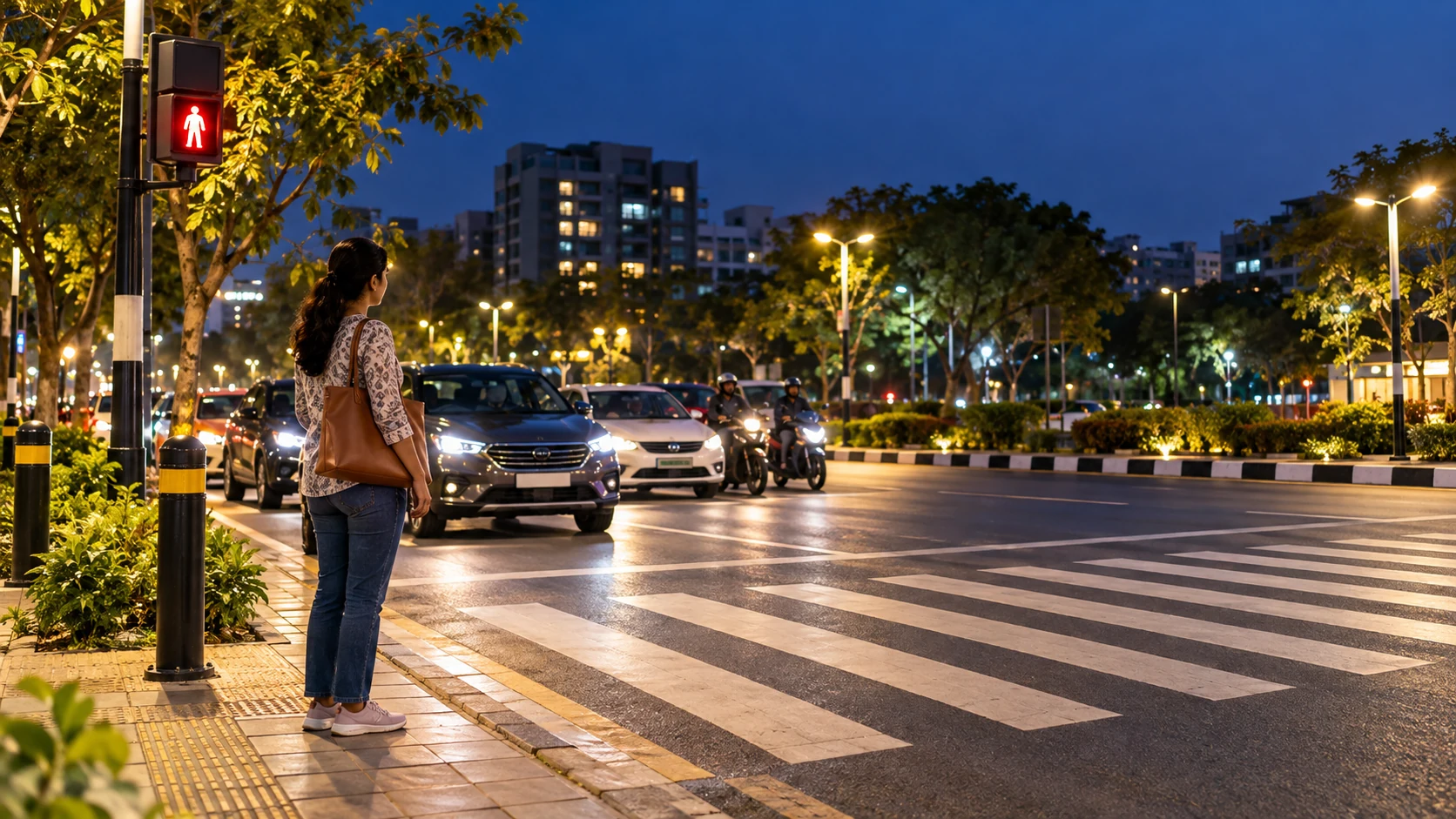
After dark, leave a little earlier so you can choose a route with active streets, a usable footpath, crossings and places where you can pause safely if needed. A brightly lit street is helpful, but it does not guarantee that every driver has seen you or that every part of the route is safe.
Make yourself easier to notice
- Choose light-coloured clothing or carry a reflective item when practical.
- Keep bags, umbrellas and clothing from blocking your view of traffic.
- Use your phone light only if it helps you see a dark path; do not let it take your attention away from the road.
- Keep headphone volume low enough to notice traffic, horns and people nearby.
Cross deliberately
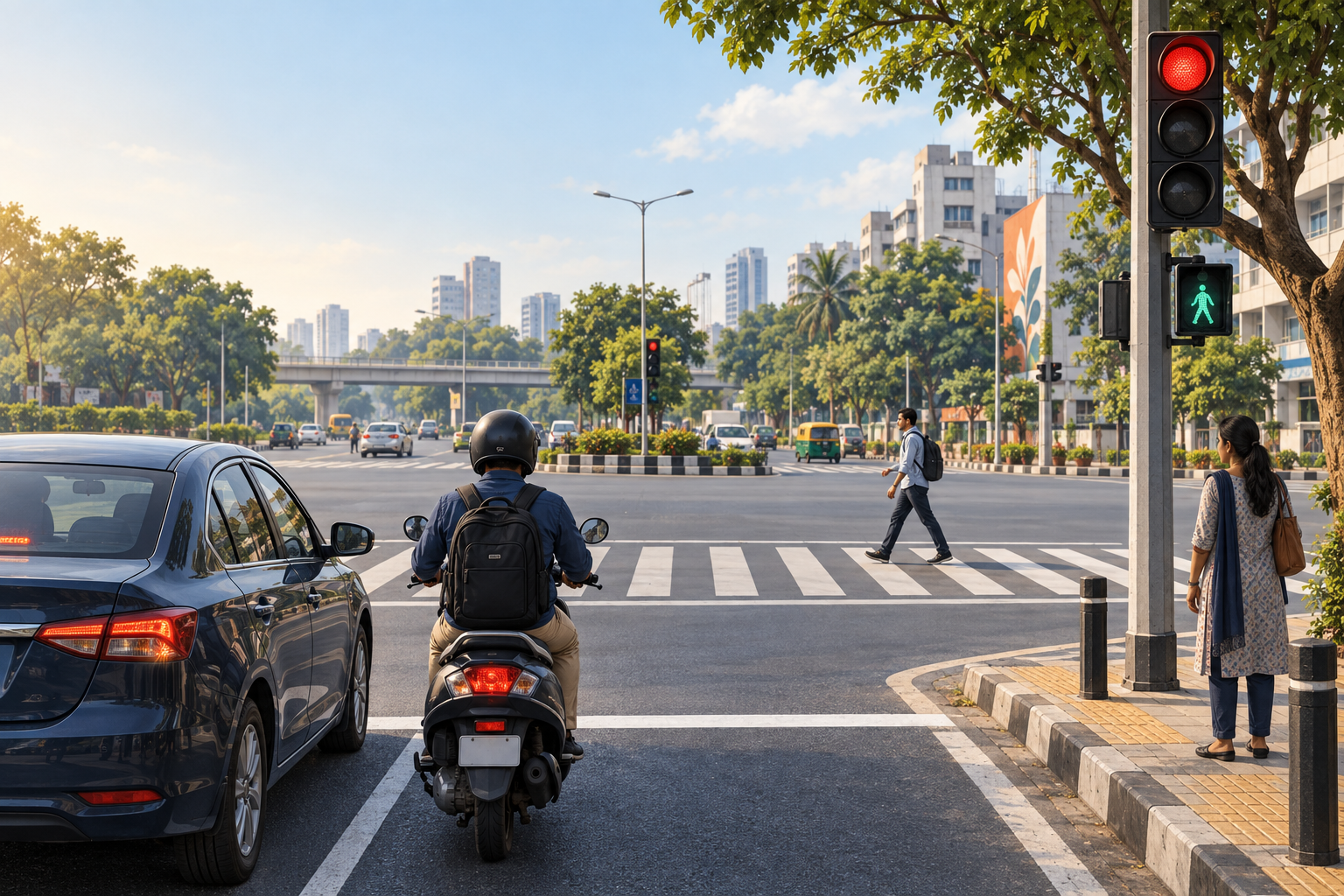
Use a marked crossing or signal where available. Before stepping out, look in every relevant direction and wait for a safe signal or gap. Eye contact can help communicate intent, but it is not a guarantee that a driver will stop. Keep watching while you cross, especially near turning vehicles, two-wheelers, buses and vehicles emerging from driveways.
When the route does not feel right
Do not push through an isolated, unlit or uncomfortable stretch merely to save time. Move toward a busier and more visible place, such as an open shop, station entrance, guard point or well-used stop, and contact someone you trust. In an emergency, call 112 and give a clear landmark.
If you are walking beside a road without a footpath
Choose the safest available edge and keep as much distance from moving traffic as practical. Do not assume a driver can see you around a bend, crest, parked vehicle or glare. If the road becomes too narrow, dark or fast-moving to continue safely, wait at a safer visible point and seek another option rather than squeezing past traffic.
A simple before-you-leave check
- Where is the safest crossing on this route?
- Where could I stop safely if I need help?
- Is my phone charged enough to call or share my location?
- Does someone know when I expect to arrive?
- What is my safer alternative if the route is blocked or feels unsafe?
What needs attention
- A bright street is not a promise that every driver can see a pedestrian.
- A marked crossing is safer when combined with deliberate observation and a safe signal or gap.
- Leaving early allows a person to choose the safer route instead of rushing into a risky shortcut.
Controls that reduce risk
- Choose the route before leaving and tell a trusted person the arrival time for a longer or unfamiliar walk.
- Wear or carry something that helps drivers notice you; light-coloured clothing, a reflective item or a phone light used without distracting yourself can help.
- Use a footpath and marked crossing where available; otherwise cross only after checking traffic from every relevant direction.
- Make eye contact with drivers where possible, but still wait for the vehicle to slow or stop.
- If the route feels unsafe, move to an active, well-lit place and contact someone you trust or seek local help.
Common unsafe practices
- Crossing from between parked or stopped vehicles where approaching traffic cannot see you.
- Assuming a vehicle will stop because you have the right of way.
- Walking on an unlit road edge with traffic behind you without actively monitoring it.
- Using headphones or a phone in a way that removes awareness of traffic and surroundings.
- Taking an isolated shortcut when a more visible route is available.
Leave a comment