
Quick answers
Can I put a power bank in checked baggage?
No. IATA and FAA passenger guidance say power banks and spare lithium batteries must be in carry-on baggage; airline rules may be stricter.
What should I do if my cabin bag is gate-checked?
Remove power banks and spare lithium batteries before the bag goes to the hold, then keep them with you in the cabin.
What if my device gets hot or smokes on a flight?
Tell cabin crew immediately, say where the device is and follow their instructions.
Is a 20,000 mAh label enough?
No. Check the battery's Wh rating and the airline's current policy.
Check your airline’s current rule first
Airline rules can be stricter than general guidance and can change. Before travelling, check the airline’s dangerous-goods or baggage page for the flight you are taking. This is especially important for power banks, spare batteries, smart luggage, camera batteries, drones and medical equipment.
Keep power banks and spare batteries with you
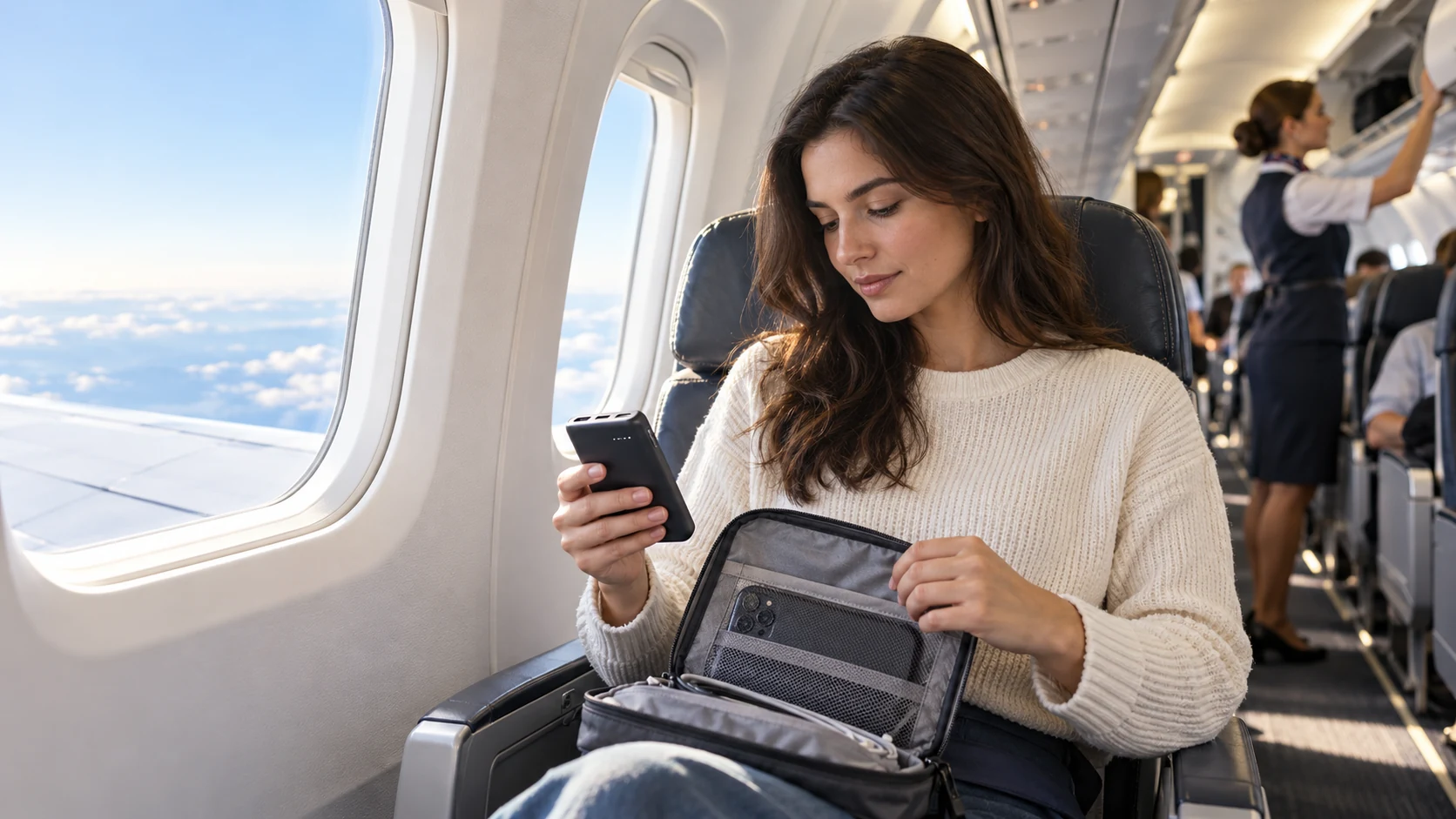
Power banks and spare lithium batteries belong in hand baggage, not checked baggage. Protect them from damage, crushing and loose metal items such as keys or coins. Use the original packaging, a battery case, tape over exposed terminals where suitable, or another insulated cover to reduce short-circuit risk.
If airline staff ask to put your cabin bag in the hold at the gate, remove power banks and spare batteries first and keep them with you in the cabin. Do not leave them in a bag that is being checked.
Read the watt-hour rating — and do not guess
The watt-hour (Wh) rating is normally printed on the battery or device. It is the figure airlines use for many limits. IATA’s 2026 passenger guidance says power banks up to 100 Wh may be carried in cabin baggage, subject to airline conditions; power banks above 100 Wh are forbidden under that table. Spare batteries above 100 Wh and up to 160 Wh may need airline approval. Rules differ by battery type and configuration, so check the airline rather than relying on a marketing label such as “20,000 mAh.”
Do not fly with a damaged or recalled battery
Do not take a power bank or battery that is swollen, cracked, leaking, unusually hot, has a damaged cable or smells unusual. Follow the manufacturer, airline or local disposal guidance for a recalled or damaged item. Do not put a questionable battery in checked baggage simply to get it through the journey.
During the flight: alert crew, do not improvise
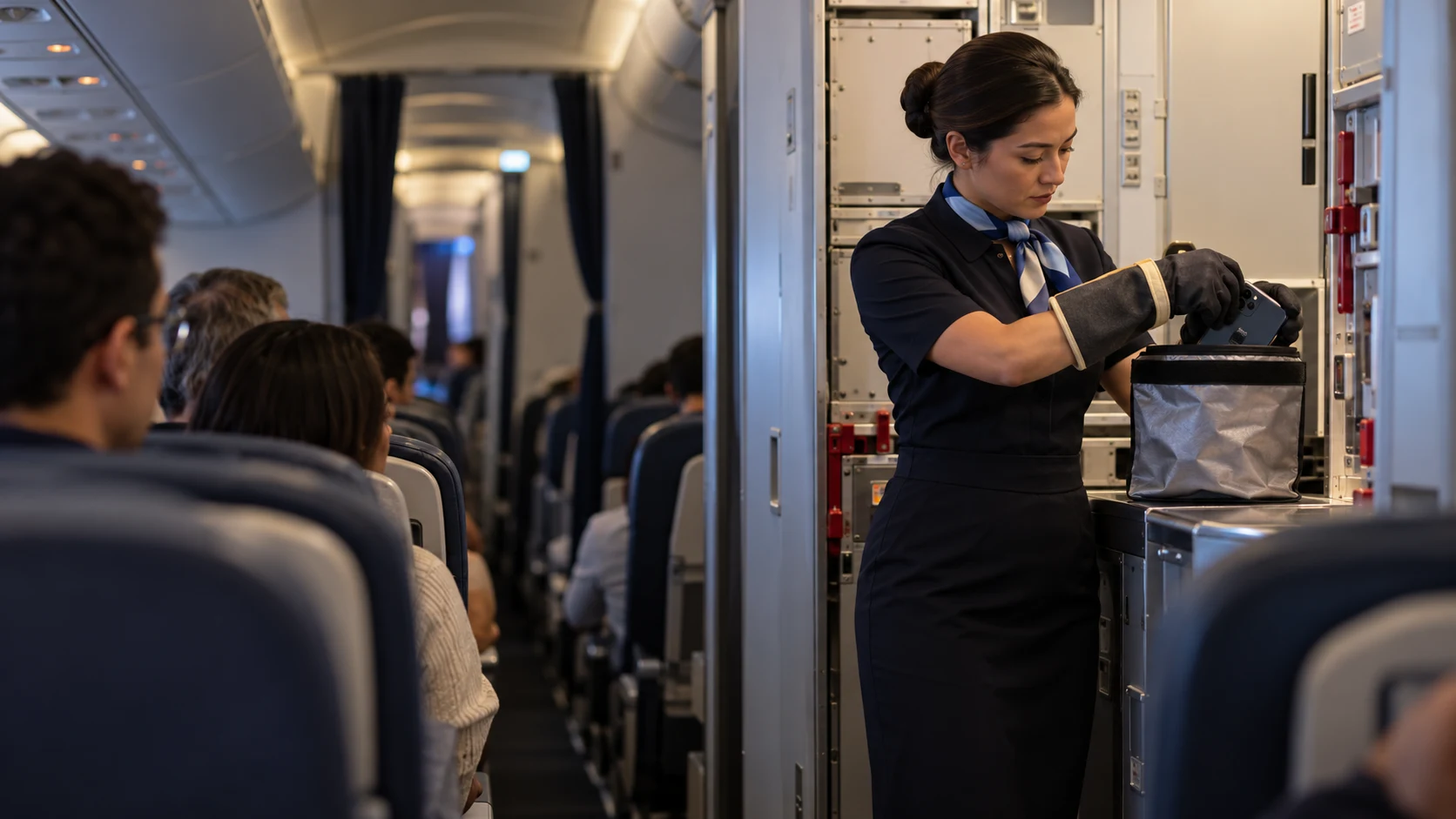
Tell cabin crew immediately if a device becomes unusually hot, expands, hisses, smokes or catches fire. Say where it is and whether it was charging, then follow crew instructions. Do not crowd the aisle, use personal bags as firefighting equipment, or move a smoking device unless the crew tells you to do so. Cabin crew have procedures and equipment for this situation.
Smart luggage, e-cigarettes and unusual equipment
Smart luggage with a removable battery may require the battery to be removed and carried in the cabin if the bag is checked. E-cigarettes and spare batteries have additional airline and destination-country restrictions. Wheelchairs, mobility aids and larger professional equipment can follow different rules. Ask the airline before travel rather than relying on a social-media post.
A 60-second pre-flight check
- Check that the power bank is not damaged or swollen.
- Find its Wh rating and compare it with the airline’s current rule.
- Put power banks and spare batteries in protected hand baggage.
- Keep them accessible if your cabin bag may be gate-checked.
- Save the airline’s dangerous-goods page before leaving for the airport.
- If anything gets hot or smokes in flight, alert cabin crew immediately.
Important limit
This is general travel-safety information, not airline approval or a guarantee that an item will be accepted at security. Airline, airport, country and equipment-specific rules can differ.
What needs attention
- A power bank is a lithium-battery safety item, not an ordinary accessory.
- The Wh rating, battery type and whether the battery is installed or spare affect what may be carried.
- A damaged, recalled or overheating battery needs airline, manufacturer or local disposal guidance rather than improvisation.
- Passengers should notify cabin crew immediately about heat, swelling, smoke or fire.
Controls that reduce risk
- Check the airline's current battery policy before travelling.
- Carry power banks and spare batteries in protected hand baggage.
- Remove power banks and spare batteries if a cabin bag is gate-checked.
- Keep loose terminals protected from short circuit.
- Tell cabin crew immediately if a device is hot, swollen, smoking or burning.
Common unsafe practices
- Putting a power bank or spare battery in checked baggage.
- Guessing a battery's eligibility from mAh alone instead of checking its Wh rating and airline rule.
- Taking a swollen, damaged, recalled or unusually hot battery on a flight.
- Leaving a power bank inside a cabin bag that is sent to the hold at the gate.
- Trying to manage a smoking device alone instead of alerting cabin crew.
Leave a comment