
Quick answers
What speed is safe at night?
Use a speed that lets you stop within the distance you can actually see; conditions decide the safe margin.
Can music or an open window fix severe tiredness?
No. Pull over safely, rest, change to a rested licensed driver or postpone the trip.
What should I do if my vehicle stops on a highway?
Move away from traffic if safe, use hazard lights, protect occupants from moving traffic and call for appropriate help.
See less, drive less fast
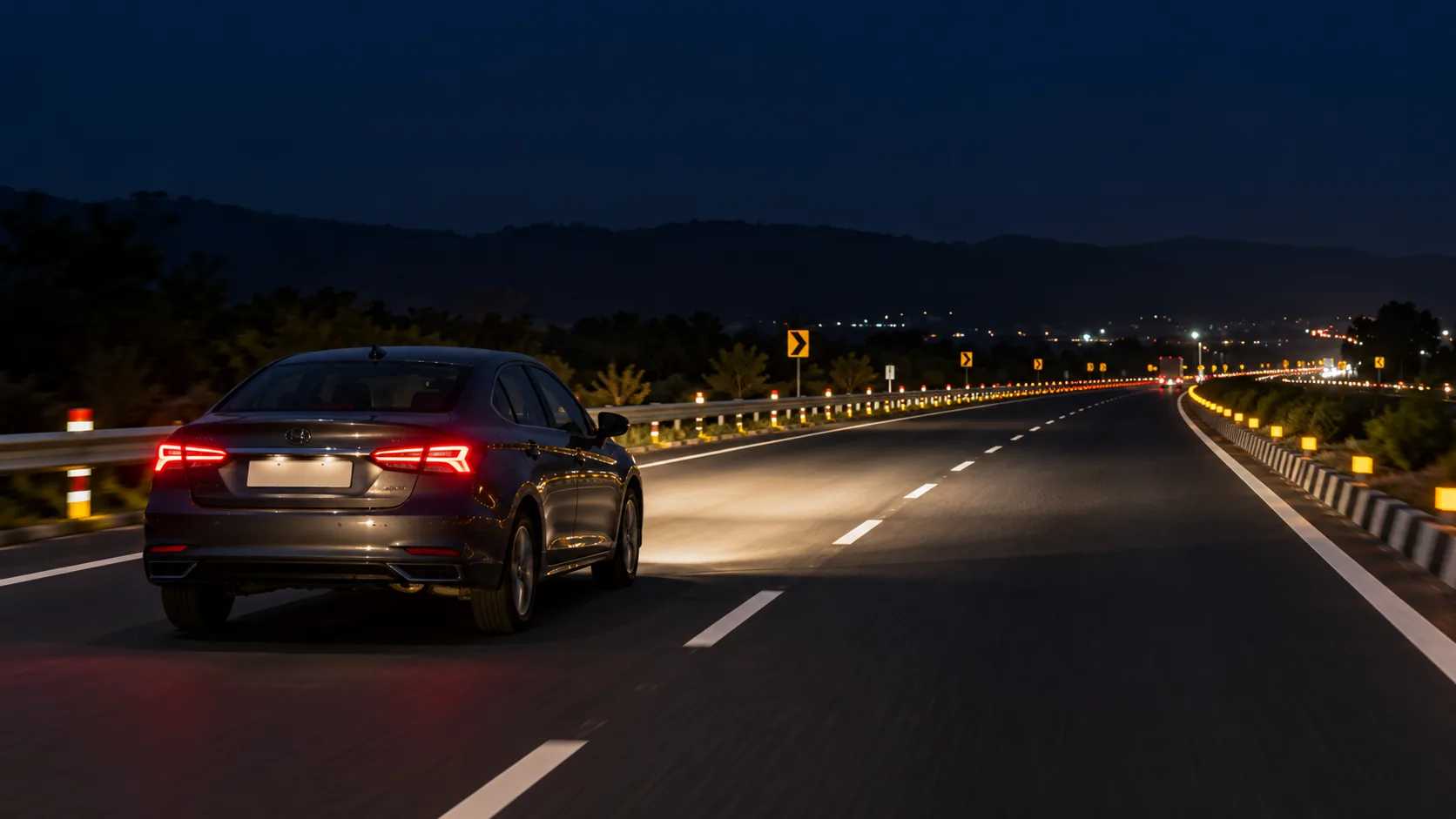
At night, a driver may see less road, less detail and less warning of people, animals, stopped vehicles, road damage or changing road shape. Drive at a speed that still allows you to stop within the distance you can actually see. This is not a fixed number: weather, lighting, traffic, road condition and your vehicle all matter.
Before leaving
- Check headlamps, tail-lights, brake lights, indicators and hazard lights.
- Clean the windscreen, mirrors, camera lenses and lamps to reduce glare.
- Check tyres, fuel or charge, wipers, phone charge and a charging cable.
- Set the route and rest stops before moving.
- Tell a trusted person the destination and expected arrival time on a long or unfamiliar journey.
While driving
- Keep enough space to stop without relying on the vehicle ahead to reveal hazards.
- Use dipped beam when meeting or following traffic.
- Slow before bends, crests, junctions, pedestrian areas, work zones and unlit stretches.
- Do not overtake into a distance you cannot see.
- Do not use a phone while driving.
Fatigue is a stop signal
Frequent blinking, lane drift, missed signs or difficulty remembering the last few kilometres are signs to stop safely. Music, an open window and phone calls do not make severe drowsiness safe. Rest, change only to a licensed and rested driver, or postpone the journey.
If the vehicle breaks down
- Move as far from moving traffic as safely possible.
- Use hazard lights.
- Get occupants behind a barrier or well away from traffic when that can be done safely.
- Call 112 for an emergency or roadside assistance for a non-emergency, giving a landmark and direction of travel.
- Do not attempt a roadside repair beside fast traffic or on a blind bend.
If you see a crash
Do not create a second crash. Stop only where safe, call 112, report people needing help and any hazards, and give first aid only within your training. Do not move an injured person unless immediate danger requires it or responders direct it.
What needs attention
- Darkness reduces the distance and detail available to the driver.
- Glare, fatigue and distraction can further reduce response time.
- A safe breakdown plan keeps people away from moving traffic.
Controls that reduce risk
- Check lights, tyres, windscreen and route before starting.
- Set navigation and rest stops before moving.
- Keep a safe following gap and lower speed when visibility falls.
- Stop safely if tired or unwell.
- Use hazards and get away from live traffic during a breakdown.
Common unsafe practices
- Using a phone while driving.
- Overtaking into a distance you cannot see.
- Continuing while drowsy.
- Standing between a broken-down vehicle and oncoming traffic.
- Attempting a roadside repair on a blind bend or beside fast traffic.
Leave a comment