
What happened here
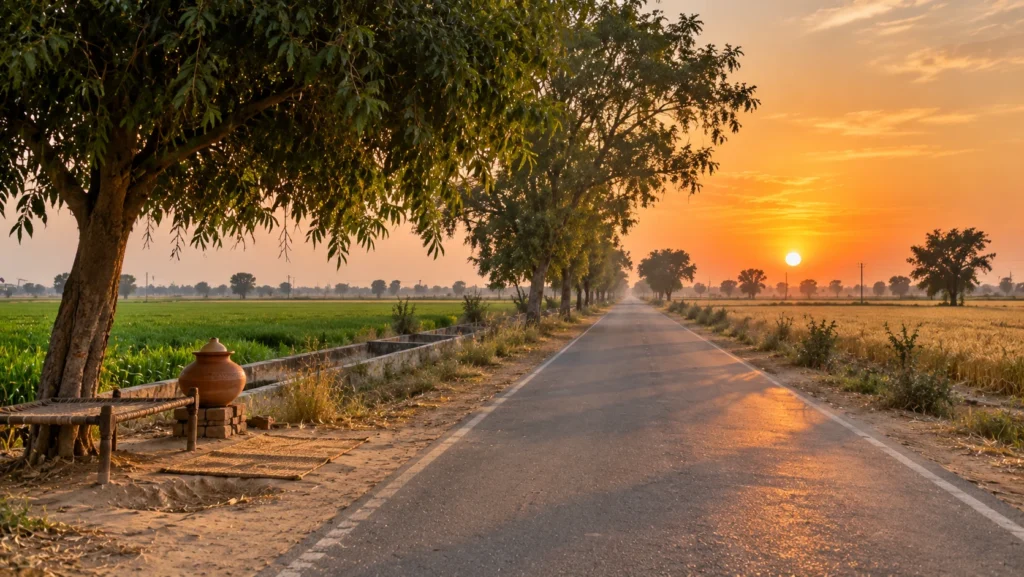
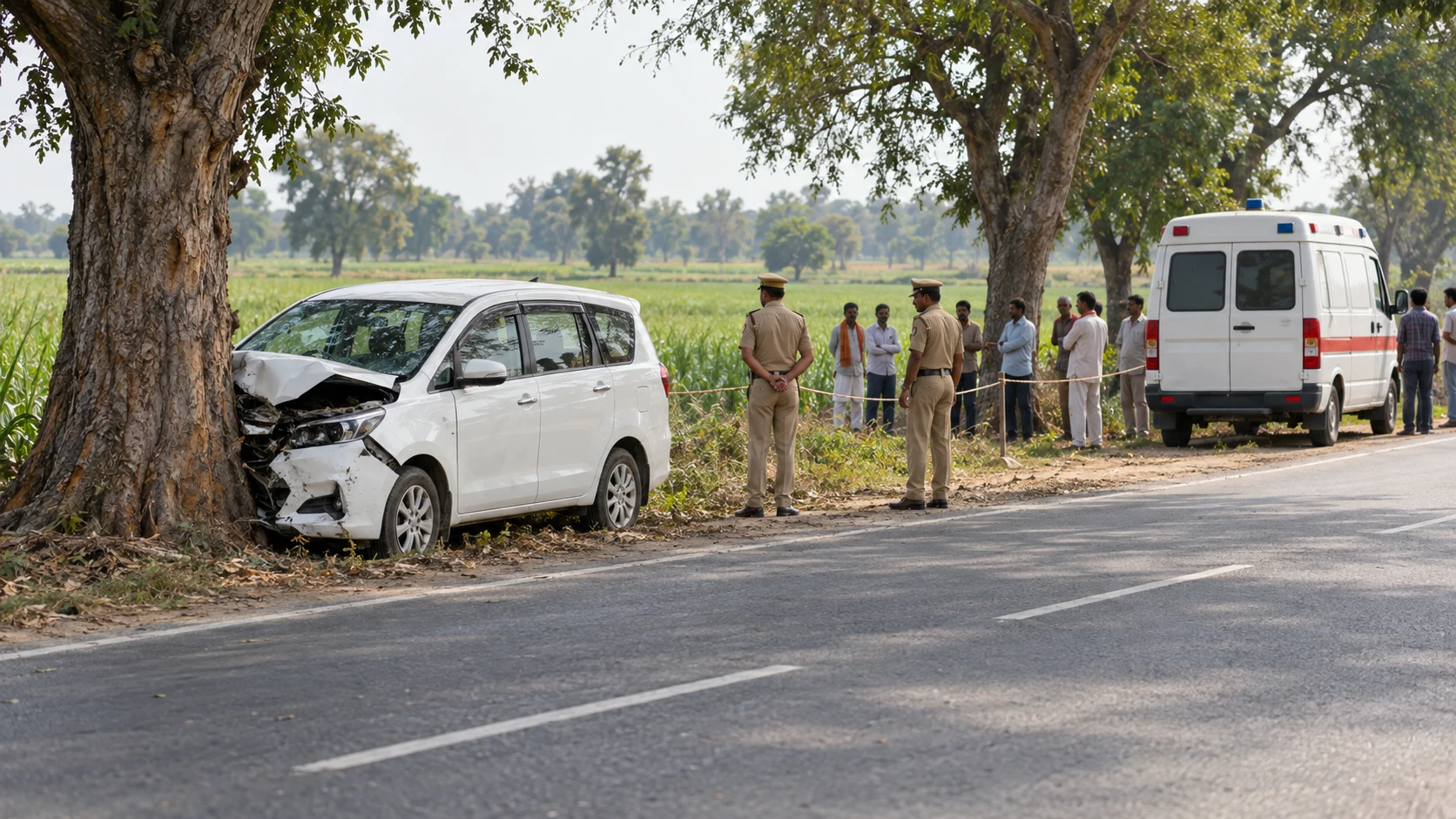
On the evening of 18 October 2026, a speeding car ran into rural-job-scheme workers resting by the Lehragaga-Jakhal road near Alisher village in Sangrur district, Punjab. Eight died (nine in some reports) and 12 or 13 were injured. The driver fled; his arrest is unconfirmed. Families say the crew had no reflective jackets, cones or flagman.
Quick answers
How many people died in the Sangrur Lehragaga road accident?
Eight, according to Sangrur Deputy Commissioner Poonamdeep Kaur, Chief Minister Bhagwant Mann and PTI. Punjabi Tribune, India.com and PTC News reported nine. Twelve or 13 were injured, depending on the report.
Was it a truck or a car?
The reports we opened describe a speeding car, and India TV and LatestLY name a Chevrolet Magnum. Some early online posts called it a truck, but no reliable report says so.
Where and when did it happen?
On the Lehragaga-Jakhal road near Alisher village in Sangrur district, Punjab, on the evening of Sunday, 18 October 2026, at about 5 to 5.30 p.m. according to Punjabi Tribune and The Tribune.
Has the driver been arrested?
Reports conflict. Police named him as Pargat Singh alias Kala of Raidhrana, who fled the spot. DY365 quotes the SP saying he had been arrested and Munsif says police took him into custody, but The Tribune (updated 19 October) said raids were on and Update Punjab reported no arrest. We found no police statement or court report, so we treat the arrest as unconfirmed.
What compensation has been announced?
Rs 2 lakh for each family of the dead from the Punjab government and free treatment for the injured. Update Punjab also reported Rs 50,000 for each injured worker, which we found in no other report. The families' Insaaf Committee has rejected the Rs 2 lakh and asks for Rs 50 lakh per death, Rs 20 lakh per injured person, a government job for one member of each family and free education for the children. Minister Barinder Goyal said the government is open to talks; we found no agreement by 20 October.
Why have the bodies not been cremated yet?
The Insaaf Committee, formed by the bereaved families with union members and activists, has said it will not allow post-mortems or cremations until its demands are met (The Tribune, 20 October). We found no report that the dispute had been settled as of the afternoon of 20 October.
What happened
On the evening of Sunday, 18 October 2026, a speeding car ran into a group of rural-employment workers who were resting by the roadside on the Lehragaga–Jakhal road, near Alisher village in Sangrur district, Punjab. Eight people died, according to the Deputy Commissioner, the Chief Minister and PTI. Reports put the time between about 5 and 5.30 p.m. (Punjabi Tribune, The Tribune); one report quotes the work supervisor saying it was the afternoon.
The workers were part of a crew of about two dozen enrolled under the rural job scheme, which several reports still call MGNREGA and which PTI names the Viksit Bharat Guarantee for Rozgar and Ajeevika Mission (Gramin), or VB-G RAM G. The supervisor told Punjabi Tribune that he had marked attendance for 24 workers that morning, 22 women and two men, most of them older women. Other reports say 23 or 25. They had been clearing grass or planting trees along the road, and many were sitting at the edge of the carriageway for a water break when the car came from the Jakhal side. An injured worker told ANI, “We were sitting on the road and drinking water when a car rammed into us.” An eyewitness told The Tribune that the car first hit a motorcycle and then turned towards the group. Some villages are named differently in different reports: Alisher is the home village of most victims, while Chotian and Pende are nearby places also mentioned as the spot.
Car, not truck. Every report we opened describes a car. India TV and LatestLY name a Chevrolet Magnum with a Punjab registration; PTI and The Tribune say only “car”. Early posts online called it a truck, but we found no reliable report that says so, so this page does not use that word.
The people
Eight deaths are confirmed by Sangrur Deputy Commissioner Poonamdeep Kaur, Chief Minister Bhagwant Mann (on X) and PTI. Punjabi Tribune, India.com, PTC News and LatestLY (quoting Punjab News Express) reported nine. We have used eight, the official figure, and flag the difference. SP Palwinder Singh Cheema said five died at the spot and three later in hospital. Cabinet Minister Barinder Goyal said six of the eight dead were women, some with children aged one or two at home (The Tribune). A village panchayat member told one reporter that a motorcyclist who had come to pick up his mother was also among the dead; it is not clear whether he is counted in the eight. The victims were mostly from Alisher and nearby villages. The reports name them, but we are not repeating the names here, out of respect for the families.
Twelve people were injured, according to PTI and the Deputy Commissioner. The Tribune counted 13, and Amar Ujala said more than 11. After first aid at Lehragaga, the injured were sent to the Government Hospital in Sangrur (seven patients, reported stable), Sunam, and Rajindra Hospital in Patiala (four or five, depending on the report). Bodies were taken to the Civil Hospital in Sangrur and to Sunam and Munak.
Response and investigation
Police said the driver left the car at the spot and ran away. SP Palwinder Singh Cheema said he had been identified, and named him as Pargat Singh, also called Kala, of Raidhrana village. The Chief Minister said on X that the accused would be arrested soon. The Tribune, in a report updated on 19 October, said no arrest had been made and that raids were on. Reports now conflict. DY365 (19 October) quotes the SP saying he had been arrested, and Munsif Daily says police took him into custody. The Tribune and Update Punjab, both on 19 October, report no arrest. We found no police statement or court report either way, so we still treat the arrest as unconfirmed. The Tribune also said the car was reportedly registered to a man named Pargat Singh of Patiala, which does not match the village given elsewhere. Reports also differ on the FIR. Oneindia (18 October) quotes the SP saying an FIR had been filed. DY365 (19 October) quotes him saying one would be registered once the injured and the families gave statements. Punjab News Express said villagers alleged that no case had been registered. We still have not found the FIR sections in any report. Rozana Spokesman quotes the Sangrur SSP, Ravjot Grewal, saying police would act under law if evidence of other offences or drug use came up; that is not a finding. No report we read says the driver was drunk or on drugs, and police have not stated a cause beyond speed.
The Chief Minister announced Rs 2 lakh for the family of each person killed and free treatment for the injured. Update Punjab (19 October) adds that the government will pay Rs 50,000 to each injured worker; we found that figure in no other report, so please treat it as unconfirmed. The same report quotes the ministers saying the injured at Rajindra Hospital were improving and out of danger. Finance Minister Harpal Singh Cheema and Barinder Goyal visited the injured in Sangrur and Patiala. Goyal also ordered a departmental inquiry into possible negligence by officials (The Tribune). Defence Minister Rajnath Singh and opposition leaders expressed condolences; Congress MP Amarinder Singh Raja Warring asked for strict action and adequate compensation.
Villagers sat on a dharna on the road, and an “Insaaf Committee” was formed with a member from each bereaved family, workers’ union members and local activists. Punjabi Tribune reported on 20 October that it demanded a government job for one member of each family, Rs 50 lakh for each bereaved family and Rs 20 lakh for each injured family, better treatment, plots and free schooling for the children, and said the bodies would not be cremated until its demands were heard. The Tribune, in a report updated on the morning of 20 October, says the committee has rejected the Rs 2 lakh offer and will not allow post-mortems or cremations until its demands are met. It puts the demands at Rs 50 lakh for each death, Rs 20 lakh for each injured person, a government job for one member of each family and free education for the children of those killed. Minister Barinder Goyal said the government remained open to talks on compensation. Former finance minister Parminder Singh Dhindsa, who visited the injured, also asked for government jobs, larger compensation and an inquiry into worker safety and any delay in getting the injured to hospital (Rozana Spokesman, 19 October). Residents also alleged that the ambulance took nearly an hour to reach the spot and that this added to the deaths (The Tribune, Punjabi Jagran). This is an allegation, and no official response-time record has been published.
Relatives and union members said the agency that gave the work had not followed road-safety requirements. They said the workers had no reflective jackets, and there were no warning boards, cones or barricades, and no flagman to slow traffic (The Tribune, Punjabi Tribune). These are claims by the families and unions. They have not yet been tested in an inquiry.
Why this matters
The people killed were doing ordinary government-scheme work on a village road, close to the carriageway, with no barrier between them and fast traffic. Rural job-scheme crews, farm labourers, road menders and tree planters often work and rest at the edge of roads that carry cars at 80 or 100 km an hour. The driver is clearly responsible for the crash, but the families are also asking who planned the work, where the crew was allowed to sit and what protection was provided. Punjabi Jagran’s editorial made the same point: blame should not stop at the driver.
Punjab recorded 4,829 road deaths in 2023, according to the Ministry of Road Transport and Highways (MoRTH), and across India 35,221 pedestrians were killed that year, about one in five of all road deaths. Roadside workers are in the same category of people on foot beside fast traffic. We covered a similar worksite danger in our Dwarka Expressway worksite crash case study.
Lessons
- Agencies and supervisors: plan the rest spot, not just the work. Choose a place for water and shade well away from the carriageway, behind a ditch, tree line or field edge, and tell workers never to sit on the road shoulder. The earlier MGNREGA Act itself lists drinking water, shade and first aid as worksite facilities, so these are not extras.
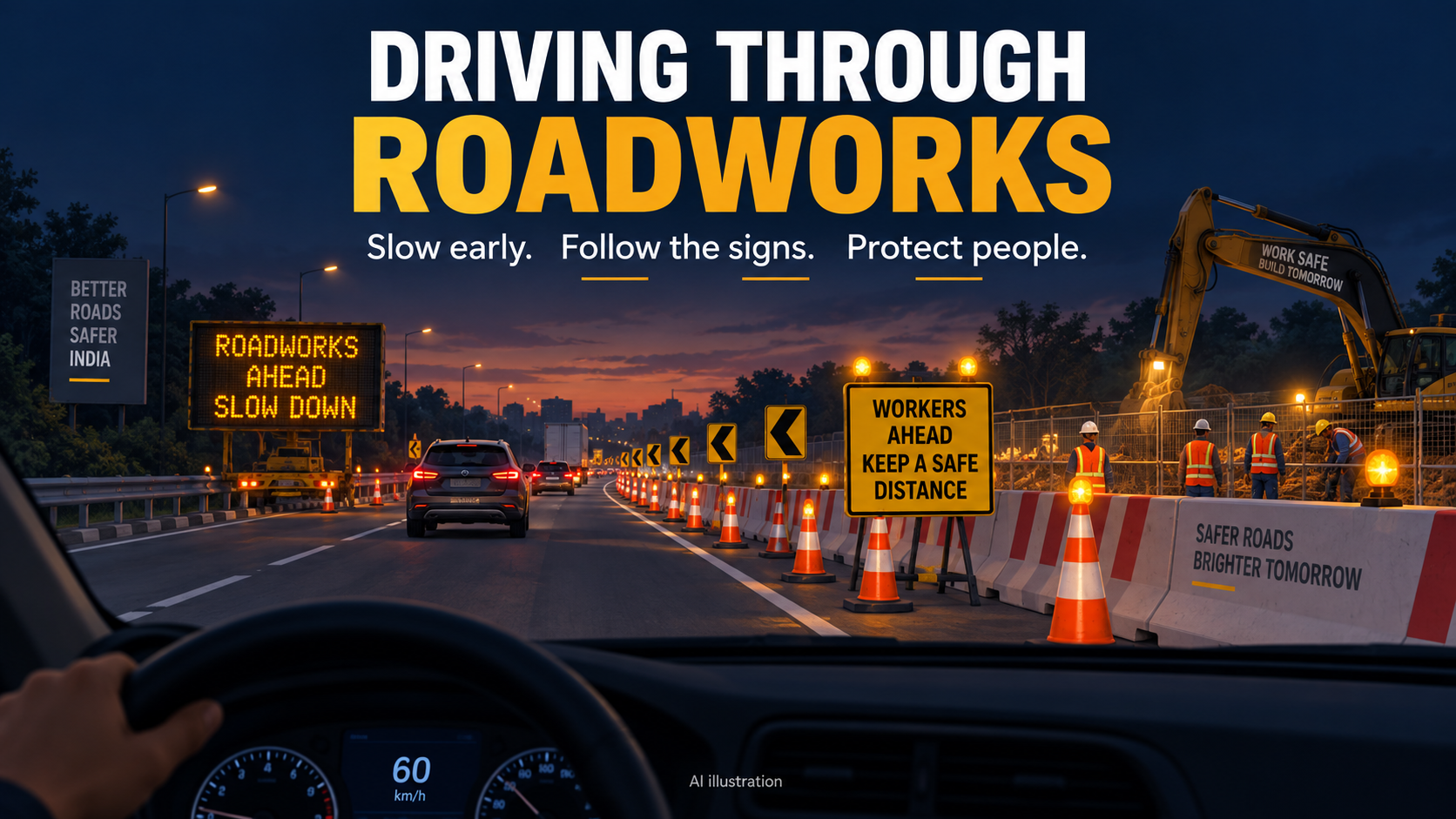
- Make the crew visible. Give every worker a reflective jacket or sash, place warning boards and cones well before the work area on both approaches, and post a flagman. Our guide on driving through roadworks shows what drivers should look for, and the national guidelines on work-zone traffic management (IRC:SP:55) cover signs and spacing.
- Slow traffic near villages. Where a road passes a village or a regular worksite, panchayats can ask the road-owning agency for speed breakers, rumble strips or a speed limit sign. Cars drive fastest on straight, empty village roads, which is where such crews work.
- Enforcement. Over-speeding and drunk driving are leading causes of road deaths in India. Police can place spot speed checks and breath tests on district link roads in the evening, when drivers are heading home.
- Workers: sit with your back to a field, not to the road. Take breaks on the side that is away from traffic, keep children and bags out of the carriageway, and refuse a rest spot you cannot see traffic from. Tell the mate or the gram panchayat office if the site has no markers.
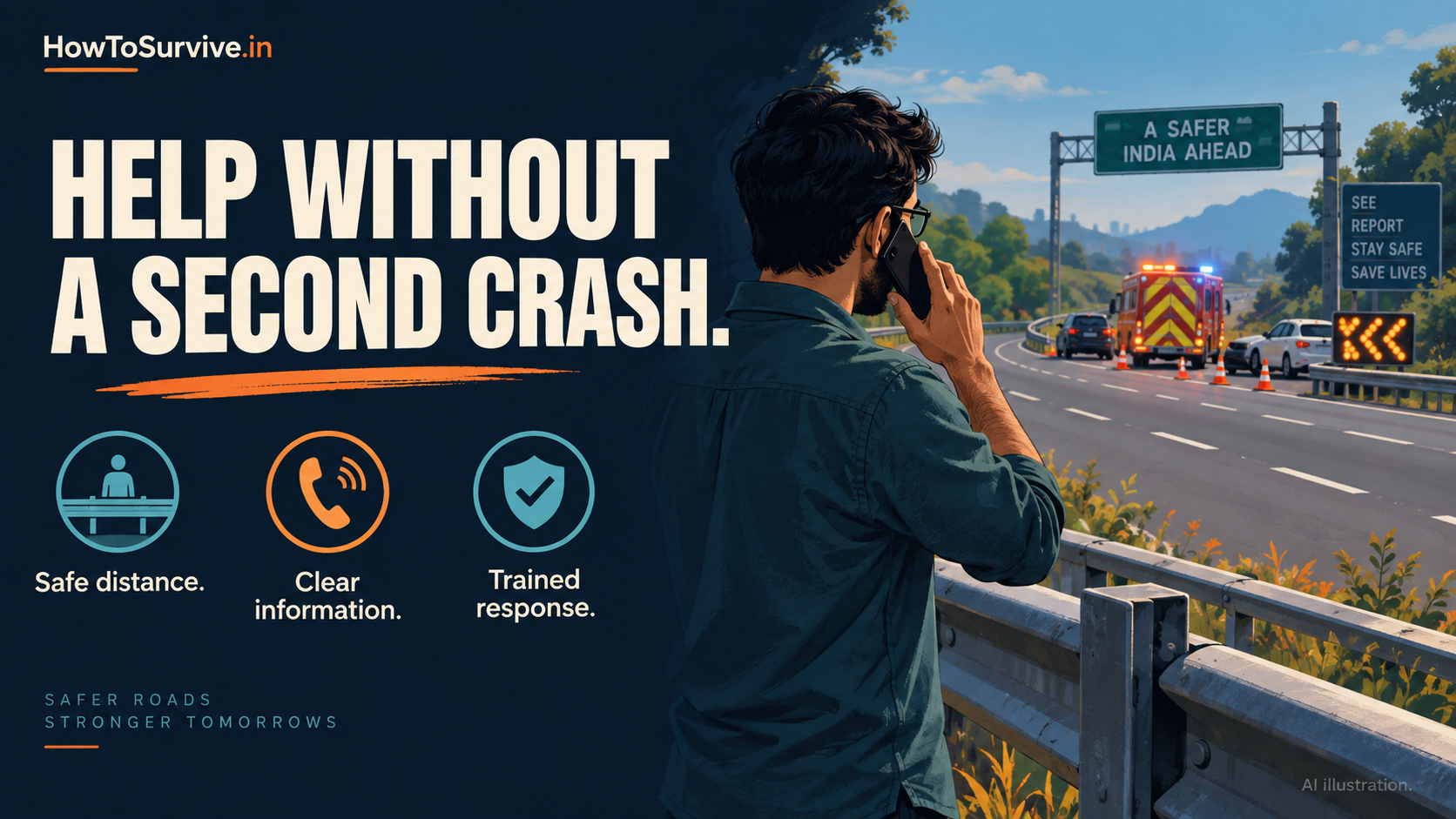
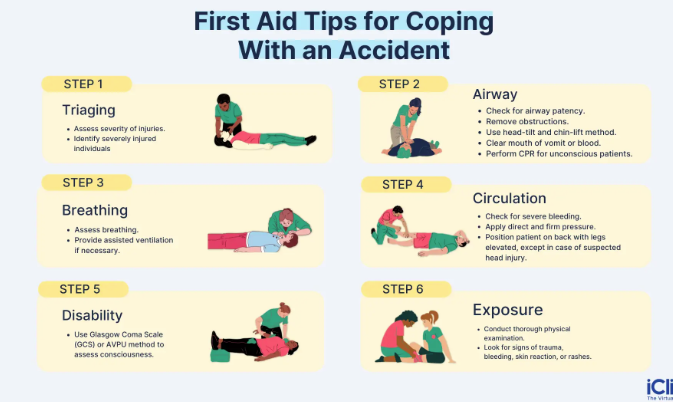
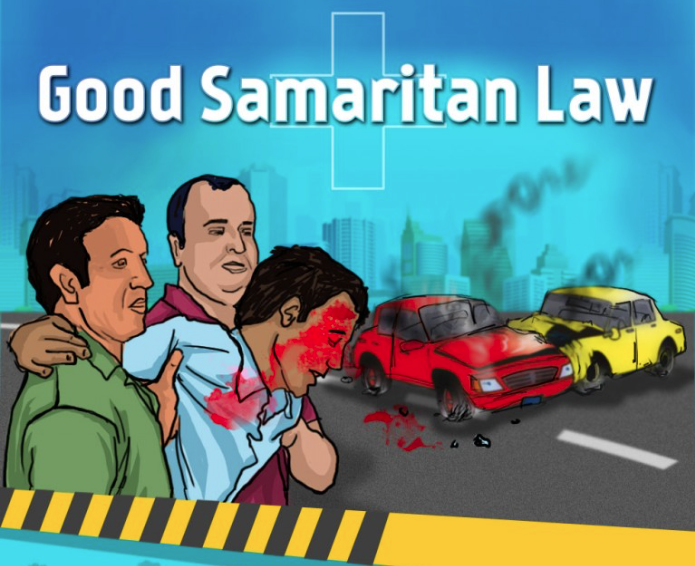
- Bystanders: call 112 or 108 at once. Note the landmark, the number of injured and whether anyone is bleeding or not breathing. Do not lift or drag a person who may have a neck or back injury unless they are in danger where they lie. Press firmly on heavy bleeding with a clean cloth. Our road accident first aid guide and our witness’s safe-help guide explain what to do until the ambulance reaches. Section 134A of the Motor Vehicles Act protects a Good Samaritan who helps an injured person, and you cannot be forced to give your name or stay at the hospital.
- Families: ask for the FIR, the post-mortem report and the work-muster records. Compensation under a motor-accident claim and relief from the government are separate. A district legal services authority (DLSA) gives free legal help to the poor and to women, and a union can help file the claim.
What is still not known
The final toll (eight or nine), the exact time of the crash and the exact spot are not settled. It is not clear whether the driver has been arrested, what the FIR says, who owned the car, how fast it was moving, or whether the driver had been drinking. The departmental inquiry has not published findings on the worksite safety claims, and the ambulance timing has not been examined. As of our check on 20 October 2026, we found no report that the government had agreed to the Insaaf Committee’s demands, or that post-mortems or cremations had been carried out. Last checked: 20 October 2026, about 2 p.m. IST. We will add to this page when official findings are published.
- Supervisor marks attendance for 24 workers on the roadside job-scheme work near Alisher
- A speeding car from the Jakhal side hits a motorcycle and then the workers sitting by the road; five die at the spot
- Injured taken to Lehragaga, Sunam, Sangrur and Rajindra Hospital, Patiala; police identify the driver, who has fled; villagers block the road in protest
- PTI reports eight dead and 12 injured; Chief Minister announces Rs 2 lakh for each family of the dead and free treatment
- Ministers Harpal Singh Cheema and Barinder Goyal visit the injured; Goyal orders a departmental inquiry; The Tribune reports no arrest yet; residents allege ambulance delay; Insaaf Committee formed
- Reports conflict on the driver: DY365 quotes the SP saying he was arrested and Munsif says police took him into custody, while The Tribune and Update Punjab report no arrest
- Punjabi Tribune reports the committee's demands and says the bodies will not be cremated until they are heard
- The Tribune reports that the Insaaf Committee has rejected the Rs 2 lakh relief and will not allow post-mortems or cremations until its demands are met
Why consequences escalated
- A speeding car reached a group of workers who were sitting at the edge of the road during a break.
- Relatives and unions say the crew had no reflective clothing, signs, cones or flagman; this has not been tested in an inquiry.
- Residents allege the ambulance took nearly an hour to arrive; no official record has been published.
- The driver was identified quickly, but reports conflict on his arrest and no FIR sections have been reported.
- The government has ordered a departmental inquiry into possible negligence by officials; no judicial inquiry has been reported.
- The Insaaf Committee has rejected the Rs 2 lakh relief and is withholding post-mortems and cremations; no agreement with the government has been reported.
Failures and risk multipliers
- A rest spot at the edge of a carriageway on a fast village road.
- No visible warning for drivers: reflective jackets, signs, cones and a flagman are alleged to have been missing.
- A driver at speed on a straight rural road, with no speed calming near a regular worksite.
- A slow emergency response alleged by residents on a district link road.
Actions that reduce risk
- Choose rest and water spots for roadside crews well away from the carriageway, with shade behind a barrier or field edge.
- Give every roadside worker a reflective jacket, put warning boards and cones on both approaches, and post a flagman.
- Ask the road agency for speed breakers or limits near villages and regular worksites.
- Run evening speed and breath-test checks on district link roads.
- Save 112 and 108, and know the nearest trauma-capable hospital.
Leave a comment