
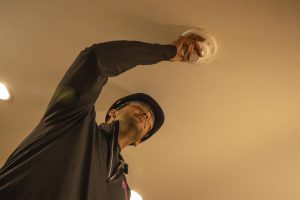
Quick answers
What are the main types of fire detectors?
Common types are smoke, heat and flame detection, with modern designs also using beam, aspirating, linear heat, multi-sensor, spark or ember and video-image approaches. No detector is universally fastest or immune to unwanted alarms.
What is the difference between ionisation and photoelectric smoke alarms?
Ionisation alarms tend to respond more quickly to smaller particles common in flaming fires, while photoelectric alarms tend to be more sensitive to larger particles from smouldering fires. Both can detect both fire types.
Can a heat detector replace a smoke detector in a bedroom?
Heat detectors usually provide less early warning than suitably placed smoke detection. Using a heat detector where early smoke warning is needed for sleeping or occupied areas is a mistake.
Can a carbon monoxide alarm be used instead of a smoke alarm?
No. Carbon-monoxide alarms address a toxic-gas hazard and are not substitutes for required smoke or fire detectors.
One of the most important parts of putting out a fire is finding it as soon as possible. When a fire is found quickly, people can get out of the building safely sooner, and fire suppression systems can act more quickly. There are different ways to find out if there is a fire. Heat detection, smoke detection, and flame detection are the three main ways to find a fire.

- Heat Detection
When there is a fire and the temperature in the area goes up, the heat detectors go off. When a certain temperature is reached in an area, the heat detectors go off. Heat detectors tend to have less false alarms than other types of detectors, but they can take longer to find a fire. Heat detectors work best in places where people don’t usually go and in places where smoke detectors don’t work well, like in steamy, humid, or dusty places.
2.Smoke Detection
Smoke detectors are activated when smoke is created by a fire. There are several types of smoke detectors that use different methods to detect smoke.
- Ionization:- It is detectors make an electric current between two electrodes by using radioactive material. When a fire makes smoke, the smoke interferes with the ionization, which sets off the alarm. This type of smoke detector can be set off by things like humidity, which can lead to false alarms. These types of smoke detectors work well to find fires that burn quickly.
- Photoelectric:- A light beam is used by these alarms to find smoke. When fire smoke particles pass through the beam, the detectors go off. These detectors tend to be more sensitive to the larger, lighter particles from slow, smouldering fires. They can still give unwanted alarms from steam, dust, insects or cooking.
- Combination:- Combination detectors use the technology from both ionization detectors and photoelectric detectors to find both fires that are burning quickly and fires that are smoldering.
- Aspirating smoke detection:- Aspirating smoke detection is a way to find a fire as soon as it starts. This kind of detector takes samples and tests the amount of particles in the air. It goes off when the amount of particles in the air goes above normal. It can give very early warning around sensitive equipment, but it is not immune to unwanted alarms. Its pipe layout, filters, alarm levels and maintenance must be engineered for the room.
3.Flame Detection
When flames are present, flame detectors can tell if there is a fire. This type of fire detection uses UV and/or infrared sensors to find a flame and set off an alarm.
What needs attention
- The legacy article's three headings—heat, smoke and flame—are useful starting points, but modern designs also distinguish point, beam, aspirating, linear heat, multi-sensor, spark or ember and video-image approaches
- Ionisation and photoelectric alarms can detect both flaming and smouldering fires; each has characteristic strengths, so the labels are tendencies rather than guarantees
- NIST explains that ionisation alarms tend to respond more quickly to the smaller particles common in flaming fires, while photoelectric alarms tend to be more sensitive to larger particles common in smouldering fires
- Photoelectric does not mean 'no false alarms'; cooking aerosols, steam, dust, insects, airflow, placement and contamination can affect smoke detection
- Aspirating smoke detection is not immune to unwanted alarms; sampling layout, filtration, thresholds, environment and response logic must be engineered and maintained
- Heat detectors may reduce smoke-related nuisance alarms but usually provide less early warning for occupants than suitably placed smoke detection
- Flame detectors can be very fast for exposed flames but may miss shielded, obstructed or smouldering fires and can be affected by welding, hot objects, lightning, sunlight or other radiation unless correctly selected
- Carbon-monoxide alarms address a toxic-gas hazard and are not substitutes for required smoke or fire detectors
- A detector indication is useful only if the control equipment identifies it, occupants can perceive the alarm and the planned response occurs
- Recurring unwanted alarms are a design or maintenance signal to investigate—not a reason to disable detection
Controls that reduce risk
- Create a detector register with type, address or zone, exact location, protected hazard, model, date and test history
- Mark every predictable nuisance source: cooking, steam, dust, exhaust, welding, sunlight, vibration and strong airflow
- Ask the designer which fire signature each detector is expected to see first
- Verify that all devices are approved or listed for their purpose and environment
- Confirm alarms are audible and visible where required and accessible alerts serve people who are deaf or hard of hearing
- Test the complete route from detector activation to panel, local alarm, remote monitoring and safety interface
- Investigate every unwanted alarm and record the root cause and corrective action
- Control detector isolation with authorisation, time limit, compensatory measures and restoration test
- Protect detectors during dusty work, then remove covers, clean and functionally test before reoccupation
- Keep emergency numbers, zone plans, keys and responder access available at the control panel
Common unsafe practices
- Choosing detector type only from room name instead of the credible fire and environmental conditions
- Promising that one technology has no false alarms
- Using a heat detector where early smoke warning is needed for sleeping or occupied areas
- Installing smoke detectors in predictable steam, dust or cooking plumes without suitable type, location or engineering
- Using a point detector beneath a very high ceiling without checking smoke transport and stratification
- Using a beam detector without access for alignment, obstruction control and maintenance
- Using flame detection where the fuel or ignition can be hidden from the detector's field of view
- Treating an aspirating pipe hole as equivalent to a correctly spaced point detector without approved calculations
- Programming delays, coincidence logic or suppression release without proving the life-safety and hazard response objective
- Leaving detectors bagged, painted, dirty, isolated or in test mode after construction or maintenance
- Testing only the panel lamp or sounder instead of applying an approved stimulus to each detector and verifying the full cause-and-effect path
- Ignoring alarm and fault history until staff begin to distrust or silence the system
Leave a comment