
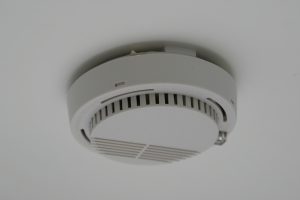
Quick answers
What causes a smoke detector false alarm?
Smoke sensors respond to airborne particles from sources such as cooking, steam, dust, insects, tobacco smoke, heated-air circulation, candles, sprays and building work. Such nuisance alarms are usually a real sensor response to a non-hazardous stimulus.
Why does my smoke alarm keep chirping?
A short chirp may report low battery, end of life, contamination or another fault rather than smoke. Do not solve it by removing the device indefinitely; follow the device manual or call a competent technician.
Can I remove the battery to stop repeated smoke alarm beeping?
No. Removing the battery, detector head or mains supply to stop repeat alarms is a mistake. For a confirmed cooking or steam source, use only the listed hush feature and ventilate while keeping the alarm powered.
What to do first when a smoke alarm goes off?
Assume it may be real and alert everyone. Leave by the safest exit if there is smoke, heat, burning odour or uncertainty, call 112 from outside and do not re-enter just because the sound stops.
The smoke alarm goes off while the tadka is sizzling. Or it starts beeping in the middle of the night for no reason anyone can see. Or the office alarm rings every few weeks and people have stopped getting up. Each of these is annoying. The last one is dangerous, because the day there is a real fire, nobody will move.

A smoke detector is not being silly when this happens. It senses tiny particles in the air, and it cannot always tell whether they came from a fire, from frying, from steam or from dust. Here is what usually sets it off and how to fix the cause without switching off your protection.
First, always treat it as real
When an alarm sounds, assume there may be a fire until you have checked safely. In an office or a building with a fire plan, follow the plan and get out. At home, if there is any smoke, heat, burning smell or doubt, get everyone out and call 101 or 112 from outside. Only once you are sure there is no fire should you deal with the alarm.
What sets off unwanted alarms
- Cooking. Frying, roasting, toasting and tadka send fine particles into the air even when nothing is burning. An alarm right outside the kitchen will pick them up.
- Steam. Bathroom steam, a pressure cooker whistle or a kettle can fool a detector.
- Dust and insects. Small insects, cobwebs and dust can get inside the sensing chamber and make it over-sensitive.
- Sprays and smoke. Paint, cleaning sprays, mosquito spray, fogging, agarbatti, dhoop, candles and cigarettes can all trigger or dirty a detector.
- Building work. Wall cutting, sanding, drilling and paint fumes.
- Air movement. A ceiling fan, an AC vent or an open window can carry particles from the kitchen to a detector that seemed far enough away.
- The device itself. An old or damaged alarm, the wrong battery, a loose connection or a cheap, unsuitable product can give faults and unreliable alarms.
A chirp is not an alarm
A loud, repeating alarm means the detector has sensed smoke. A short chirp every minute or so usually means something else: a low battery, a fault, dirt inside, or that the alarm has reached the end of its life. Check the manual for what your model’s sounds mean. Fit the right battery. If the chirp continues, or the alarm is past its replacement date, replace the alarm. Do not just take it down and leave it off.
How to prevent unwanted alarms
- Place it well. US fire safety guidance (USFA) advises keeping home smoke alarms at least 10 feet, about 3 metres, from a cooking appliance. Keep them away from bathroom doors and right in front of AC vents. Follow the maker’s instructions and any Indian requirement for your building, and do not leave a room without cover just to avoid cooking smoke.
- Keep it clean. Vacuum or dust the outside vents gently as the maker says. Do not open it up, and never spray cleaner, insect spray or paint into it.
- Use the kitchen chimney or exhaust fan while cooking, and do not leave food on the gas.
- During building work, do not switch off the alarm system. Ask your fire alarm service provider to cover only the detectors in the work area, keep the rest of the system working and keep a log. Covers must come off, and those detectors must be tested, as soon as work stops each day.
- Get sensitivity checked. In offices and larger buildings, a competent fire alarm technician should check detector sensitivity at the intervals set by the maker and the applicable standard. In India, fire alarm control equipment follows BIS IS 15908:2021 and smoke detectors IS 11360. A detector that is too sensitive keeps giving nuisance alarms; one that is not sensitive enough may not go off in time.
- Get the system serviced by a qualified agency at the interval your building requires, and keep the records.
Stopping an unwanted alarm safely
At home, once you are sure there is no fire, press the hush or silence button and open a window to clear the air. The alarm stays powered and will sound again if smoke builds up.
If your home alarms are linked or wired to the mains, the one making the most noise may not be the one that went off. Look for the alarm whose light is flashing differently. If an alarm will not stop, do not switch off the MCB or pull out the batteries. That can leave every linked alarm dead. Follow the maker’s instructions or call a qualified technician.
In an office or a building with a fire alarm panel, the person on duty should note which detector and zone went off, and when, before resetting the panel. If the same detector keeps going off, get the cause found and fixed. Do not just turn down its sensitivity or switch it off.
As the US Fire Administration puts it, disabling a smoke alarm or removing its battery can be a deadly mistake. Fix the cause, not the alarm.
Tonight, look at your smoke alarm. Is it dusty, painted over or right outside the kitchen? Note the date on the back, and press the test button.
What needs attention
- A nuisance alarm is usually a real sensor response to something harmless, not proof that the detector is faulty
- US CPSC research lists cooking particles, steam, dust, insects, cigarette smoke, circulating hot air and candles as outside causes of nuisance alarms
- Both ionisation and photoelectric detectors can react to nuisance sources
- NIST found that whether cooking set off an alarm depended on the particles, how much of them, where the detector was and the airflow; more distance helped in many cases but did not replace correct design
- The old advice to switch off detectors during renovation is unsafe without a formal impairment plan, other protection in the meantime and a sure restoration
- The old advice to switch a mains-wired alarm circuit off and on is not a general fix; it can disable linked alarms and should follow the maker's or a competent person's procedure
- Opening a smoke alarm to clean inside can damage or dirty the sensing chamber; clean only as the instructions allow
- A low-battery or end-of-life chirp is different from a smoke alarm and must not be solved by taking the device down for good
- Newer product standards that resist nuisance alarms lower the risk but do not promise zero unwanted alarms
- Repeated alarms make people stop responding, so finding the real cause is a life-safety priority
Controls that reduce risk
- Photograph the label and note the maker, model, manufacture date, power type and room
- Learn from the manual how the smoke, carbon monoxide, low-battery and fault signals sound
- Test home alarms once a month with the test button and replace them when the maker says
- Keep the kitchen chimney or exhaust working and do not leave food unattended
- For confirmed cooking smoke or steam, use the hush button and open a window; never take out the battery
- Keep detectors free of paint and construction dust, and clean them only the approved way
- Have a competent person look at places with repeat alarms for airflow, ceiling shape, nuisance sources and whether the detector suits the spot
- In a building system, save the event log before resetting and track alarms by device address and cause
- Control every isolation with authorisation, other protection in the meantime, a time limit and a recorded restoration test
- Replace damaged, dirty, recalled, expired or repeatedly unreliable devices with approved compatible ones
Common unsafe practices
- Calling an alarm false before checking for a hidden fire in wiring, walls, ceilings or appliances
- Taking out the battery, detector head or mains supply to stop repeated alarms
- Resetting the panel before noting which device went off, when and in what conditions
- Moving an alarm further from the kitchen and leaving an area without cover
- Fitting a heat alarm casually in place of a required smoke alarm
- Spraying cleaner, compressed air, paint or insect spray into the sensing chamber
- Opening and cleaning the inside against the maker's instructions
- Covering detectors during building work without an impairment log, a fire watch where needed and a check at the end of each shift
- Changing detector sensitivity or delay settings to hide a problem in the surroundings
- Replacing only the battery when the chirp means the device has reached end of life or the system has a fault
- Assuming the loudest linked alarm is the one that went off
- Ignoring repeated alarms until people stop responding
Leave a comment