How To SurviveLife-Safety Intelligence for IndiaEmergency Guide
Home / Case Study / Case Study: Jaipur-Ajmer Highway LPG Tanker Fire Incident
Case Study · Ready For Review

Case Study: Jaipur-Ajmer Highway LPG Tanker Fire Incident

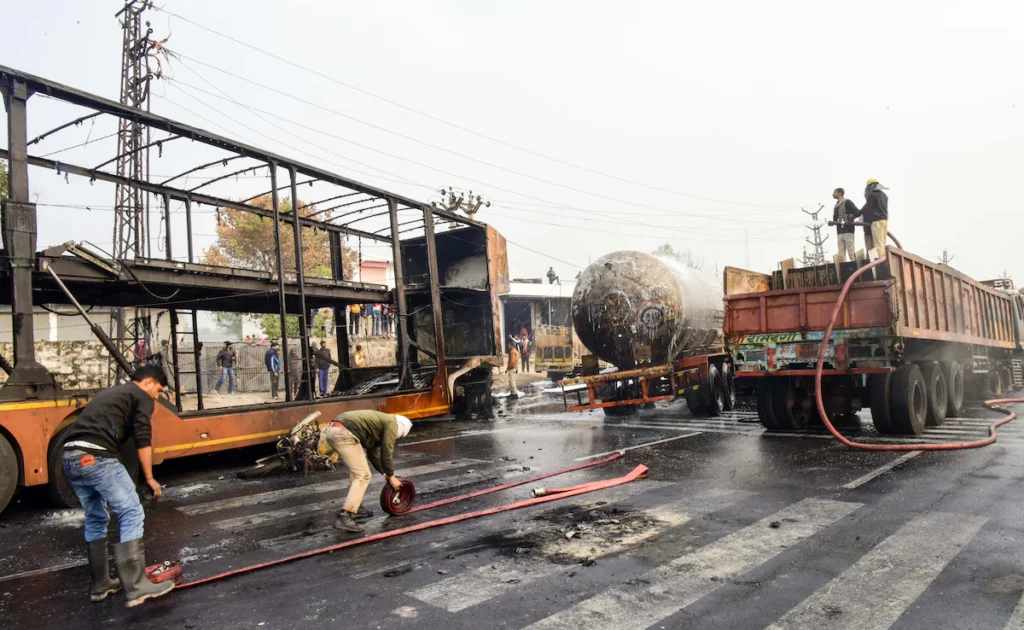
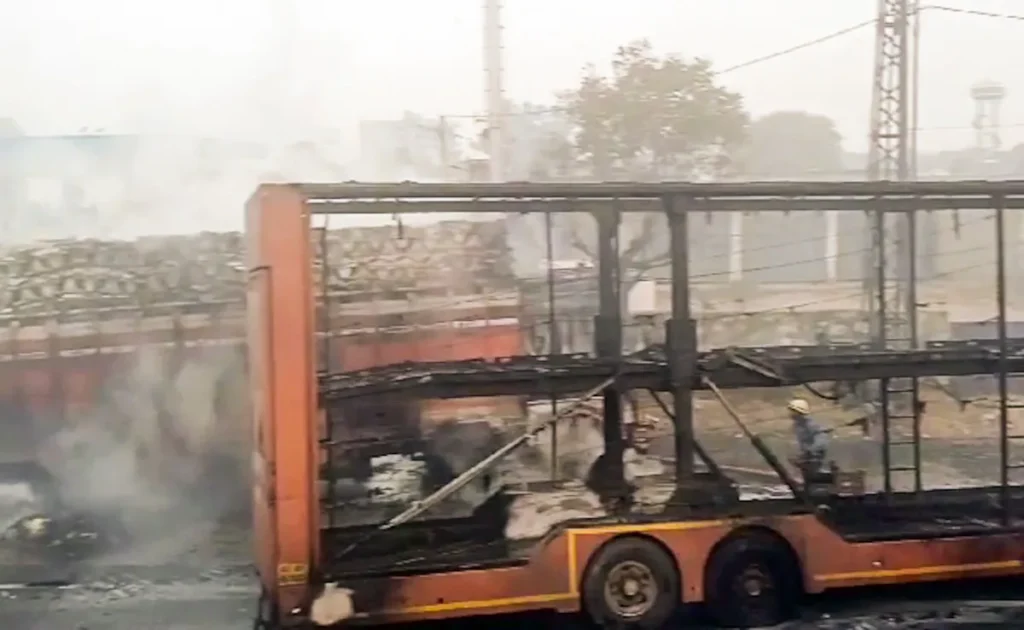
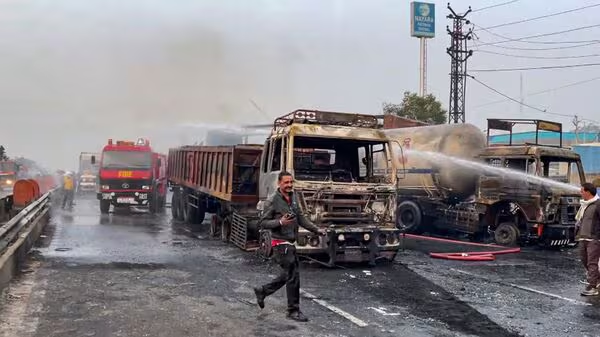
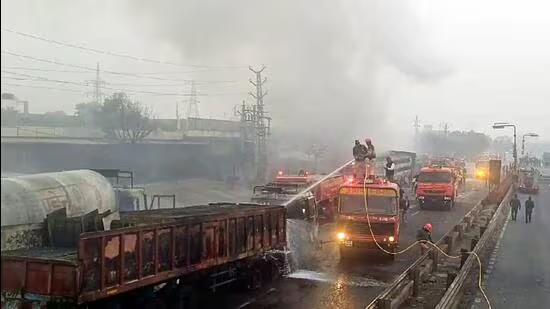
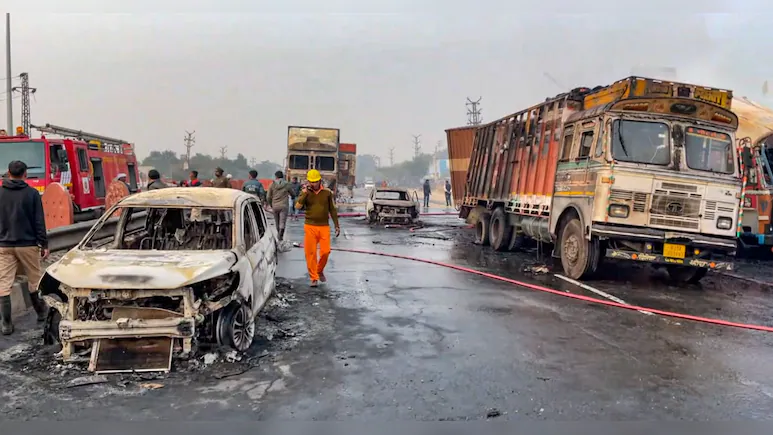
A collision sheared the LPG tanker’s bottom lines, releasing gas that ignited across the highway; PESO’s final annual report records 20 deaths and 24 injuries.

Date20 December 2024LocationBhankrota, Jaipur–Ajmer Highway (NH48), Rajasthan, India
01
Case Study

What happened here
Deaths20
Injured24
TimeAbout 05:30
VehicleLicensed LPG road tanker
Immediate damageAll three bottom manifold pipes sheared after collision

What we can say safely

A collision sheared the LPG tanker’s bottom lines, releasing gas that ignited across the highway; PESO’s final annual report records 20 deaths and 24 injuries.

  1. LPG tanker takes a U-turn near the DPS cut
  2. A container truck strikes the tanker
  3. Bottom inlet and outlet lines shear
  4. Escaping LPG forms a large fire spreading across NH48
  5. Fire, police, medical and investigation teams respond

Why consequences escalated

  • Unprotected bottom fittings were vulnerable during lateral collision
  • A high-flow LPG release created a rapidly expanding flammable cloud
  • Road geometry and tanker manoeuvring were central exposure factors
  • Traffic exclusion and immediate uphill/upwind withdrawal are essential
  • Dangerous-goods routing and junction design require joint review

Failures and risk multipliers

  • Failing to identify and control the dominant fuel or energy hazard
  • Allowing detection, suppression or escape systems to remain absent or unserviceable
  • Failing to isolate the public and neighbouring occupancies from escalation
  • Delaying emergency notification or providing incomplete hazard information
  • Treating approvals as a substitute for checking actual site conditions

People closest to the evidence

“Safety lesson”

Incident control begins before ignition: identify the hazard, limit the inventory, detect early, protect escape and give responders accurate information.

Actions that reduce risk

  1. Verify hazardous-material and battery inventories
  2. Inspect alarms, suppression, exits and emergency lighting
  3. Keep emergency and fire-service access unobstructed
  4. Confirm isolation and shutdown procedures
  5. Run a scenario-specific drill with every shift
  6. Prepare public warning and accountability procedures
02
Watch & learn

Playable video library

Captions
Incident report

LPG tanker crash on Jaipur-Ajmer highway

The Hindu · English/Hindi footage

Contemporary verified-news footage; casualty count later increased

03
Incident data

The broader evidence

Survival sequence

  1. Raise the alarm, call 112 and move away from smoke or vapour
  2. Approach neither a tanker leak nor an industrial plume
  3. Move upwind and uphill when gas or chemical release is suspected
  4. Use a safe stair and never an ordinary lift during fire
  5. Report to the assembly point and identify missing people
  6. Do not return until authorities declare the area safe
20DeathsPESO 2024–25 annual report
24InjuredPESO final record
3Bottom pipes shearedInlet and outlet manifold lines
05:30Approximate incident time20 December 2024
20DeathsPESO 2024–25 annual report
24InjuredPESO final record
3Bottom pipes shearedInlet and outlet manifold lines
05:30Approximate incident time20 December 2024

Limitations

  • Early casualty figures may differ from final records. Causation remains subject to the competent investigation; contemporary media is used only where a final public technical report was not located.

Immediate actions

  • Walk the complete escape route to open air
  • Confirm alarms and emergency lighting operate
  • Remove obstructions and combustible waste
  • Display 112 and the full site address
  • Check shutdown, spill and isolation equipment
  • Record defects with an owner and closure date
Sources and further readingPetroleum and Explosives Safety Organisation: Annual Report 2024–25 ↗Rajasthan High Court suo motu order ↗Akashvani interim casualty reporting ↗Last reviewed 2026-09-01