How To SurviveLife-Safety Intelligence for IndiaEmergency Guide
Home / Case Study / Mumbai Airport Incident – ATC Oversight and Safety Protocols
Case Study · Ready For Review

Mumbai Airport Incident – ATC Oversight and Safety Protocols

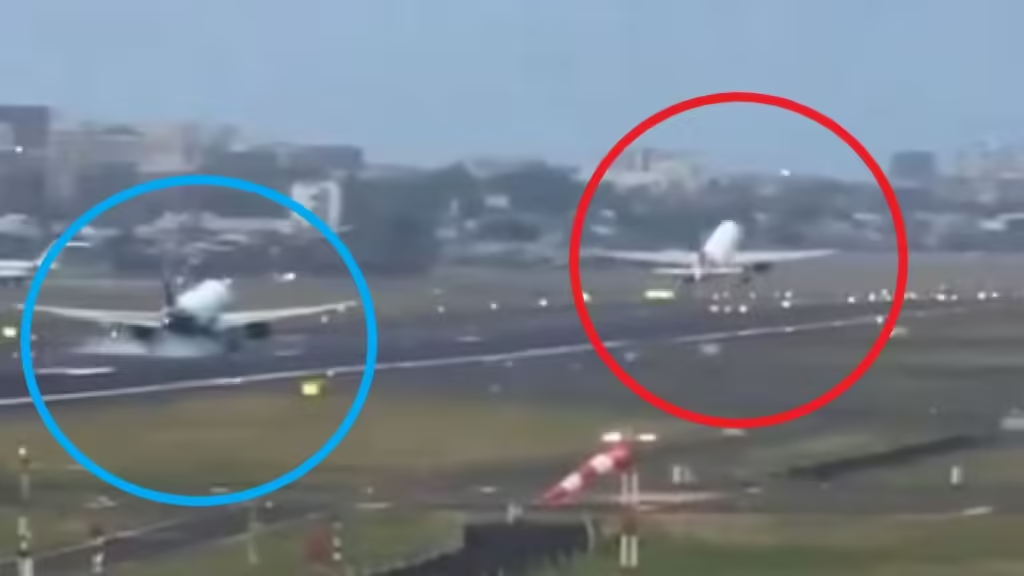
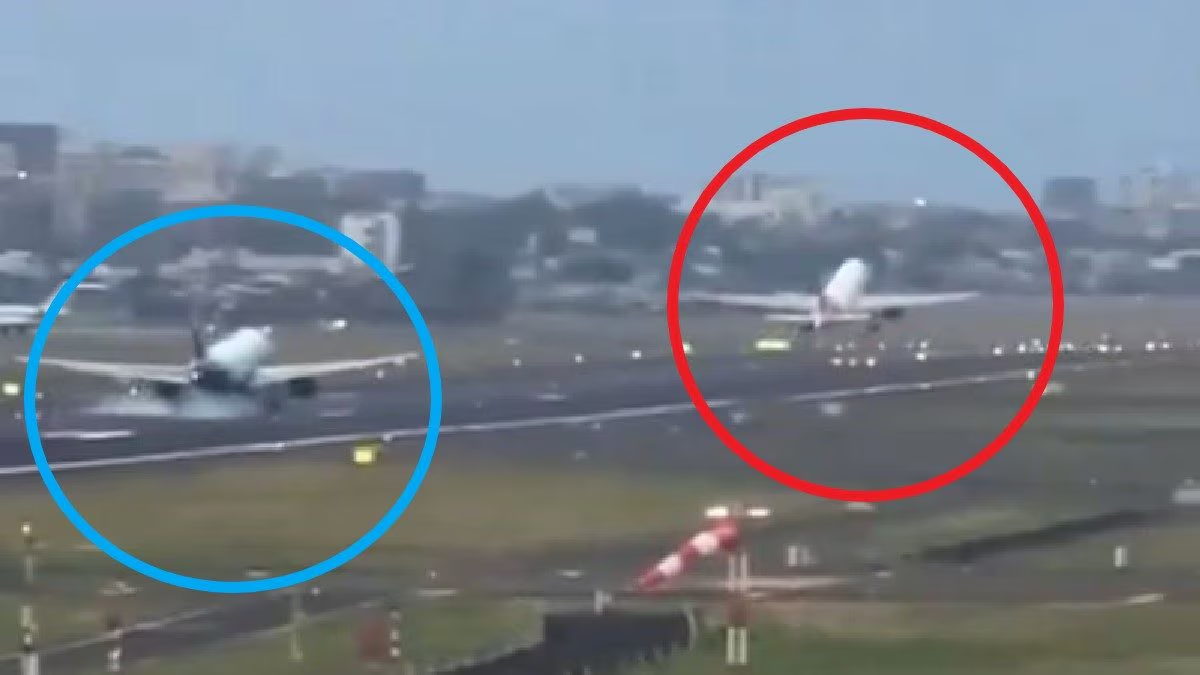
An Air India A320 was taking off as an IndiGo A320 landed on the same runway shortly afterward. No collision or injury occurred, and DGCA de-rostered the controller while investigating.

Date8 June 2024LocationChhatrapati Shivaji Maharaj International Airport, Mumbai, Maharashtra, India
01
Case Study

What happened here
Fatalities or injuries0
Aircraft taking offAir India AI657
Aircraft landingIndiGo flight from Indore
RunwayMumbai single active-runway operation
Immediate actionController de-rostered pending investigation

What we can say safely

An Air India A320 was taking off as an IndiGo A320 landed on the same runway shortly afterward. No collision or injury occurred, and DGCA de-rostered the controller while investigating.

  1. Air India aircraft begins take-off roll
  2. IndiGo aircraft continues approach with landing clearance
  3. Landing occurs shortly after departing aircraft becomes airborne
  4. Public attention focuses on spacing
  5. DGCA de-rosters controller and investigates

Why consequences escalated

  • Runway separation depends on controller judgement, crew compliance and predictable aircraft performance
  • A stable approach does not remove the option to go around
  • Read-back and runway-occupancy monitoring are critical defences
  • Viral video cannot by itself establish exact separation or culpability
  • Near misses should be investigated without waiting for harm

Failures and risk multipliers

  • Ignoring foreseeable occupancy and access hazards
  • Depending on a single protective layer
  • Failing to maintain separation, warning or escape space
  • Treating early reporting as a final finding
  • Failing to document and close corrective actions

People closest to the evidence

“Safety principle”

Human error must be anticipated through separation, warning, supervision and independent barriers.

Actions that reduce risk

  1. Identify two safe escape routes
  2. Control speed, ignition sources and combustible loading
  3. Maintain emergency access
  4. Inspect alarms and protective equipment
  5. Record occupants, vehicles and hazardous stock
  6. Call 112 or the local emergency service promptly
02
Watch & learn

Playable video library

Captions
General context

Emergency awareness

Bureau of Indian Standards · Hindi/English

Aviation procedures require qualified sources

03
Incident data

The broader evidence

Survival sequence

  1. Raise the alarm and call emergency services
  2. Move away from traffic, smoke, fire or aircraft movement areas
  3. Use the nearest safe exit
  4. Stay upwind of burning vehicles and plastics
  5. Do not re-enter
  6. Give responders accurate location and occupancy information
0CasualtiesIncident record
2Aircraft involvedAir India and IndiGo A320-family aircraft
1Existing incident imageWordPress export
0CasualtiesIncident record
2Aircraft involvedAir India and IndiGo A320-family aircraft
1Existing incident imageWordPress export

Limitations

  • Early counts, cause claims and legal allegations may change. No person is described as guilty before final adjudication. Existing site media is packaged; external news photographs are not copied without permission.

Immediate actions

  • Check alarms and exits
  • Remove access obstructions
  • Review vehicle, electrical and storage hazards
  • Confirm emergency contacts
  • Record defects
  • Practise the response
Sources and further readingDirectorate General of Civil Aviation ↗Airports Authority of India ↗Civil Aviation Requirements ↗Last reviewed 2026-09-01