
What happened here
 1 / 6
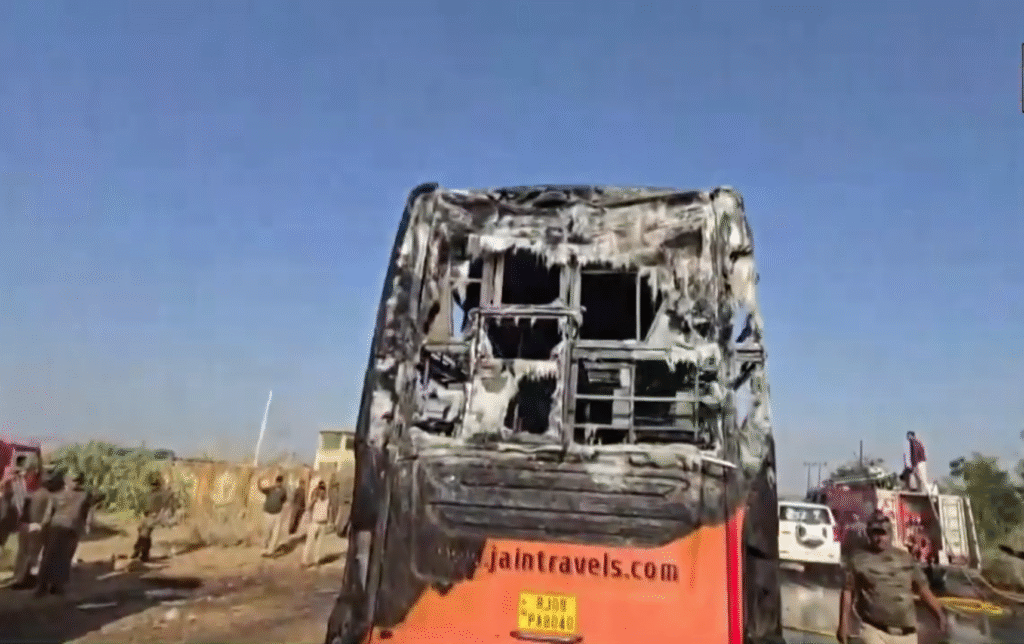
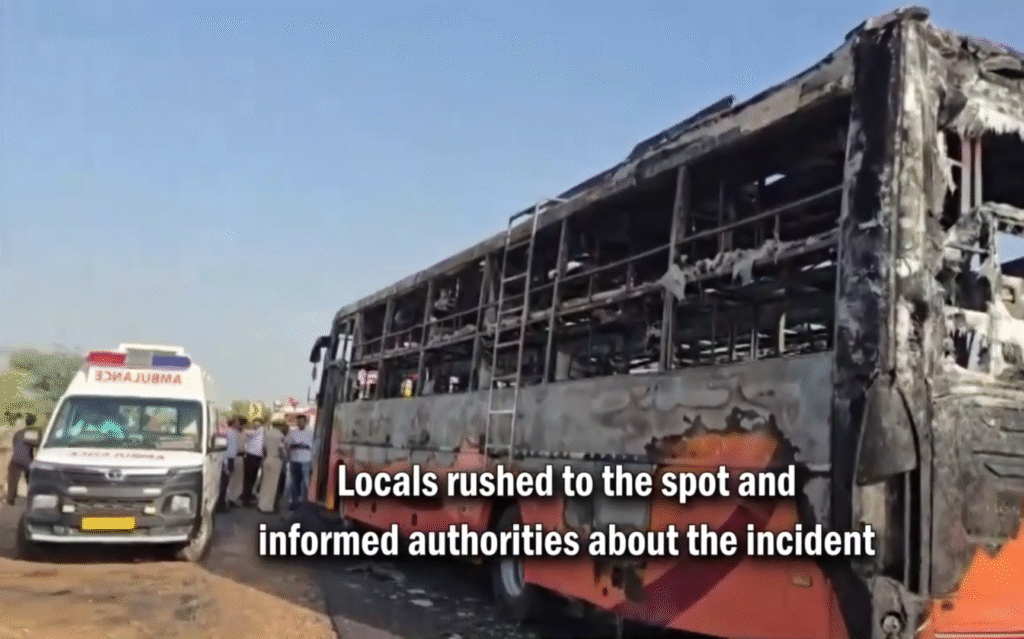
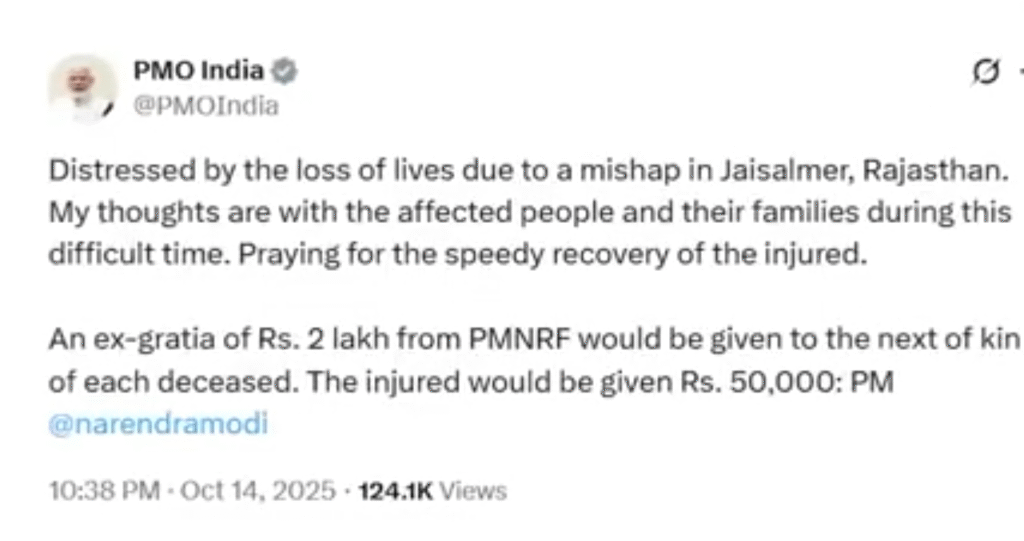
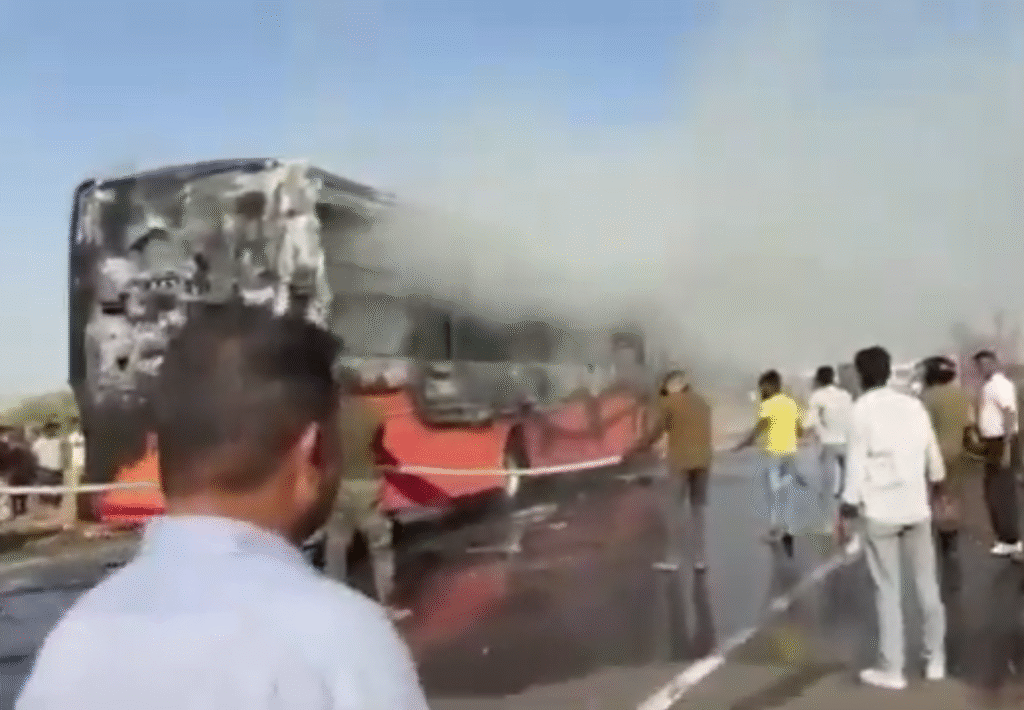
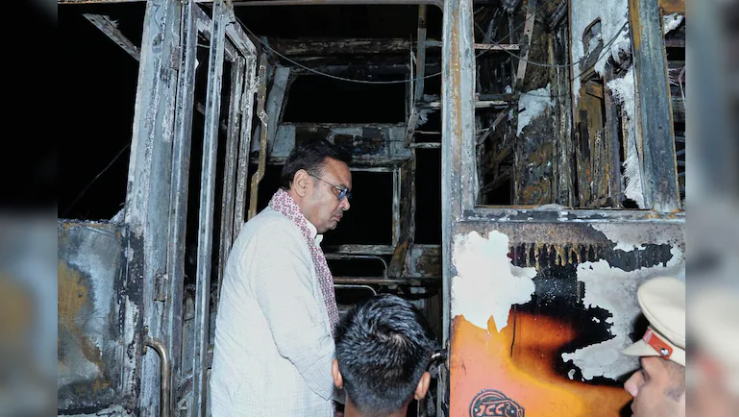
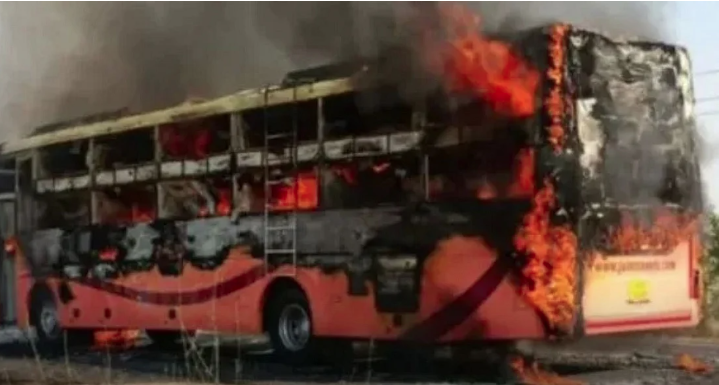
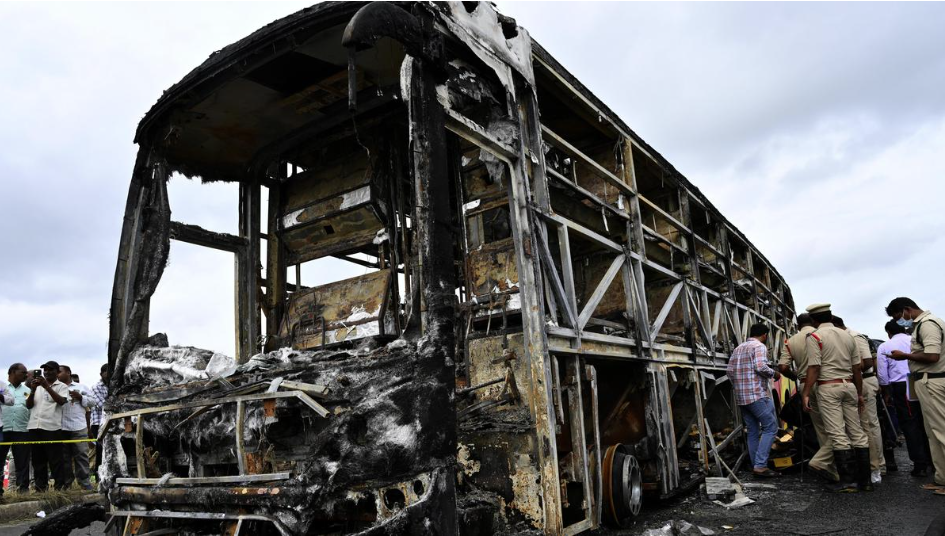
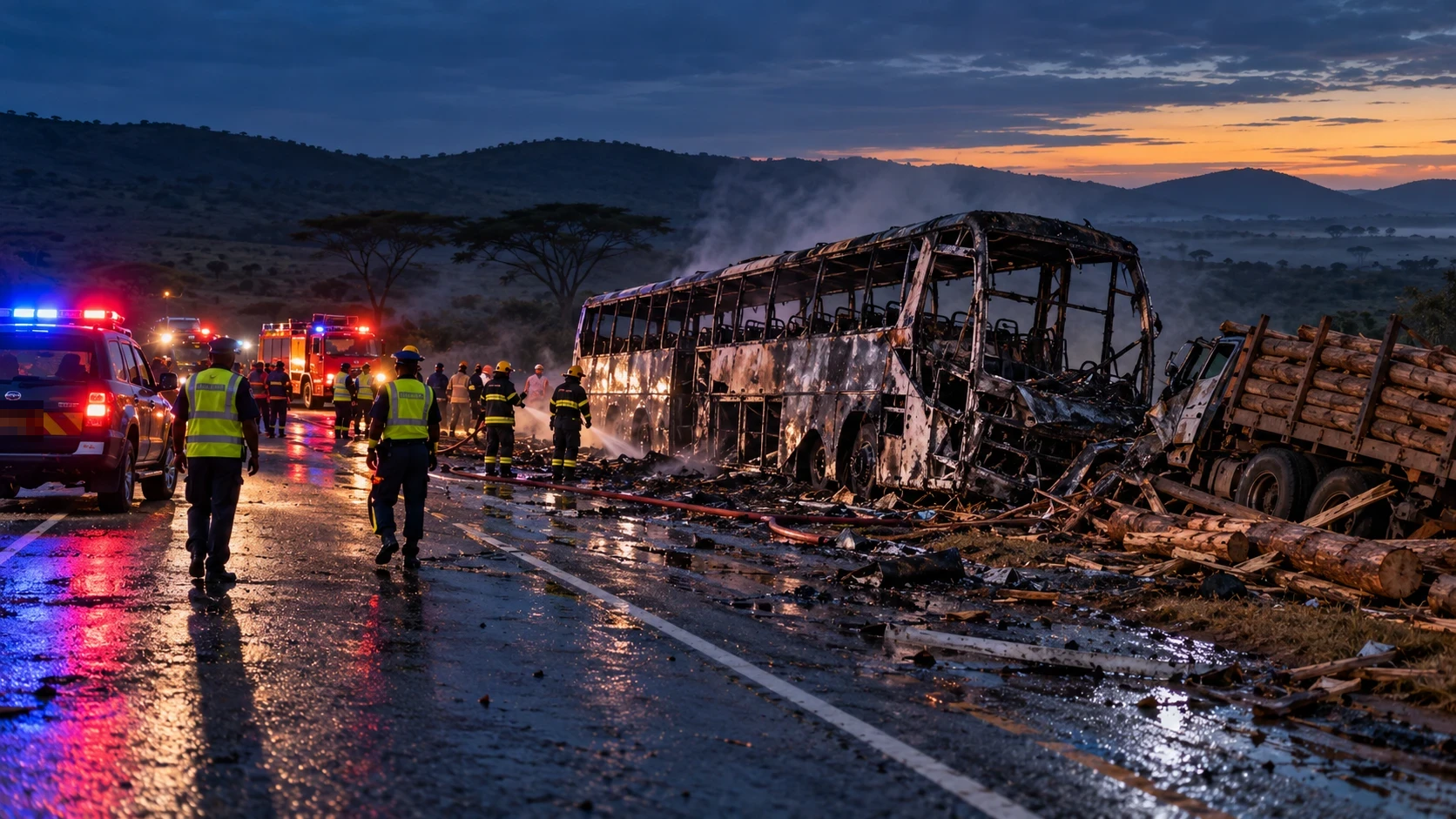
1 / 6 An air-conditioned sleeper bus travelling from Jaisalmer to Jodhpur caught fire on the afternoon of 14 October 2025. The initial toll was 20 (Akashvani, 15 October 2025). It rose as injured passengers died, and Rajasthan Patrika reported 29 deaths in total on 11 October 2026. A joint FSL report traced the fire to a short circuit in the roof-mounted AC unit. Police and investigators reported a stuck door and an undersized, blocked emergency exit.
📍 Date & Location
Date: 14 October 2025, around 3:30 pm
Location: Near Thaiyat village, Jaisalmer District, Rajasthan
Bus Route: Jaisalmer to Jodhpur (private air-conditioned sleeper bus)
🕯️ Incident Summary
A private AC sleeper bus travelling from Jaisalmer to Jodhpur caught fire near Thaiyat village on the afternoon of 14 October 2025. Police told PTI that the bus was carrying 57 passengers; Akashvani reported more than 50 people on board. A joint forensic (FSL) report later found that the fire originated in the roof-mounted air-conditioning unit (PTI, 24 October 2025).
- Initial toll: 20 deaths. Nineteen people died in the bus and one died during treatment (Akashvani, 15 October 2025). The toll rose as injured passengers died: 21 later on 15 October (Akashvani), 26 when the FSL findings were reported (PTI, 24 October 2025), and 29 in total according to Rajasthan Patrika’s anniversary report (11 October 2026).
- Around 15 injured passengers were treated at Mahatma Gandhi Hospital, Jodhpur (Akashvani, 15 October 2025). Several later died; those deaths are included in the later toll.
- Police told PTI that passengers could not escape because the door was stuck. The investigation team reported that the emergency exit was undersized and blocked by two seats (ETV Bharat, 19 October 2025). The FSL report ruled out explosives or firecrackers as the cause (PTI, 24 October 2025).
🚨 What Went Wrong? (Primary Mistakes)
- ❌ Only one emergency exit working; other doors jammed
- ❌ Overcrowding and narrow aisle blocked escape
- ❌ Short circuit in the roof-mounted AC unit, according to the joint FSL report. Investigators said the bus was registered as non-AC and was later fitted with AC equipment and faulty wiring.
- ❌ Emergency exit undersized and blocked by two seats, with seating increased beyond permissible limits, the SIT probe found (ETV Bharat, 19 October 2025)
- ❌ Fire spread fast: it took hold quickly after the driver stopped, with many passengers still inside (CBS News, citing PTI)
- ❓ Not yet known: whether the seats, berths and interior panels met fire-retardant requirements. No finding on this has been published
- ❌ Bodywork without approval: police said the workshop ignored the AIS-119 bus-body standard and built everything from chassis to wiring without proper approval (ETV Bharat, 19 October 2025)
🔍 Hidden Truths & Negligence
🧨 Fire origin: The joint FSL report found a short circuit in the roof-mounted air-conditioning unit (PTI, 24 October 2025).
🧨 Cargo: The FSL report ruled out explosives or firecrackers as the cause; firecrackers found in the luggage compartment were reported as soaked in water and unrelated.
🧨 Escape: Police said the door was stuck. The investigation team reported an undersized emergency exit blocked by two seats (ETV Bharat, 19 October 2025).
🧨 Modification: The bus was reported as registered non-AC and later modified with AC fittings and faulty wiring. The bus owner, driver and body-workshop operator were arrested; these are allegations, not convictions.
📛 Could This Have Been Prevented?
✅ Yes — completely. This was a systemic and preventable tragedy.
🛡️ Survival Lessons (How to Save Yourself)
🧍♂️ For Passengers:
- Always locate emergency exits before journey begins.
- Carry a personal mini glass breaker + smoke mask for long journeys.
- If fire starts:
- Drop low (smoke rises)
- Cover mouth with cloth
- Kick/break glass if door stuck
- Never run toward fire direction
🧑✈️ For Drivers & Staff:
- Mandatory training in emergency evacuation & fire suppression
- Know location & usage of extinguisher, hammers, electric cut-off switch
- In case of fire: Stop > Open doors > Evacuate > Pull emergency switch
📊 Key Data from the Case
| Metric | Value |
|---|---|
| Total passengers onboard | 57 |
| Deaths | 20 initially (Akashvani, 15 Oct 2025); 29 in total (Rajasthan Patrika, 11 Oct 2026) |
| Injured (initial) | About 15 treated in Jodhpur (Akashvani, 15 Oct 2025) |
| Fire origin | Short circuit in roof-mounted AC unit (joint FSL report, PTI, 24 Oct 2025) |
| Fire spread | Took hold quickly, with many passengers still inside (CBS News, citing PTI) |
| Bus operator | Private operator; ownership reports conflict |
| Fire control by | Local police, villagers, Army response team |
| Safety findings | Undersized, seat-blocked emergency exit; unapproved AC modification (SIT probe, ETV Bharat, 19 Oct 2025) |
🎥 Visuals






📢 Voices From the Ground
We have not reproduced eyewitness or survivor quotes, because we could not verify them. Jaisalmer Additional SP Kailash Dan told PTI that most of the bodies were found in the aisle, which showed that people tried to get out but could not because the door was stuck (CBS News, 15 October 2025).
🏛️ Systemic Questions for the Nation
- How many buses on Indian roads still have only one working exit?
- Are passenger vehicle safety norms being enforced or ignored?
- When will India mandate fire-resistant interiors in all public transport?
- Why is there no national protocol for bus evacuation training?
✅ What Needs to Change Now
- Mandatory installation of dual exit points in all commercial buses
- Installation of temperature/smoke sensors + auto shut-off
- Fire-retardant interiors as per BIS/AI standards
- Annual public reporting of Bus Fitness + Fire Safety Audit
- Public education campaign: “Bus mein Suraksha, Har Safar ke Saath”
📣 Action for Citizens
🛡 Ask your bus operator before boarding:
“Where is the emergency exit? Fire extinguisher? Hammer?”
🛡 Support the demand for:
➡️ Dual exit norms
➡️ National Bus Fire Registry
➡️ Passenger safety law reform
🔚 Closing Line
29 deaths reported in total from a fire inside a bus (Rajasthan Patrika, 11 October 2026). What will it take to act before the next bus becomes a coffin?
🛡 This is why we built HowToSurvive.in – to turn death into awareness, and silence into action.
- Sleeper coach leaves Jaisalmer
- Rear/AC area begins smoking minutes into journey
- Bus halts near a military area
- Fire takes hold quickly after the driver stops, with many passengers still inside
- Survivors break windows; authorities use DNA identification
Why consequences escalated
- Sleeper berths delay recognition and movement
- One service door is inadequate when fire blocks the aisle
- Every window exit needs a reachable hammer and clear marking
- Interior materials and AC refrigerant/fuel can accelerate fire
- Passenger briefing should identify exits before departure
Failures and risk multipliers
- Fitting AC units and wiring to a bus registered as non-AC, as investigators alleged
- Leaving the emergency exit undersized and blocked by two seats
- Relying on one main door, which police said was stuck
- No smoke detection to warn passengers before the fire took hold
- Letting passengers travel without being shown the exits and hammers
Actions that reduce risk
- Ban unapproved AC and wiring changes on buses and check for them at every fitness test
- Keep emergency exits full size, marked and free of seats and luggage
- Fit fire detection, and suppression in the engine and roof AC areas, on sleeper and AC buses
- Fix a glass hammer at every marked window and keep an extinguisher by the driver
- Brief passengers on the exits before every night or long-distance trip
- Train drivers and conductors to stop, open every door and get people out at once
Leave a comment