Home / Case Study / The Bombay Port Fire of April 14, 1944
Case Study · Ready For Review
The Bombay Port Fire of April 14, 1944
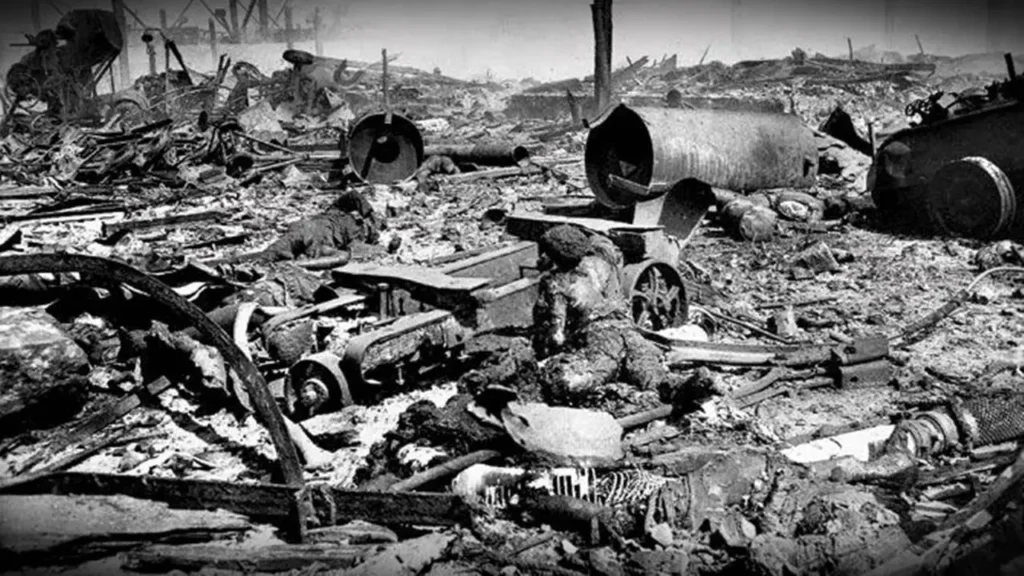
The SS Fort Stikine fire and explosions devastated Bombay docks, killing port workers, firefighters and residents and demonstrating the extreme danger of mixed hazardous cargo in a dense port.
Date14 April 1944LocationVictoria Dock, Bombay (now Mumbai), Maharashtra, India
01
Case Study
What happened here
1 / 4Existing HowToSurvive.in incident image
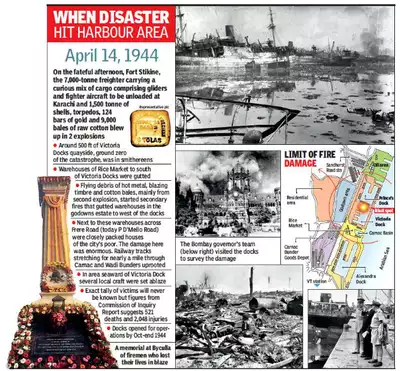
VesselSS Fort Stikine
LocationVictoria Dock, Bombay Port
Cargo hazardsAmmunition with cotton, oil and other goods
Major explosionsTwo
Mumbai Fire Brigade personnel killed66
Verified overview
What we can say safely
The SS Fort Stikine fire and explosions devastated Bombay docks, killing port workers, firefighters and residents and demonstrating the extreme danger of mixed hazardous cargo in a dense port.
Incident timeline
SS Fort Stikine enters Victoria Dock with mixed cargo including ammunition
Fire develops in a cargo hold and firefighting begins
Burning cargo detonates, damaging the dock and surrounding city
A further massive blast spreads debris and ignites widespread fires
Firefighters, port workers, military and civil services fight fires and begin recovery
Key findings
Why consequences escalated
Mixing explosives, cotton, oil and other cargo created severe escalation potential
Delay between detecting fire and decisive hazard isolation reduced available options
Responders faced an incompletely communicated cargo hazard
Blast fragments created secondary fires across a wide urban area
Port zoning, manifests, segregation and emergency command are essential controls
Core mistakes / what went wrong?
Failures and risk multipliers
Stowing highly incompatible and energetic cargo on one vessel
Insufficiently rapid escalation after smoke and fire were detected
Exposing responders without a complete, immediately usable dangerous-goods picture
Keeping a burning ammunition ship inside a dense operational dock
Underestimating blast radius, fragments and cascading urban fires
Voices that matter
People closest to the evidence
“Safety lesson”
Protected escape, early warning and enforceable occupancy controls must work before an emergency; response cannot compensate for every built-in failure.
Practical prevention
Actions that reduce risk
Verify current fire and occupancy approvals against the actual premises
Keep every exit, stair, gangway and fire-service access route unobstructed
Test alarms, emergency lighting, extinguishers and suppression systems on schedule
Remove unauthorised combustible construction and hazardous storage
Train every shift and conduct realistic evacuation drills
Record defects, assign an owner and close them by a fixed date
02
Watch & learn
Playable video library
Captions
Official safety guidance
Fire Safety
Bureau of Indian Standards · Hindi/English
BIS overview of building fire-safety systems
03
Incident data
The broader evidence
How to survive this situation
Survival sequence
Raise the alarm and leave immediately by the nearest safe exit
Do not use lifts during a fire unless specifically designed and directed for evacuation
Stay low beneath smoke and close doors behind you where possible
Do not hide in toilets or enclosed rooms unless no escape remains; if trapped, call 112 and signal your location
Move to the assembly point and report missing people
Never re-enter for belongings
66Mumbai Fire Brigade personnel killedOfficial brigade memorial record
2Major explosionsVictoria Dock
14 April 1944Incident dateBombay Port
Multiple hazardsAmmunition, cotton and oilEscalating cargo combination
Evidence chart
66Mumbai Fire Brigade personnel killedOfficial brigade memorial record
2Major explosionsVictoria Dock
14 April 1944Incident dateBombay Port
Multiple hazardsAmmunition, cotton and oilEscalating cargo combination
What the data does not show
Limitations
Historical records may use different casualty definitions and were produced for legal, administrative or memorial purposes. Video material is supplementary and is not a substitute for the primary sources.
What you can do today
Immediate actions
Walk every exit route from the occupied area to open air
Check that exit doors open without keys or special knowledge
Confirm alarms are audible and visible where required
Remove stored or decorative combustibles from escape paths


 1 / 4
1 / 4