
પરિચય
નાની આગને પ્રચંડ નરક સમાન આગમાં ફેરવાતી અટકાવવા માટે અગ્નિશામક એ એક નિર્ણાયક સાધન છે. અગ્નિશામકની મૂળભૂત બાબતોને સમજવી એ દરેક વ્યક્તિની સલામતી માટે જરૂરી છે, પછી ભલે તે ઘરમાં હોય, કાર્યસ્થળમાં હોય અથવા કોઈપણ જાહેર જગ્યા હોય. આ લેખમાં, અમે અગ્નિશામક સાધનોના પ્રકારો, વર્ગો, ઉપયોગ અને જાળવણી સહિતના મૂળભૂત પાસાઓને આવરી લઈશું. અંત સુધીમાં, તમે નાની આગને આત્મવિશ્વાસપૂર્વક પ્રતિસાદ આપવા અને અગ્નિ સલામતીમાં મહત્વપૂર્ણ ભૂમિકા ભજવવા માટે જરૂરી જ્ઞાનથી સજ્જ થઈ જશો.
અગ્નિશામક સાધનોનું મહત્વ
અગ્નિશામક ઉપકરણો તેમના પ્રારંભિક તબક્કા દરમિયાન આગને ઝડપથી અને અસરકારક રીતે દબાવવા માટે રચાયેલ છે. તેઓ સંરક્ષણની આવશ્યક લાઇન છે જે આગને ફેલાતા, વ્યાપક નુકસાન પહોંચાડવા અને જીવનને જોખમમાં મૂકતા અટકાવી શકે છે. હાથ પર યોગ્ય પ્રકારનું અગ્નિશામક હોવું, તેનો યોગ્ય રીતે ઉપયોગ કેવી રીતે કરવો તે જાણવું અને આગના વિવિધ વર્ગો કે જેનાથી તેઓ લડી શકે છે તે સમજવું એ અગ્નિ સલામતીના મહત્વપૂર્ણ ઘટકો છે.
ફાયર વર્ગોને સમજવું
બળતણના પ્રકારને આધારે આગને વિવિધ વર્ગોમાં વર્ગીકૃત કરવામાં આવે છે. ત્યાં પાંચ પ્રાથમિક આગ વર્ગો છે:
1. વર્ગ A: લાકડા, કાગળ, કાપડ અને પ્લાસ્ટિક જેવા સામાન્ય જ્વલનશીલ પદાર્થોને લગતી આગ.
2. વર્ગ B: જ્વલનશીલ પ્રવાહી અને વાયુઓ, જેમ કે ગેસોલિન, તેલ અને પ્રોપેનનો સમાવેશ કરતી આગ.
3. વર્ગ C: ઇલેક્ટ્રિકલ સાધનો અને ઉપકરણોને લગતી આગ.
4. વર્ગ ડી: જ્વલનશીલ ધાતુઓ, જેમ કે મેગ્નેશિયમ, સોડિયમ અને ટાઇટેનિયમનો સમાવેશ કરતી આગ.
5. વર્ગ K: વાણિજ્યિક રસોડામાં રસોઈના તેલ અને ગ્રીસને લગતી આગ.
અગ્નિશામકના પ્રકારો
અગ્નિશામક ઉપકરણો ચોક્કસ આગ વર્ગો સામે લડવા માટે રચાયેલ છે. અગ્નિશામકના સૌથી સામાન્ય પ્રકારો છે:
1. પાણી: વર્ગ A આગ માટે યોગ્ય, કારણ કે પાણી જ્વાળાઓને ઠંડુ કરે છે અને તેમની તીવ્રતા ઘટાડે છે.
2. ફોમ: વર્ગ A અને B આગ પર અસરકારક. ફીણ અગ્નિ અને ઓક્સિજન વચ્ચે અવરોધ બનાવે છે, જ્વાળાઓને ધૂંધવાડે છે.
3. કાર્બન ડાયોક્સાઇડ (CO2): વર્ગ B અને C આગ પર અસરકારક. CO2 ઓક્સિજનને વિસ્થાપિત કરે છે, આગને ગૂંગળાવે છે.
4. શુષ્ક કેમિકલ: વર્ગ A, B, અને C આગ માટે યોગ્ય. શુષ્ક રાસાયણિક અગ્નિશામક આગની રાસાયણિક પ્રતિક્રિયામાં વિક્ષેપ પાડે છે.
5. વેટ કેમિકલ: ખાસ કરીને વર્ગ K આગ માટે રચાયેલ છે, જે સામાન્ય રીતે વ્યાવસાયિક રસોડામાં જોવા મળે છે. તે રાંધવાના તેલ અને ચરબી સાથે પ્રતિક્રિયા કરીને સાબુનું સ્તર બનાવે છે જે આગને દબાવી દે છે.
અગ્નિશામક સાધનોનો યોગ્ય ઉપયોગ
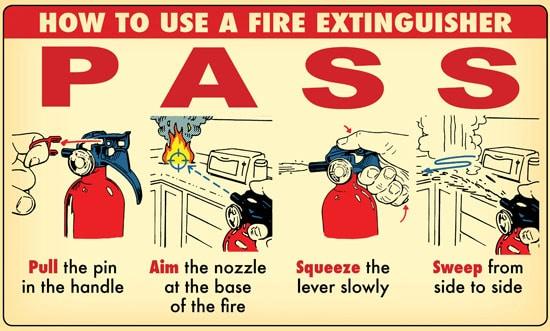
અગ્નિશામકનો અસરકારક રીતે ઉપયોગ કરવા માટે ટૂંકાક્ષર “PASS” યાદ રાખવાની જરૂર છે:
1. ખેંચો: ઓપરેટિંગ લીવરને અનલૉક કરવા માટે પિનને ખેંચો.
2. ધ્યેય: નોઝલ અથવા નળીને આગના પાયા પર રાખો જ્યાં બળતણનો સ્ત્રોત બળી રહ્યો છે.
3. સ્ક્વિઝ: ઓલવવાના એજન્ટને ડિસ્ચાર્જ કરવા માટે લિવરને સ્ક્વિઝ કરો.
4. સ્વીપ કરો: નોઝલને એક બાજુથી બીજી તરફ સ્વીપ કરો, આગને બુઝાવવાના એજન્ટ સાથે આવરી લો.
આ પગલાંને હંમેશા શાંત અને નિયંત્રિત રીતે અનુસરો. યાદ રાખો કે અગ્નિશામક ઉપકરણો નાની આગ માટે રચાયેલ છે જે નિયંત્રિત કરી શકાય છે. જો આગ ઝડપથી ફેલાઈ રહી હોય, ધુમાડો ઉત્પન્ન થઈ રહ્યો હોય, અથવા જો તમને તેના પ્રકાર વિશે ખાતરી ન હોય, તો તરત જ જગ્યા ખાલી કરો અને ફાયર વિભાગને કૉલ કરો.
અગ્નિશામક જાળવણી
જ્યારે જરૂરી હોય ત્યારે અગ્નિશામક કાર્યકારી છે તેની ખાતરી કરવા માટે યોગ્ય જાળવણી જરૂરી છે:
1. નિયમિત તપાસો: અગ્નિશામક ચાર્જ થયેલ છે અને ઉપયોગ માટે તૈયાર છે તેની ખાતરી કરવા માટે પ્રેશર ગેજ તપાસો. જો દબાણ ખૂબ ઓછું અથવા ખૂબ ઊંચું હોય, તો તેને સર્વિસિંગની જરૂર પડી શકે છે.
2. વિઝ્યુઅલ ઇન્સ્પેક્શન: નુકસાન, કાટ અથવા લીકના ચિહ્નો માટે નિયમિતપણે અગ્નિશામકની તપાસ કરો.
3. સીલ અને છેડછાડ સૂચકાંકો: ખાતરી કરો કે સલામતી સીલ અને છેડછાડ સૂચકાંકો અકબંધ છે. જો તૂટી ગયું હોય, તો અગ્નિશામક સાથે ચેડા થઈ શકે છે.
4. હાઇડ્રોસ્ટેટિક પરીક્ષણ: કેટલાક અગ્નિશામકોને તેમની માળખાકીય અખંડિતતા ચકાસવા માટે સમયાંતરે હાઇડ્રોસ્ટેટિક પરીક્ષણની જરૂર પડે છે.
નિષ્કર્ષ
અગ્નિશામક એ અગ્નિ સલામતીમાં એક મહત્વપૂર્ણ સાધન છે, જે નાની આગ ફાટી નીકળે ત્યારે તાત્કાલિક પગલાં લેવા માટે વ્યક્તિઓને સશક્ત બનાવે છે. અગ્નિશામકના વિવિધ વર્ગો, અગ્નિશામક સાધનોના પ્રકારો, યોગ્ય ઉપયોગની તકનીકો અને જાળવણીનું મહત્વ સમજવું એ સુનિશ્ચિત કરવાના તમામ મુખ્ય પાસાઓ છે કે અગ્નિશામકો જીવન અને મિલકતના રક્ષણમાં અસરકારક છે. અગ્નિશામકની મૂળભૂત બાબતોથી પોતાને પરિચિત કરીને, તમે સુરક્ષિત વાતાવરણમાં યોગદાન આપો છો અને આગ નિવારણ માટે સક્રિય પ્રતિબદ્ધતા દર્શાવો છો. યાદ રાખો, જ્યારે આગ સલામતીની વાત આવે છે, ત્યારે જ્ઞાન એ ખરેખર શક્તિ છે.
What needs attention
- The article topic must be linked to the actual occupancy and hazard
- Prevention and early warning provide more safety margin than last-second intervention
- Equipment is effective only when correctly selected, accessible and maintained
- People need short practised actions and a clear decision to stop and escape
- Children, visitors and people needing assistance require explicit planning
- Records, drills and inspections matter only when defects are corrected
Controls that reduce risk
- Complete a task- and site-specific hazard assessment
- Verify applicable Indian, state and local requirements
- Use competent inspection for installed systems and specialist hazards
- Keep alarms, exits, signs and emergency access usable
- Train intended users and practise evacuation
- Record defects with an owner and completion date
- Review the plan after changes, incidents or near misses
Common unsafe practices
- Relying on equipment without a hazard assessment
- Blocking or compromising escape routes
- Delaying the alarm or emergency call
- Attempting a response beyond training or safe conditions
- Re-entering before authorised clearance
- Treating a checklist as a substitute for competent inspection



Leave a comment