
What happened here
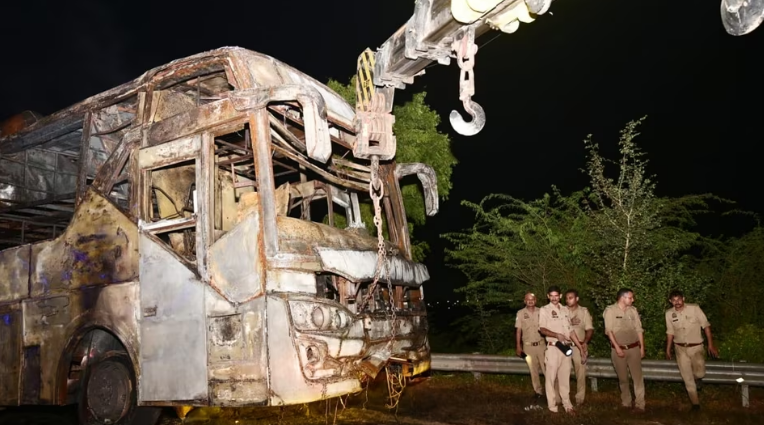
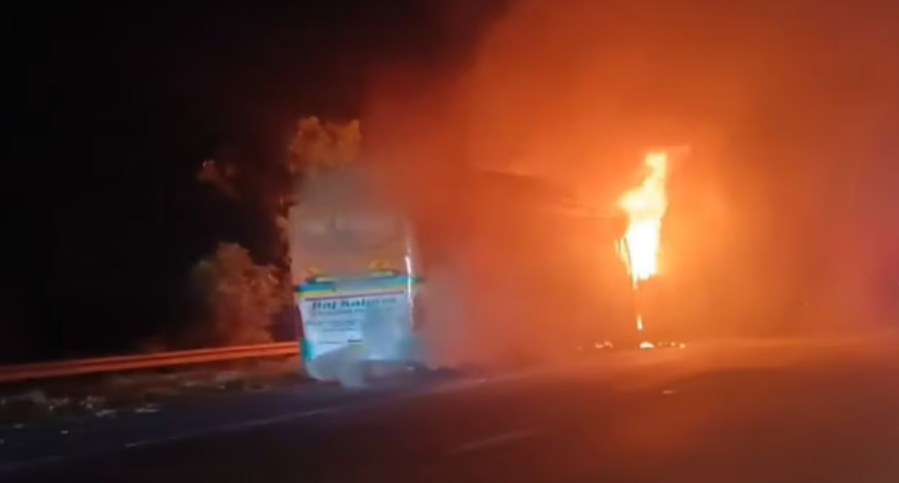
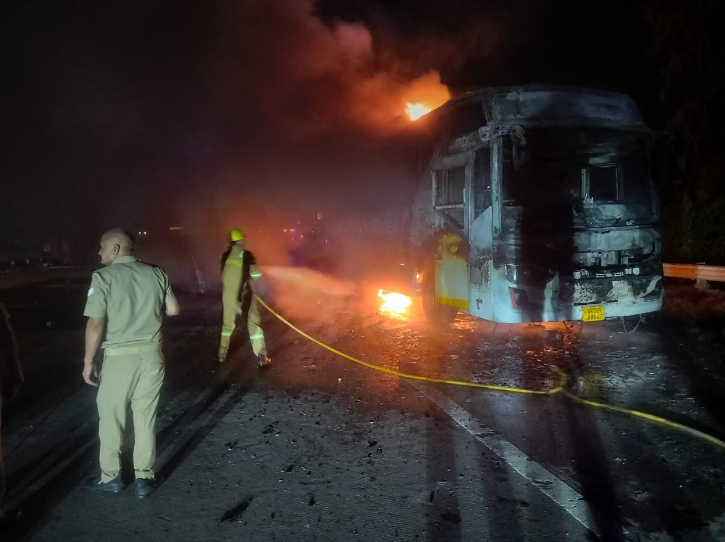 1 / 7
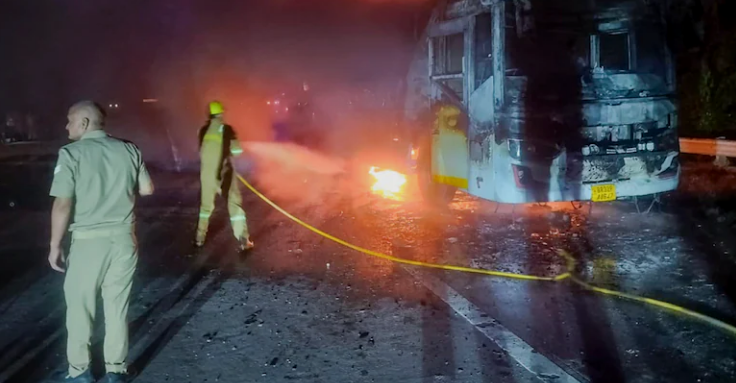
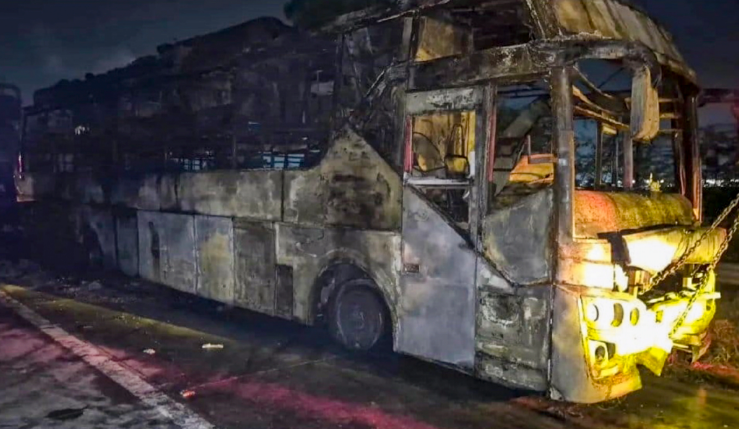
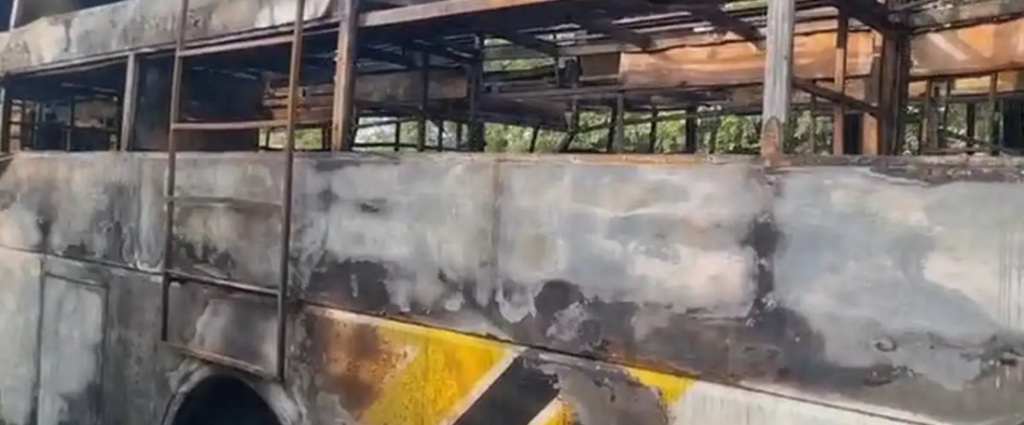
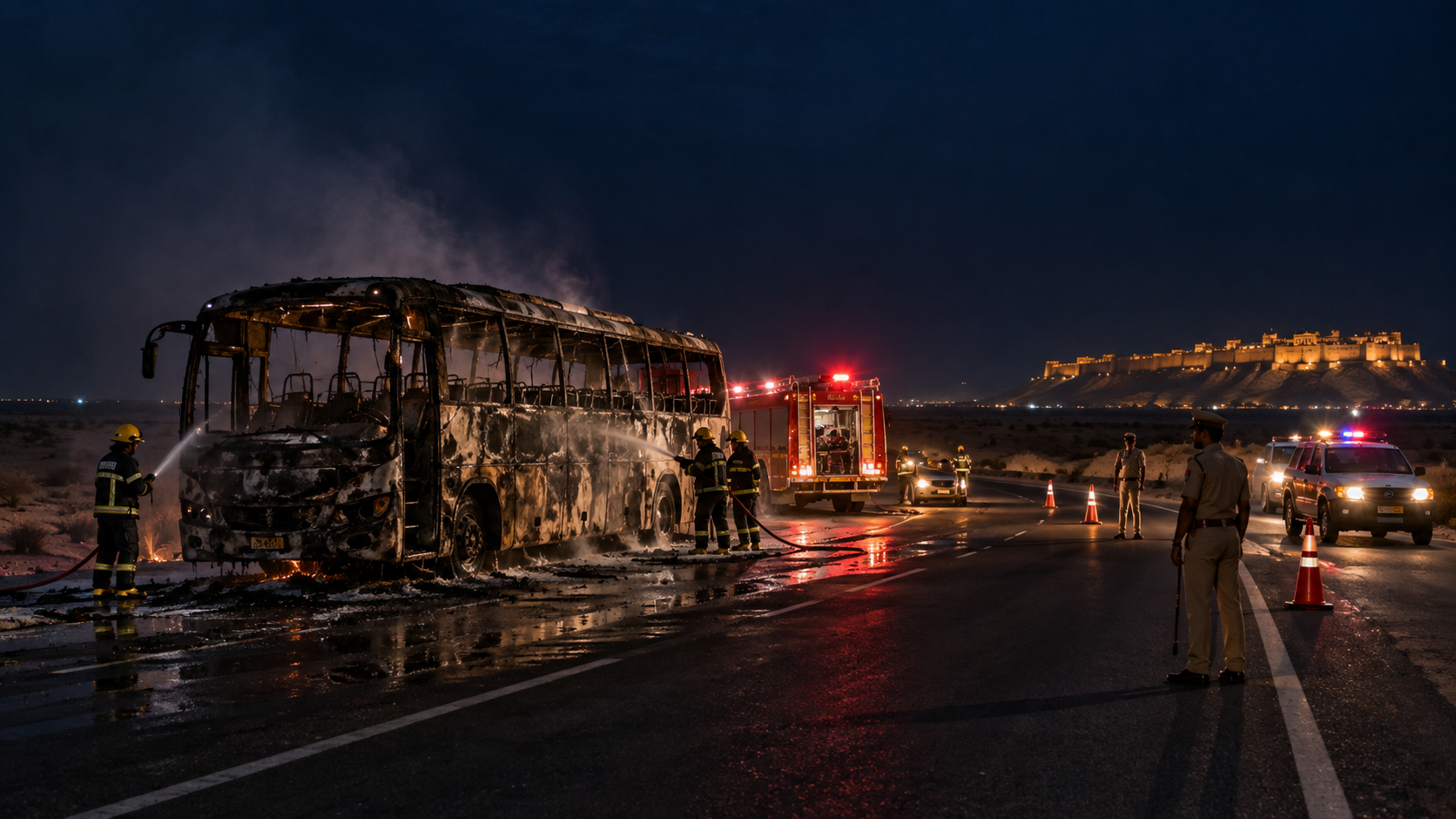
1 / 7 A sleeper bus carrying 35 people caught fire near Dayanatpur on the Yamuna Expressway. Nine people died and 26 escaped. Police investigated an unusable emergency exit, obstructing luggage and ignored-warning allegations; no final technical or court finding was available by 6 October.
Quick answers
What happened in the Greater Noida sleeper bus fire on the Yamuna Expressway?
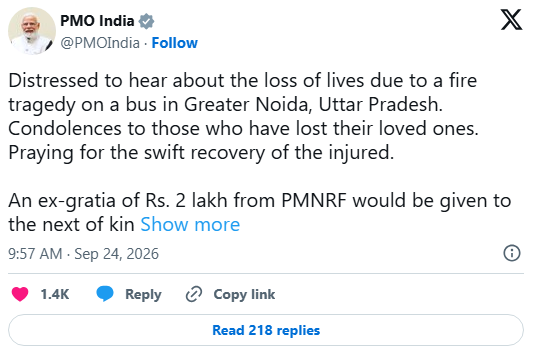
At about 11 pm on 23 September 2026, an air-conditioned sleeper bus travelling from Delhi toward Mahoba caught fire near Dayanatpur village. Police-linked reports recorded 35 passengers aboard, nine deaths and 26 people who escaped.
Why could passengers not escape the Yamuna Expressway sleeper bus fire easily?
Police said the rear emergency exit was not functional and luggage had been placed under seats and in the aisle, and warnings about a burning smell were allegedly not acted on promptly. These are investigation claims, not final findings.
What should I check before sleeping on an overnight sleeper bus?
Locate the main door, rear emergency door, escape windows, roof hatches and emergency hammers. Keep the aisle clear, keep your phone and footwear reachable, and tell the operator immediately about smoke or a burning smell.
What to do if a sleeper bus catches fire while travelling?
Shout a fire warning, alert the driver, leave belongings and move low beneath smoke to the nearest usable exit. Move far from the bus and traffic, call 112 with the expressway direction and kilometre marker, and do not re-enter.
What happened
At about 11 pm on 23 September 2026, an air-conditioned sleeper bus travelling from Delhi toward Mahoba caught fire near Dayanatpur village on the Yamuna Expressway in Greater Noida. Police-linked reporting recorded 35 passengers aboard, nine deaths and 26 people who escaped.
Escape conditions under investigation
Survivors described smoke and a crowded attempt to leave the sleeping coach. Police later said the rear emergency exit was not functional and that luggage had been placed under seats and in the aisle. Investigators were also examining allegations that warnings about a burning smell were not acted on promptly. These are investigation claims, not final judicial findings.
Response and follow-up
Police, fire and medical teams attended the scene. By 26 September, reporting said all nine victims had been identified. Two drivers, a conductor and the travel-company manager had been arrested in the negligence investigation. Arrests and allegations do not by themselves establish guilt.
Independent and court review
The Uttar Pradesh government assigned an independent technical inspection to the SaveLIFE Foundation under judicial supervision. The Allahabad High Court also initiated proceedings and asked senior state officials to explain sleeper-bus safety checks. No final technical report or final court finding was located by 6 October 2026.
Practical passenger lesson
Before sleeping, identify the main door, rear emergency door, marked windows and roof hatches. Keep the aisle clear. If smoke or a burning smell appears, alert others immediately, insist that the vehicle stop, leave luggage behind and use the nearest working exit. Move well away from the bus and traffic after escape.
Evidence boundary
The nine-death, 35-passenger and 26-escape figures are dated police-linked reports. The ignition source, precise fire-growth mechanism, vehicle compliance and responsibility remain matters for the continuing investigation and court process.
Latest update (16 October 2026)
Daily Jagran reported that the bus had 19 unpaid challans worth about Rs 1.75 lakh, including retrofitting and permit violations. Two drivers and a conductor were sent to jail; they denied smoking or ignoring warnings. On 25 September police arrested the manager of the operator, Raj Kalpana Travel Agency, and said earlier staff complaints about faults had been ignored. The bus was registered in Madhubani, Bihar (The Tribune).
The Allahabad High Court asked the state for an affidavit on sleeper-bus permits, design changes and parcel carriage, and ordered more night checks. On 28 September the Supreme Court issued notice to the UP Chief Secretary and the Road Transport Ministry on an application seeking a report on the cause, the bus’s permit and fitness, and arrests. We found no SaveLIFE report or chargesheet by 16 October 2026.
- The sleeper bus travelled from Delhi toward Mahoba with 35 passengers.
- Fire developed near Dayanatpur village in the Jewar area; the final ignition source remained unconfirmed.
- Twenty-six people escaped; survivors described smoke, crowding and difficult movement.
- Police, fire and medical response continued; later reporting established nine deaths.
- All nine victims were reported identified. Two drivers, a conductor and the company manager had been arrested in the negligence investigation.
- Government assigned an independent SaveLIFE Foundation technical inspection under judicial supervision.
- Allahabad High Court initiated proceedings and sought explanations of sleeper-bus safety checks.
- No final technical report, completed court finding or conclusive ignition cause was located.
- Reports say the bus had 19 unpaid challans of about Rs 1.75 lakh; two drivers and a conductor sent to jail, denying claims of smoking (Daily Jagran; ANI)
- Manager of operator Raj Kalpana Travel Agency arrested; police say staff complaints about faults were ignored (The Tribune)
- Supreme Court issues notice to the UP Chief Secretary and Road Transport Ministry (PTI)
- SaveLIFE report, chargesheet and High Court outcome not found
Why consequences escalated
- Night travel meant many passengers were asleep when the emergency developed.
- Heavy smoke reduced visibility and time available for organised evacuation.
- Crowding at a limited route can turn an available exit into a bottleneck.
- Sleeper berths create different movement and orientation problems from seated buses.
- Large differences between early reports demonstrate the need for an official manifest and dated casualty reconciliation.
- Emergency-exit compliance, interior modification, wiring and fire-protection performance require investigation rather than speculation.
Failures and risk multipliers
- Blocking or locking an emergency door, escape window or roof hatch.
- Allowing luggage, bedding or alterations to narrow the gangway.
- Beginning an overnight trip without demonstrating exits and emergency hammers.
- Continuing to drive after smoke, burning smell, repeated electrical trips or warning signs.
- Passengers returning for luggage instead of leaving immediately.
- Publishing a developing casualty figure without its reporting time and source.
Actions that reduce risk
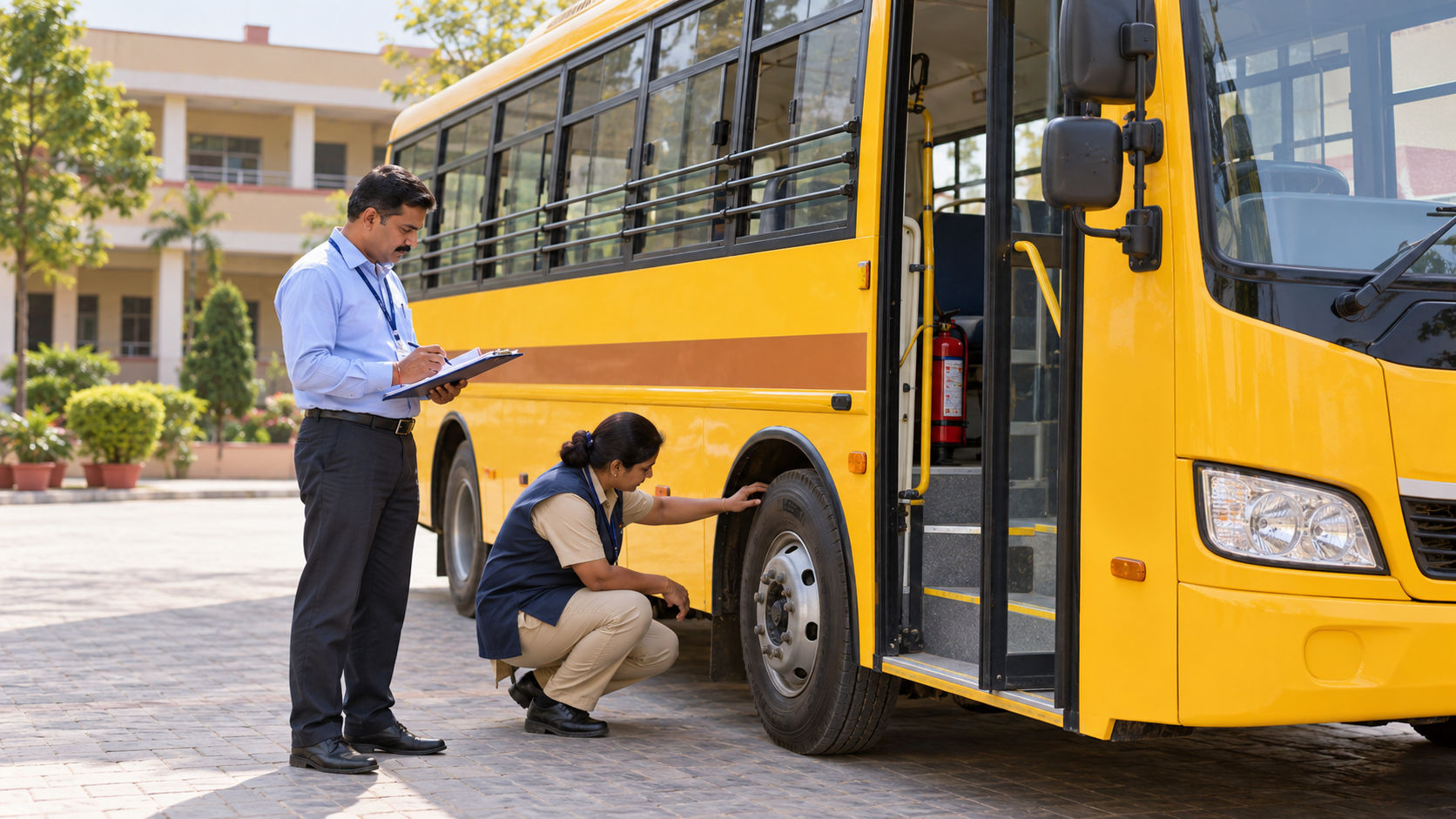
- Operators should verify emergency doors, windows, roof hatches, hammers, lighting and markings before every departure.
- Inspect wiring, batteries, alternators, air-conditioning systems and engine-bay fire hazards under a documented maintenance programme.
- Confirm required detection and fire-protection systems are functional and not obstructed by modifications.
- Give a 60-second departure briefing showing passengers every exit and how to open it.
- Keep gangways clear and control luggage so it cannot fall into escape routes.
- Train drivers and attendants to stop safely, isolate power where appropriate, open all exits, call 112 and account for passengers.
- Preserve the vehicle, CCTV, GPS, permits, inspection history, passenger manifest and maintenance records for investigation.

Leave a comment