
Quick answers
What is the full form of SDMA?
SDMA stands for State Disaster Management Authority, in Hindi राज्य आपदा प्रबंधन प्राधिकरण. Each state authority is set up under the Disaster Management Act, 2005 to lead disaster planning, early warning, coordination and recovery in that state.
What is the difference between NDMA, SDMA and DDMA?
NDMA is the national authority chaired by the Prime Minister. SDMA is the state authority chaired by the Chief Minister. DDMA is the district authority chaired by the Collector or District Magistrate, with the elected head of the local body as co-chairperson. Each one approves or prepares the disaster plan for its own level, and every plan is reviewed each year.
How can I contact my state's SDMA?
In an emergency dial 112. For disaster information or help, many states run a toll-free State Emergency Operation Centre on 1070 and district centres on 1077. Tripura lists both numbers and Uttar Pradesh's SDMA shows 1070. The NDMA website links to every state SDMA's own site.
Is SDRF a fund or a force?
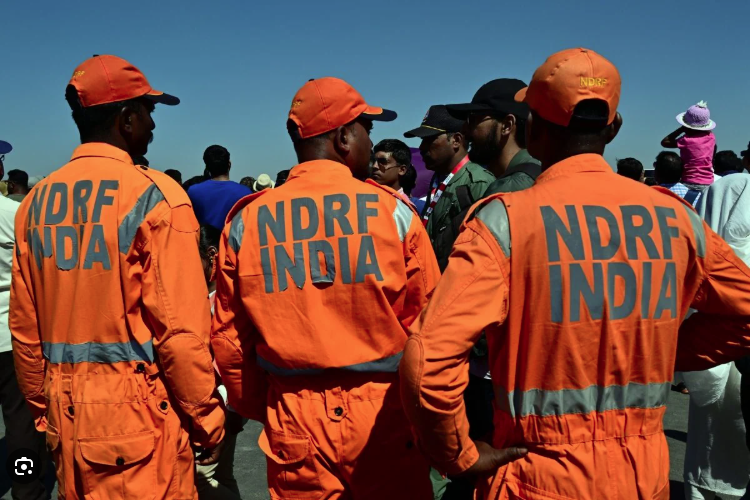
The same short form is used for both. Section 48 of the Disaster Management Act sets up the State Disaster Response Fund, which pays for relief. The State Disaster Response Force is the state's trained rescue team, a state version of the NDRF.
The Disaster Management Act, 2005 requires every state to set up a State Disaster Management Authority (SDMA), chaired by the Chief Minister. But we could not find any official national scorecard that grades how well each SDMA works, so this article does not rank states.
(Source: Disaster Management Act, 2005, sections 14 and 18.)
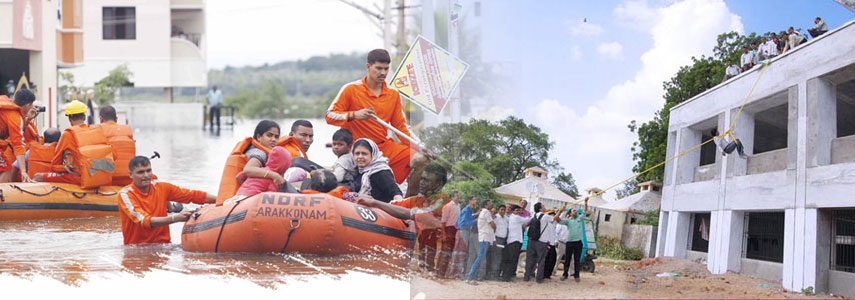
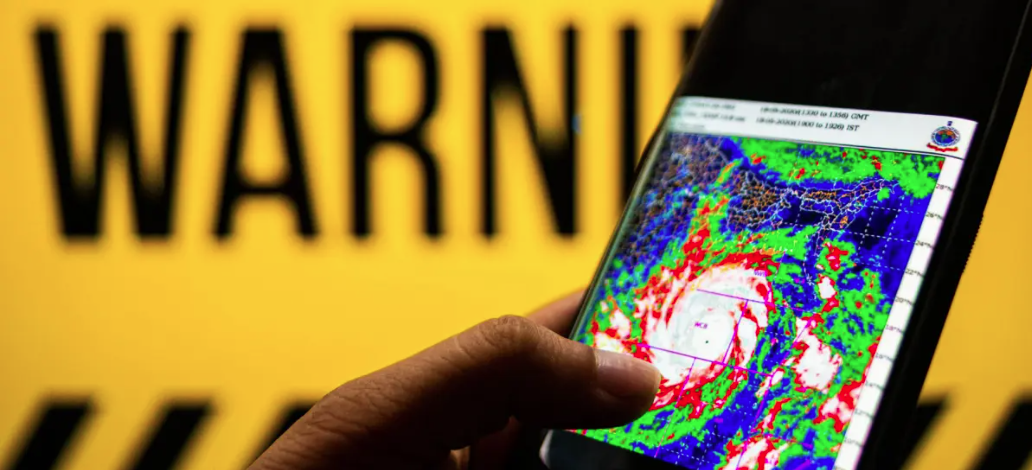
When a cyclone, flood or earthquake hits, most of us think of the NDRF. But the planning that decides whether people are warned in time, whether shelters are ready and whether relief reaches the right villages is mainly the state’s job. That job sits with the SDMA and, below it, the District Disaster Management Authority (DDMA) headed by the Collector.
Why this matters to you
Each SDMA is responsible for state-level planning, early warning, coordination with the NDRF and other agencies, and recovery after a disaster. Yet there is very little public, comparable information on each SDMA’s staff, budget and readiness. Most citizens cannot tell how prepared their own state really is. When planning is weak, even a moderate flood or fire can turn into a disaster.
What the law requires of every SDMA
- Each state government must set up an SDMA by notification, with the Chief Minister as Chairperson (section 14).
- The SDMA lays down the state disaster management policy and approves the State Disaster Management Plan in line with NDMA guidelines (section 18).
- It coordinates the State Plan, recommends funds for mitigation and preparedness, and reviews what each department is doing on mitigation, capacity-building and preparedness (section 18).
- The State Plan must be reviewed and updated every year (section 23(5)).
We found no official, published classification of SDMAs as fully functional, partly functional or dormant, and no verified national figures on drills, plan updates, staffing or unspent funds, so none are quoted here. The duties above are from the Act as passed in 2005. Check later amendments and your state’s notifications for the current position.
Case study: Odisha and Cyclone Fani (2019)
- The system: Odisha built its disaster set-up after the 1999 super cyclone. It has a state authority, round-the-clock control rooms, cyclone shelters and its own rapid action force, the Odisha Disaster Rapid Action Force (ODRAF).
- The result: before Cyclone Fani made landfall in May 2019, about 1.2 million people were reported evacuated in 24 hours.
- Why it works: a clear chain of command, early warnings that reach villages, and local volunteers who know their area.
- Lesson: a well-run state system can turn a deadly cyclone into a serious but survivable event.
Problems often seen across states
- Weak coordination between the SDMA, district authorities and local fire, police and health services.
- Waiting for central relief instead of investing in prevention and mitigation at state level.
- Limited risk mapping, so planners do not know exactly which villages and wards are most at risk.
- Vacant posts and thinly staffed disaster units.
- Too little public awareness work, so warnings do not always turn into action.
What an effective SDMA should have
- A working State Emergency Operations Centre, staffed 24 hours a day.
- Active DDMAs in every district, with reliable communication links.
- Trained responders for fire, flood, chemical and earthquake emergencies, including a State Disaster Response Force.
- Regular mock drills for schools, industries, hospitals and civic bodies.
- Trained community volunteers in every disaster-prone area.
- A State Plan that is published and updated every year, as the law requires.
How to check your state’s SDMA
We found no verified NDMA report naming “lagging” states, so no state is singled out here. Instead, check these yourself:
- Is your State Disaster Management Plan published, and does it say when it was last reviewed? The Act requires a review every year.
- Does the SDMA website list current helplines, district authorities and warnings?
- When did your district last hold a public mock drill?
- Does your district have a District Disaster Management Plan, and does it cover your area’s main hazards?
What should change
- Regular independent audits of SDMAs, with results made public.
- Citizen representation in SDMA advisory committees.
- A national public dashboard showing each state’s plan status, drills and readiness.
- A shift in spending from relief after a disaster to prevention before it.
- Release of funds linked to measurable readiness, such as updated plans and held drills.
What you can do
Look up your SDMA’s website and save its helpline along with 112. Find your district’s disaster plan. Then ask your district administration one question: when was our last disaster drill? Good disaster management starts with officials, but it works only when citizens know the plan too.
What an SDMA does, in practical terms
SDMA stands for State Disaster Management Authority, in Hindi राज्य आपदा प्रबंधन प्राधिकरण. People often ask “what do SDMAs actually do?” Here is the plain answer, section by section of the Disaster Management Act, 2005.
- Who runs it. The Chief Minister is the Chairperson, with up to eight members nominated by the Chief Minister, and the Chairperson of the State Executive Committee as member and Chief Executive Officer (section 14). In Delhi the Lieutenant Governor chairs and the Chief Minister is Vice-Chairperson.
- Who does the daily work. A State Executive Committee, chaired by the Chief Secretary with four department secretaries, carries out the SDMA’s decisions and coordinates the departments (section 20).
- Plans. The SDMA approves the State Disaster Management Plan and each department’s own plan, and the State Plan must be reviewed every year (sections 18 and 23).
- Relief standards. It fixes the minimum relief people get after a disaster, such as food, water, shelter and medical care, and these can never be lower than NDMA’s national minimum (section 19).
- Emergency powers. In an emergency the Chief Minister, as Chairperson, can use all the SDMA’s powers at once, with the Authority ratifying the decision afterwards (section 18(3)).
- Money. The state must set up a State Disaster Response Fund, a State Disaster Mitigation Fund and matching district funds (section 48).
- Districts. Every district has a DDMA chaired by the Collector, District Magistrate or Deputy Commissioner, with the elected head of the local body or zila parishad as co-chairperson, the Superintendent of Police and the Chief Medical Officer as members. The DDMA prepares the district plan, including the district response plan, and that plan is also reviewed every year (sections 25, 30 and 31).
- Rescue teams. Many states have a State Disaster Response Force (SDRF), a trained rescue force on the lines of the NDRF. NDMA’s state list shows, for example, Bihar forming its SDRF in 2010 and Assam in 2011, while Goa was shown as not yet having one.
NDMA, SDMA and DDMA at a glance
| Level | Chaired by | Main plan | Disaster Management Act, 2005 |
|---|---|---|---|
| NDMA (national) | Prime Minister | National Plan, reviewed every year | Sections 3 and 11 |
| SDMA (state) | Chief Minister (Lieutenant Governor in Delhi) | State Plan, reviewed every year | Sections 14, 18 and 23 |
| DDMA (district) | Collector, District Magistrate or Deputy Commissioner | District Plan and district response plan, reviewed every year | Sections 25, 30 and 31 |
What changed in 2025
Parliament passed the Disaster Management (Amendment) Act, 2025 (Act 10 of 2025) in March 2025. As introduced, the amendment has the SDMA itself prepare the State Plan, lets the state government set up an SDRF by law, allows a separate Urban Disaster Management Authority for the state capital and municipal corporation cities, and asks NDMA and SDMAs to keep a disaster database. The amendment comes into force on dates the Centre notifies, so check your state’s notifications for the current position.
How to reach your SDMA
In any emergency, dial 112 first. For disaster information or help, most states run a State Emergency Operation Centre and district control rooms. Tripura, for example, lists toll-free 1070 for its state centre and 1077 for every district centre, and Uttar Pradesh’s SDMA shows 1070 as its helpline. NDMA’s website keeps a list of links to every state and union territory SDMA. Save your state’s number in your phone tonight, next to 112.
References
- The Disaster Management Act, 2005 (No. 53 of 2005), sections 14, 18 and 23
- Al Jazeera, “Cyclone Fani kills dozens in India and Bangladesh”, 4 May 2019
What needs attention
- Every state is legally required to have an SDMA chaired by the Chief Minister
- The State Disaster Management Plan must be reviewed and updated every year
- No official national scorecard shows how well each SDMA works
- Odisha's preparedness allowed a very large evacuation before Cyclone Fani
- Weak coordination, vacant posts and limited risk mapping are commonly reported problems
Controls that reduce risk
- Publish and annually update every State and District Disaster Management Plan
- Keep a State Emergency Operations Centre staffed round the clock
- Hold regular mock drills with schools, hospitals and industries
- Train community volunteers in disaster-prone areas
- Make SDMA readiness data public
Common unsafe practices
- Treating disaster management as relief after the event instead of prevention
- Leaving the State Plan unpublished or not reviewed every year
- Leaving disaster posts vacant
- Holding no public mock drills
- Citizens not knowing their SDMA helpline or district plan

Leave a comment