
Quick answers
What is the NDRF?
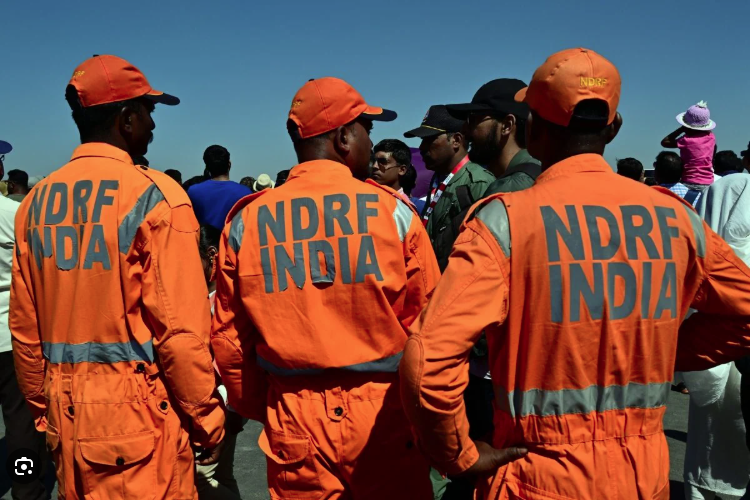
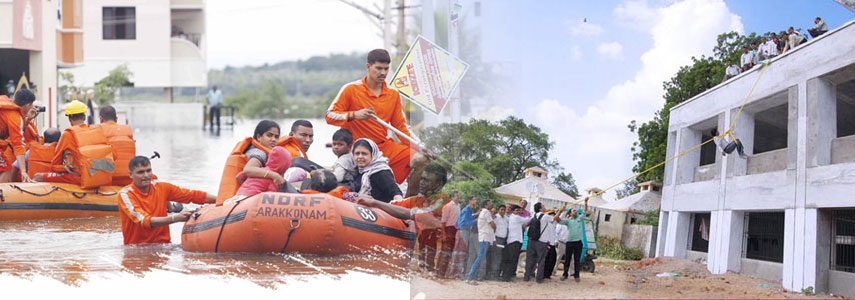
The National Disaster Response Force is India's national disaster response force, deployed for floods, earthquakes, industrial fires, building collapses and chemical leaks, including some missions abroad.
What should I do when authorities order an evacuation during a disaster?
Follow evacuation orders during disasters without arguing. Acting promptly helps responders reach everyone who needs help.
What challenges does disaster response in India face?
Limited manpower for simultaneous operations, outdated boats, communication kits and drones, overloaded training centres, poor coordination with state forces, and delayed mobilisation in hilly and remote regions.
How can citizens support disaster responders?
Respect first responders, follow evacuation orders, and support volunteer drives and disaster awareness programmes in your state.
Since it was raised in 2006, the National Disaster Response Force (NDRF) has carried out more than 12,000 operations, rescued more than 1,58,000 people and evacuated more than 8.5 lakh. It has grown from 8 battalions to 16, with a sanctioned strength of 18,556.
(Source: NDRF, 20th Raising Day note, January 2025.)
When a building collapses, a river breaks its banks or a tunnel caves in, the orange uniforms of the NDRF are often the first sign that real help has arrived. But India is a big country with floods, cyclones, earthquakes, landslides, chemical leaks and building collapses, often in several states at once. Sixteen battalions cannot be everywhere. That is why state forces, local volunteers and prepared families matter just as much.
NDRF strength (official figures, January 2025)
| Parameter | Official figure |
|---|---|
| Battalions | 16 (8 when raised in 2006) |
| Personnel per battalion | 1,149 |
| Sanctioned strength | 18,556 |
| Locations | 68, including 28 Regional Response Centres |
| Operations since 2006 | More than 12,000 |
| People rescued | More than 1,58,000 |
| People evacuated | More than 8.5 lakh |
| Operations in 2024 | 1,038 (a record) |
(Sources: NDRF “About Us”; NDRF 20th Raising Day note, 19 January 2025.)
Selected NDRF operations (official figures)
| Year | Operation | Where | Outcome (as stated by NDRF) |
|---|---|---|---|
| 2008 | Kosi floods | Bihar | Over 1,00,000 people rescued |
| 2011 | Japan triple disaster | International | International deployment |
| 2015 | Nepal earthquake | International | International deployment |
| 2023 | Türkiye and North-West Syria earthquake | International | 3 teams; 2 survivors rescued, 85 bodies recovered |
| 2023 | Odisha train accident | Odisha | 44 survivors rescued, 121 bodies retrieved |
| 2023 | Silkyara tunnel collapse | Uttarakhand | 41 trapped workers rescued |
| 2024 | Wayanad landslide | Kerala | 111 bodies retrieved |
(Sources: NDRF “About Us”; NDRF Raising Day note, January 2025.)
The challenges
- Several disasters at once. When floods hit many states in the same monsoon, teams are stretched across long distances.
- Equipment has to keep up. Boats, communication kits, cutting tools and drones need regular replacement and maintenance.
- Training load keeps rising as the force grows and takes on more operations.
- Working with State Disaster Response Forces (SDRFs). Coordination between the national and state forces is not equally strong everywhere.
- Distance and terrain. Reaching hilly and remote areas takes time, especially when roads are cut off.
Case study: Silkyara tunnel rescue (2023)
- What happened: in 2023, 41 workers were trapped after a collapse in the Silkyara tunnel in Uttarakhand.
- Response: NDRF lists the operation among its major rescues.
- Outcome: all 41 trapped workers were rescued.
- Lesson: long, technical rescues need patience, specialist equipment and many agencies working as one team.
What helps the NDRF work better
- Drones and mapping help teams find stranded people faster in floods and landslides.
- Airlift support from the Indian Air Force gets teams to distant disaster sites quickly.
- Pre-positioning teams in flood- and cyclone-prone districts before the season saves precious hours.
- Community training. NDRF teams run awareness and training programmes with schools and communities, so local people can act before help arrives.
What should change
- Expand NDRF capacity in line with its growing workload and the regions where disasters hit most often.
- Strengthen SDRFs in every state, with joint training and a shared command system, so the NDRF is not the only option.
- Link weather and flood forecasts to deployment plans, so teams are in place before the disaster.
- Match funding to the force’s growing workload. It carried out a record 1,038 operations in 2024.
- Train community volunteers in every disaster-prone district.
What you can do
- When the district administration orders an evacuation, leave. Do not argue or wait to see how bad it gets. Every family that stays back is one more rescue for a stretched team.
- Keep an emergency bag ready with medicines, documents in a plastic cover, a torch, a charged power bank and drinking water.
- Follow official warnings from IMD and your state disaster management authority.
- Join a volunteer or first-aid training programme in your area.
- In an emergency, call 112.
The NDRF has shown great courage. The best way to respect that is to be ready yourself, so their help reaches those who need it most.
References
What needs attention
- The NDRF has doubled from 8 to 16 battalions since 2006
- It carried out a record 1,038 operations in 2024
- Its teams have served abroad, including in Japan, Nepal and Türkiye
- Simultaneous disasters across many states stretch the force
- State Disaster Response Forces and local volunteers must share the load
Controls that reduce risk
- Strengthen SDRFs with joint training and shared command
- Pre-position teams in flood- and cyclone-prone districts before the season
- Link forecasts to deployment plans
- Train community volunteers in every disaster-prone district
- Match NDRF funding to its growing workload
Common unsafe practices
- Ignoring or arguing with evacuation orders
- Waiting to see how bad a flood gets before leaving
- Expecting the NDRF to reach every village in the first hours
- Not keeping an emergency bag ready in the flood or cyclone season
- Ignoring official IMD and state warnings

Leave a comment