
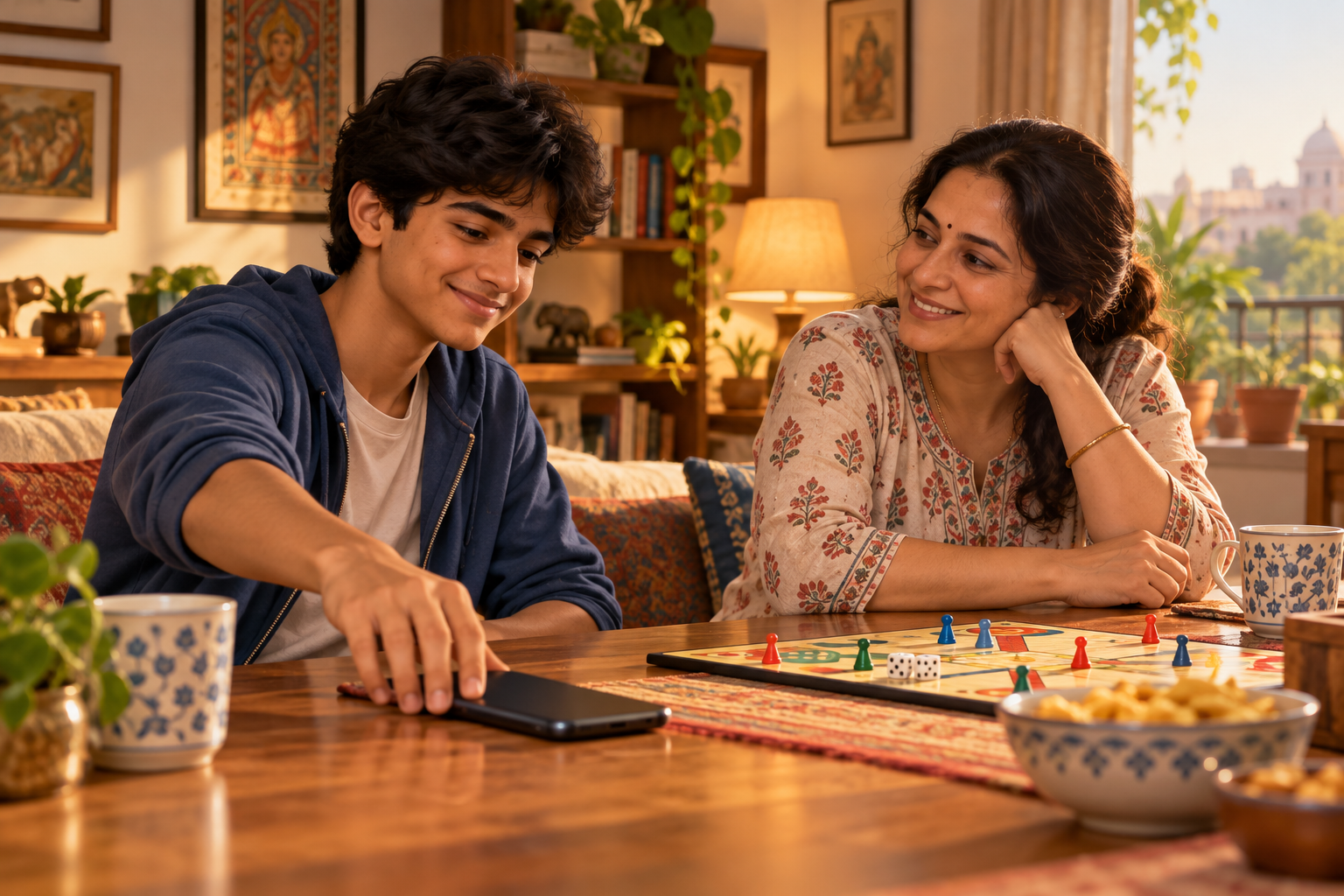
Cover image: AI-generated editorial illustration, not a photograph of a real person or event.
Look at impact, not just screen hours
Phones and computers can support learning, work, friendship and accessibility. A useful question is whether a particular activity is repeatedly displacing sleep, school, work, relationships or other valued activities. Do not label ordinary heavy use an addiction based on a daily-hours rule. WHO’s definition of gaming disorder concerns persistent loss of control and significant impairment; it is not a diagnosis for all social-media or screen use.
Change the environment together
Identify which apps, times or notifications make it hard to stop. Try a device-free bedtime routine, disable nonessential notifications and agree on spaces for undistracted meals or study. Parents should discuss the purpose and benefits of online activity with teenagers, listen to their concerns and offer attractive offline alternatives rather than rely only on punishment. UNICEF’s teen screen-time guidance supports a collaborative approach.
Get help when functioning suffers
If attempts to change use fail and the person is struggling substantially with sleep, mood, education or relationships, seek assessment from a qualified professional. If online conflict, harassment or use is linked to immediate self-harm risk, seek urgent help. In India, 112 is for immediate danger and Tele-MANAS 14416 offers mental-health support. This guide does not diagnose gaming disorder or prescribe a universal time limit.
What needs attention
- WHO's *gaming disorder* is a defined condition involving impaired control and significant functional impairment; it is not a synonym for ordinary screen time. Online activities can also be useful or social.
Controls that reduce risk
- Identify the activity and its effects; set device-free times/places and notification boundaries; protect sleep and offline commitments; seek professional help for persistent impairment.
Common unsafe practices
- Diagnosing all heavy screen use as addiction.
- punishment without discussion.
Leave a comment