
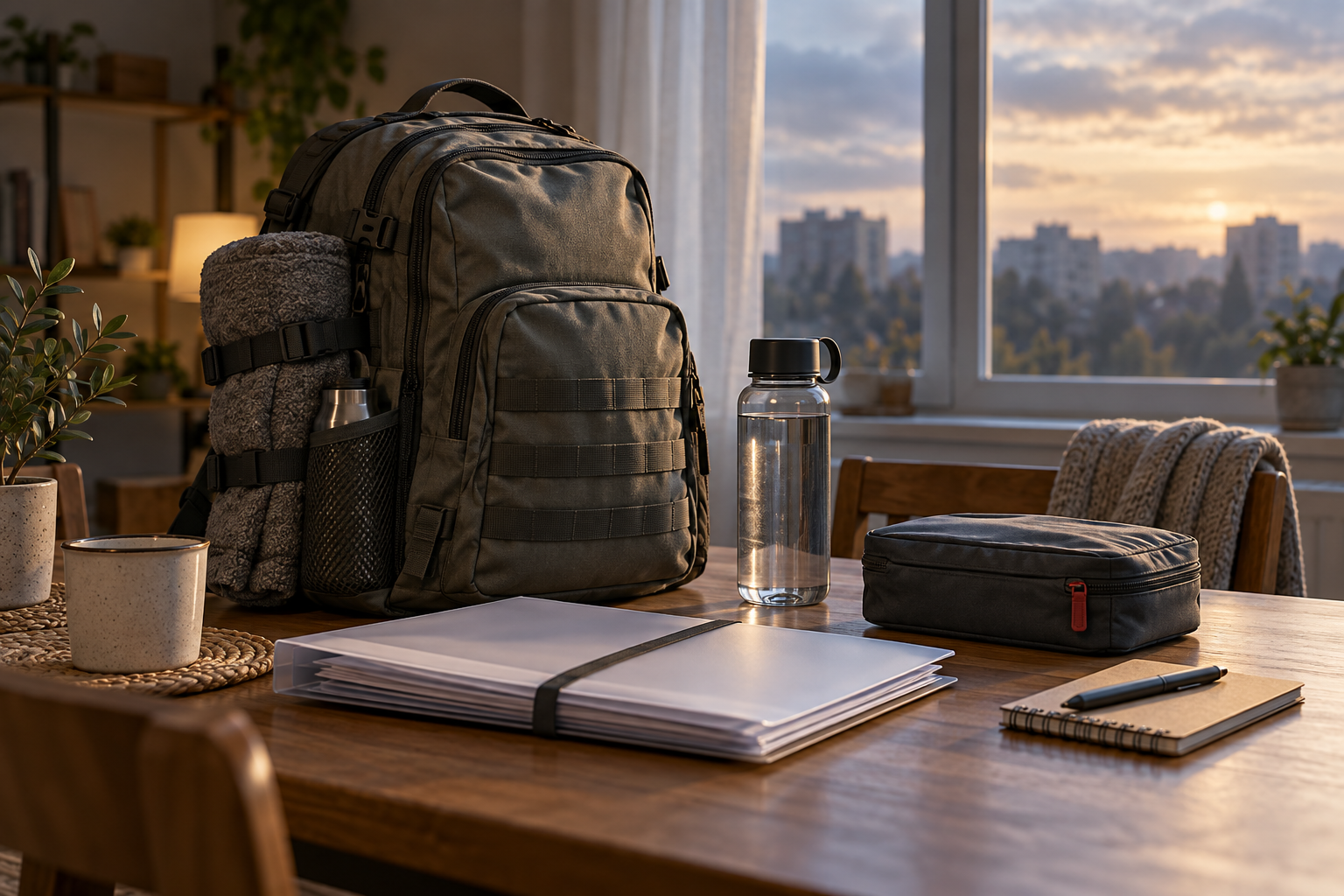
Cover image: AI-generated editorial illustration, not a photograph of a real conflict or shelter.
Protect civilians with a flexible household plan
Conflict conditions differ sharply by place and can change within hours. A general page cannot identify a safe route, shelter or evacuation time for a reader. Use current instructions from reliable local authorities and recognised humanitarian organisations; check the time and location of an alert before acting. Do not follow an unverified map or social-media convoy message.
Keep essentials and family contact information ready
Agree how household members will contact one another if phones or transport fail. Keep identity documents, necessary medicines, water and essential supplies accessible where safe. Plan for children, older people, disability-related needs and family members who may become separated. The ICRC’s family-links service addresses separation during conflict and disasters. Share only the information needed for safety; avoid publishing sensitive locations of civilians or shelters.
Respond to the actual local danger
Move away from active fighting and damaged infrastructure when it is safe and permitted to do so. If an authority directs shelter or evacuation, follow the latest locally verified instructions. Seek medical or humanitarian assistance through available official channels. Do not enter a damaged building or attempt a route based solely on this article. UNICEF’s explosive-ordnance risk education warns people not to touch a suspicious object, to move back from it and report it through appropriate local channels. This general risk principle does not identify safe routes or authorities in a reader’s location. This is civilian-focused preparedness, not tactical advice or a claim that one action is safe in every conflict.
What needs attention
- Civilian risks vary by place and phase of conflict. Rumours, unverified routes and improvised travel can add danger.
Controls that reduce risk
- Identify official local alert channels and shelters if designated; agree a family contact plan; keep essential documents, medicines and accessible assistance plans ready.
Common unsafe practices
- Following unverified route messages.
- publishing a civilian shelter location.
- touching suspect ordnance.
Leave a comment