
Quick answers
What should I do if a railway platform becomes dangerously crowded?
Stay calm and follow station staff and announcements rather than the push of the crowd. If a footbridge or staircase is already packed, wait at the side or use another route. Keep your arms in front of your chest, move diagonally towards the edge of the flow rather than against it, and avoid carrying heavy luggage on busy platforms.
What should I do if I fall in a crowd at a station?
Try to get back on your feet as quickly as you can. If you cannot get up, curl up on your side with your knees drawn in and your arms covering your head and neck, and get up at the first gap. If someone near you falls, stop, ask the people behind to hold back, and help lift them.
What triggers stampedes at railway stations?
Stampedes often begin with something small such as sudden rain, a rumour, a train delay or a rush, combined with overcrowding at narrow stairs, foot overbridges and entry gates.
How do most people die in a stampede?
Most victims die from suffocation due to crowd compression rather than from trampling, which is why staying calm and helping fallen people up matters.
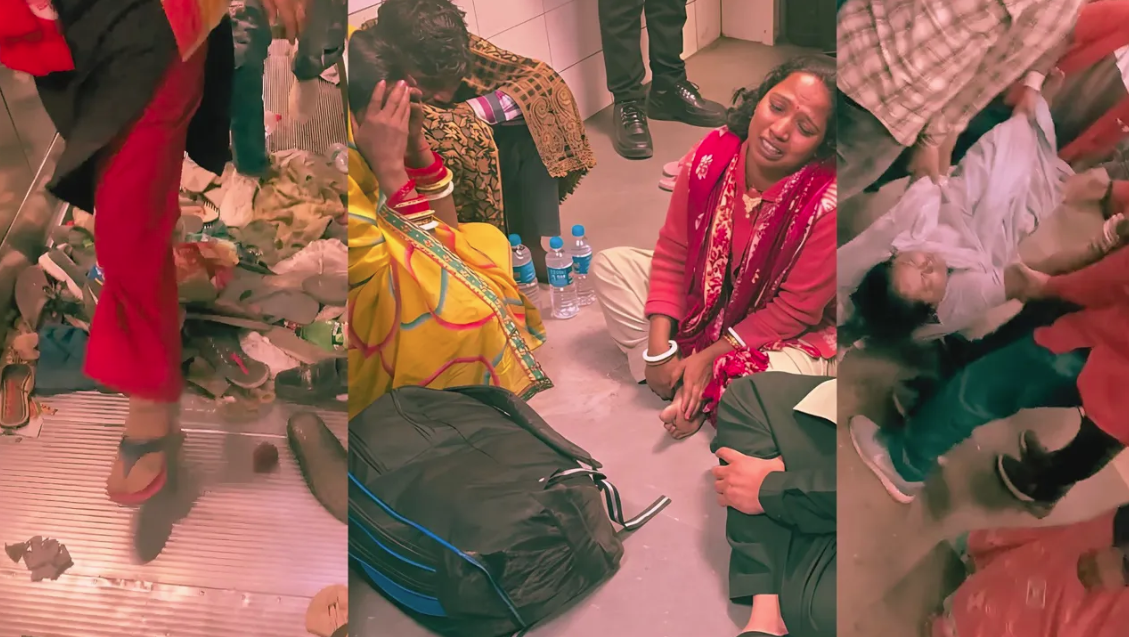
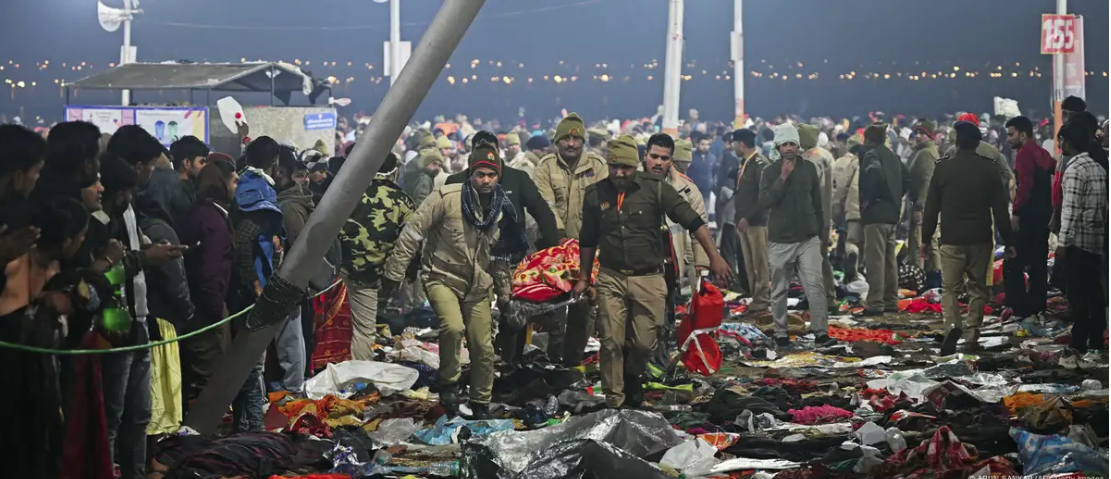
Nobody keeps a public national count of stampedes at railway stations. But two of the worst in recent years tell you most of what you need to know. On 29 September 2017, 23 people died on the narrow foot overbridge between Elphinstone Road and Parel in Mumbai. On 15 February 2025, at least 18 people died at New Delhi station. Neither was a train accident. Both happened on or at the foot of a foot overbridge, when too many people were pushed into too little space.
Almost every station crush starts with something ordinary: a spell of rain, a rumour, a late platform change or a rush for one train. What turns it deadly is a narrow staircase or bridge with nowhere for the pressure to go.
Why this matters
Indian Railways carries about 2.3 crore passengers every day (New India Samachar, PIB, February 2025). On a festival weekend or a wet Monday morning, a single footbridge on a busy suburban station can be packed shoulder to shoulder. On days like that, the staff on duty and the announcements decide whether people keep moving safely.
We cannot stop people travelling. We can make sure stations, staff and passengers know what to do before the pressure builds.
Two crushes, one pattern
| Date | Station | Deaths | Injured | Reported trigger |
|---|---|---|---|---|
| 29 September 2017 | Elphinstone Road and Parel foot overbridge, Mumbai | 23 | Over 30 | Commuters sheltering from rain on a narrow bridge; panic after a shout was misheard as “the bridge is falling” |
| 15 February 2025 | New Delhi (platforms used by Prayagraj-bound trains) | At least 18 | Several | Passengers coming down a footbridge slipped and fell on others during the Maha Kumbh rush |
Sources: The Quint, 11 October 2017; The News Minute, 29 September 2017; PBS NewsHour (Associated Press), 16 February 2025. These are selected verified incidents, not a national count.
In both cases the deaths happened on footbridge stairs and landings. That is where people slow down, bunch up and lose their footing.
What goes wrong at stations
| Problem | What it looks like on the ground |
|---|---|
| Overcrowding and bottlenecks | Packed platforms, staircases and narrow exits, with people still pouring in |
| Rumours and panic | A false shout about a train arriving, a bridge falling or an electric fault sets off a sudden push |
| Weather | Sudden rain sends everyone running for the same covered bridge or shed |
| Poor design | Slippery floors, steep steps and weak lighting |
| Weak crowd control | Too few staff, no one holding the flow, and announcements that do not give clear directions |
Most of these can be fixed with better crowd management and better design. None of them needs new technology to start.
How people actually die
In a crush, most people do not die from being stepped on. They die because the crowd presses so hard on their chest that they cannot breathe. The National Disaster Management Authority’s crowd management guide (2014) says compressive asphyxia has historically been the most common cause of death in crowd disasters. That is why space around your chest, and getting a fallen person back on their feet, matters so much.
Elphinstone Road, Mumbai, 2017
- When: about 10:45 am on 29 September 2017, during the morning rush.
- Where: the narrow foot overbridge linking Elphinstone Road station on the Western line with Parel on the Central line.
- Trigger: commuters crowded onto the bridge to get out of heavy rain. Panic spread after a shout was misheard as “the bridge is falling”.
- Toll: 23 dead and over 30 injured.
- Bridge width: the railway inquiry report listed the bridge as 5 metres wide. The Quint measured it at just over 1.8 metres.
- Inquiry: the railway report found no negligence. It recommended more CCTV, a ban on heavy luggage at peak hours, regulated vendors and a wider bridge.
More than seven years later, New Delhi station showed the same pattern: a sudden rush on footbridge stairs, and people falling on each other.
What the Railways announced after New Delhi
On 7 March 2025, the Railway Ministry announced crowd control measures for 60 busy stations (All India Radio News). They include permanent waiting areas outside the stations so passengers reach the platform only when their train is due, direct platform entry only for confirmed ticket holders, sealing of unauthorised entry points, new 12-metre and 6-metre-wide foot overbridges, more cameras, war rooms at major stations, walkie-talkies for staff and a senior Station Director at each major station. These are the right steps. Whether they work will depend on how strictly they are followed on the busiest days.
What you can do as a passenger
- Look before you step in. If a footbridge or staircase is already packed, wait at the side or use another route. Missing one local is better than getting caught in a crush.
- Keep calm and keep your hands up near your chest. Your arms in front of you protect your breathing space.
- Do not push against the crowd. If the pressure builds, move diagonally, a little at a time, towards the edge of the flow.
- If you fall, get up as fast as you can. If you cannot, curl up on your side with your knees to your chest and your arms over your head and neck, and get up at the first gap.
- Help a fallen person up. Hold your ground, shout to the people behind you to stop, and lift them. One person down can bring others down.
- Travel light at peak hours. Big bags take space and trip people on stairs.
- Follow station staff and announcements, not shouts in the crowd. If you hear a rumour, do not pass it on.
What the system has to do
- Size footbridges, stairs and exits for the real crowd on the busiest day, not the average day.
- Hold passengers in waiting areas and release them to the platform in batches, especially for special and festival trains.
- Avoid last-minute platform changes for crowded trains, and announce them clearly in the local language when they cannot be avoided.
- Train RPF and station staff to spot dangerous crowding early and to stop the flow onto a bridge before it fills.
- Watch CCTV for crowd build-up, not only for crime, and give the control room the power to act on it.
- Run drills and put up clear signs for exits at big junctions and metro stations.
Before your next trip
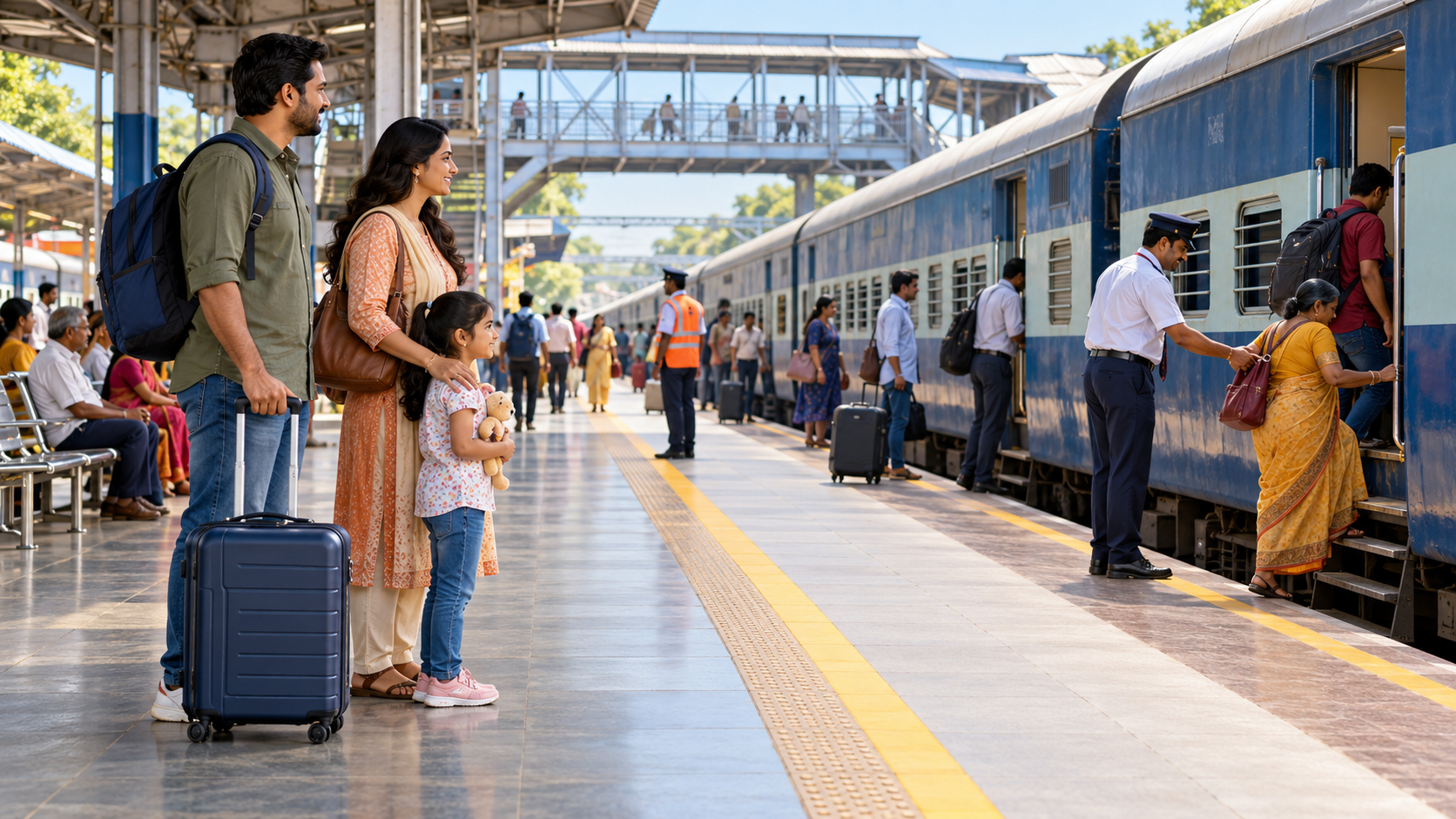
The next time you use a busy station, take ten seconds to notice the footbridges and the second way out. If a bridge looks full, wait. If someone falls, stop and help them up. On a crowded staircase, the calm person who stops and shouts “ruko” (stop) can save lives.
References
- The Quint, “Rain & Rumours Caused Elphinstone Tragedy, No Negligence: Railways” (11 October 2017)
- The News Minute, “At least 22 dead, over 30 injured after stampede at Mumbai local train station” (29 September 2017)
- PBS NewsHour (Associated Press), “Stampede at New Delhi railway station in India leaves at least 18 people dead” (16 February 2025)
- New India Samachar (PIB), 1 to 15 February 2025, page 15
- All India Radio News, “Railways announces series of crowd control measures to avoid chaotic situations at stations” (7 March 2025)
- National Disaster Management Authority, “Managing Crowd at Events and Venues of Mass Gathering” (2014)
- Onmanorama, “Puri Jagannath and Hathras stampedes: How to protect yourself if caught in one?” (8 July 2024), citing NDMA advice
What needs attention
- Both deadly station crushes happened on or at the foot of a foot overbridge, where people bunch up on stairs
- Ordinary triggers like rain, a misheard shout or a rush for one train set them off
- The Elphinstone bridge was far narrower than the railway report recorded: just over 1.8 metres by The Quint's check against 5 metres on paper
- People in a crush die mostly because they cannot breathe, not from being trampled
- Crowd control works best before people reach the bridge, by holding them back and releasing them in batches
Controls that reduce risk
- Station managers: hold passengers outside the platform and release them in batches for crowded trains
- Stop the flow onto a footbridge before it fills; post staff at the top and bottom of stairs on rush days
- Avoid last-minute platform changes for crowded trains and announce any change clearly in the local language
- Use CCTV and the control room to spot crowd build-up early
- Check real footbridge and staircase widths against the crowd they carry
- Train RPF and station staff in crowd management and run drills at big junctions
Common unsafe practices
- Letting people keep pouring onto a footbridge or staircase that is already full
- Pushing against the flow or forcing your way down crowded stairs
- Carrying heavy luggage through packed bridges at peak hours
- Passing on rumours or reacting to shouts in the crowd
- Stepping over a fallen person instead of stopping to lift them
- Recording the size of a bridge on paper without checking what is actually there
Leave a comment