
Quick answers
What are the warning signs of a toxic gas leak?
Watch for a chemical smell, throat irritation or sudden dizziness. These signs mean you should move away from the area quickly.
What should I do if there is a gas leak near me?
Move away upwind and towards higher ground, cover your mouth and nose with a wet cloth, and do not light any fire near the leak area.
Who should I call during a chemical gas leak?
Call 108 or 112 immediately and report the plant name, the smell and the wind direction.
Why do industrial gas leaks keep happening?
Common reasons include neglected maintenance, lack of training, process safety failures, illegal effluent discharge into drains and poor storage design, along with weak inspection and missing sirens or gas detectors.
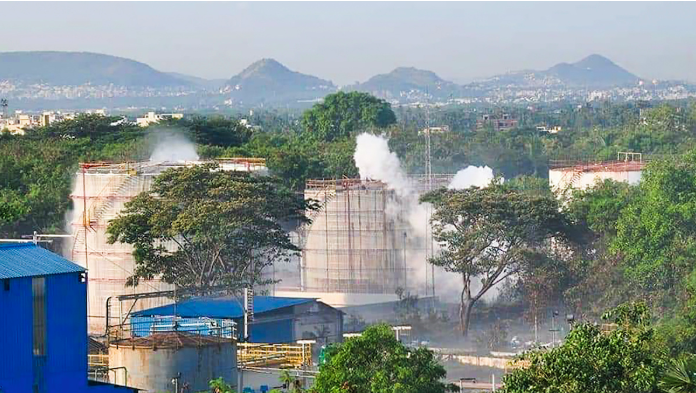
In the early hours of 7 May 2020, styrene vapour leaked from a storage tank at the LG Polymers plant in Visakhapatnam. People in the villages around it woke up choking, and some collapsed in the street. Twelve people died and hundreds fell ill, according to the High Power Committee the Andhra Pradesh government set up to investigate. The committee also found that the plant’s siren did not work. Many people called it a second Bhopal.
There is no public national count of gas leaks in India since then. But the cases we can verify show the same pattern: toxic gas, people living or sleeping right next to the source, and no warning.
Why this matters to people who live near industry
India is the sixth-largest chemical producer in the world and the third-largest in Asia (PIB fact sheet, September 2022). Many chemical units, tank farms and effluent drains sit close to homes. When gas escapes, the first people hurt are the night-shift worker and the family in the next lane, not the people who signed the safety papers.
Toxic gas does not only kill. People who survive heavy exposure can be left with damaged lungs, eyes or nerves.
Verified gas and fume incidents since Vizag
| Year | Place | What happened | Deaths | Injured or affected |
|---|---|---|---|---|
| 2020 | LG Polymers, Visakhapatnam (Andhra Pradesh) | Styrene vapour leak from a storage tank | 12 | Hundreds fell ill |
| 2022 | Sachin GIDC, Surat (Gujarat) | Toxic fumes as chemical waste was pumped from a tanker into a drain | 6 | 20 hospitalised |
| 2022 | Deepak Nitrite, Nandesari, Vadodara (Gujarat) | Fire and smoke at a chemical plant | 0 | 7 workers hospitalised; about 700 residents moved |
| 2023 | Giaspura, Ludhiana (Punjab) | Hydrogen sulphide from the sewer | 11 | 4 more treated in hospital |
Sources: The News Minute, 7 July 2020; Scroll, 6 January 2022; The Tribune (PTI), 2 June 2022; The Tribune, 30 April 2023. These are selected verified cases, not a complete national count.
What happened in each case
Visakhapatnam, LG Polymers (2020)
Twelve people died and hundreds of nearby residents fell ill. Styrene stored in a tank began to react on its own, a process called polymerisation that heats the liquid and turns it into vapour, and the vapour escaped over the villages. The High Power Committee found the company negligent and noted that the siren did not work.
Sachin GIDC, Surat (2022)
On 6 January 2022, a tanker was pumping chemical waste into a drain next to a factory where workers were sleeping. The reaction released toxic fumes. Six people died and 20 were taken to hospital. The lesson: illegal waste dumping can cause a deadly gas release well outside any factory gate.
Nandesari, Vadodara (2022)
On 2 June 2022, a fire broke out at the Deepak Nitrite chemical plant. Seven workers were hospitalised after breathing in smoke, and about 700 people living next to the plant were moved to safety as a precaution. The lesson: off-site emergency plans must cover smoke and fumes drifting into nearby villages.
Giaspura, Ludhiana (2023)
On 30 April 2023, hydrogen sulphide rose from the sewer in a crowded residential area and killed 11 people, including three children. A district inquiry in May 2023 found no proof of industrial dumping, but found that the sewer had no vents and the area lacked ventilation. In July 2023, the Central Pollution Control Board concluded that acidic industrial effluent in the main sewer had released very high levels of hydrogen sulphide. The two findings disagree, and we report both.
Gases you should know about
| Gas or chemical | Where it is found | What it does to people |
|---|---|---|
| Styrene | Plastics industry | Drowsiness, unconsciousness, damage to the nervous system |
| Ammonia | Fertiliser plants, cold storages, ice factories | Burns the eyes and lungs; can stop breathing |
| Chlorine | Water treatment, paper and chemical plants | Choking, chemical burns to the airways |
| Hydrogen sulphide | Sewers, septic tanks, tanneries, refineries | Rapid collapse; can kill within minutes at high levels |
| Carbon monoxide | Boilers, furnaces, generators, foundries | Headache, confusion, unconsciousness; has no smell |
Do not rely on smell. Hydrogen sulphide smells of rotten eggs at low levels, but at high levels it dulls the sense of smell. Carbon monoxide has no smell at all.
Why gas leaks keep happening
- Poor maintenance. Old valves, corroded pipelines and tanks kept in service too long.
- Untrained handling. Workers who do not know the chemicals they are handling or the right procedure.
- Process failures. Overpressure, wrong mixing, and temperature or sensor controls that fail.
- Illegal dumping. Effluent and waste poured into drains and sewers, where it reacts.
- Poor storage and design. Overfilled tanks and closed spaces with no ventilation.
- No warning. At Vizag the siren did not work. At Giaspura the sewer had no vents.
The rules that already exist
India has had a legal framework for chemical emergencies since 1996. Under the Chemical Accidents (Emergency Planning, Preparedness and Response) Rules, 1996, every state is meant to have a State Crisis Group, every district with hazardous units a District Crisis Group, and every industrial pocket a Local Crisis Group. The district group, chaired by the Collector or Deputy Commissioner, helps prepare the district off-site emergency plan and holds a mock drill every year. The local group is meant to train people, hold drills and educate the people likely to be affected.
If you live near an industrial area, you have every right to ask your district administration whether your Local Crisis Group meets, when it last held a drill and what the off-site emergency plan says you should do.
If you smell gas or see a toxic cloud
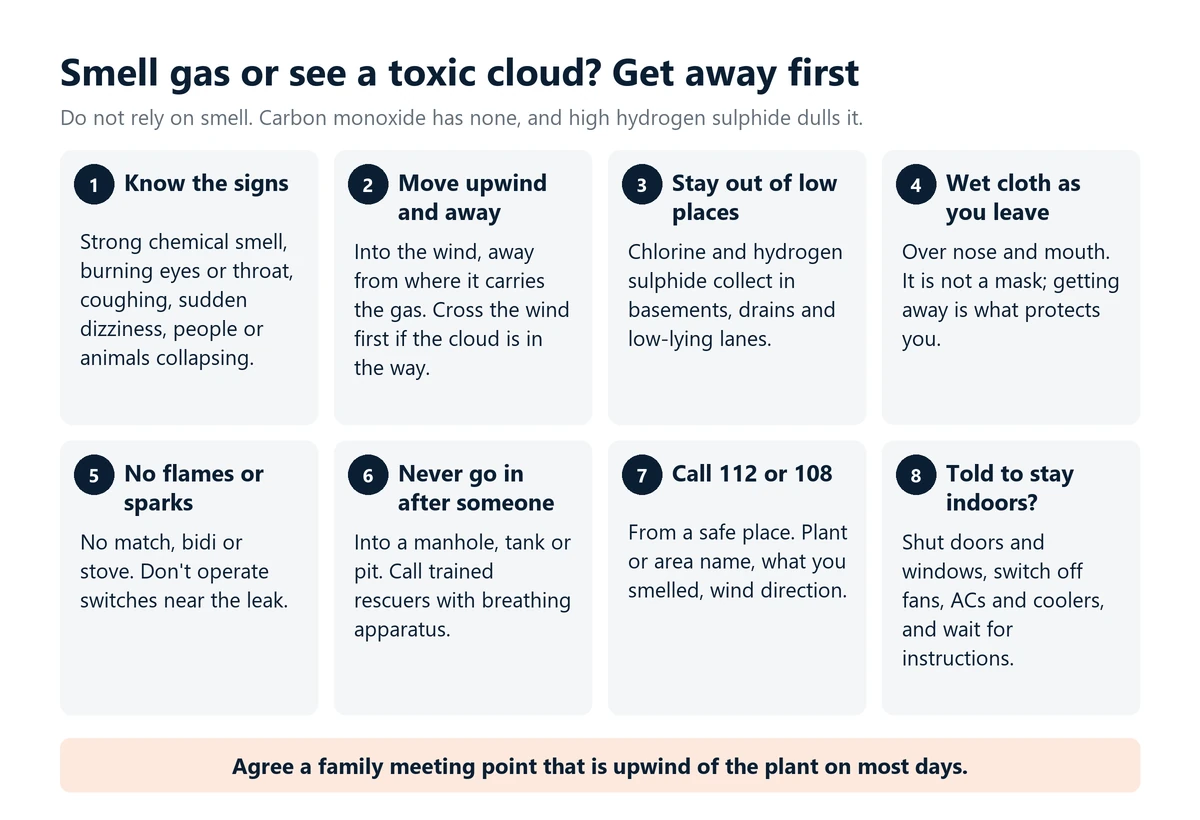
- Know the warning signs: a strong chemical smell, burning eyes or throat, coughing, sudden dizziness, or people and animals collapsing.
- Move upwind and away. That means into the wind, away from where the wind is carrying the gas. Move across the wind first if the cloud is between you and safety.
- Stay out of low places. Many toxic gases, such as chlorine and hydrogen sulphide, are heavier than air and collect in basements, drains and low-lying lanes. Ammonia is lighter and rises, so getting well away matters more than height.
- Cover your nose and mouth with a wet cloth while you get away. It can help a little with some irritant gases, but it is not a mask. Getting away is what protects you.
- No flames or sparks. Do not light a match, a bidi or a stove, and do not operate switches near the leak.
- Never go into a manhole, tank or pit to rescue someone who has collapsed. You will very likely collapse too. Call for trained rescuers with breathing apparatus.
- Call 112 or 108 from a safe place. Give the plant or area name, what you smelled and which way the wind is blowing.
- If told to stay indoors, shut doors and windows, switch off fans, ACs and coolers that draw in outside air, and wait for official instructions.
What needs to change
- Every Local and District Crisis Group should actually meet, drill and publish its off-site plan.
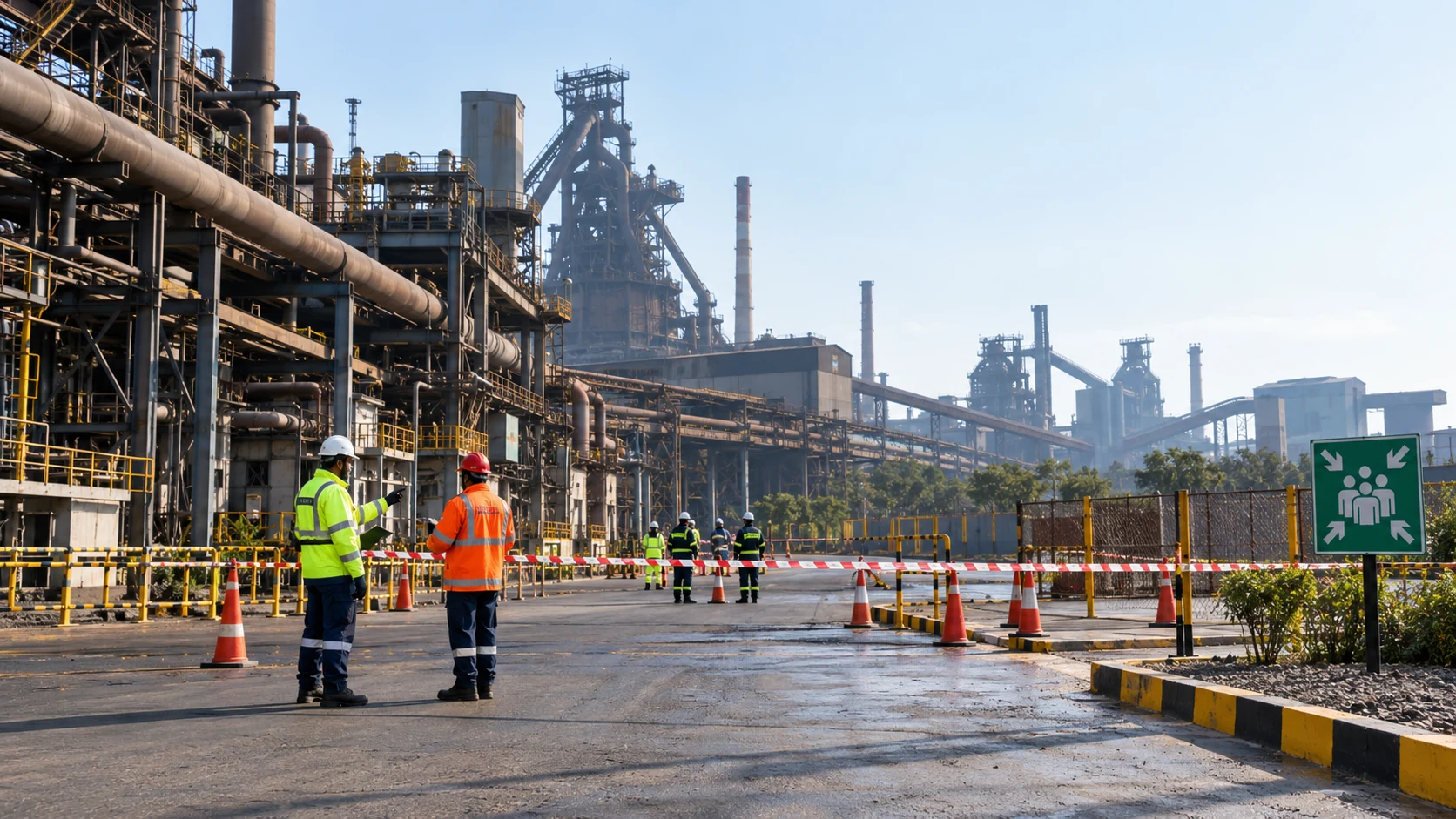
- Industrial clusters should have working gas detectors and sirens that are tested regularly.
- People living near hazardous units should be told what the siren means and where to go.
- Chemical waste movement by tanker should be tracked, and illegal dumping prosecuted.
- District hospitals in industrial areas should be ready to treat toxic exposure at any hour.
- Sewers and drains in industrial towns need vents and regular gas monitoring.
Tonight
If you live or work near an industrial area, find out what the plant siren sounds like and where you would go if it rang. Agree a meeting point with your family that is upwind of the plant on most days. And teach everyone at home the one rule that saves rescuers’ lives: never climb into a manhole or tank after someone who has collapsed.
What needs attention
- In every verified case the people hurt were workers or residents right next to the source
- At Vizag the plant siren did not work, so people got no warning
- The Surat deaths came from waste dumped into a drain, outside the factory process itself
- At Giaspura a district probe and the CPCB reached different conclusions on the source, but both pointed to a sewer with no vents or ventilation
- Hydrogen sulphide and carbon monoxide cannot be relied on to give a warning smell at dangerous levels
- District and local crisis groups required since 1996 are the bodies meant to plan and drill for such events
Controls that reduce risk
- Test plant sirens and gas detectors regularly and log the results
- Share the off-site emergency plan with nearby residents and explain the siren
- Make sure the Local and District Crisis Groups meet and hold drills
- Use permits, gas testing and breathing apparatus for all confined-space work
- Track chemical waste tankers and stop illegal dumping into drains
- Keep hospitals near industrial areas ready for toxic exposure cases
- Ventilate sewers and monitor them for gas in industrial towns
Common unsafe practices
- Relying on smell to judge whether gas is dangerous
- Running downwind or into low-lying lanes and basements
- Climbing into a manhole, tank or pit to rescue someone who has collapsed
- Lighting a match, bidi or stove near a suspected leak
- Leaving sirens and gas detectors untested
- Dumping chemical waste into drains and sewers
- Not telling nearby residents what to do when the siren sounds
Leave a comment