
Quick answers
How can I stay safe in a crowd at a temple or festival?
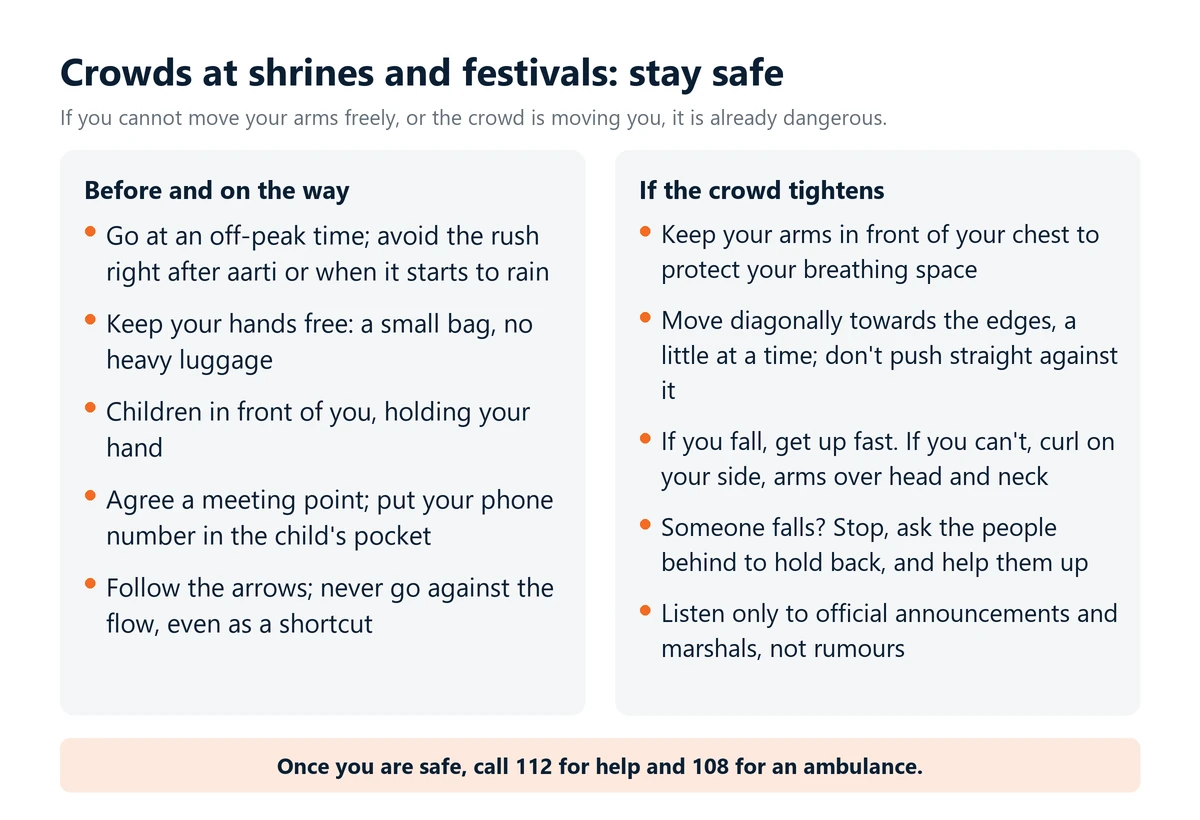
Visit at off-peak times, follow the flow arrows, never move against the crowd, keep your hands free with no heavy luggage, and listen only to official announcements and marshals, not rumours.
What should I do if the crowd density rises suddenly?
Keep your arms in front of your chest and move diagonally towards the edges rather than straight against the crowd. If you fall, get up as quickly as you can; if you cannot, curl up on your side, cover your head and neck with your arms and get up at the first gap. If someone near you falls, ask the people behind to hold back and help lift them.
How can families avoid getting separated at religious gatherings?
Keep children in front and hand-linked, and decide on a safe reunion point in advance.
What should temple organisers do to prevent stampedes?
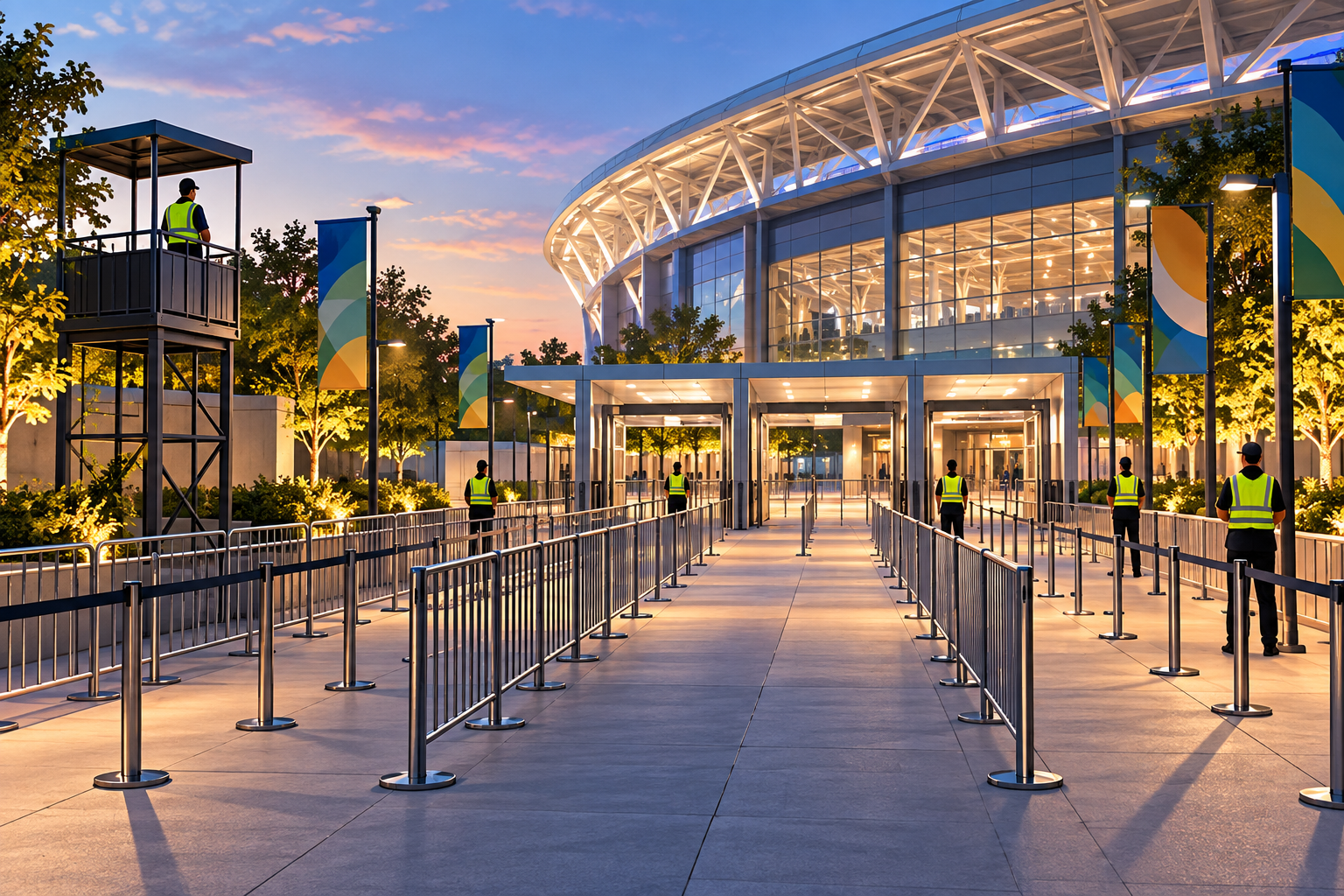
Use one-way movement with no counter-flow, timed entry slots, a rain plan with covered queues, trained marshals, unlocked and lit emergency exits, backup public address systems and a medical bay nearby.
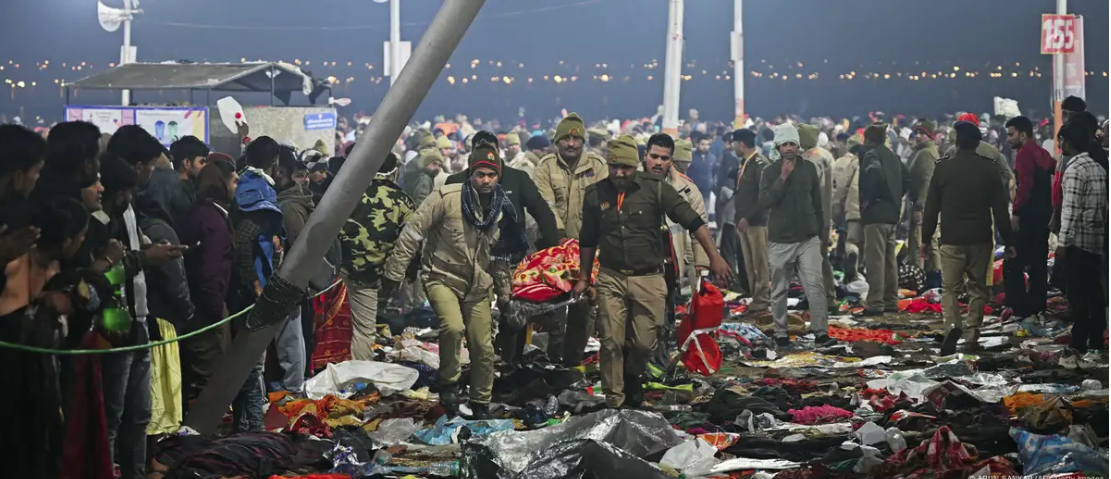
Between 2022 and 2025, just four crushes at a shrine, a satsang, a temple token counter and the Maha Kumbh killed at least 169 people: 12 at Vaishno Devi, 121 at Hathras, 6 at Tirupati and 30 at the Maha Kumbh. There is no official national count of stampedes at religious gatherings. But the National Disaster Management Authority’s crowd management guide (2014) says that most crowd disasters in India have happened at religious places.
Almost all of these deaths could have been prevented with basic crowd management: controlled entry, clear exits, timed slots and clear announcements.
Why this matters
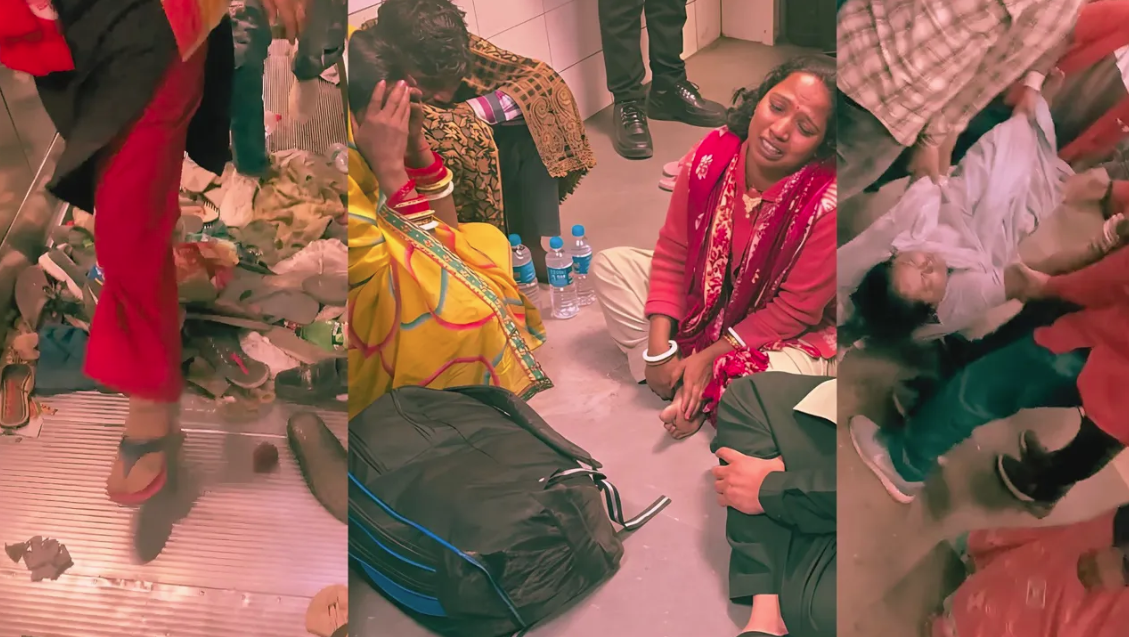
A darshan, a satsang or a snan should be a moment of faith, not fear. But narrow gates, a sudden rush when it starts to rain, wet steps, rumours and VIP movement turn devotion into disaster again and again. Families get separated, and elders and children are the first to struggle for breath when the crowd presses in.
Planning for crowd safety does not take anything away from faith. It protects the people who come to worship.
Four recent crushes
| Date | Place | Deaths | Reported trigger |
|---|---|---|---|
| 1 January 2022 | Mata Vaishno Devi shrine, Jammu and Kashmir | 12 | Heavy New Year rush near gate 3 |
| 2 July 2024 | Satsang at Phulrai, Hathras (Uttar Pradesh) | 121 | Over 2.5 lakh people at a gathering permitted for about 80,000 |
| 8 January 2025 | Darshan token counters, Tirupati (Andhra Pradesh) | 6 | Crowd surged as people rushed for Vaikunta Dwara darshan tokens |
| 29 January 2025 | Sangam area, Maha Kumbh, Prayagraj (Uttar Pradesh) | 30 | Barricades gave way under crowd pressure, according to UP Police |
Sources: Business Today, 1 January 2022; DT Next (PTI), 3 July 2024; The Hitavada, 9 January 2025; The Tribune (PTI), 29 January 2025. These are selected verified incidents, not a national count.
In each case, far more people reached a narrow point than it could hold. At Hathras, a doctor cited asphyxia from compression as the main cause of death. That matches what the NDMA guide says: historically, most people who die in crowd disasters die of compressive asphyxia. They cannot breathe because the crowd is pressing on their chest. Most are not trampled.
What sets off a crush
| Cause | What happens |
|---|---|
| Bottlenecks and two-way movement | People going in and coming out meet at a narrow gate or staircase, and the crowd locks and compresses |
| Rumours | A shout of “gate is closing”, “short circuit” or “VIP is coming” sets off a sudden surge |
| Rain and slippery surfaces | A rush for shelter, wet steps, one fall and then a pile-up |
| Poor layout and signs | Blind turns, queues that lead nowhere and locked side exits |
| Power or sound system failure | No announcements, so people simply follow the push of the crowd |
When and where the risk is highest
- Hill shrines and ghats reached by steep, narrow steps
- Big festival days: New Year, Navratri, Kumbh snan days and mela days
- VIP visits that suddenly stop or reverse the flow of devotees
- Monsoon evenings, under plastic sheet canopies with poor lighting
Three common situations and how to fix them
These are typical situations drawn from many crowd incidents, not descriptions of one particular event.
- Narrow gate in the rain. Gate staff pause entry, the crowd behind keeps pushing, someone at the front falls and others fall on them. Fix: one-way lanes, a covered queue for rain, and timed slots.
- Queue reversed on a footbridge. The flow is turned back to let a VIP through, and two crowds meet head on. Fix: no reverse flow; give VIPs a separate route before the bridge.
- Power cut during aarti. The lights and sound go, and everyone rushes for the one lit exit. Fix: battery-backed sound system, glow-in-the-dark exit signs and marshals with megaphones.
How crowded is too crowded?
- Crowd safety specialist G. Keith Still treats 5 people per square metre as the upper limit for a standing crowd. Guidance he cites uses 4 per square metre for a moving queue.
- A simple test: if you cannot move your arms freely, or you are being moved by the crowd without choosing to, the density is already dangerous. Get to the edge and out.
- Two-way movement in a narrow space is the biggest danger. Keep entry and exit separate.
For devotees and families
- Time your visit. Go at an off-peak time, and avoid the rush right after aarti or when it starts to rain.
- Follow the arrows and never go against the flow, even if it looks like a shortcut.
- Keep your hands free. Carry only a small bag and no heavy luggage.
- Keep your arms in front of your chest if the crowd tightens, to protect your breathing space.
- If the crowd gets denser, move diagonally towards the edges, a little at a time. Do not push straight against it.
- If you fall, get up as quickly as you can. If you cannot, curl up on your side with your knees drawn in and your arms over your head and neck, and get up at the first gap. If someone near you falls, stop, ask the people behind to hold back, and help them up.
- Keep children in front of you, holding your hand, and agree on a meeting point in case you get separated. Put your phone number in their pocket.
- Listen only to official announcements and marshals, not rumours or shouts.
- Once you are safe, call 112 for help and 108 for an ambulance.
For organisers and temple trusts: ten things that must not be skipped
- One-way movement, with separate entry and exit and no reverse flow.
- Timed darshan tokens, with counters that show the waiting time.
- Gates wide enough for the expected crowd, and barriers ready to hold back overflow.
- A rain plan: covered queue lanes and anti-skid mats.
- Enough trained marshals along the route, with hand mics or megaphones.
- Someone watching crowd density, by CCTV or counters, with the power to stop entry.
- Emergency side gates unlocked, lit and clearly signed.
- A medical post with an AED and wheelchairs close to the crowd, and a tie-up with 108.
- A backup sound system on battery, with a siren and voice announcements.
- Drills with police and SDRF before the event, and a published review after it.
For district administration and police
- No VIP movement through public choke points at peak times.
- A live view of crowd numbers, density, weather and gate status in the control room.
- SMS and WhatsApp alerts about slot timings, weather and route changes.
- Buses and parking released in stages so crowds do not arrive all at once.
- Permission for the expected crowd, not a smaller figure, and action when numbers cross it. At Hathras, permission was sought for about 80,000 people and over 2.5 lakh came.
- Publish capacity, flow rates and drill dates so organisers can be held to them.
Before your next yatra or festival
Faith needs flow, not force. Before you set out, decide a meeting point with your family, plan to go at a quieter time, and keep the children’s hands in yours. If you are on a committee, ask one question: where will people go if this gate gets blocked? A two-minute announcement at the right time can save many lives.
References
- Business Today, “Vaishno Devi stampede: 12 dead, 20 injured” (1 January 2022)
- DT Next (PTI), “Hathras stampede: Toll rises to 121, FIR says 2.5 lakh people in venue of 80,000” (3 July 2024)
- The Hitavada, “6 killed in Tirupati temple stampede” (9 January 2025)
- The Tribune (PTI), “Maha Kumbh stampede: 30 dead, 60 injured, say UP Police” (29 January 2025)
- National Disaster Management Authority, “Managing Crowd at Events and Venues of Mass Gathering” (2014)
- G. Keith Still, “Static crowd density (general)”
- Onmanorama, “Puri Jagannath and Hathras stampedes: How to protect yourself if caught in one?” (8 July 2024), citing NDMA advice
What needs attention
- In each of the four crushes, far more people reached a narrow point than it could hold
- At Hathras the crowd was more than three times the number permission was sought for
- People die mostly because they cannot breathe under crowd pressure, not from being trampled
- Rain, rumours, VIP movement and power cuts are common triggers
- Two-way movement at gates, stairs and bridges is the most dangerous layout
Controls that reduce risk
- Plan one-way movement with separate entry and exit
- Use timed darshan tokens or slots to spread the crowd
- Post trained marshals with megaphones along the whole route
- Watch crowd density and stop entry before it gets dangerous
- Keep emergency gates unlocked, lit and signed
- Set up a medical post with an AED, and a 108 tie-up
- Drill with police and SDRF before big festival days
Common unsafe practices
- Letting entry and exit share the same narrow gate or staircase
- Seeking permission for a smaller crowd than will actually come
- Stopping or reversing the public flow for VIP movement
- Having no rain plan for open queues and steps
- Locking side exits or leaving them unlit
- Relying on a single sound system with no backup

Leave a comment