
Quick answers
Why do scrap and plastic godown fires burn for hours?
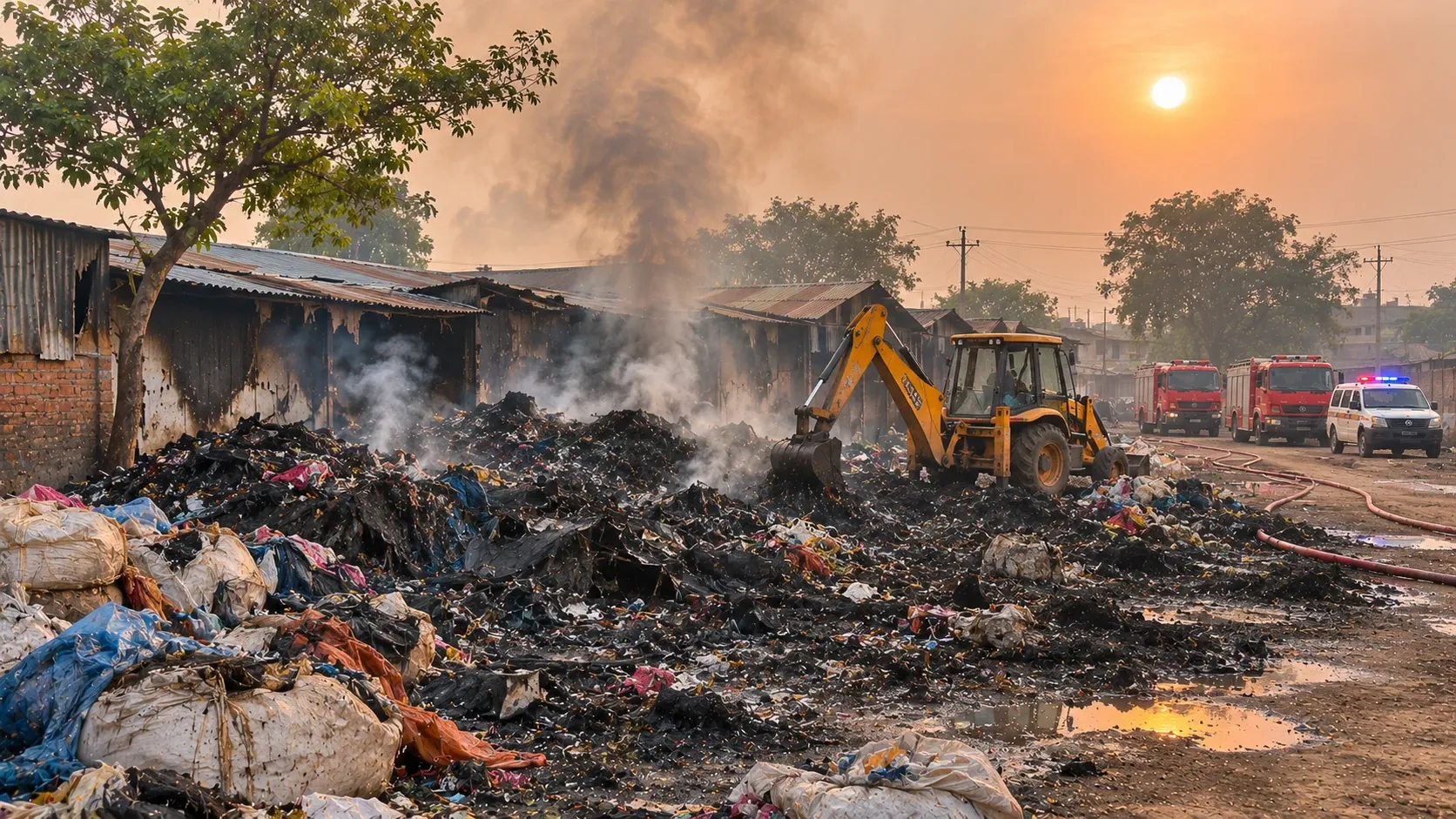
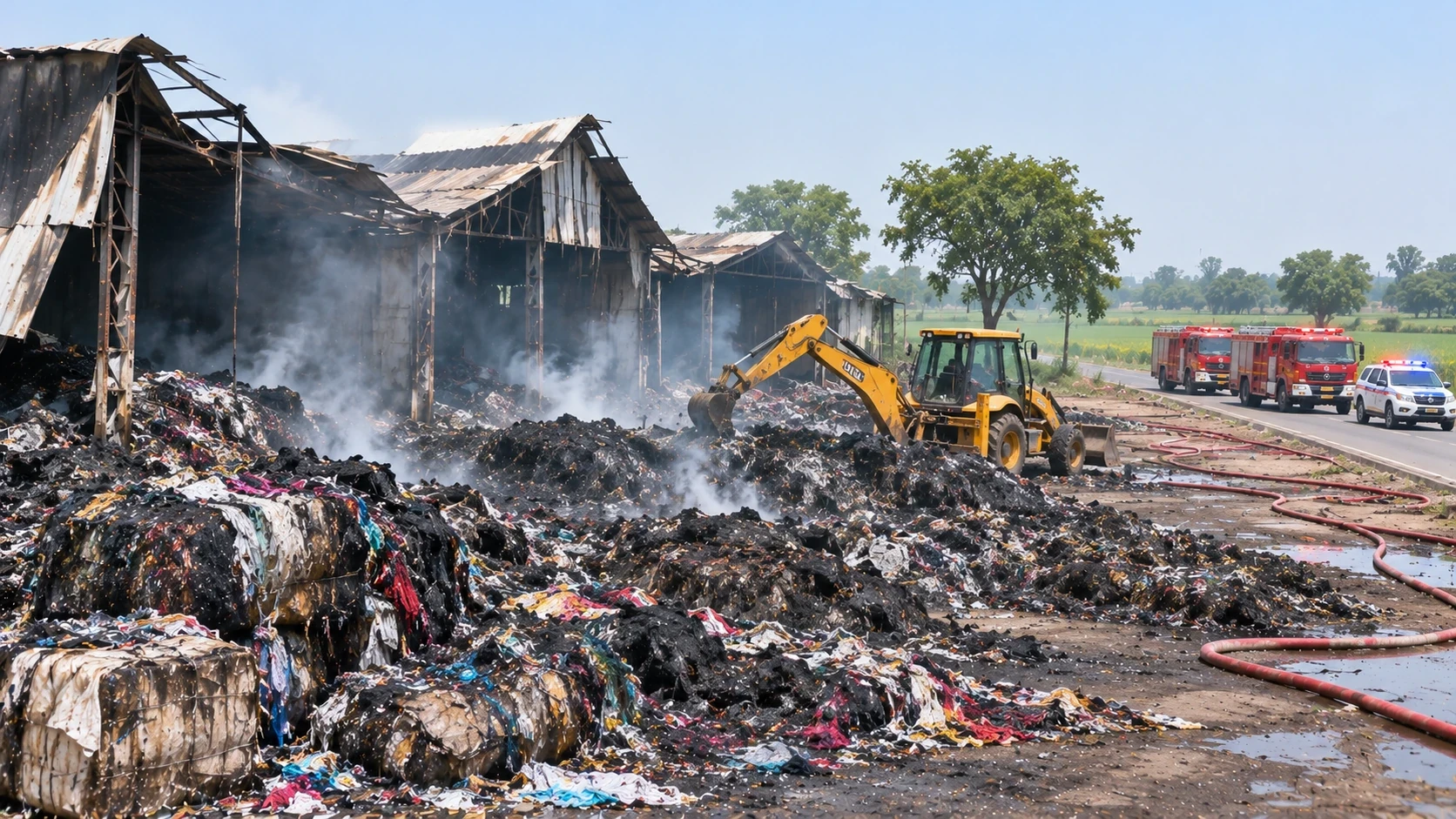
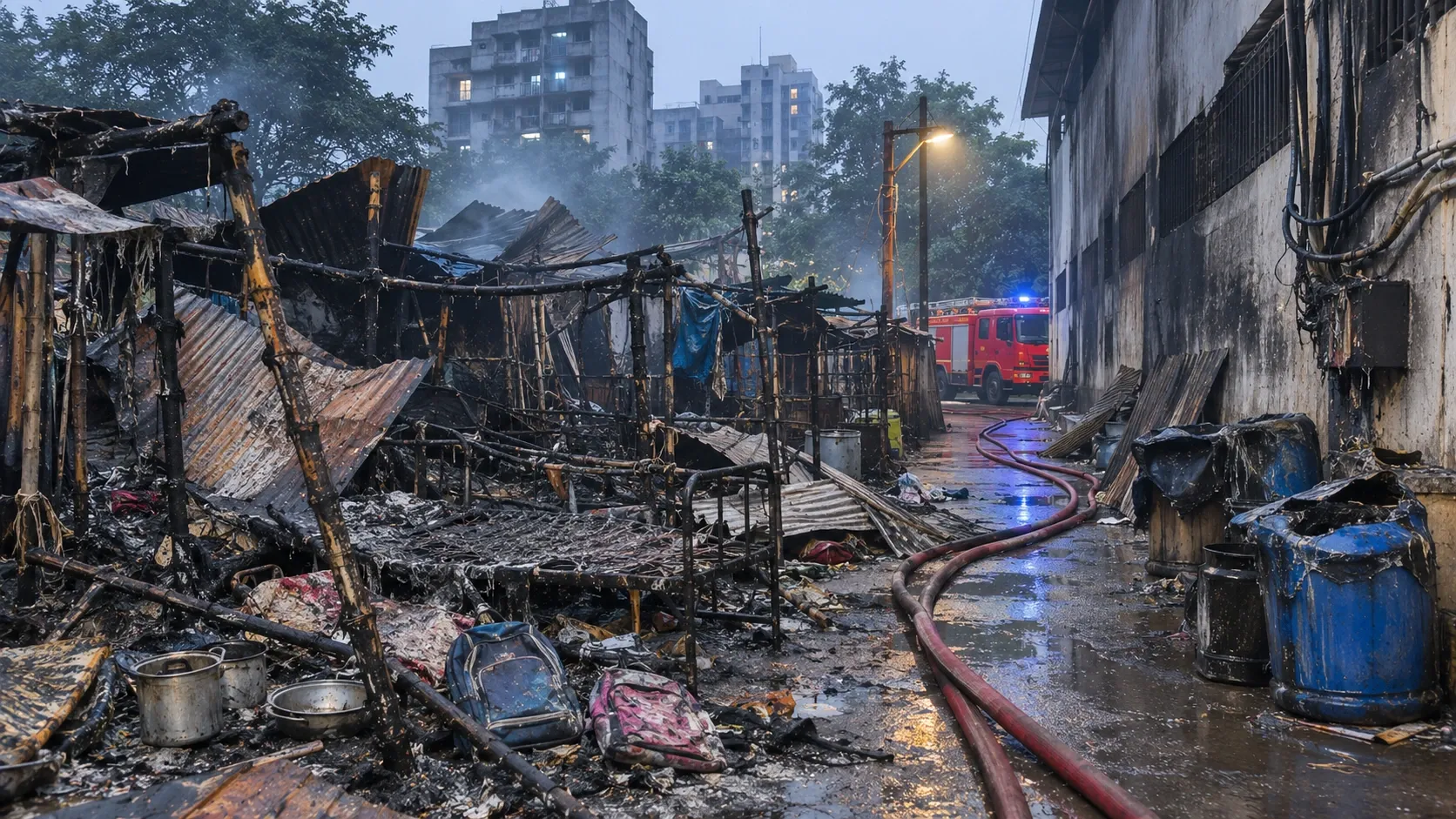
The stock is loose and stacked, so fire spreads through the heap and hides in the middle where water does not reach. Plastic burns hot with thick black smoke, and crews keep cooling after the flames drop. In Surat two JCBs were needed to pull the heap apart.
What should I do if a godown next to my house catches fire?
Leave at the first smoke, call 101 or 112 from outside, take people and papers you can carry, keep the lane clear and stay upwind. Do not go back in until the fire service says it is safe.
Is smoke from burning plastic dangerous?
Our reading of the guidance we found is that it can be harmful to breathe, so move away and keep children and older people far from it. For the next step, see our page on smoke from a nearby fire.
What does the Indian Standard say about warehouse fire safety?
IS 3594:2024, a Bureau of Indian Standards code of practice, asks in paraphrase for waste bins 6 m from the building, no smoking within 15 m, outdoor piles to 10 m high with a matching aisle, and roads and gates at least 6 m wide, among other points. The fire officer decides for a real building.
Who is responsible for a rented godown that catches fire?
We did not find a general answer. The reports do not say who was responsible in any of the seven fires, and in Surat only a local allegation about unapproved plots is reported. Ask the local fire station and a lawyer.
Who do I call?
Call 101 for fire or 112, the single emergency number, from outside the building.
Scrap, plastic sacks, waste cloth and timber burn fast and hot because they are light, loose and stacked in large heaps, and they smoulder for hours after the flames drop. If you own or rent a godown or yard, keep the stock small, apart from other stock, away from homes and electrical points, and make sure a fire engine can reach it. If you live or work next to one, leave at the first smoke, call 101 or 112 from outside, and do not go back for belongings. This page covers seven such fires between 14 and 21 November 2026, why they are so hard to put out, and what an Indian Standard on warehouses asks of owners. Checked 23 November 2026.
In short
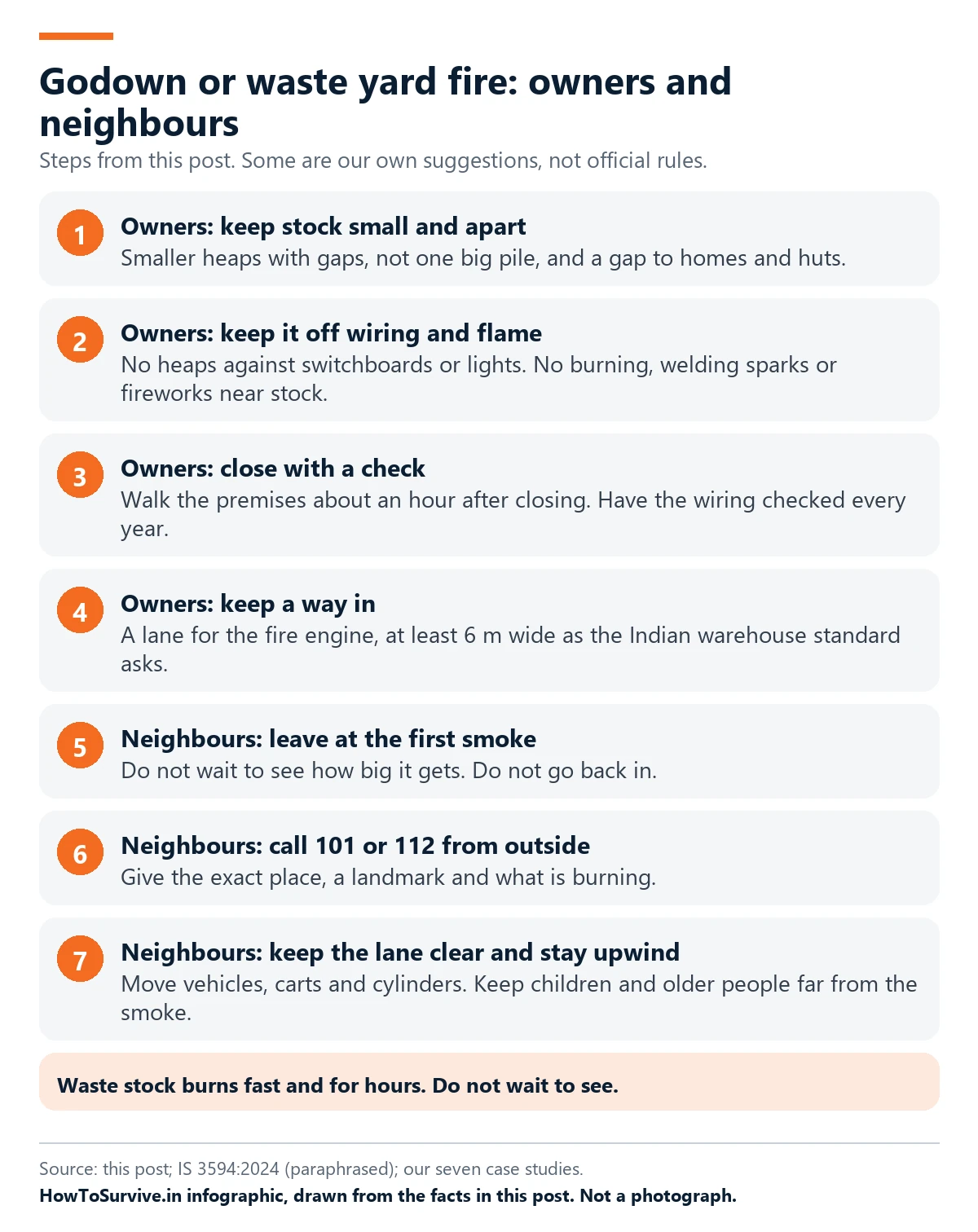
- Seven godown and yard fires in eight days, and no deaths reported in any of them. That is luck and early escape, not safe storage: huts, shops and houses were burnt in three of them.
- The stock is the problem. Plastic scrap, sacks, rags, paper and timber give a large burning surface, black smoke and fire that hides in the heap.
- Fire engines arrived quickly and still needed hours. In these fires crews worked from about one hour to about four and a half hours, and in Surat two JCBs were needed to pull the heap apart.
- Neighbours get the least warning. In Lucknow and Kolkata the flames reached huts beside the godown.
- Owners control the risk before a fire: stock size, distance, power, closing checks and access for fire engines.
What the last eight days show
These are the cases we added to this site between 14 and 21 November 2026. Causes are not established in any of them, and each case page says where the reports differ.
- Surat, Un Patiya, 14 November: a large stock of chindhi, or waste cloth, on an open plot and in tin sheds. Engines came from six fire stations, 50 to 60 personnel worked and two JCBs were called in. No one was hurt. Gujarat First reports a local allegation that unapproved plots were rented out as godowns.
- Mundka, Delhi, 18 November: plastic scrap spread over about 1,500 square yards beside a godown. Nine fire units worked, and the stop message came about three and a half hours after the 5.12 am call.
- Lucknow, Aishbagh, 18 November: a plastic scrap godown caught fire and the flames reached between 10 and 15 huts beside it. Ten fire tenders took one and a half to two hours, and black smoke was seen from 3 to 4 km away.
- Pune, Timber Market, 18 November: about 45 to 60 shops and six houses were damaged. Thirty-one vehicles and about 150 firefighters brought it under control in about two hours, and about 30 workers sleeping in the shops got out.
- Kolkata, Palm Avenue, 19 November: a warehouse beside a slum burned and several huts were gutted. Fourteen or fifteen engines worked for about an hour, and residents heard loud blasts.
- Muzaffarnagar, Kukra Chowk, 21 November: a rented godown of plastic sacks, with sparks from wedding fireworks next door suspected. Eleven fire vehicles took about an hour and a half, and shops nearby were emptied.
- Burari, Delhi, 21 November: a ground-floor godown of electrical goods. Ten or eleven fire vehicles worked, a make-4 call was declared at 7.54 am and the fire was doused at 10.35 am, about four and a half hours after the first call.
Why waste stock burns for so long
This part is our own explanation from the reports, not an official finding. Loose stock has air all through it, so flames and heat travel quickly through the heap. Plastic and foam burn hot and give thick black smoke, which is why the Lucknow smoke was seen from several kilometres. Bales and sacks are stacked, so the fire hides in the middle and water does not reach it. That is why crews kept cooling after the flames had dropped, as at Mundka, and why Surat needed machines to pull the heap apart. Open yards and tin sheds have no walls to hold a fire back, and in Kolkata and Lucknow the next hut was only a few feet away.
If you own or rent a godown or yard
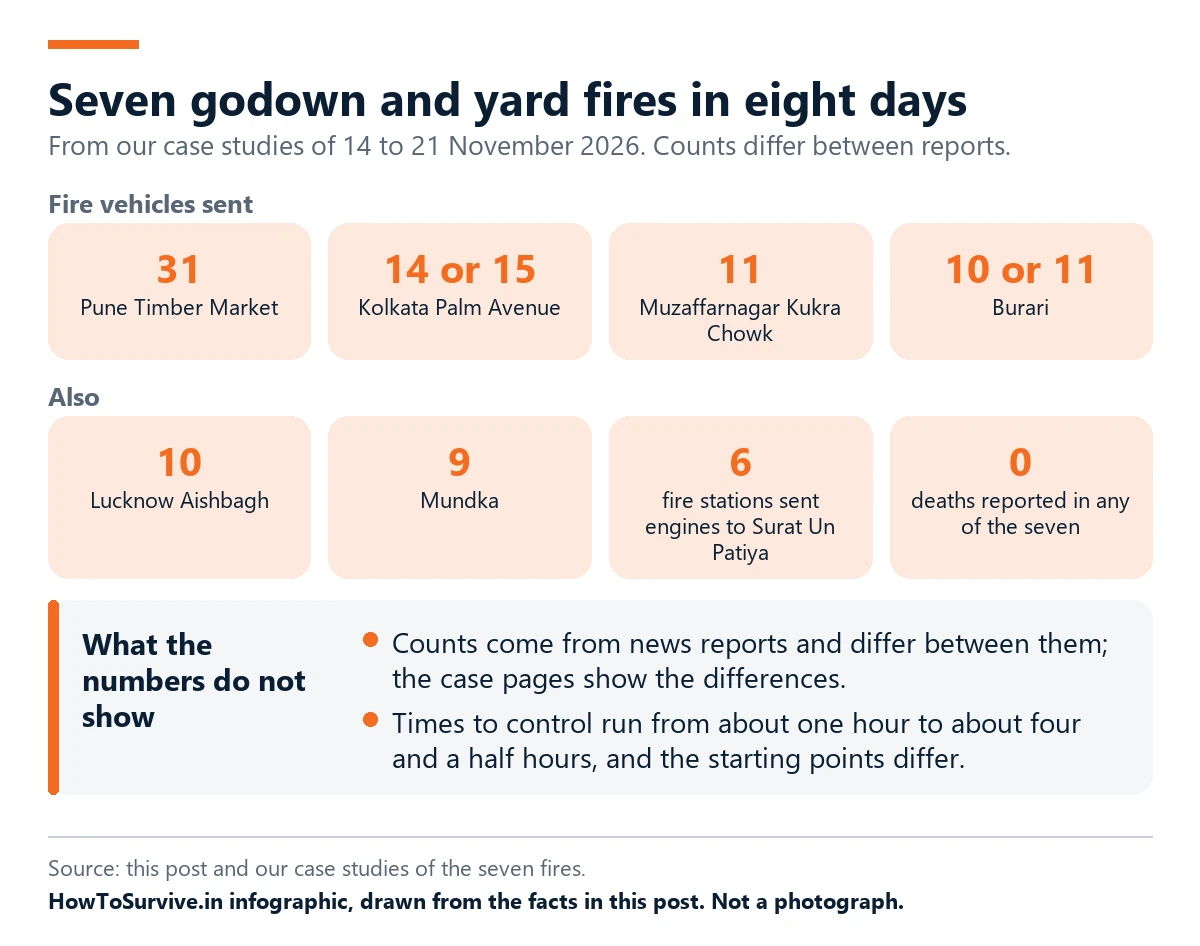
The Bureau of Indian Standards has a code of practice, IS 3594:2024, on fire safety of general storage and warehousing. It is a code of practice, not a law on its own, and the fire officer decides for a real building. In plain words it asks for things like these, and we have paraphrased it:
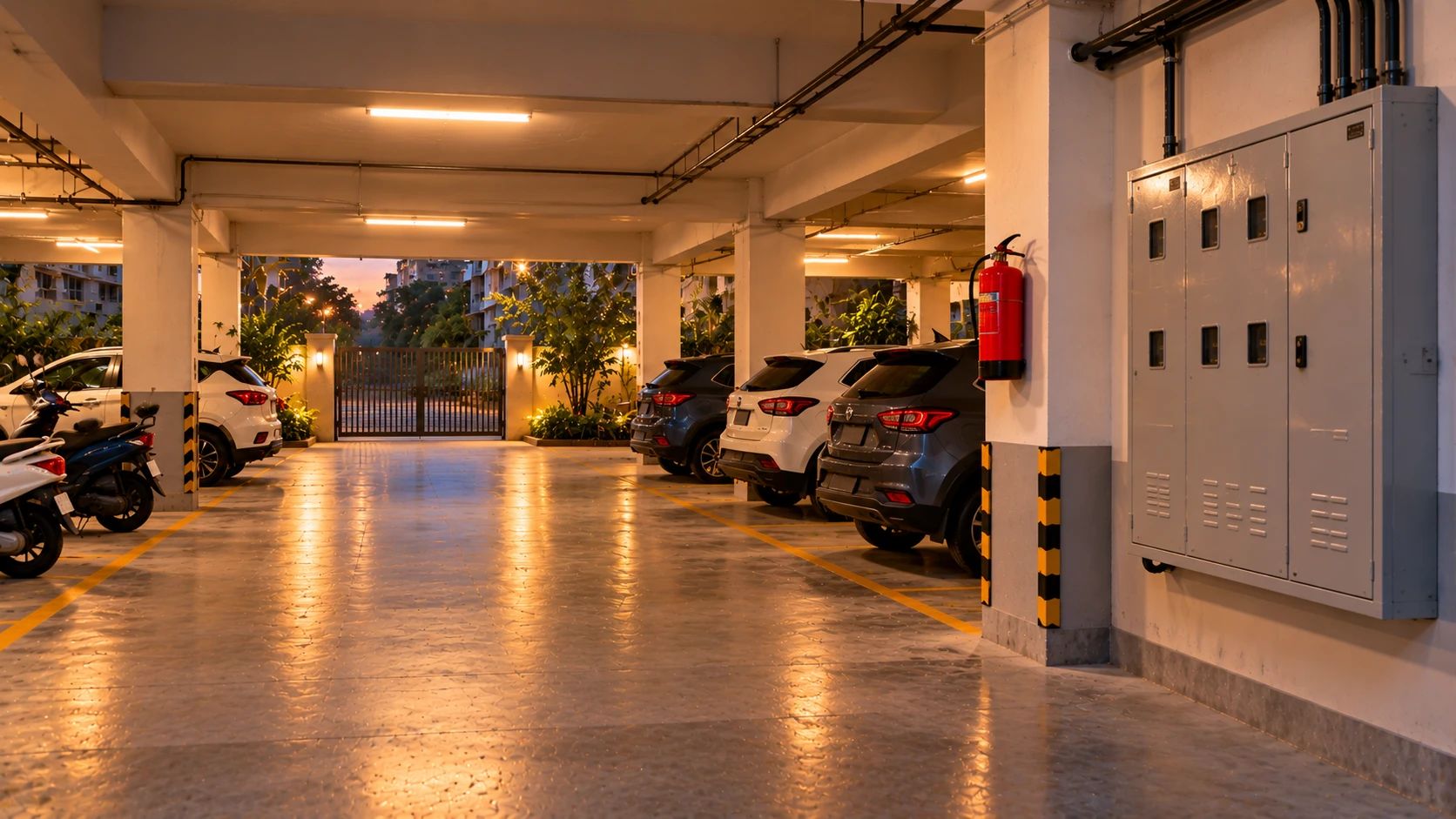
- Waste bins kept at least 6 m from the building, and no smoking within 15 m of the stock.
- Outdoor piles not higher than 10 m, with an aisle as wide as the pile is high and never under 3 m, so a fire cannot jump and engines can reach.
- Compound roads at least 6 m wide and gates at least 6 m, so a fire engine can get in.
- A main switch with an indicator near the entrance, earthing with automatic disconnection, and a yearly electrical check.
- A check of the premises about an hour after closing, and an emergency plan.
The reports do not say whether any of the seven yards followed these points, so we cannot say whether they would have helped. Our own suggestions, not official rules:
- Do not store waste or stock against a wall shared with homes or huts. Keep a clear gap and a way through.
- Keep stock in smaller heaps with gaps, not one large pile, and keep the heap from touching wiring, lights or switchboards.
- Ask your local fire station whether your plot is cleared for storage. If you rent a plot to others, ask what they keep on it.
- Do not burn waste on the plot, and keep sparks from welding, cutting and festival fireworks away. In Muzaffarnagar fireworks from a wedding next door are suspected.
- Insure the stock and photograph it every month; see what to do in the first 48 hours after a fire.
If you live or work next to a godown or yard
For smoke and the next step, see smoke from a nearby fire: choose your next step. For these fires specifically, our own suggestions:
- Leave at the first smoke or flame. Huts and shops next to a godown can catch within minutes.
- Call 101 or 112 from outside and give the exact place, a landmark and what is burning.
- Take people and papers you can carry, not belongings. Do not go back in.
- Keep the lane clear. Move vehicles, handcarts and cylinders out of the way of the fire engines.
- Stay upwind and away from the smoke. Burning plastic smoke is toxic; keep children and older people well away.
- Do not go back until the fire service says it is safe, because the heap can flare up again.
What we could not confirm
- We did not find the cause of any of the seven fires, and none of the reports says whether the yard had a fire clearance or how the stock was stored.
- The counts of engines, huts and shops differ between reports, and each case page shows the differences.
- IS 3594:2024 is a Bureau of Indian Standards document with copyright; we paraphrase it and read it in full. It is written for warehouses and storage premises, and we do not know how it applies to every open scrap yard.
- We found no Indian government public guide written for waste godown fires specifically.
- We did not test the spoken words of the videos.
Do this today
What needs attention
- Seven godown and yard fires in six cities between 14 and 21 November 2026 caused no reported deaths, but burnt huts, shops and houses in Lucknow, Kolkata and Pune.
- Crews worked from about one hour to about four and a half hours, and Surat needed two JCBs to pull the heap apart.
- The cause was not established in any of the seven, and none of the reports says whether the yard had a fire clearance.
- Gujarat First reports a local allegation that unapproved plots at Surat were rented out as godowns with no fire safety; no official has confirmed it.
- IS 3594:2024 asks owners for waste bins 6 m away, no smoking within 15 m, limits on outdoor pile height with a matching aisle, and roads and gates wide enough for fire engines.
- We found no Indian government public guide written for waste godown fires.
Controls that reduce risk
- Look at what is stored behind or beside your home or shop, and tell the owner if it is waste.
- Save 101 and 112 on your phone.
- If you own stock, check the gap to the next building and the way in for a fire engine.
- Photograph your stock every month and keep bills online.
Common unsafe practices
- Piling waste against a wall shared with homes or huts.
- One large pile with no gaps, so fire hides in the middle and cannot be reached.
- Stock touching wiring, lights or switchboards.
- Renting a plot to others without asking what they will keep on it.
- Going back for belongings while the fire is still burning or smouldering.








Leave a comment