
What happened here
 1 / 4
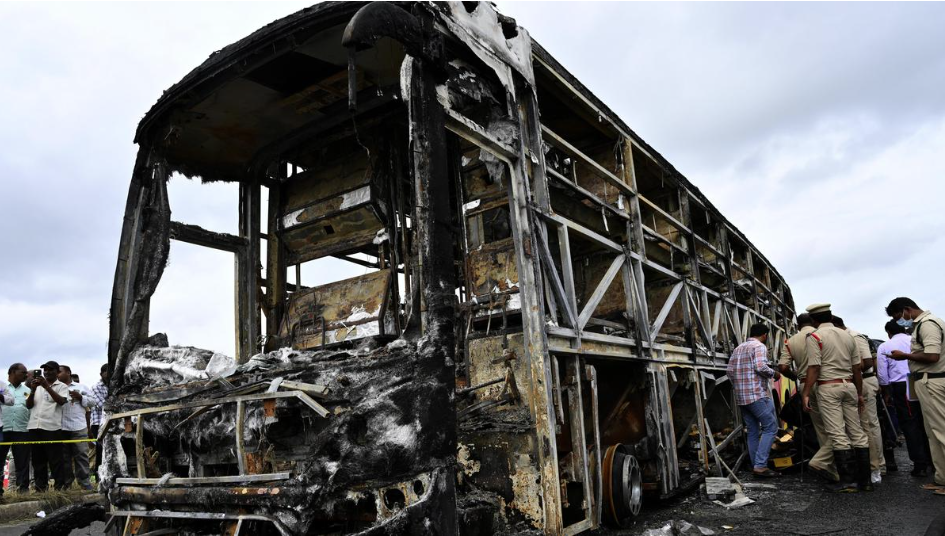
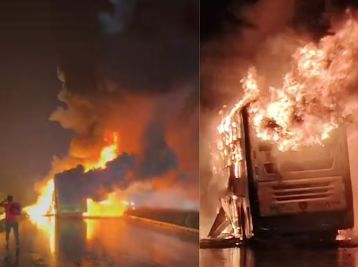
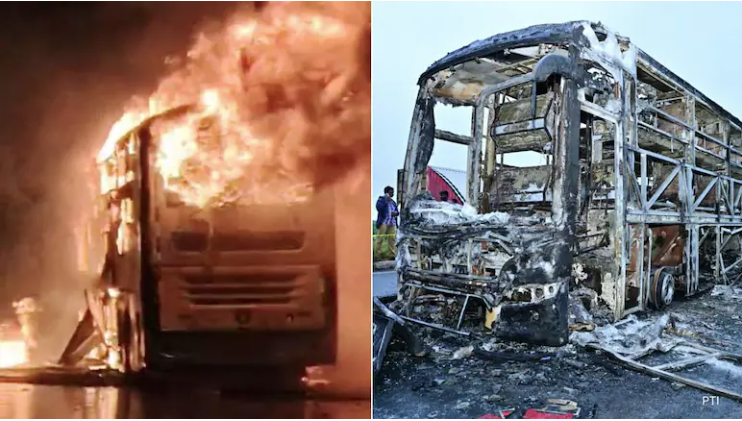
1 / 4 A motorcycle already involved in a crash became trapped beneath a Hyderabad–Bengaluru sleeper bus, igniting a fast-moving fire that killed 20 bus occupants in the official News on Air count.
📅 Date & Location of Incident
Date: 18 October 2025
Location: NH-44, near Kalluru Mandal, Kurnool District, Andhra Pradesh
Incident Type: Road accident + fire (private sleeper bus)
🕯 What Happened?
In the early hours of 18th October 2025, a private sleeper bus traveling from Hyderabad to Bengaluru caught fire on NH-44 near Kurnool after colliding with a two-wheeler around 4 AM.
- The motorbike rider died on the spot.
- The bus overturned, and within seconds, a massive fire engulfed the vehicle.
- At least one passenger, a 21-year-old engineering student, died trapped in the flames.
- Eight others were injured, including some with severe burns.
- Over 40 passengers escaped, many breaking windows to flee.
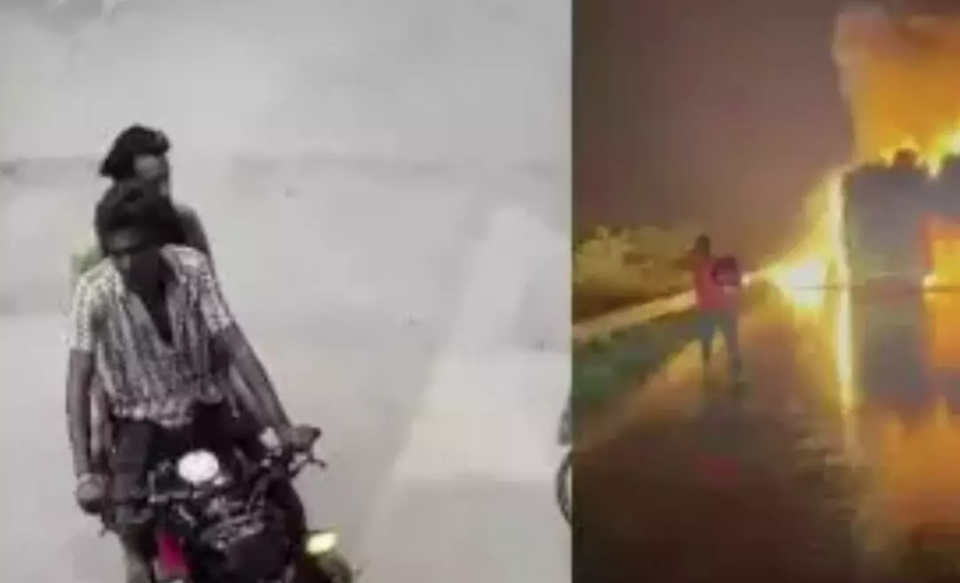
Initial reports blamed the biker. But now, eyewitnesses and CCTV evidence point to a third vehicle — possibly an SUV — which caused the crash and fled the scene.
🔍 Core Mistakes / What Went Wrong?
- ❌ The bus was running at high speed in the early morning fog.
- ❌ Reckless lane shift by a third, unknown vehicle reportedly led to the collision.
- ❌ The biker was drunk, per forensic report — but not the sole cause.
- ❌ The bus flipped and caught fire instantly, suggesting flammable interiors or fuel leak.
- ❌ No fire extinguisher used or visible inside the bus.
- ❌ Windows were locked or jammed, slowing evacuation.
- ❌ Delay in fire services reaching rural highway stretch.
⚖ Truth You Must Know
🔴 Media reports focus only on biker’s alcohol report — but police are now tracking a third vehicle via CCTV, indicating hit-and-run involvement.
🔴 Buses are not equipped with interior fire suppression systems — this is not just negligence, but a national regulatory failure.
🔴 Passengers broke windows with hands and luggage to escape — there were no emergency hammers inside.
🧯 How This Could Have Been Prevented
- ✅ Bus operators must ensure dual exit routes and working fire extinguishers.
- ✅ Government should mandate anti-flame interior materials for all intercity buses.
- ✅ Proper lane discipline and anti-drowsy driver checks for highways.
- ✅ Faster response units on highway hot zones like NH-44.
- ✅ CCTV-monitored lane behavior and AI alerts at accident-prone patches.
🛡 How to Survive a Bus Fire
🚨 If your bus crashes or you sense fire:
- Shout loudly — alert others
- Check for windows with hammers or loose locks
- Use bag buckles, bottles, shoes to break windowpanes
- Cover mouth with cloth to avoid smoke inhalation
- Exit quickly — drag others if safe
- Don’t rush to grab bags
- Move at least 100m away from the vehicle
- Call 112 or 108 immediately
📊 Related Data
| Metric | Value |
| India annual bus fire deaths | ~180+ (NCRB, avg 2020–2024) |
| Highways with most fatal crashes | NH-44, NH-48, NH-19 |
| % buses with fire-ready interiors | <5% (MoRTH data) |
| Fire extinguisher availability in buses | Only 2 out of 10 (RTI survey, 2023) |
📽 Visuals



🙏 Voices That Matter
🗣 “We couldn’t breathe. The bus was full of smoke. A boy got stuck. He screamed… we couldn’t save him.”
— Survivor, quoted in Indian Express
🗣 “A third vehicle was involved. We’re scanning camera footage and will find the driver.”
— Kurnool Police official, NDTV
📢 Systemic Lesson
India’s intercity transport system is still not emergency-ready.
Buses are built for capacity, not safety.
There are no national-level mandates for:
- Automatic fire suppression in buses
- Training for drivers in evacuation
- Public reporting of bus fire incidents
A ₹70 bus ticket should not cost anyone their life.
💡 What You Can Do Today
✅ Never board a sleeper bus without checking exits.
✅ Report buses without fire extinguishers or safety hammers.
✅ Learn basic fire survival tricks for closed vehicles.
✅ Share this story — one share can raise awareness.
✅ Volunteer with VFF India to spread highway safety.
🔚 Closing Line
“This is why we started HowToSurvive.in — because no one should burn alive on their way home.”
- Bike lies on or near the highway
- Motorcycle becomes trapped beneath coach
- Dragging ignites the bus underside/fuel area
- Smoke and flame spread through sleeper cabin
- Survivors break glazing; DNA identification follows
Why consequences escalated
- Night driving reduces recognition time for road debris
- Underbody impact can breach fuel and electrical systems
- Sleeper passengers need redundant exits at berth level
- Hammers and illuminated markings must remain accessible
- Driver actions cannot compensate for a blocked single aisle
Failures and risk multipliers
- Relying on one escape route
- Failing to detect smoke before occupants are trapped
- Allowing electrical, fuel or LPG hazards to go unchecked
- Failing to maintain emergency equipment and accessible exits
- Delaying accurate emergency information
People closest to the evidence
““Safety lesson””
Redundant escape, early warning and controlled fuel load decide survival before responders arrive.
Actions that reduce risk
- Test alarms and emergency lighting
- Locate and practise every emergency exit
- Keep hammers and exits accessible in buses
- Inspect electrical, fuel and LPG systems
- Display 112 and exact location
- Record and close safety defects
Leave a comment