

Quick answers
When is it safe to use a fire extinguisher instead of evacuating?
Only when you are trained, the fire is very small and contained, smoke is not threatening, everyone else is leaving and a safe exit remains behind you. If the fire is spreading, smoke is increasing or you are unsure, evacuate immediately.
How to use a fire extinguisher with the PASS method?
Pull the pin, aim the nozzle at the base of the flame, squeeze the handle and sweep from side to side across the base until the fire goes out. Then back away while watching for re-ignition. PASS describes handling only; it does not decide whether fighting the fire is safe.
Can I use water on an electrical or cooking oil fire?
No. Using water on energised electrical equipment or burning cooking oil is a dangerous mistake. Using the wrong agent can spread burning liquid, conduct electricity or create another exposure.
What should I check on a fire extinguisher before relying on it?
Read the full label to see which hazards it is rated for, check the pressure gauge, and look for damage, corrosion, missing pins or broken seals. Damaged, discharged, corroded or out-of-range units should be replaced or serviced.
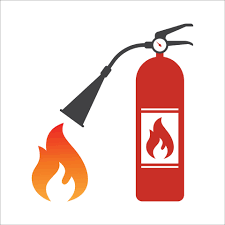
A fire extinguisher hanging on the wall of your office, shop or society lobby can stop a small fire from turning into a big one. It can also get someone hurt if they use it at the wrong time. This page is about knowing when to pick it up, how to use it, and when to put it down and leave.
First things first
Before anyone touches an extinguisher, three things must happen:
- Raise the alarm. Shout “Fire!” and press the nearest fire alarm call point if there is one.
- Call for help. Dial 101 for the fire brigade or 112. Give the full address, the floor and what is burning. Do this even if the fire looks small. If it gets worse, help is already on the way.
- Get everyone else moving out. Children, elderly people and visitors should start leaving at once.
When it is safe to use an extinguisher
Use one only if every one of these is true:
- You have been trained, and you know which kind of fire this extinguisher is for.
- The fire is small and in one place, like a dustbin, a small pile of paper or one appliance.
- Smoke is not filling the room.
- Everyone else is leaving.
- Your way out is behind you, and the fire cannot get between you and that exit.
If any one of these is not true, do not fight the fire. Get out, close the door behind you and wait for the fire brigade outside. Leaving is never the wrong choice.
Pick the right extinguisher
In India, fires are grouped by what is burning. The Bureau of Indian Standards uses these classes:
- Class A: ordinary solids such as wood, paper, cloth, rubber and plastics.
- Class B: flammable liquids such as petrol, diesel, paint and thinner.
- Class C: flammable gases such as LPG.
- Class D: burning metals such as magnesium and aluminium.
- Class F: cooking oils and fats in a kadhai or fryer.
Every extinguisher is marked with the classes it can be used on. Read the label before a fire, not during one. Never use water on wiring or appliances that are still live, or on burning cooking oil. American guides talk about “Class K” for kitchen fires; in India the equivalent is Class F.
How to use it: PASS
Most portable extinguishers work the same way. Stand a few steps back from the fire with your exit behind you.
- Pull the safety pin. This breaks the tamper seal.
- Aim the nozzle or hose low, at the base of the fire, not at the flames.
- Squeeze the handle slowly and evenly.
- Sweep from side to side across the base of the fire until it goes out.
Then back away slowly, still facing the fire. Watch it for a while, because it can flare up again. A portable extinguisher empties in seconds. If the fire is not clearly getting smaller, or the extinguisher runs out, stop and leave at once.
PASS tells you how to work the extinguisher. It does not tell you whether it is safe to fight the fire. That decision comes first.
Keep your extinguishers ready
- Mount them where people can see and reach them without going near the hazard, such as beside an exit.
- Once a month, look at the pressure gauge. The needle should be in the green.
- Check that the pin and seal are in place, and that the hose, nozzle and body are not cracked, dented or rusted.
- Get any used, damaged or low-pressure extinguisher refilled or serviced straight away by a competent agency, and follow BIS standards and the maker’s instructions for servicing and testing.
An online video can show you the steps, but it cannot show you what heat and smoke feel like. Ask your local fire station or a competent trainer for a hands-on session. Many fire services run them for societies and offices.
Today, find the nearest extinguisher at home or at work. Read its label, check the gauge, and make sure nothing is stacked in front of it.
What needs attention
- PASS is a memory aid for handling the extinguisher, not a replacement for training and knowing the hazard
- The wrong extinguisher can spread burning liquid, carry electric current or create a new danger
- Smoke can knock a person out before the flames reach them
- A portable extinguisher holds little agent and reaches only a short distance, so the decision to back off must be quick
- Extinguishers must be easy to reach, correctly pressurised, intact, checked and serviced
- The building still needs smoke detection, an alarm, protected exits and an emergency plan
Controls that reduce risk
- Ask your local fire station or a competent trainer for hands-on extinguisher training
- Work out the real fire hazards before choosing the types and ratings of extinguishers
- Mount and mark extinguishers where people can see and reach them without going into the danger area
- Check the gauge, pin, seal, hose, nozzle, body and service record
- Get damaged, used, rusted or low-pressure extinguishers serviced or replaced
- Teach everyone that leaving is always allowed and is often the safest choice
- Put up the emergency numbers, full address, how to reach the building and the assembly point
- Practise the alarm, evacuation and head count separately from extinguisher training
Common unsafe practices
- Trying to put out the fire before warning others and calling for help
- Letting fire, heat or smoke get between you and the exit
- Using water on live electrical equipment or burning cooking oil
- Walking into a smoke-filled room without firefighting gear and breathing apparatus
- Carrying on after the extinguisher runs out or the fire grows
- Using an extinguisher without knowing its class, condition, range and what its discharge can do
- Turning your back on a fire that seems to be out, or going back in to check it
Leave a comment