
Case Study
What happened here
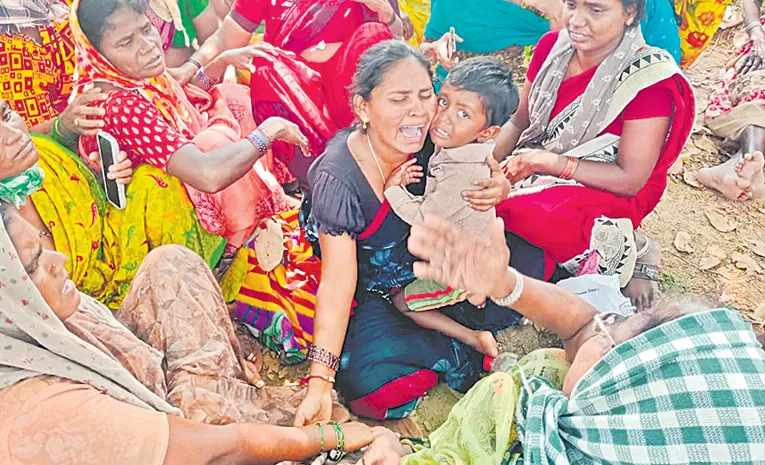
EventGanesh idol immersion followed by multiple drownings at a lake near Pedda Kanjerla.
Corroborated outcomeSix students died; a complete injury total has not been established.
Water-entry denominatorReports conflict: eight entered and two escaped, or nine entered and three escaped. Fifteen reportedly arrived with the wider group.
Site questionPolice-attributed reporting says the location was not a notified immersion point; obtain the actual notification before making a compliance determination.
InvestigationWarden arrest and remand reported on 17 September; allegations remain subject to investigation and legal process.
AssistanceINR 2 lakh per bereaved family was announced according to Telangana Today; payment is not verified and this is not an economic-loss estimate.
What we can say safely
Six students died during Ganesh idol immersion at a lake near Pedda Kanjerla, Telangana, on 16 September 2026. Reports agree on the death toll but differ on how many entered the water, the time and early supervision accounts. This case separates verified reporting, investigation allegations and practical prevention.
- Group attended the lake for immersion. Sources give differing clock times; no precise time is adopted.
- Several students became distressed. Pit and mud descriptions are reported explanations, not a measured final finding.
- Police and local people participated in recovery; hospital transfer reported. Call, dispatch and arrival times are unavailable.
- Newsrooms reported arrest/remand and announced assistance; supervision allegations developed beyond the earliest accounts.
- Six-death toll retained; denominator, timing and mechanism conflicts remain visible pending authoritative records.
Why consequences escalated
- The stable finding is a six-person fatal outcome during immersion. Agreement among several newsrooms supports that outcome, while differences elsewhere require restraint. Multiple reports may share police information, so their number is not equivalent to independent forensic examinations.
- The site-selection decision is a central prevention issue. Police-attributed reporting that the waterbody was not a notified immersion point warrants checking the local list, responsibility for directing groups and the information actually available to organisers that evening.
- Entry control and supervision must be examined separately. Knowing who accompanied the group does not establish whether an effective barrier, staff handover or instruction against public water entry existed. Early absence claims cannot be repeated as settled facts after later allegations of the warden’s involvement.
- Mud and abrupt changes in depth are reported possibilities. No reviewed source provides a survey, excavation record or final investigation establishing the exact mechanism. These details support questions for investigators rather than a definitive reconstruction.
Failures and risk multipliers
- Do not convert a reported underwater pit into a proven engineering cause.
- Do not use six deaths divided by fifteen arrivals as a fatality rate among water entrants.
- Do not describe the announced family assistance as compensation already received or total loss.
- Do not treat an arrest as proof of guilt, or an early supervision account as the final account.
- Do not present regional plans for later festival dates as the rescue resources actually deployed to this incident.
Actions that reduce risk
- For local organisers, confirm the named operating immersion location with the responsible authority before departure. Record the contact and opening arrangements; a familiar lake or last year’s practice does not confirm this year’s arrangements.
- For a group leader, establish who is responsible for each participant, where spectators wait and how the group returns together. Keep the headcount separate from the number of people authorised to handle the idol.
- At the site, request a staff handover and keep spectators away from the water-entry area. Pause if the intended route is unstaffed, visibility is poor or the waiting area cannot contain the group safely.
- If someone is in difficulty, alert site rescuers and call 112 with the waterbody name, access point and last-seen position. Avoid entering uncertain water. Keep emergency access clear and follow dispatcher instructions.
- For the investigation, preserve site photographs, notifications and witness accounts with dates and provenance. Reconcile the group list, water-entry count and medical outcomes before calculating rates or attributing fault.
Leave a comment